
Building Strong Name Recognition in Dogs
Master the fundamentals of teaching your dog to respond reliably to their name using proven training methods.
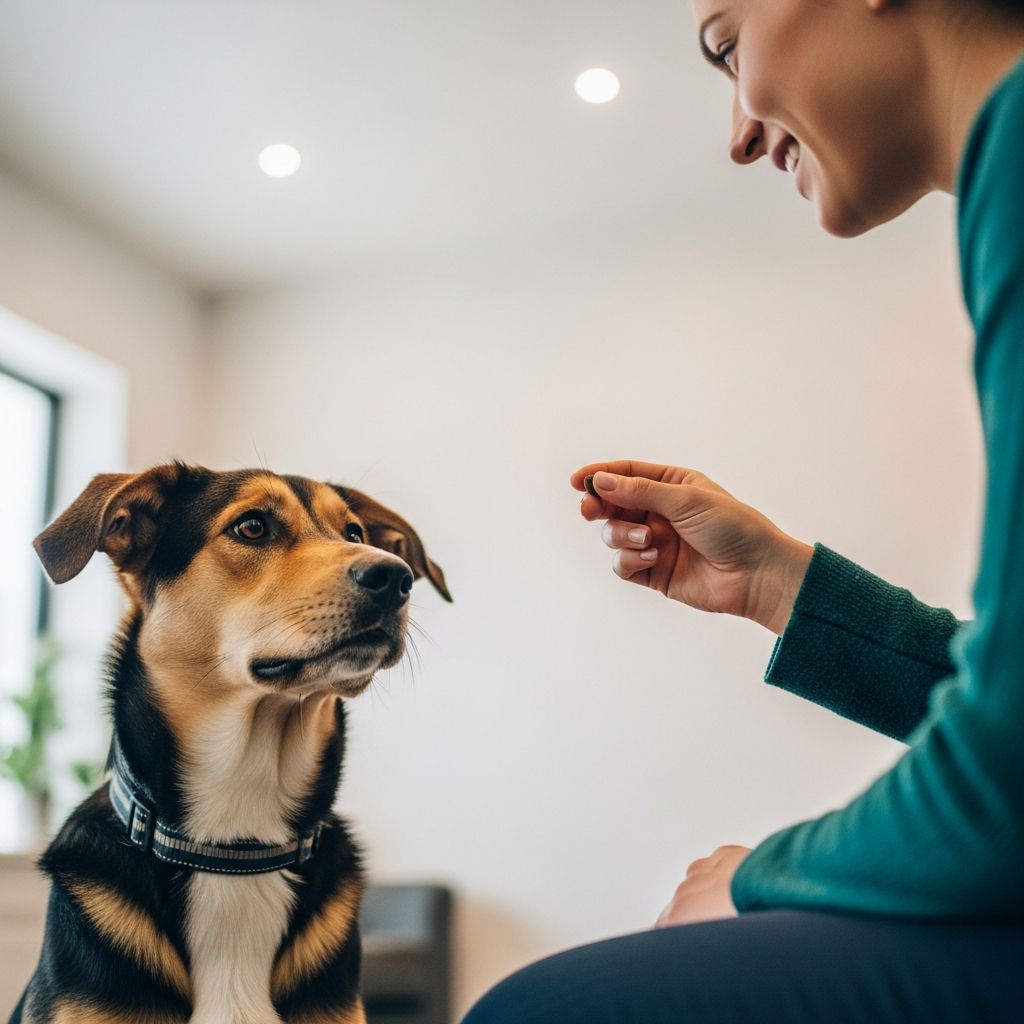
One of the most fundamental skills any dog owner should teach their pet is reliable name recognition. When your dog consistently responds to their name, it opens doors to more advanced training, improves safety during walks and outdoor activities, and strengthens the bond between you and your canine companion. However, many dog owners struggle with this foundational skill, often wondering why their dog seems to ignore their name in distracting environments or only responds inconsistently at home.
Understanding the Foundation: Why Name Recognition Matters
Your dog’s name serves as an attention-getting tool that precedes all other commands and communication. Before you can ask your dog to sit, come, or stay, you first need their attention. Without solid name recognition, subsequent training becomes unnecessarily difficult. A dog that reliably looks at you when hearing their name has already completed half the battle of any training scenario.
Beyond training applications, strong name recognition has practical safety implications. Imagine your dog approaching a potentially dangerous situation—a busy street, an unfamiliar dog, or a harmful object. If your dog responds immediately to their name, you can redirect their attention and keep them safe. This skill quite literally can be lifesaving in critical moments.
Preparing Your Training Environment for Success
The environment where you begin training significantly impacts your success rate. Starting in the right setting creates a foundation that allows your dog to focus entirely on learning without overwhelming sensory input.
- Choose a quiet, enclosed space: Your living room, bedroom, or a quiet corner of your home works perfectly for initial training sessions. Minimal visual and auditory distractions allow your dog’s brain to process the new association without competing stimuli.
- Gather appropriate rewards: Collect small, soft treats that your dog can quickly consume. These should be higher-value treats than your dog receives during regular feeding—something genuinely exciting that captures their enthusiasm. Some dogs respond better to toy rewards or brief play sessions instead of food.
- Consider using a clicker: A clicker is a small mechanical device that produces a consistent clicking sound. This tool marks the exact moment your dog performs the desired behavior, creating clarity about what earned the reward. The consistency of the clicker sound is superior to verbal markers, though verbal markers like “yes” or “good” work adequately as substitutes.
- Ensure proper physical setup: Keep your dog on a leash initially to prevent them from wandering away and to help guide their attention back to you if needed. This setup guarantees your dog remains in the training area and available for reward delivery.
The Classical Conditioning Approach
Classical conditioning creates an automatic association between the sound of your dog’s name and positive outcomes. This method doesn’t require your dog to perform any action—simply the sound of their name becomes linked with good things happening.
Begin by preparing several small, highly desirable treats. Show your dog you have these treats so they understand something valuable is available. Now say your dog’s name clearly once, and immediately place a treat in their mouth. The timing here is critical—the treat should follow the name within a fraction of a second. Repeat this sequence five to seven times during a brief thirty-second session. The rapid delivery of treats teaches your dog that their name predicts immediate gratification.
Conduct these abbreviated sessions two or three times daily. The brevity prevents fatigue and maintains enthusiasm. Always conclude on a positive note, even if your dog hasn’t performed perfectly. Over several days of consistent practice, your dog begins forming a neurological pathway where the sound of their name automatically triggers anticipation of reward.
As your dog becomes conditioned to their name, gradually introduce variables. Say their name in different tones—happy, excited, calm, whispered, or firm. Have different family members call their name. Practice in various rooms of your home. This variance prevents your dog from becoming conditioned to respond only under specific circumstances.
The Operant Conditioning Method
Operant conditioning differs from classical conditioning by requiring your dog to actively participate in the training. Your dog learns that their specific response to their name produces rewards, creating intentional behavior rather than automatic association.
This method requires that your dog already understands clicker training or has been conditioned to a verbal marker. If your dog hasn’t experienced this, begin by establishing the marker. Click (or say “yes”) and immediately deliver a treat repeatedly until your dog’s eyes light up when they hear the marker sound. They should begin expecting a treat to follow the marker. This establishes the clicker or verbal marker as a reward predictor.
Once your marker is established, move to the name recognition phase. Toss a treat to your dog, and while they’re eating or moving away from you, wait for them to naturally look in your direction. The instant their eyes focus on you, click or say your marker word and toss another treat. Repeat this sequence until your dog begins deliberately looking at you in anticipation of the click and treat.
Your dog will likely make the connection that looking at you produces clicks and rewards. Let this happen naturally without rushing. Once your dog consistently makes eye contact approximately four out of every five repetitions, you’re ready to add the verbal cue. At this point, toss a treat, wait for the look, and just as they make eye contact, say their name clearly. Click and reward. Gradually shift the timing so you say their name slightly before they look at you, rewarding them when they look at you in response to the name.
Progressing Through Training Stages
Effective name recognition training follows a logical progression. Beginning too ambitiously with distractions and distance causes frustration and setbacks. Instead, methodically build competence through stages.
| Training Stage | Environment | Distance | Distractions | Reward Schedule |
|---|---|---|---|---|
| Stage 1: Foundation | Quiet indoor room | 2-3 feet | Minimal | Every correct response |
| Stage 2: Consistency Building | Indoor, multiple rooms | 5-8 feet | Few distractions | Every correct response |
| Stage 3: Introduction to Distraction | Home with minor distractions | 8-15 feet | Moderate (toys present, mild sounds) | Every correct response |
| Stage 4: Real-World Application | Outdoor spaces, varying environments | 15+ feet | Significant (other dogs, people, movement) | Intermittent rewards, verbal praise constant |
Never rush progression between stages. Some dogs master each stage within days, while others require weeks. If your dog struggles at any stage, regress to the previous stage where they were successful and progress more slowly. Consistency and patience yield superior long-term results compared to pushing too quickly.
Managing Common Training Obstacles
Several predictable challenges emerge during name recognition training. Understanding how to navigate these obstacles prevents training plateaus.
The Repeated Name Problem: Some owners habitually say their dog’s name multiple times—”Fido, Fido, Fido!”—expecting a response. This teaches your dog they can ignore the first and second repetitions and only respond when they feel like it. Instead, say the name once and wait. If no response occurs within one to two seconds, don’t repeat. Instead, gently guide your dog’s attention back to you using a treat lure or by moving to a location with fewer distractions. Then try again.
Inconsistent Reinforcement: Every family member must enforce the same training protocol. If one person rewards your dog for responding and another doesn’t, your dog receives conflicting signals. Conduct a family meeting explaining the training approach and ensuring everyone participates consistently.
Inadequate Practice Frequency: Dogs require minimum ten repetitions daily for name recognition to develop reliably. Many owners practice sporadically, expecting results. Commit to integrating name practice into daily routines—during meals, before walks, while watching television, or during other naturally occurring moments.
Rushing Distance and Distraction Increases: A common mistake involves teaching name recognition in one quiet room, then immediately expecting the dog to respond across the yard with squirrels nearby. Your dog hasn’t learned to generalize yet. Introduce distance and distraction separately and gradually, always ensuring success before adding complexity.
Utilizing Real-Life Training Opportunities
Formal training sessions are important, but real-life situations provide powerful learning contexts. Every day offers natural opportunities to reinforce name recognition without dedicating special training time.
When feeding your dog, say their name just before placing the food bowl down. Your dog quickly learns their name predicts mealtime. During walks, periodically call your dog’s name and reward attention with praise or a treat. When your dog naturally looks at you during the day, mark this behavior with your clicker or marker word and reward it. These incidental reinforcements compound into reliable, automatic responses.
Introducing Combined Cues and Behaviors
Once your dog responds reliably to their name across various environments and distractions, you can link name recognition to other trained behaviors. Call your dog’s name followed by another command: “Fido, sit” or “Fido, come.” Your dog first responds to their name by giving attention, then executes the subsequent command. This layered cueing system forms the foundation for more complex training.
Transitioning Away from Treat Rewards
Not all name recognitions need to earn food rewards indefinitely. Initially, consistent treat rewards establish the behavior. Over time, gradually replace food rewards with intermittent treats interspersed with verbal praise, physical affection, and play. Many dogs eventually respond to their name primarily for the praise and connection with their owners, without needing food motivation. However, occasional treats maintain enthusiasm and prevent response degradation.
Addressing Environmental Variability
Your dog’s behavior in a quiet home differs from their behavior in busy, stimulating environments. Systematic exposure builds generalization. Practice name recognition in progressively more challenging environments: different rooms in your home, your yard, quiet parks, busier parks, and eventually anywhere you take your dog. Each new environment should be introduced after your dog succeeds reliably in the previous setting.
Frequently Asked Questions
How long does it take to teach name recognition?
Most dogs show basic name recognition within one to two weeks of consistent daily practice. However, reliable responses across all environments typically require four to eight weeks. Individual variation depends on the dog’s age, prior training experience, and consistency of human training.
Can older dogs learn name recognition as quickly as puppies?
Adult dogs often learn name recognition just as quickly as puppies. Some adult dogs learn even faster due to increased maturity and better attention spans. Prior training experience also accelerates learning. Never assume an older dog lacks the capacity to learn this fundamental skill.
What if my dog responds better to toys than treats?
Food rewards aren’t mandatory. If your dog responds more enthusiastically to toy play or balls, use those as rewards instead. Some dogs find brief play sessions with their favorite toy more motivating than treats. Adapt the method to your individual dog’s preferences while maintaining the same training principles.
Why does my dog respond at home but not during walks?
This indicates insufficient generalization training. Your dog hasn’t learned that name recognition applies in all contexts. Return to higher-value treats during walks and practice more frequently in outdoor environments before expecting reliable responses. Keep your dog on a leash initially during outdoor training to prevent them from being distracted by the environment.
Is a clicker necessary for teaching name recognition?
Clickers are helpful but not essential. They provide precise timing and consistency that accelerates learning. However, verbal markers like “yes” or “good” work adequately. The fundamental principle—marking correct behavior with a predictor that precedes reward—remains effective regardless of which marker you choose.
Troubleshooting Plateaus in Training Progress
Sometimes training progress stalls despite consistent effort. When this occurs, review several factors. First, verify that rewards remain sufficiently valuable. Dogs lose interest in stale treats or predictable rewards. Rotate reward types regularly. Second, confirm that every family member is using identical training methods and consistency. Third, ensure you’re not inadvertently rewarding incorrect responses. Finally, consider reducing session duration and frequency slightly, then rebuilding more gradually. Sometimes training plateaus resolve simply by backing up and rebuilding foundation slowly.
References
- How to Teach Your Dog Their Name — American Kennel Club. 2024. https://www.akc.org/expert-advice/training/how-to-teach-dog-name/
- Teach a Dog to Respond to Its Name — The Royal Kennel Club. 2024. https://www.royalkennelclub.com/your-dog/dog-training/get-started/dog-training-and-games/how-do-i-teach-my-dog-to-respond-to-their-name/
- How to Teach Your Dog Their Name — Training Canines. 2024. https://trainingcanines.com/how-to-teach-your-dog-their-name/
- How to Teach a Dog Its Name — Battersea Dogs & Cats Home. 2024. https://www.battersea.org.uk/pet-advice/dog-care-advice/how-teach-dog-its-name
Similar Articles








Read full bio of medha deb




