

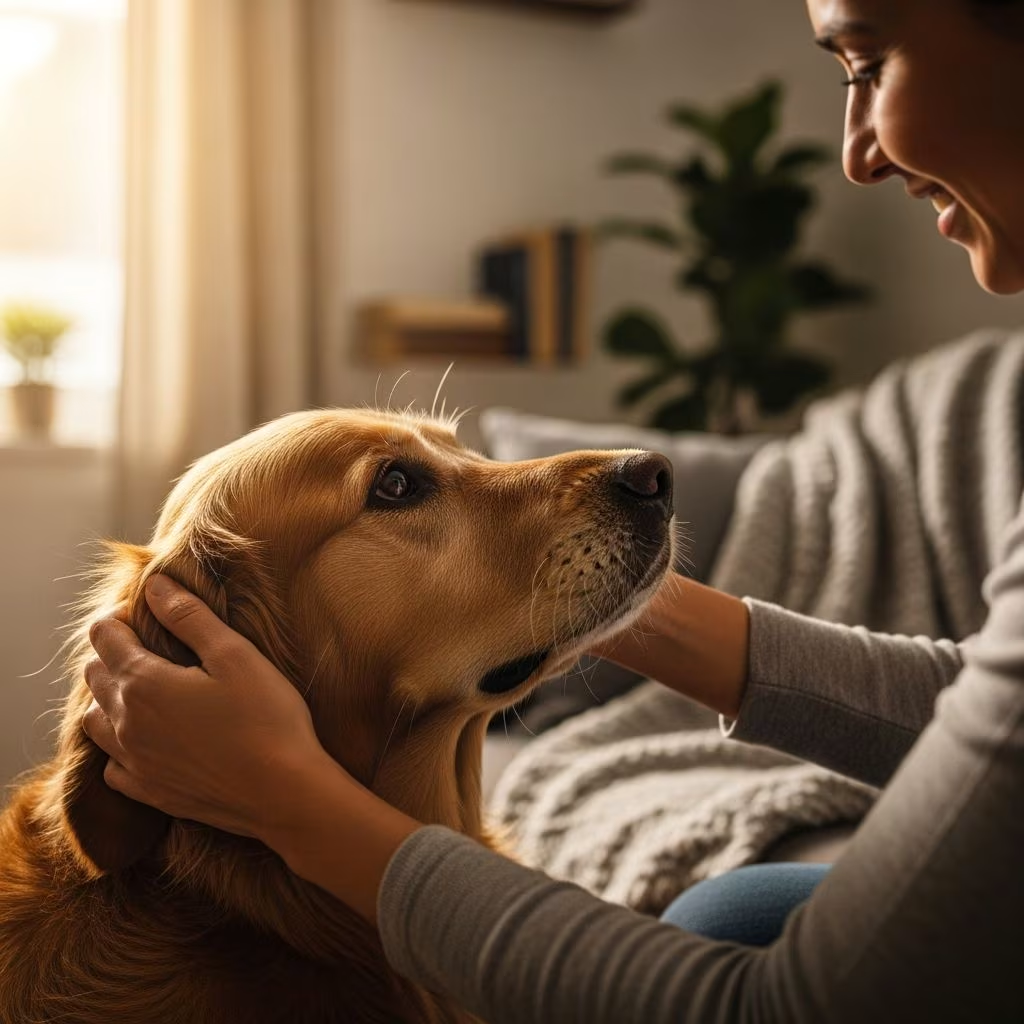
The connection between dogs and their owners goes beyond mere companionship; it forms a profound emotional partnership that influences behavior, health, and happiness for both parties. Scientific studies reveal that this bond mirrors aspects of human parent-child attachments and friendships, providing emotional support while minimizing conflicts.
Understanding the Foundations of Canine-Human Attachment
Dogs have co-evolved with humans over thousands of years, developing unique social behaviors that prioritize our companionship. Research shows that secure attachments reduce stress in dogs, much like a child’s reliance on a parent for comfort in frightening situations. Owners serve as a “safe haven,” alleviating anxiety during challenges, and a “secure base,” encouraging exploration.
Key elements include emotional closeness, where dogs display proximity-seeking behaviors like tail wagging and extended interactions during calm periods. Dogs with strong bonds exhibit lower arousal levels in stressful scenarios, such as separation, highlighting how consistent human presence buffers physiological stress responses measured via heart rate variability.
- Proximity seeking: Dogs stay closer to owners during uncertainty, reflecting trust.
- Exploration boost: Confident dogs venture further when owners are nearby.
- Stress reduction: Secure bonds lower cortisol and improve coping mechanisms.
Debunking Dominance Myths in Modern Dog Training
The outdated “alpha dog” theory, which promotes forceful dominance, lacks scientific backing and can harm relationships. Instead, dogs naturally recognize humans as leaders through benevolent guidance, not intimidation. Behaviors like head-passing under chins or mouth-licking in dog packs signify deference, akin to pets enjoying head pats and kisses from owners.
Studies emphasize treating dogs with magnanimity as the responsible dominant partner. Force-based methods increase fear and aggression, while positive reinforcement builds voluntary cooperation. Companion dogs thrive on dependency for problem-solving, differing from independent working breeds.
| Myth | Reality | Impact on Bond |
|---|---|---|
| Pack leader must dominate | Leadership via trust and consistency | Reduces fear, enhances loyalty |
| Dogs challenge authority | Behaviors stem from insecurity | Positive methods address root causes |
| Physical corrections work | Reward-based training excels | Builds mutual respect |
Daily Practices to Strengthen Your Bond
Consistent routines foster security. Regular play, grooming, and feeding create positive associations. Owners who provide frequent care see heightened attachment behaviors, like increased arousal during reunions, signaling emotional investment.
Incorporate structured activities:
- Gentle stroking sessions to lower arousal and promote relaxation.
- Interactive toys that involve joint problem-solving.
- Calm reunions after short separations to reinforce safety.
Physical activity synchronizes heart rates, deepening empathy. Avoid over-reliance on leashes; allow sniffing during walks to satisfy natural instincts, preventing frustration.
Recognizing Signs of a Healthy Emotional Connection
Dogs communicate love through subtle cues: sustained eye contact releases oxytocin in both, wiggly butts signal joy, and relaxed body language indicates trust. Owners report higher satisfaction with dogs than most human relationships, except children, due to low conflict and high companionship.
Behavioral indicators include:
- Tail wags during greetings.
- Leaning into touch without tension.
- Calm waiting for cues, showing attentiveness.
Physiological markers, like stable heart rate variability during novel stimuli, confirm emotional security. Mismatched perceptions—owners misreading calm as disinterest—can weaken bonds; education bridges this gap.
Personality Influences on Relationship Dynamics
Dog temperament shapes interactions. Self-assured dogs interact less during baselines but show fewer fears, correlating with owner perceptions of lower training focus. Neurotic traits demand more reassurance, while cooperative breeds enhance owner attachment.
Assess your dog’s profile:
- High emotional closeness: Frequent caregiving boosts arousal and attachment.
- Perceived costs: Less owner-oriented dogs prompt higher dissatisfaction ratings.
- Training responsiveness: Independent personalities may seem stubborn but respond to patience.
Overcoming Common Relationship Challenges
Separation anxiety arises from insecure bonds; gradual desensitization with toys and routines helps. Resource guarding often stems from past inconsistencies—use counter-conditioning with high-value treats.
Owner errors, like inconsistent rules, condition misbehaviors. Rural owners in studies showed positive rapports through education, emphasizing clear communication. Hormonal influences, such as owner stress, affect dog responses, underscoring mutual well-being.
Long-Term Benefits for Health and Happiness
Strong bonds improve stress coping, reducing chronic health issues in dogs and boosting owner mental health via emotional support. Owners perceive fewer relational negatives, fostering harmony akin to best-friend dynamics without drama.
Hybrid nature—nurturance like parenting plus low-conflict friendship—makes dogs unparalleled companions. Positive interactions yield self-directed behaviors less during stress, promoting resilience.
Frequently Asked Questions (FAQs)
How can I tell if my dog trusts me?
Look for relaxed posture, voluntary proximity, and joyful greetings. Physiological calm during challenges confirms trust.
Does breed affect bonding ease?
Yes, but individual personality matters more. Working breeds may seem independent, companions more dependent.
What if my dog ignores commands?
Rebuild with positive reinforcement; dominance myths mislead. Consistency and rewards work best.
Can bonding reduce barking or jumping?
Absolutely—secure dogs exhibit fewer attention-seeking extremes, focusing on calm signals.
How often should I train to strengthen the bond?
Daily short sessions (5-10 minutes) build habits without overwhelm, enhancing mutual understanding.
References
- Dog–Owner Relationship – Emotional Reactivity of Dogs — PMC/NCBI. 2022-05-31. https://pmc.ncbi.nlm.nih.gov/articles/PMC9179432/
- The Power of the Dog-Human Connection — Psychology Today. 2025-05-01. https://www.psychologytoday.com/us/blog/all-dogs-go-to-heaven/202505/the-power-of-paws
- Dog behavior — Wikipedia (informed by primary studies). N/A. https://en.wikipedia.org/wiki/Dog_behavior
- Human-Canine Relationships: Dog Behavior and Owner Perceptions — Liberty University Digital Commons. N/A. https://digitalcommons.liberty.edu/cgi/viewcontent.cgi?article=1313&context=honors
- The myth of the alpha dog — ASU News. 2021-08-05. https://news.asu.edu/20210805-discoveries-myth-alpha-dog
- How do dogs show love? — Company of Animals. N/A. https://companyofanimals.com/uk/how-do-dogs-show-love/



