

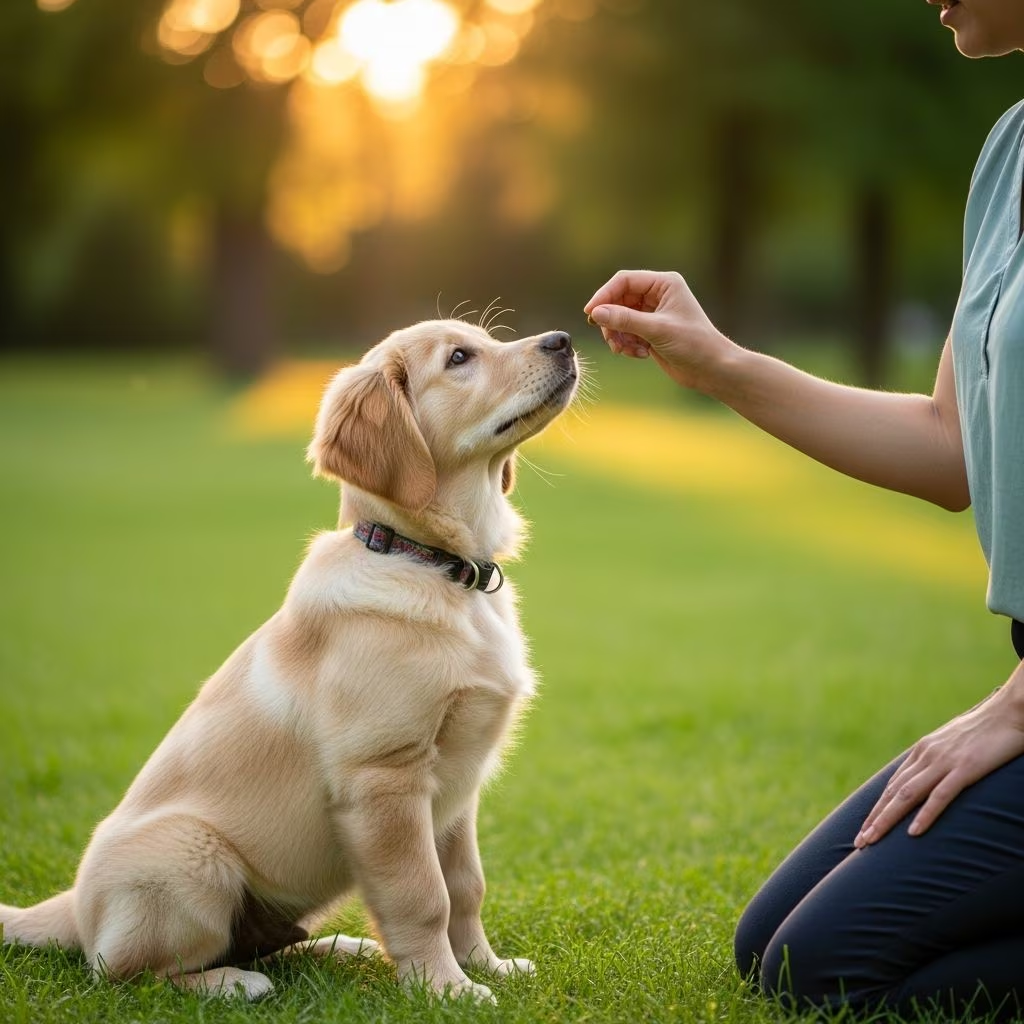
A dog that comes when called is not just convenient—it’s essential for safety and quality of life. Whether your dog is off-leash at the park or needs to respond quickly in an emergency, a reliable recall command can be the difference between a happy outing and a dangerous situation. Many dog owners struggle with recall training because they approach it without a systematic foundation. This comprehensive guide breaks down the process of developing exceptional recall behavior that works in real-world conditions.
Understanding the Foundation of Recall Training
Before working on recall specifically, your dog needs to understand how training works. This means establishing clear communication through marker words or clicker training. The marker—whether it’s a clicker device or a verbal cue like “yes”—signals to your dog that they’ve performed correctly and a reward is coming. This marker creates anticipation and helps your dog understand exactly which behavior earned the reward.
Building this foundation in a quiet, distraction-free environment is critical. Start by clicking or saying your marker word, then immediately providing a high-value treat. Repeat this association dozens of times until your dog’s eyes light up when they hear the marker sound. Once your dog reliably looks toward you after hearing the marker, you’ve established the communication system needed for all subsequent training.
The relationship between you and your dog matters tremendously in recall training. Dogs are more motivated to return to handlers they trust and enjoy spending time with. Invest time in play, positive interactions, and general relationship-building before expecting reliable recalls under pressure.
Selecting Appropriate Training Tools and Equipment
The tools you choose significantly impact your training success. Leash selection matters more than many owners realize. Non-retractable leashes of appropriate length are far superior to retractable options. For most training scenarios, a standard 6-foot leash provides good control while allowing sufficient movement for your dog to practice loose leash walking skills.
However, different training situations call for different lengths. Small dogs may work well with 10-foot leashes, while handlers skilled in managing longer lines might progress to 20 or 30-foot leashes during advanced training. Longer lines allow your dog more freedom to make mistakes while still maintaining safety and control.
Your collar or harness choice affects both comfort and training effectiveness. Harnesses distribute pressure across the chest and shoulders rather than concentrating it on the neck, making them gentler options for pulling dogs. Front-clip harnesses naturally redirect a pulling dog back toward you without requiring handler intervention. For recall training specifically, ensure your chosen equipment fits securely and doesn’t restrict your dog’s movement.
A treat pouch or multi-pocket training bag keeps everything organized and accessible. This small investment allows you to focus on your dog rather than fumbling for treats in your pockets.
Establishing Environmental Conditions for Success
Training location determines your success rate. Begin in familiar, quiet environments where your dog is already comfortable and distractions are minimal. Many owners make the mistake of attempting recall training outdoors immediately, where environmental stimuli overwhelm their dog’s ability to focus.
Start indoors in your home or a quiet room. This allows your dog to concentrate on the training process without competing stimuli. Once your dog demonstrates reliable recall in this controlled setting, gradually introduce mild distractions—different rooms, outdoor spaces with fewer stimuli, then progressively more challenging environments.
This systematic progression builds confidence and reinforces the behavior before real-world application. Each location represents a new “context” for your dog, requiring specific practice. A dog that recalls reliably indoors may need dedicated training in your backyard before generalizing the skill to public parks or trails.
Progressive Recall Training Stages
Effective recall training progresses through distinct stages, each building on the previous foundation:
- Stage One: Building Initial Response — With your marker and treats ready, place a treat on the ground and allow your dog to approach. As your dog walks toward the treat, you can begin your walk. Mark and reward any position that represents slack on the leash, reinforcing the behavior of staying connected to you.
- Stage Two: Increasing Duration — Gradually require more steps between marking and rewarding. Vary the number randomly—one step, three steps, two steps, four steps—to prevent your dog from predicting exactly when rewards arrive. This variable ratio reinforcement schedule strengthens the behavior significantly.
- Stage Three: Adding Verbal Cues — Once your dog reliably walks next to you, pair a specific verbal cue with the behavior. Commands like “Let’s go,” “With me,” or “Follow me” signal your intent to walk together. Say the cue immediately before movement begins, then mark and reward compliance.
- Stage Four: Introducing Directional Changes — Teach your dog to respond to direction cues. Get their attention by saying their name, then introduce verbal cues like “turn,” “left,” or “right” while changing direction. Mark and reward when your dog stays with you during the transition.
- Stage Five: Automatic Check-ins — Train your dog to automatically look back at you when reaching the end of the leash rather than pulling. Say your dog’s name when they hit the leash’s end, and when they turn back to look at you, mark and reward. Repeat until this checking behavior becomes automatic.
Managing Common Pulling Behaviors
Pulling on the leash represents one of the most frustrating challenges for dog owners. The key principle is reinforcing loose leash position rather than attempting to punish pulling. Reinforce behavior, not the product of behavior. In other words, reward your dog when the leash remains loose, not after they’ve pulled and you’ve redirected them.
Two advanced techniques help manage pulling transitions. The “gather” involves quickly shortening the leash efficiently without adding significant tension. This move alerts your dog that something different is about to happen. The “dip” involves lowering your hands when tension appears on the leash, reducing tension without necessarily adding length. When taught as cues, both moves signal your dog to orient back to you.
When your dog reaches the end of the leash, avoid the common mistake of pulling back harder. Instead, reduce your forward movement, establish eye contact, and reward attention. This teaches your dog that pulling doesn’t achieve their objective—only loose leash walking and maintaining connection with you does.
Incorporating Real-World Distractions
The distinction between “recall at home” and “recall in the real world” often frustrates owners. Your dog hasn’t forgotten their training—they’re simply prioritizing environmental stimuli over your requests. Systematically introducing distractions bridges this gap.
Start with mild distractions you can control. In your backyard, practice recall with mild sounds in the distance. Gradually increase distraction levels as your dog demonstrates reliable responses. Only progress to more challenging situations—parks with other dogs, busy streets, or wildlife—once your dog has proven themselves at lower distraction levels.
Maintain consistency across all training contexts. Use identical cues, rewards, and marking in different locations. This consistency helps your dog understand that the behavior expectation remains constant regardless of environment.
Reward Strategies That Maintain Motivation
Treat selection directly impacts your dog’s motivation. High-value treats—those your dog finds irresistible—are essential for training. Many owners use kibble or low-value treats during training, then wonder why their dog doesn’t respond to recalls. Reserve special treats for training sessions only, making them genuinely exciting.
Rotate between high-value and lower-value rewards to maintain unpredictability. Your dog might receive an incredible treat one time and a normal treat the next, never knowing which reward they’ll receive. This unpredictability increases engagement and focus.
Beyond food rewards, consider incorporating play, praise, and physical affection into your reward system. Some dogs value a quick game more than any treat. Varying your reward type maintains enthusiasm and prevents habituation.
Understanding Communication and Tone
How you communicate matters as much as what you communicate. Clear, upbeat communication makes a significant difference in training outcomes. Your tone, volume, and enthusiasm directly influence your dog’s response. Dogs respond better to handlers who sound happy and engaged.
Inconsistent communication creates confusion. If you only use your recall cue sometimes, or sometimes use different words for the same command, your dog becomes uncertain about what you’re requesting. Standardize your cues and use them consistently across all situations.
Avoid using your dog’s name in frustration or anger outside of training contexts. If your dog begins associating their name with corrections or negative tone, they’ll be less enthusiastic about responding when you call. Reserve your dog’s name primarily for positive interactions.
Training Timeline and Realistic Expectations
Recall training takes weeks to months, not days. Most dogs demonstrate indoor success within a few days to weeks of consistent practice. Real-world reliability requires significantly more time—typically several months of systematic practice across different contexts.
Consistency matters more than duration. Five minutes of focused training daily surpasses sporadic longer sessions. Your dog learns through repetition and consistency, not marathon training sessions.
Expect plateaus where progress seems to stall. These represent normal learning phases. Continue consistent training, and your dog will break through to the next level of proficiency.
Advanced Techniques for Reliable Recall
Once foundational recall is solid, several advanced techniques enhance reliability:
- Distance Training — Gradually increase the distance between you and your dog before requesting recall. Start with one foot, progress to five feet, then ten feet, continuously rewarding reliable responses.
- Distraction Resistance — Deliberately introduce mild distractions during training. Initially, these should be controllable and predictable. Eventually, introduce unpredictable real-world distractions.
- Fatigue Management — A tired dog focuses better than an over-energized one. Ensure your dog gets adequate exercise before training sessions, but avoid exhaustion that impairs learning.
- Multiple Handler Training — Practice with different family members and friends to ensure your dog responds regardless of who calls. This prevents the command from becoming handler-specific.
Troubleshooting Common Training Challenges
If your dog isn’t responding to recall training, several factors might be responsible:
- Insufficient Motivation — Your rewards may be inadequate. Upgrade to higher-value treats or different reward types.
- Inconsistent Training — Sporadic practice prevents learning consolidation. Establish a consistent daily routine.
- Premature Environmental Progression — Your dog may not be ready for the current distraction level. Return to simpler environments and progress more gradually.
- Equipment Issues — Uncomfortable collars, harnesses, or leashes can discourage your dog. Ensure equipment fits properly and doesn’t restrict movement.
- Timing Problems — Your marker may be delayed too long after the desired behavior. Mark immediately when your dog performs correctly.
Maintaining Long-Term Recall Reliability
Recall training isn’t a destination but an ongoing process. Continue practicing regularly even after your dog demonstrates reliable responses. One month without practice may significantly degrade previously learned behavior.
Periodically return to basics with high-value rewards to reinforce and refresh the behavior. This maintenance training takes far less time than initial training but preserves reliability.
Remain aware of changes in your dog’s motivation or environment that might affect recall. Life changes, aging, new family members, or environmental shifts may require adjusted training approaches.
References
- How To Leash Train a Dog — PetMD. https://www.petmd.com/dog/general-health/how-to-leash-train-dog
- How To Teach a Puppy To Walk on a Leash — American Kennel Club. https://www.akc.org/expert-advice/training/teach-puppy-walk-leash/
- To Teach Loose Leash Walking, Loosen the Leash — Kiki Yablon Dog Training. https://kikiyablondogtraining.com/kiki-blog/2019/12/17/loose-leash-walking-lessons
- Leash Training Your Dog (The Right Way) — Kyle Kittleson. https://kylekittleson.com/leash-training-your-dog/



