

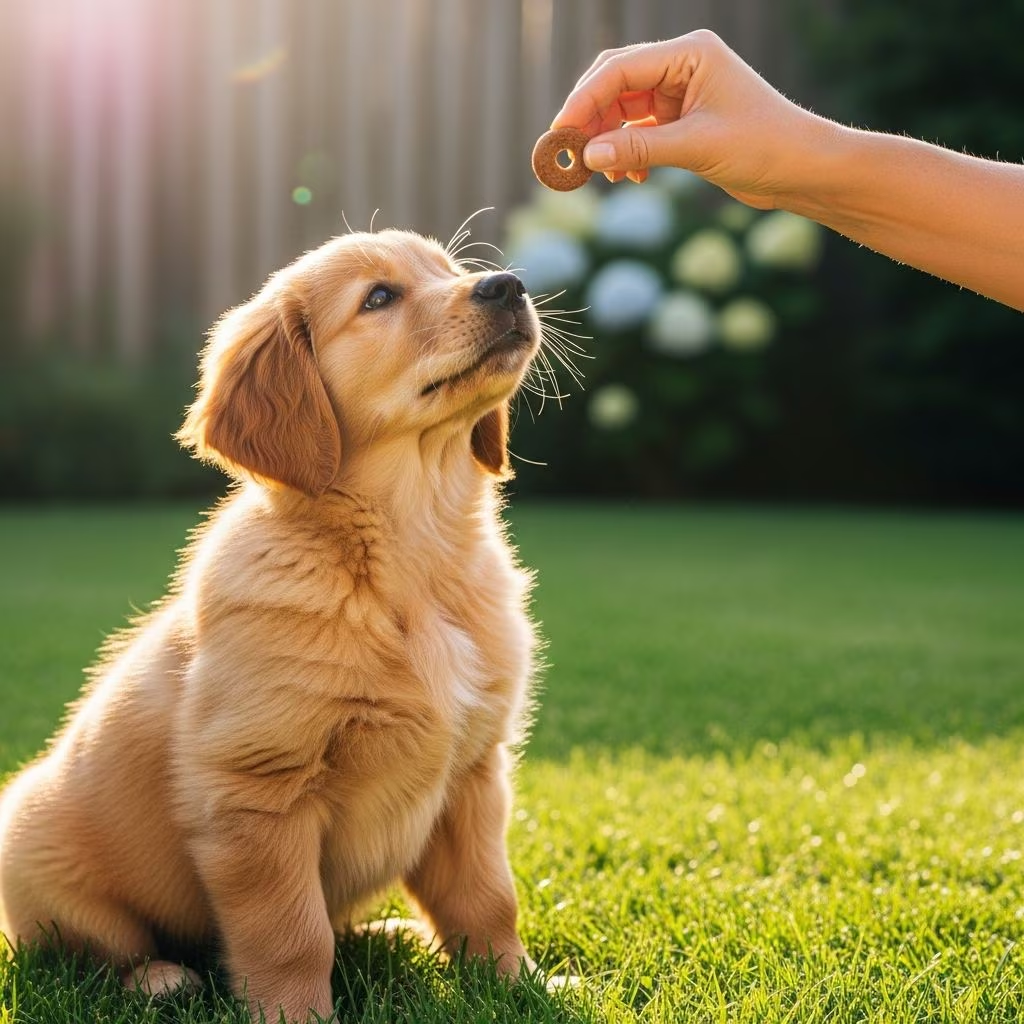
Consistency forms the cornerstone of effective dog training, enabling pets to grasp expectations clearly and respond reliably in various situations. By maintaining uniform approaches across commands, rewards, and daily interactions, owners can cultivate well-mannered companions who thrive in home and public environments.
Why Uniformity Drives Canine Learning
Dogs flourish under predictable patterns, where repeated cues and responses solidify neural pathways for desired actions. Inconsistent signals breed confusion, leading to hesitation or unwanted behaviors, whereas steady practices accelerate comprehension and boost confidence.
Research from veterinary experts underscores that regular reinforcement enhances memory retention, making behaviors habitual over time. Animals in stable training regimens exhibit fewer anxiety-related issues, as they anticipate outcomes with certainty.
- Clear Communication: Identical verbal and visual cues prevent misinterpretation.
- Behavioral Predictability: Uniform rewards link actions to positive results swiftly.
- Emotional Security: A composed handler’s demeanor reinforces trust.
This foundation not only curbs immediate problems but paves the way for advanced skills, strengthening the human-canine partnership through mutual reliability.
Establishing a Structured Daily Framework
Integrating training into routine activities transforms ordinary moments into learning opportunities, embedding obedience without dedicated sessions. Dogs benefit from schedules that align feeding, exercise, and interaction times, fostering anticipation and focus.
Begin with walks as prime practice grounds: cue “sit” at crosswalks or “heel” amid distractions to bridge controlled settings with real life. Meal times offer engagement via command-based food delivery, turning kibble into motivators for compliance.
| Daily Activity | Training Integration | Expected Outcome |
|---|---|---|
| Morning Walk | Practice “stay” and “come” | Improved recall in motion |
| Mealtime | Require “sit” before serving | Manners at feeding |
| Play Sessions | Incorporate “drop it” or “leave it” | Impulse control during fun |
| Evening Wind-Down | Reinforce calm settling | Reduced hyperactivity |
Such embedding ensures skills generalize across contexts, promoting adaptability. Short bursts—5-10 minutes, multiple times daily—preserve attention and end positively, maximizing retention without fatigue.
Harmonizing Household Rules for Collective Success
Family-wide alignment prevents mixed messages that undermine progress. convene all members to define core rules, commands, and reward protocols, documenting them for reference.
Uniformity in phrasing—like always saying “sit” paired with a palm-up signal—eliminates ambiguity. Divergent styles confuse dogs, stalling advancement, while synchronization accelerates mastery.
- Agree on exact wording and gestures for basics: sit, stay, down, come.
- Standardize rewards: high-value treats for excellence, praise for adequacy.
- Distribute a shared guide to maintain adherence during absences.
This collaborative effort not only streamlines training but cultivates a cohesive home dynamic, where the dog views the group as a reliable unit.
Harnessing Positive Reinforcement Effectively
Positive methods outperform punitive ones by associating compliance with joy, encouraging repetition. Deliver treats, verbal acclaim, or play instantly post-behavior to forge strong links.
Virginia Tech veterinary guidance emphasizes rewards like toys or petting, keeping sessions engaging with variety. Ignore minor infractions, redirecting focus to approved actions, to avoid reinforcing negatives through attention.
High-value incentives—reserved meats or favored toys—motivate amid distractions, while fading rewards over time builds independence. Consistency here means prompt, equivalent responses each success instance.
Navigating Real-World Challenges with Proofing
Mastery in quiet spaces means little without distraction tolerance. Progressively escalate environments: from indoors to yards, then parks, embedding cues amid noises, crowds, or temptations.
For reactivity, desensitize gradually—pair distant triggers with rewards until neutral. Reliable recall trumps chasing instincts; practice with long lines in safe areas, rewarding returns lavishly.
Urban scenarios demand polite greetings: teach “sit for petting” to curb jumping. Wildlife encounters benefit from solid “leave it,” preventing pursuits that risk safety.
Advanced Techniques for Lasting Results
Relationship-based approaches mimic child education, starting simple and layering complexity. Offer praise for accuracy, gentle corrections for errors, ensuring fun to sustain motivation.
Sessions should adapt to the dog’s pace; stress signals warrant pauses or method shifts. Model-rival methods leverage observation—watching proficient peers perform tasks—intrinsically rewarding via social emulation, sans treats.
Incorporate mental exercises like puzzle toys during downtime, blending obedience with stimulation to prevent boredom-driven mischief.
Overcoming Common Hurdles in Consistent Training
Patience proves vital; plateaus are normal, resolved by varying routines or breaks. If progress stalls, reassess cues for inadvertent changes or escalate rewards.
Multi-dog homes require individualized yet house-wide standards. Puppies demand brevity; adults, endurance-building. Track via journals to spot patterns and celebrate milestones.
FAQs on Steady Dog Training Practices
What if family members disagree on rules?
Hold a meeting to vote and document consensus, revisiting quarterly for adjustments based on results.
How short should sessions be for puppies?
Limit to 5 minutes, 2-3 times daily, always concluding with success.
Can treats be phased out?
Yes, transition to intermittent praise and play after reliability, randomizing to maintain engagement.
What about correcting bad habits?
Use redirection and prevention over punishment; consistency in ignoring extinguishes them humanely.
How to train in distracting places?
Begin with low levels, high rewards; advance only upon 90% success rate.
Long-Term Benefits of Persistent Consistency
Sustained efforts yield adaptable, joyful dogs responsive in any scenario, from travel to visitors. Bonds deepen through trust, reducing stress for all. Owners report fewer vet visits for behavior issues and enhanced life quality.
Commit to this path for a harmonious companionship enduring years.
References
- 5 Tips for Successful Dog Training — Virginia Tech College of Veterinary Medicine. 2023-01-01. https://vetmed.vt.edu/news/2023/dog-training-tips.html
- Importance of Consistency in Dog Training — Calm K9 Training. Accessed 2026. https://www.calmk9training.com/importance-of-consistency-in-dog-training/
- Practical Tips for Consistent Dog Training — Dog Gone It K9 LLC. Accessed 2026. https://doggoneitk9.com/tips-for-consistent-dog-training/
- Integrating Dog Training Into Everyday Life — Sit Now Stay Dog Training. Accessed 2026. https://www.sitnowstay.com/integrating-dog-training-into-everyday-life-tips-from-sit-now-stay-dog-training
- Real Life Dog Training Techniques for Everyday Situations — Freak On A Leash Dog Training. Accessed 2026. https://freakonaleashdogtraining.com/real-life-dog-training-techniques-for-everyday-situations/



