

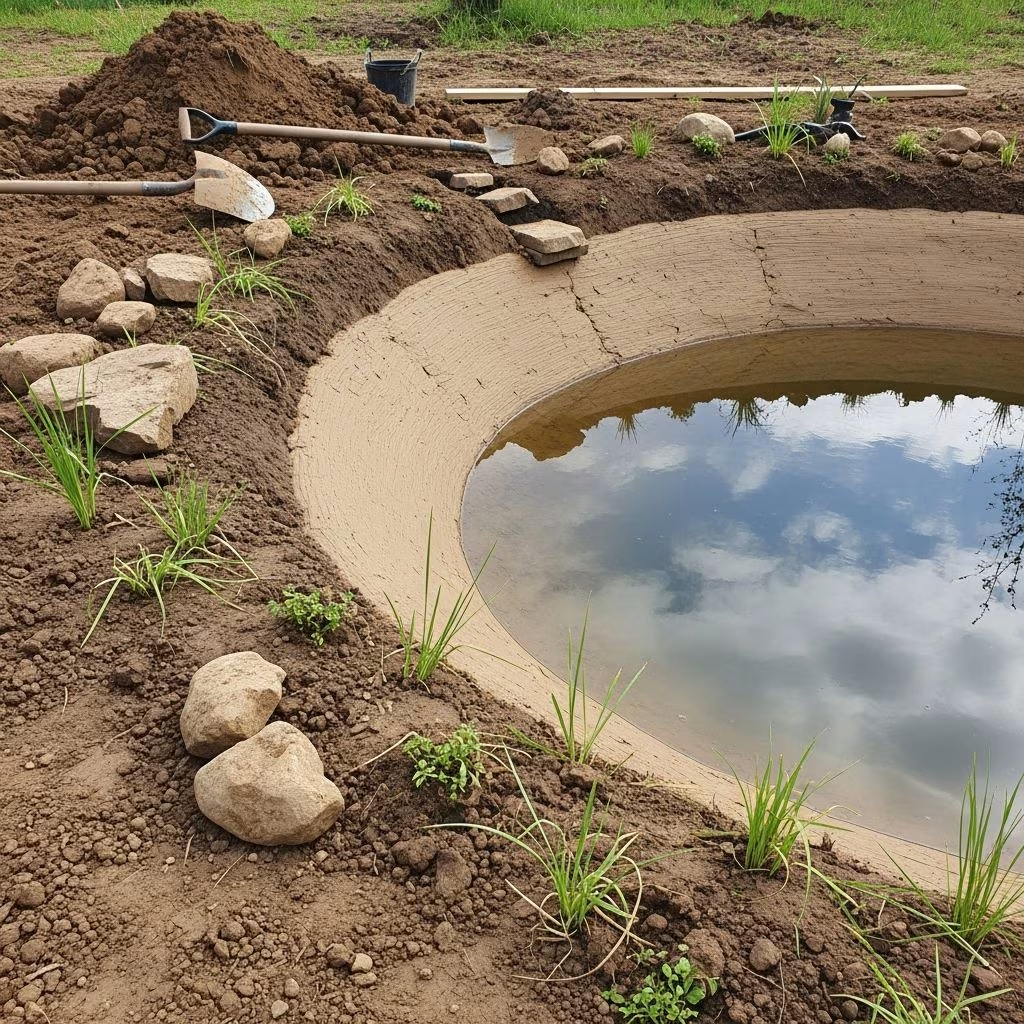
Building A Pond Without A Pond Liner
Creating a pond without traditional plastic liners is an achievable goal when you understand soil composition and follow proven construction methods. Many pond enthusiasts prefer liner-free ponds because they provide a more natural aesthetic and can be more sustainable long-term. However, success depends heavily on your local soil conditions and climate. This comprehensive guide explores the various techniques for constructing a permanent pond without relying on artificial liners.
Understanding Your Soil Requirements
The foundation of any successful liner-free pond begins with a thorough soil assessment. Your soil’s composition directly determines whether you can maintain water levels without artificial barriers. The most critical factor is clay content—the higher the clay percentage in your soil, the better your pond will retain water.
Professional soil analysis is strongly recommended before beginning excavation. Soil conditions vary substantially throughout the country, and what works in one region may fail in another. Ideally, clay should comprise at least 10 percent of your soil mixture, though substantially higher percentages are far more desirable. Soils with heavy clay components—particularly those exceeding 20 percent clay content—provide the best conditions for successful liner-free ponds.
If your local soils lack adequate clay content, water will seep through the pond floor and walls too quickly, requiring constant refilling. Testing your soil before committing time and resources to excavation can save significant frustration later.
Pond Depth Considerations
When designing your liner-free pond, depth plays a crucial role in preventing seepage. The recommended maximum depth is less than 10 feet. Deeper ponds experience greater static head pressure at the bottom and sides, which can force water through even well-compacted soil and the pond floor. Water pressure increases with depth, so the deeper your excavation, the more likely seepage will occur.
When planning your excavation, add approximately 30 inches to your desired depth to accommodate planting soil that will be added later. This protective layer not only covers the compacted soil base but also protects the pond against cracking from freeze-thaw cycles in colder climates. This additional soil layer should consist of a loam and clay mixture suitable for aquatic plants.
Excavation and Soil Preparation
Once you’ve confirmed suitable soil conditions, begin by removing all vegetation from the pond area. This step is essential because plant roots can create channels for water seepage.
The soil that will become your pond floor and walls must be carefully prepared. Turn the soil to a depth of at least 12 inches and remove all rocks, stones, roots, and other debris. These obstructions can compromise the integrity of your pond floor. After removing debris, compact the soil to approximately 8 inches depth. Proper compaction is crucial—this process reduces soil permeability and creates a more waterproof base.
A critical warning: the impermeability of compacted soil will be destroyed if you plant directly into it. Aquatic plant roots can penetrate up to 2 feet into soil, creating channels for water to escape. Therefore, after completing your pond sculpting, add at least 30 inches of loam and clay planting soil as a protective layer above the compacted base.
Method 1: Soil Compaction Technique
The first and most straightforward approach for building a liner-free pond relies on using local impermeable soils with proper compaction. This method works best when your native soil already has adequate clay content.
The process involves:
- Excavating the pond to your desired depth (minus the 30-inch planting soil addition)
- Thoroughly preparing the soil by removing all vegetation and debris
- Turning soil to at least 12 inches depth
- Compacting prepared soil to approximately 8 inches
- Adding the 30-inch protective planting soil layer
- Filling with water gradually to allow clay particles to swell and seal naturally
This method is the most economical option but requires soil with naturally high clay content to succeed.
Method 2: Clay Liner Application
The ancient Chinese pond-building technique involves adding a dedicated clay layer, particularly useful when your local soils lack adequate clay content. This method has proven effective for centuries and remains popular today.
To implement the clay liner method:
- Prepare your excavation as described above, removing all vegetation
- Turn soil to 12 inches depth and remove debris
- Compact prepared soil to 8 inches
- Spread a 12-inch clay layer (coarse soil with at least 20 percent clay content) over the pond floor and walls
- Apply clay in 6-inch layers, compacting each layer before applying the next
- Cap with your 30-inch planting soil layer
The clay layer acts as a waterproof barrier, significantly reducing seepage. Keep in mind that your total excavation depth must account for the desired pond depth plus 12 inches for clay plus 30 inches for planting soil. For example, if you want a 4-foot deep pond, you’ll need to excavate approximately 7.5 feet.
Method 3: Bentonite and Chemical Additives
For properties with unsuitable native soils and limited budget for traditional clay layers, bentonite offers an innovative solution. Bentonite is a clay colloid that expands dramatically when exposed to water—expanding to 10 times or more its original volume. This expansion seals tiny pores in the soil, creating an impermeable layer.
However, whether bentonite will work for your specific location depends on numerous soil characteristics that can only be determined through professional soil analysis. Factors such as soil pH, mineral composition, and existing clay content all influence bentonite’s effectiveness. Before investing in bentonite application, obtain professional soil testing to confirm compatibility.
Filling Your Pond
After construction is complete, fill your pond gradually over several days or weeks. This incremental filling allows clay particles to swell and properly seal, and minor initial seepage is normal. The clay will seal itself during this process. Be patient—it may take several weeks before your pond feels settled and reaches stable water levels.
Use rainwater whenever possible for filling, as it’s free and sustainable. During dry periods, supplement with collected rainwater rather than municipal water to minimize chemical additives in your pond ecosystem.
Pond Size Considerations
Understanding pond dimensions helps with planning. A half-acre pond would be approximately equivalent to a circular pond about 170 feet in diameter, or in a more natural shape, roughly 220 feet long by 100 feet wide. Even significantly smaller ponds—backyard ponds of just a few hundred square feet—can be successfully constructed without liners using the methods described.
Long-Term Maintenance Requirements
Constructing a liner-free pond is not the end of your responsibilities. Unlike sealed pond systems that can be largely ignored once established, natural ponds require ongoing maintenance to remain healthy and attractive.
Regular maintenance tasks include:
- Monitor water levels during dry periods and refill with collected rainwater
- Inspect pond banks after heavy rain for erosion, rebuilding as needed with additional clay
- Remove fallen leaves before they sink and decompose, as decomposition depletes oxygen
- Maintain any circulation systems like pumps or filters you’ve installed
- Monitor for excess algae growth or water quality issues
- Keep plants trimmed to prevent overgrowth
- Check for bank instability or erosion damage after storms
The good news is that once established, natural ponds generally require less intensive management than artificial systems. Nature tends to maintain balance if given proper initial conditions and basic care.
Adding Circulation and Aeration
While not absolutely necessary, adding circulation through pumps, fountains, or filters provides significant benefits. Stagnant water becomes a breeding ground for mosquitoes and can develop foul odors. Circulation oxygenates the water, supports beneficial bacteria, and helps maintain water clarity.
Solar-powered fountain pumps offer an energy-efficient option that requires no electricity. Filter systems help remove excess nutrients that promote algae growth. Even modest circulation—such as a small waterfall or fountain running a few hours daily—significantly improves pond health.
Comparing Construction Methods
| Method | Soil Requirements | Cost | Installation Time | Longevity | Best For |
|---|---|---|---|---|---|
| Soil Compaction | High clay content (10%+) | Low | 1-2 weeks | Permanent | Properties with natural clay-rich soil |
| Clay Liner | Any soil type acceptable | Medium | 2-4 weeks | Permanent | Properties lacking native clay content |
| Bentonite | Requires soil analysis | Medium-High | 1-2 weeks | Permanent | Difficult soils where analysis confirms compatibility |
Environmental Benefits of Liner-Free Ponds
Constructing ponds without artificial liners offers several environmental advantages. These natural ponds integrate better with local ecosystems, creating habitat that supports native wildlife including amphibians, birds, and beneficial insects. The absence of plastic eliminates concerns about liner degradation and leaching of synthetic chemicals into groundwater. Additionally, proper construction supports sustainable water management by capturing rainwater runoff.
Common Mistakes to Avoid
Understanding what not to do is as important as knowing the correct procedures. Common mistakes include: excavating too deeply (exceeding 10 feet), skipping soil analysis and proceeding with unsuitable soil, failing to remove debris before compaction, planting directly into compacted soil layers, attempting construction in areas with high water tables without professional guidance, and neglecting maintenance after construction.
Additionally, avoid filling your pond with chemically treated municipal water if possible. Chlorine and other water treatment chemicals can harm aquatic plants and beneficial bacteria. Always prioritize collected rainwater or groundwater sources.
Frequently Asked Questions
Q: Can I build a pond without a liner if my soil has low clay content?
A: If your native soil has low clay content (below 10 percent), direct compaction alone will likely fail. However, you can add a clay layer (Method 2) or use bentonite additives (Method 3) after professional soil analysis confirms compatibility. These alternatives work well when native soil is unsuitable.
Q: How deep should my pond be without a liner?
A: Keep your pond depth to less than 10 feet maximum. Deeper ponds experience excessive static head pressure that forces water through soil layers. Account for an additional 30 inches of planting soil when planning your excavation depth. For most backyard applications, 3-5 feet depth is ideal.
Q: How long does a soil-less pond take to stop leaking?
A: Expect 2-4 weeks for clay particles to swell and create a proper seal. Minor seepage during the initial filling is normal. Patience is essential—avoid assuming the pond has failed if water levels drop slightly during the first month.
Q: Can I use pond liners over compacted clay in certain areas?
A: Yes, professional-grade liners like Permalon can be placed over compacted soil and planting layers. These liners can accommodate heavy equipment for moving gravel and soil without damage, providing hybrid solutions that combine natural construction with liner protection.
Q: Should I add pumps and filters to my liner-free pond?
A: While not mandatory, circulation systems provide significant benefits by oxygenating water, preventing mosquito breeding, and maintaining clarity. Solar-powered options offer energy-efficient solutions. Even modest circulation improves pond health considerably.
Q: What aquatic plants work best in liner-free ponds?
A: Choose native aquatic plants suited to your region’s climate and water conditions. These plants should thrive in your specific soil conditions and help stabilize banks while oxygenating water. Consult local horticultural extension services for recommendations.
Q: How often do I need to refill my pond?
A: Refilling frequency depends on climate, sunlight exposure, and soil drainage. During dry periods, expect to supplement water loss. In areas with regular rainfall, natural precipitation may meet most water needs. Collect and use rainwater whenever possible rather than municipal water.
Q: Can I stock fish in a liner-free pond?
A: Yes, but wait until aquatic plants have established themselves. Start with a modest number of fish (around 10 for a medium backyard pond) and avoid overfeeding. Excess nutrients from fish waste promote algae growth, so maintain proper balance between fish populations and plant coverage.
References
- Building A Pond Without A Pond Liner — Chewy Editorial. 2024. https://www.chewy.com/education/fish/fish-pond/building-a-pond-without-a-pond-liner
- How to Create a Natural Pond Without a Liner — Poposoap. 2024. https://fr.poposoapsolar.com/blogs/water-gardening/natural-pond-without-liner
- Building a Pond Without a Pond Liner — AllPondSolutions. 2024. https://www.allpondsolutions.co.uk/blogs/fishkeeping-advice/pond-without-liner
- HOW TO BUILD ALL NATURAL POND WITHOUT LINER — Instructables. 2024. https://www.instructables.com/HOW-TO-BUILD-ALL-NATURAL-POND-WITHOUT-LINER-LOW-CO/
- How to create a mini pond — The Wildlife Trusts. 2024. https://www.wildlifetrusts.org/actions/how-create-mini-pond



