

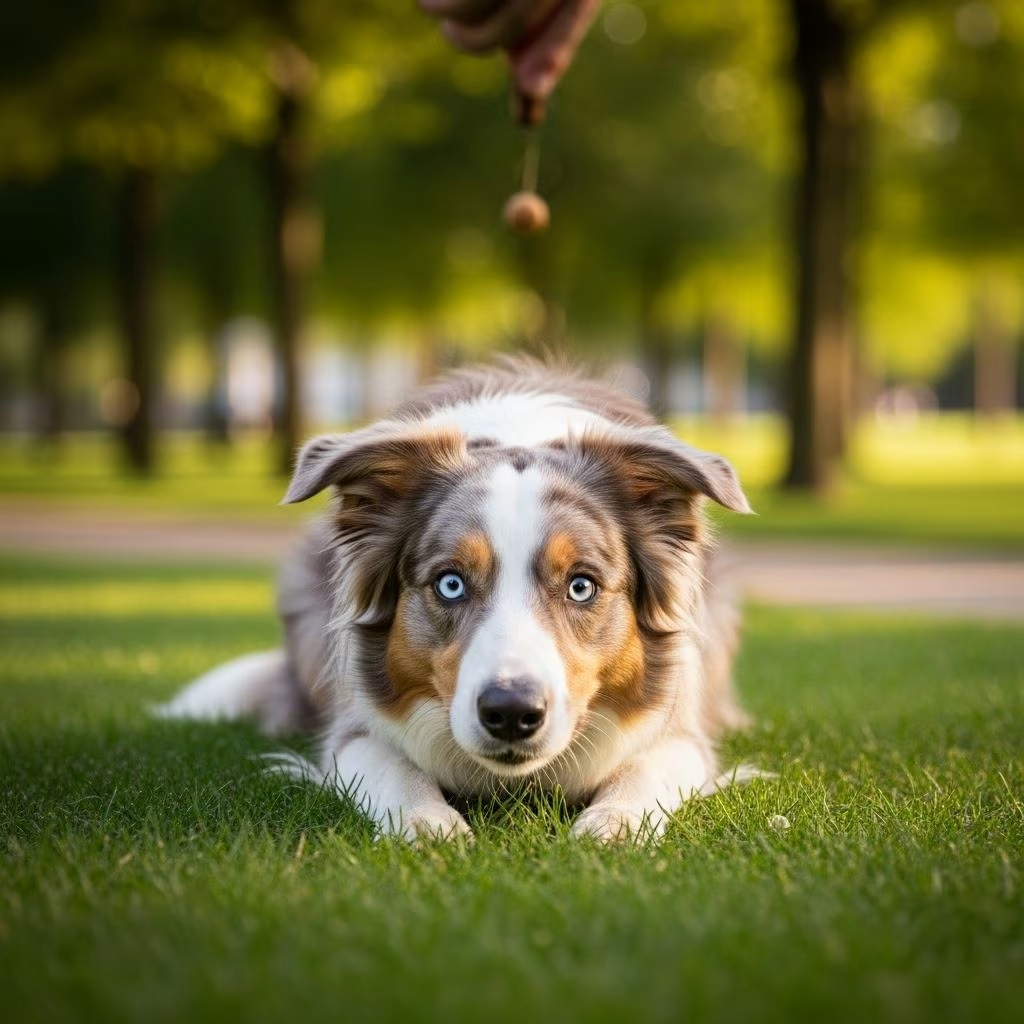
Teaching a dog to focus on command transforms everyday interactions and obedience training. This skill ensures your pet responds reliably amid distractions, fostering a deeper partnership built on trust and clear communication.
Why Focus Training Matters for Every Dog Owner
Attention is the cornerstone of all dog training. Without it, basic commands like sit or stay falter in real-life scenarios. Focused dogs navigate busy parks, vet visits, or home chaos with ease, reducing frustration for owners and boosting safety. Research from canine behavior studies emphasizes that dogs with strong attention spans exhibit fewer problem behaviors and quicker learning curves.
Focus training benefits puppies by establishing good habits early and adult dogs by overcoming ingrained distractions. It promotes mental stimulation, preventing boredom-related issues like chewing or barking. Owners report stronger bonds when dogs voluntarily tune in, creating mutual enjoyment in training sessions.
Foundational Principles of Attention Cues
Effective cues go beyond commands; they are gentle prompts signaling expected behaviors. Use short, distinct words or gestures like “look” or a hand signal to avoid confusion. Consistency across family members prevents mixed signals, accelerating learning.
- Clarity: Choose one-word cues for quick recognition.
- Timing: Deliver cues just before the desired action.
- Association: Pair cues with rewards to build positive links.
Positive reinforcement—treats, praise, or toys—cements these connections. Dogs learn that focusing yields rewards, making compliance enthusiastic rather than reluctant.
Step-by-Step Guide to Teaching the Basic “Look” Cue
Start in a quiet room with high-value treats. Hold a treat near your eyes and say “look.” When your dog makes eye contact, mark the moment with a clicker or enthusiastic “yes!” and reward immediately. Repeat 10-15 times per session.
- Gradually fade the treat lure by holding it lower, rewarding only eye contact.
- Extend duration: Count silently to three before rewarding prolonged focus.
- Introduce the verbal cue alone once eye contact is reliable.
Practice daily for 5 minutes. Most dogs grasp this within a week, showing voluntary glances for rewards.
Hand Targeting: A Gateway to Engagement
Hand targeting builds focus through physical interaction. Present your open palm at nose level and say “touch.” Reward nose contact instantly. This cue boosts handler engagement, precision, and redirects attention effortlessly.
Progress by varying hand positions—above head, to the side, or behind you. Use it for guiding into positions or breaking distractions. Victoria Stilwell highlights its recall value, as dogs target amid chaos for rewards.
| Exercise Level | Description | Goal |
|---|---|---|
| Beginner | Static hand at face height | Initial nose touch |
| Intermediate | Moving hand side-to-side | Follow and touch |
| Advanced | Hand in motion or hidden | Reliable targeting |
Incorporate toys or praise if food isn’t motivating, keeping sessions fun and brief.
Proofing Cues Against Distractions
Cue proofing elevates basic skills to real-world reliability. After mastering indoors, introduce mild distractions like toys or mild noises. Reward focus amid them, gradually intensifying challenges.
- Low-distraction: Quiet room with a toy nearby.
- Medium: Add movement, like clapping or another person.
- High: Outdoors with dogs, traffic, or squirrels.
Structure sessions progressively: Spend days at each level until 90% success before advancing. This builds confidence without overwhelming your dog.
Advanced Focus Games for Lasting Results
Engage with pattern games sequencing cues: “Look, sit, touch.” Vary environments to generalize skills. Spot work—performing at marked locations—reinforces reliability across settings.
Relaxation cues complement focus: Teach a settled down-stay, rewarding calm. Combine with focus for versatile control, like “look” then “relax” at doorbells.
Common Challenges and Solutions
Dogs losing interest? Use higher-value rewards or shorten sessions. Inconsistent responses signal unclear cues—revert to basics. Puppies distract easily; build duration slowly. Adults with habits need patience and counter-conditioning.
Table of Troubleshooting:
| Problem | Solution |
|---|---|
| Breaks eye contact quickly | Click before break; build time gradually |
| Ignores in distractions | Lower distraction level; increase rewards |
| Over-excitement | Incorporate calm rewards like petting |
Integrating Focus into Daily Routines
Weave cues into walks, mealtimes, and play. Before meals, cue “look” for focus. On leashes, use “touch” to redirect. Track progress in a journal, noting successes and setbacks.
Group classes accelerate learning through social proof, but home practice solidifies gains. Aim for voluntary attention, where dogs check in without cues.
Benefits Beyond Obedience
Focused dogs stress less in novel situations, improving welfare. Owners gain confidence, reducing reliance on leashes or corrections. This humane approach aligns with modern veterinary behavior recommendations.
Frequently Asked Questions (FAQs)
How long until my dog focuses on cue?
Basic cues take 1-2 weeks with daily practice; proofing extends to months.
Can any breed learn this?
Yes, all dogs benefit, though high-energy breeds may need more sessions.
What if my dog isn’t food-motivated?
Use toys, play, or access to favorites like walks.
Is a clicker necessary?
No, but it precisely marks behavior for faster learning.
How to maintain skills long-term?
Practice randomly in daily life; fade rewards gradually.
References
- Mastering Effective Cues for Dog Training — The Training of Dogs. 2023-05-15. https://www.thetrainingofdogs.com/post/implementing-effective-training-cues-in-dog-training-lessons
- Cue Proofing & Distraction Training for Real-World Obedience — Laylo Pets. 2024-02-10. https://www.laylopets.com/blogs/barkives/mastering-real-world-dog-obedience-cue-proofing-distraction-training-for-dogs
- Teach Your Dog to Focus On Cue! — Whole Dog Journal. 2023-11-20. https://www.whole-dog-journal.com/training/teach-your-dog-to-focus-on-cue/
- Training Tricks That Improve Dogs Focus — OLK9 Iowa. 2024-08-05. https://olk9iowa.com/training-tricks-that-improve-dogs-focus/
- How & Why To Teach Your Dog The ‘Touch’ Cue — Victoria Stilwell (YouTube). 2023-06-12. https://www.youtube.com/watch?v=wIGr7OLXJfc



