

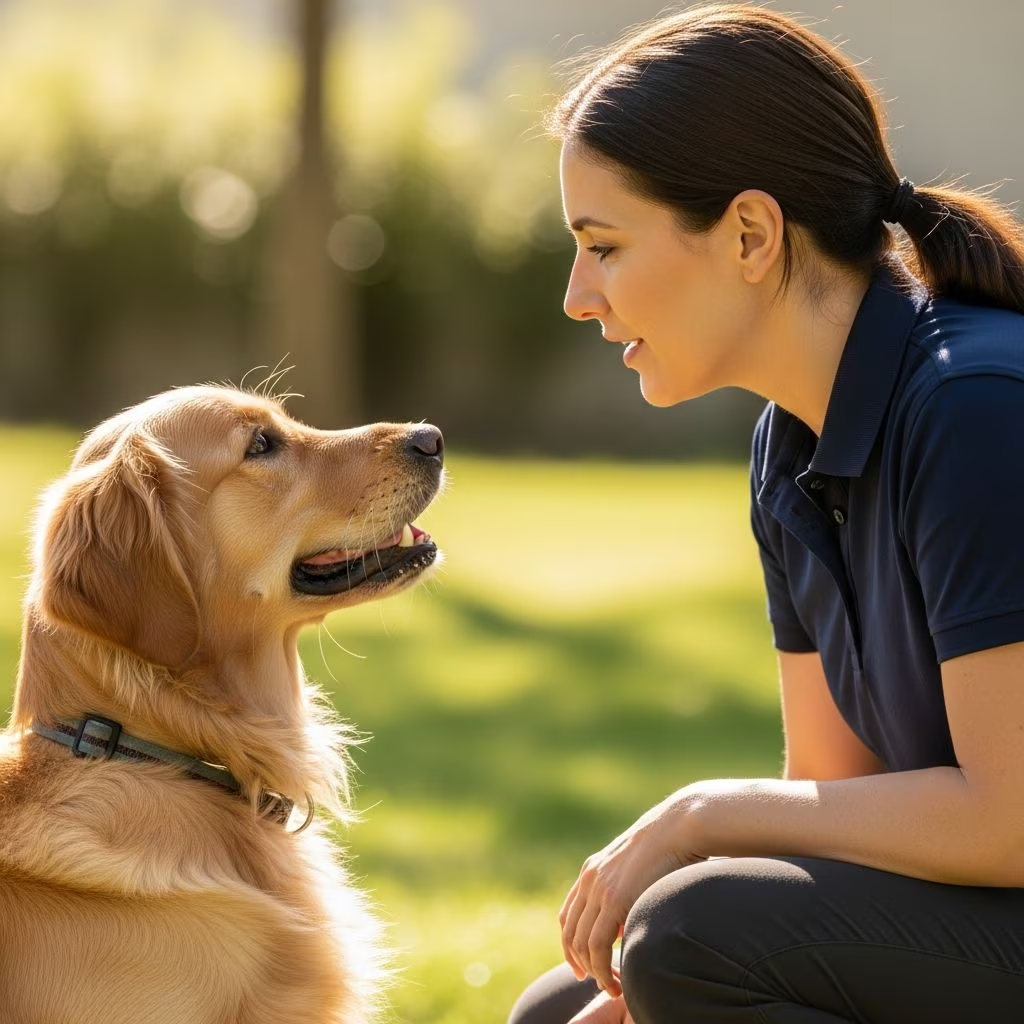
Eye contact serves as one of the most fundamental skills in dog training, yet many handlers overlook its significance or struggle with the methodology required to teach it effectively. This skill transcends simple obedience; it represents a gateway through which all other training becomes possible. When your dog maintains focus on you through direct eye contact, the channels of communication open wider, creating opportunities for deeper learning and stronger behavioral responses.
Understanding Why Eye Contact Matters in Training
The foundation of successful dog training rests upon a dog’s ability to redirect attention from their environment to their handler. Eye contact accomplishes this by creating a deliberate connection between dog and handler at the moment when learning can occur most effectively. Dogs naturally process information through visual observation, monitoring facial expressions, body language, and movement patterns from those around them.
When a dog looks directly at your face, they demonstrate readiness to receive information. This state of attentiveness represents the optimal window for delivering new cues, reinforcing behaviors, or interrupting unwanted patterns. A dog focused on environmental distractions—another animal, food, sounds, or movement—cannot simultaneously process your training instructions with the same efficiency.
Beyond the mechanics of training delivery, eye contact builds a collaborative foundation between handler and dog. This mutual visual attention creates a checkpoint where dogs learn that checking in with their handler provides access to desired outcomes. Whether that outcome involves going outside, accessing food, greeting another person, or receiving a reward, the dog begins to understand that you represent the gateway to their wants.
The Developmental Process: Starting from Scratch
Teaching eye contact requires a structured progression that respects the dog’s learning capacity and builds duration and reliability gradually. The process differs from simply commanding a dog to look at you; instead, it involves creating conditions where the dog voluntarily chooses to offer eye contact because doing so has proven rewarding.
Creating the Optimal Learning Environment
Begin training in a location with minimal distractions. A quiet room without other animals, people, or external sounds provides the clearest context for a dog to understand the connection between eye contact and reward. This controlled setting allows the dog to focus cognitive resources on the task rather than managing environmental stimuli.
Position yourself in a way that doesn’t inadvertently guide the dog’s attention to your hands rather than your face. Many trainers find success by initially keeping their hands behind their back while teaching this skill. This physical positioning removes the visual competition that treats or hand movements create, allowing your face to become the primary focal point.
Building from Momentary Glances to Sustained Focus
In the earliest stages of training, mark and reward any glance toward your face, regardless of duration. A fleeting look counts as success initially because you’re establishing the fundamental connection: looking at your face leads to reward. Use a marker word—a specific sound or word that precisely indicates the moment the dog performed the correct behavior—immediately followed by the reward.
As the dog develops understanding, gradually increase your criteria. Rather than rewarding quick glances, begin marking the second or third glance in a sequence, allowing duration to naturally extend as the dog learns to maintain focus to earn the marker. Within one or two training sessions, most dogs transition to offering one to two seconds of steady eye contact before expecting reinforcement.
Once your dog reliably maintains eye contact with your hands positioned behind your back, gradually introduce hand visibility by moving them to your sides, then extending them outward at various positions. This staged approach prevents the dog from becoming dependent on your hands being hidden and helps transfer the eye contact skill to real-world training scenarios where your hands naturally occupy various positions.
Strategic Reward Placement and Timing
How and when you deliver rewards significantly impacts how quickly a dog learns eye contact and how reliably they offer it in future contexts. The timing of your marker—the instant you indicate to the dog that they’ve performed correctly—creates the foundation for learning. Precise markers communicate exactly which behavior earned the reward.
Consider varying your reward delivery location. Initially, you might reward directly in front of your face to maintain the eye contact association. As understanding develops, you can transition to rewarding from different positions, including remote rewards where treats come from a bowl or distant location. This variation teaches your dog that eye contact itself generates rewards rather than creating dependency on a specific reward delivery pattern.
Some dogs respond better to different reward modalities. While food treats motivate many dogs powerfully, others show stronger enthusiasm for toy-based rewards. Experiment with what genuinely motivates your individual dog, whether that involves treats, ball play, access to outdoor time, or social interaction. Dogs that reliably offer eye contact for one type of reward often generalize this behavior to other motivators more readily.
Troubleshooting Common Training Challenges
Not every dog progresses smoothly through eye contact training. Understanding common obstacles helps you adjust your approach when your dog struggles with this skill.
Difficulty Maintaining Duration: If your dog offers only momentary glances rather than sustained eye contact, avoid rewarding those brief glimpses. Instead, wait for the second or third glance in succession, allowing duration to accumulate naturally as the dog realizes longer looks precede reward delivery. Patience during this phase prevents teaching the dog that quick glances satisfy the requirement.
Jumping or Mouthing During Training: Some dogs respond to the excitement of training by jumping toward your face or mouthing your hands. If you’re holding a treat, maintain a steady hand position and avoid movement or verbal corrections. The dog eventually realizes that these behaviors don’t produce the marker or reward. Silence and stillness communicate that the attempted behavior didn’t work.
Environmental Distraction: If introducing eye contact training in a more complex environment proves unsuccessful, return to the controlled setting and build stronger foundation skills before attempting to maintain eye contact amid distractions. Gradually increase environmental complexity only after your dog demonstrates reliable focus in simpler contexts.
Integrating Eye Contact Into Daily Life
The true value of eye contact training emerges when you weave the skill into everyday routines and interactions. Rather than relegating eye contact to structured training sessions, actively practice and reinforce the behavior throughout your dog’s day.
Eye Contact as a Gateway Behavior
Before allowing your dog to access something they want, request eye contact. Before going outside, obtain eye contact first, then release with a verbal cue. Before mealtime, get eyes on you, then permit access to the food bowl. Before greeting a visitor, establish eye contact as the prerequisite. This pattern teaches your dog to look to you when presented with decisions or opportunities, building a habit of checking in before pursuing wants.
This integration addresses one of the most critical applications of eye contact: safety decision-making. A dog that habitually checks in with their handler when encountering choices becomes more likely to glance toward you before chasing a squirrel into traffic, before approaching an unfamiliar dog, or before responding to other environmental stimuli.
Combining Eye Contact With Other Training Behaviors
Layer eye contact into your established obedience work by requiring it before executing other cues. Wait for eye contact before asking your dog to sit, lie down, heel, or perform any trained behavior. This integration transforms eye contact from an isolated skill into a fundamental prerequisite that enhances the reliability and quality of all your other training.
Progressive Training Methodology
A structured approach to teaching eye contact follows a logical progression that builds confidence and reinforces learning at each stage.
- Foundation Phase: Dog learns that looking at handler’s face results in reward delivery in a controlled environment
- Duration Extension: Training shifts focus toward maintaining eye contact for increasingly longer periods before earning rewards
- Position Variation: Handler’s hand and body positions change while the dog continues to maintain focus on the face
- Environmental Complexity: Training gradually transitions from controlled environments to locations with mild, moderate, and eventually substantial distractions
- Alternative Motivators: Dog practices eye contact using different reward types, building flexibility in the skill
- Life Integration: Eye contact becomes a prerequisite for accessing daily-life opportunities and rewards
Understanding Individual Learning Differences
Dogs possess varying innate tendencies regarding eye contact. Some breeds and individual personalities show natural inclination toward mutual gazing, while others require more deliberate training to establish the behavior. Recognizing these individual differences prevents frustration and allows you to tailor your approach appropriately.
Older dogs who haven’t previously learned eye contact can absolutely develop the skill, though they may require adjusted expectations regarding speed of learning. Rescue dogs and those with previous behavioral challenges sometimes need additional patience as they build trust and learn new patterns. Puppies often learn eye contact relatively quickly due to their natural exploratory focus on their handlers, yet they may need frequent refresher sessions as their developing brains mature.
The Role of Consistency and Patience
Eye contact training rewards consistency. Brief, frequent training sessions prove more effective than occasional lengthy efforts. Five to ten minutes several times daily typically produces faster learning than a single thirty-minute session. This distributed practice approach aligns with how canine brains consolidate learning, allowing time for neural pathways to solidify between sessions.
Patience during the learning process prevents many common training errors. Frustration often leads handlers to introduce unnecessary corrections or become inconsistent with marker timing and reward delivery. Maintaining calm, focused intent throughout training sessions communicates clarity to your dog and accelerates learning.
Building Your Training Communication System
Effective eye contact training requires reliable communication infrastructure. Developing a consistent marker word—”yes,” “mark,” or the sound of a clicker—that precisely indicates the moment your dog performed correctly forms the cornerstone of this communication. The marker creates a bridge between the correct behavior and the reward that follows, allowing your dog to understand exactly which action earned reinforcement.
Body language consistency also matters. Your physical positioning, facial expressions, and movement patterns should remain stable during early training to prevent inadvertent cueing or distraction. As your dog develops competence, you can gradually introduce more natural variation in your presentation.
Measuring Progress and Adjusting Expectations
Track your dog’s development by noting changes in eye contact duration, reliability, and persistence across different contexts. Early indicators of progress include longer periods of sustained focus, more frequent voluntary offers of eye contact, and increasing reliability even when mildly distracted. These benchmarks help you recognize when your dog is ready to progress to the next training stage.
Reasonable timelines vary based on individual dogs, but most achieve basic eye contact competence within two to four weeks of consistent training. Full reliability, particularly across various environments and distractions, typically requires several months of ongoing practice and integration into daily life.
Eye contact represents far more than a training trick; it constitutes the fundamental skill upon which all other behavioral development rests. By investing time in teaching this foundational ability, you create a communication channel that transforms your entire training experience and strengthens the bond between handler and dog.
References
- Pay Attention! Teaching Your Dog Eye Contact — Golden Paws Dog Training. Accessed March 30, 2026. https://goldenpawsdogtraining.com/pay-attention-teaching-your-dog-eye-contact/
- The Power of Eye Contact in Dog Training — Shades Dog Training. Accessed March 30, 2026. https://shadesdogtraining.net/eye-contact
- The Importance of Eye Contact During Dog Training — Project Upland. Accessed March 30, 2026. https://projectupland.com/dogs/the-importance-of-eye-contact-during-dog-training/
- Eye Contact; a Precious Tool — Lazy Acres Dog Training. Accessed March 30, 2026. https://www.lazyacresdogtraining.com/blog-1/2enhtqs8lyctsndt2d0havy3inbxrc
- How to Teach Your Dog the Watch Me Command — Battersea Dogs & Cats Home. Accessed March 30, 2026. https://www.battersea.org.uk/pet-advice/dog-advice/how-teach-your-dog-watch-me-command



