

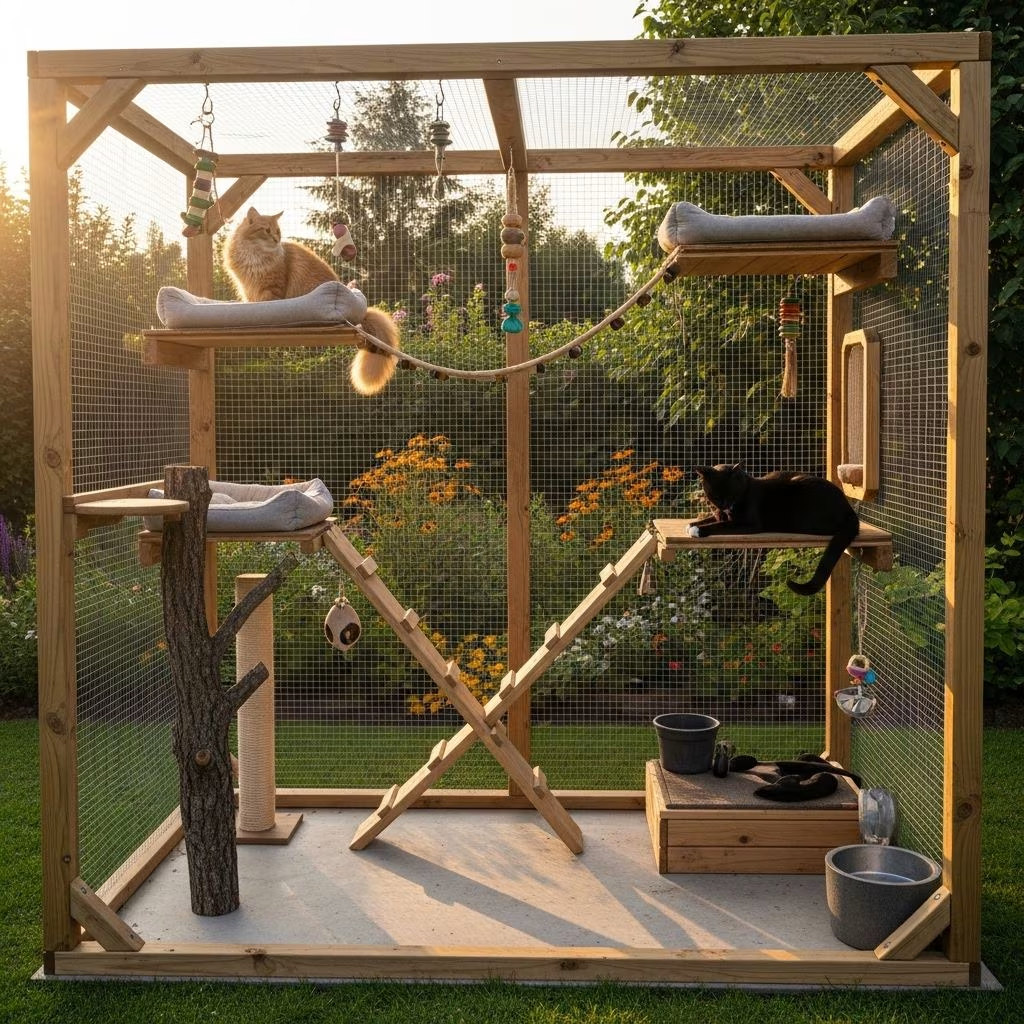
Creating a dedicated outdoor space for your cat allows them to experience fresh air, sunshine, and natural stimuli without the risks of free-roaming. This comprehensive guide walks you through planning, building, and enhancing a sturdy cat enclosure using accessible materials and straightforward techniques. Whether you’re a novice builder or experienced DIYer, these instructions prioritize safety, durability, and your cat’s enjoyment.
Why Every Cat Needs an Outdoor Enclosure
Free-roaming cats face dangers like traffic, predators, toxins, and diseases, but denying them outdoor access can lead to boredom and stress. A well-designed enclosure bridges this gap, offering protection while promoting physical health and mental stimulation through climbing, jumping, and observing wildlife.Key benefits include reduced injury risk, better exercise, and stronger owner-pet bonds.
- Protection from cars, dogs, and birds of prey.
- Opportunities for natural behaviors like hunting insects or basking in sunlight.
- Lower stress levels from confined indoor living.
Organizations like the Humane Society emphasize enclosures as the safest alternative to letting cats roam unsupervised.
Planning Your Cat Enclosure Design
Start with your space and cat’s needs. Measure available yard area—aim for at least 8×8 feet for one cat, scaling up for multiples. Consider attaching to your home for easy access or freestanding for flexibility. Sketch a blueprint including height (minimum 6 feet for jumping), entry points, and enrichment zones.
| Enclosure Type | Pros | Cons | Best For |
|---|---|---|---|
| Freestanding | Portable, no home modifications | Requires ground anchoring | Small yards |
| Attached to House | Weatherproof entry, supervised views | Needs sturdy anchoring | Large homes |
| Multi-Level | Max climbing space | More materials | Active cats |
Factor in local climate: add windbreaks for breezy areas or insulation for cold snaps.
Essential Materials for Durability and Safety
Select weather-resistant, non-toxic components to withstand scratching, weather, and time. Avoid chicken wire—it’s too weak for determined cats or predators.
- Framing: Pressure-treated 2×4 lumber or galvanized metal for rust resistance.
- Mesh: 16-gauge galvanized wire with 1×1-inch openings to block escapes and intrusions.
- Roofing: Corrugated polycarbonate for light and rain protection.
- Fasteners: Stainless steel screws, heavy-duty hinges, and latches.
- Flooring: Concrete pavers or gravel over weed barrier for stability and drainage.
Budget tip: Repurpose pallet wood or kennel panels, but inspect for sharp edges. Total cost for a basic 8×8 unit: $300–$800.
Tools You’ll Need Before Starting
Gather these basics for efficient assembly:
- Circular saw or miter saw for cuts.
- Drill with bits for screws and pilot holes.
- Staple gun or fencing pliers for mesh.
- Level, tape measure, and post hole digger.
- Safety gear: gloves, goggles, ear protection.
Step-by-Step Construction Process
Building takes 1–2 weekends. Work in good weather and enlist a helper for large frames.
- Site Preparation: Clear and level a flat spot away from hazards like roads or grills. Dig post holes 2 feet deep for stability.
- Frame Assembly: Cut lumber to size (e.g., 8-foot panels). Screw corners with brackets for square alignment. Stand and brace uprights.
- Secure Foundation: Set posts in concrete or anchor to pavers. Let cure 24 hours.
- Install Mesh Walls: Stretch and staple mesh taut, overlapping seams by 2 inches. Double-layer bottom 18 inches to deter diggers.
- Add Roof and Door: Attach roofing panels with screws. Build a framed door with latch—test swing for smooth operation.
- Seal and Anchor: Caulk joints if house-attached. Stake sides to ground.
Pro tip: Paint frames with pet-safe, water-based sealant post-construction.
Safety Features to Prevent Escapes and Injuries
A secure enclosure saves lives. Inspect for vulnerabilities:
- No gaps larger than 1 inch—cats squeeze through tiny spaces.
- Roll-top or sloped roofing to block climbers.
- Remove collar-snagging protrusions; use breakaway collars indoors.
- Sturdy latches predators can’t manipulate.
For predator-heavy areas (coyotes, hawks), reinforce with metal roofing and buried mesh aprons. Always supervise initial outings.
Enriching the Space for Maximum Fun
A bare enclosure bores cats quickly. Transform it into a feline paradise:
- Vertical Elements: Install shelves, ramps, and hammocks at varying heights.
- Hiding Spots: Add insulated boxes or tunnels for shade and retreat.
- Interactive Toys: Hanging feathers, puzzle feeders, and catnip planters.
- Natural Touches: Potted grass, bird feeders outside mesh for watching.
Include a scratching post and water fountain. Rotate items weekly for novelty.
Common Mistakes and How to Avoid Them
Steer clear of pitfalls for a lasting build:
| Mistake | Consequence | Solution |
|---|---|---|
| Undersized mesh | Escapes or predator entry | Use 16-gauge minimum |
| Poor anchoring | Wind damage, collapse | Concrete footings |
| No weatherproofing | Rust, leaks | Sealants and flashing |
| Forgetting enrichment | Underuse | Add platforms early |
Introducing Your Cat to the New Space
Cats may hesitate. Acclimate gradually:
- Place familiar bed and toys inside first.
- Feed meals in the enclosure with door open.
- Short supervised sessions with treats.
- Extend time as confidence grows.
Most adapt within a week, showing excitement through purring and exploration.
Maintenance for Long-Term Use
Weekly checks ensure safety:
- Scan for mesh tears, loose screws.
- Clean litter zones, refresh water.
- Clear debris from roof.
- Winterize with covers if needed.
Annual deep clean and re-seal frames.
Cost Breakdown and Budgeting Tips
Average build:
- Materials: $400.
- Tools (if buying): $150.
- Enrichment: $100.
Save by shopping sales or using reclaimed wood. Pre-made kits start at $500 but lack customization.
FAQs
Q: How big should a cat enclosure be?
A: Minimum 8x8x6 feet per cat; larger for multiples to allow free movement.
Q: Can I build on grass?
A: Yes, but add mesh skirting to prevent digging.
Q: Is it predator-proof?
A: With proper mesh and roofing, yes against most threats; avoid in bear/coyote zones without extras.
Q: What if my cat won’t go in?
A: Use positive reinforcement and familiar scents.
Q: Can I attach it to my deck?
A: Absolutely—anchor to studs and seal well.
References
- Build an Outdoor Cat Enclosure: A Step-by-Step Guide — Jet Pet Resort. 2023. https://jetpetresort.com/blog/cat-boarding/build-an-outdoor-cat-enclosure-a-step-by-step-guide/
- Cat enclosures for outdoor safely — Animal Wellness Magazine. 2024. https://animalwellnessmagazine.com/cat-enclosures-for-outdoor-safely/
- Catios: Safe Outdoor Enclosures for Happy, Healthy Cats — Humane World. 2023. https://www.humaneworld.org/en/resources/catios-safe-outdoor-enclosures
- The Pros and Cons of Attaching a Catio to Your Home — The Cattopia. 2024. https://www.thecattopia.com/blog/pros-and-cons-of-attaching-a-catio-to-your-home/
- Catios: A Comprehensive Guide to Outdoor Enclosures for Cats — HSNBA. 2023. https://hsnba.org/catios-a-comprehensive-guide-to-outdoor-enclosures-for-cats/



