

Introduction to Buffalo Flies and Their Significance
Buffalo flies represent one of the most economically significant parasitic challenges facing cattle producers in warm, humid regions of Australia and parts of Asia. These small, persistent blood-feeding insects have earned their reputation as major livestock pests due to their ability to rapidly multiply, develop resistance to conventional treatments, and cause substantial production losses. Understanding the biology, behavior, and impact of these insects is essential for any cattle operation seeking to maintain herd health and productivity.
The scientific name of the buffalo fly is Haematobia irritans exigua, and it shares certain morphological and behavioral characteristics with horn flies, though it remains a distinct species adapted to tropical and subtropical climates. Unlike many fly species that are merely nuisances, buffalo flies are active, aggressive feeders that cause direct harm through blood loss and indirect damage through stress-induced behavioral changes.
Morphological Characteristics and Identification
Accurate identification of buffalo flies is the first step in developing an effective management strategy. These insects possess several distinguishing features that differentiate them from other fly species found on cattle in Australia and neighboring regions.
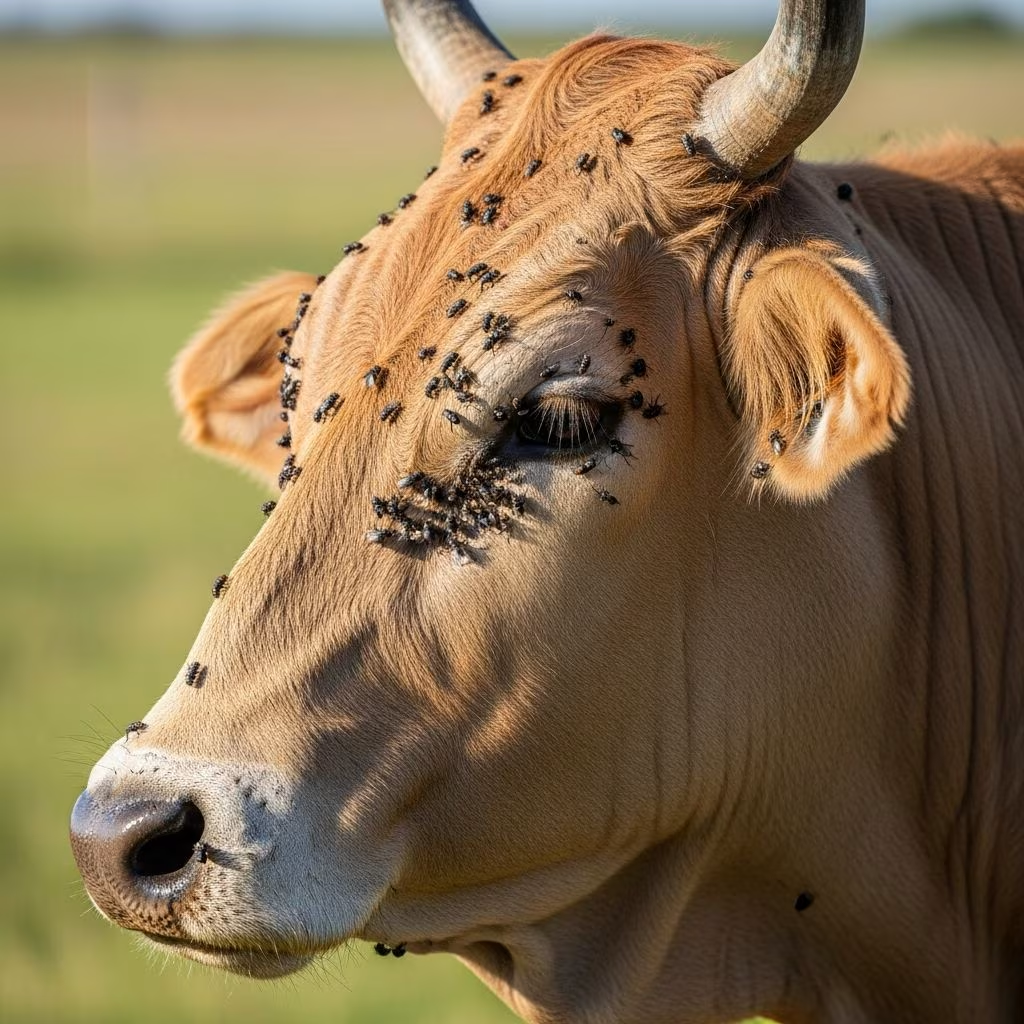
Buffalo flies are characterized by their dark coloration, which makes them relatively visible against the lighter areas of cattle hide. Their body size is notably small, approximately half the size of stable flies, allowing them to aggregate in large numbers on the animal without immediately attracting attention. The most distinctive anatomical feature is the bayonet-like proboscis that protrudes forward from the head, which serves as their primary feeding apparatus for penetrating hide and accessing blood vessels.
Adult flies measure only a few millimeters in length, yet despite their diminutive size, they can inflict considerable cumulative damage when present in large numbers. Both males and females are equipped with this sharp, specialized feeding structure, as both sexes actively feed on blood.
Life Cycle and Reproductive Dynamics
The buffalo fly lifecycle is relatively rapid, enabling populations to expand quickly under favorable environmental conditions. Understanding this lifecycle is crucial for timing treatment interventions and predicting seasonal population fluctuations.
Temporal Development Stages
- Adult lifespan: Buffalo flies live for 2 to 3 weeks once they reach maturity, during which they remain permanently attached to cattle hosts except when breeding
- Egg incubation: Females deposit eggs in or beneath fresh dung pats, where eggs typically hatch within 24 hours under optimal conditions
- Larval development: Larvae complete their development within 4 to 5 days, after which they pupate in dung or soil
- Emergence and host-seeking: Newly emerged flies actively seek their first host, capable of traveling substantial distances
The reproductive capacity of female buffalo flies is remarkable. A single female can deposit up to 360 eggs before reaching the end of her lifespan, meaning that under conditions supporting optimal development, populations can increase exponentially within just a few weeks. This rapid reproduction rate is particularly concerning during the warmer months when environmental conditions favor rapid development through all life stages.
Feeding Behavior and Host Utilization
Buffalo flies exhibit distinct feeding patterns that differentiate them from many other cattle parasites. Rather than visiting their host intermittently, buffalo flies establish a permanent residence on cattle, leaving only when forced by disturbance or when females depart briefly to deposit eggs.
Adult flies feed with extraordinary frequency, consuming blood up to 20 times per day under typical conditions, with some reports indicating feeding events may occur as frequently as 40 times daily in particularly aggressive populations. Each feeding event, though brief, creates a small wound that must be reopened if the fly is displaced, meaning that continuous feeding throughout the day results in accumulating trauma to the skin.
Both male and female buffalo flies actively feed on blood, making every individual in a population a potential vector for disease transmission and direct tissue damage. This contrasts with some other parasitic flies where only females are hematophagous, meaning that male buffalo flies contribute equally to the overall burden on infested cattle.
Geographic Distribution and Environmental Requirements
Buffalo flies are primarily distributed throughout northern Australia, from northeastern New South Wales extending westward to northern Western Australia. Beyond Australia, populations are found in Papua New Guinea and in portions of southern, southeastern, and eastern Asia, as well as in various Pacific Island regions. Notably, the species has never established populations in New Zealand, suggesting specific environmental or geographic barriers to colonization.
The geographic range of buffalo flies correlates strongly with climate patterns characterized by warm, humid conditions. The insects thrive in tropical and subtropical environments where temperatures remain elevated and moisture is adequate for dung-based larval development. These climatic requirements create a distinct seasonal pattern, with fly numbers typically highest during warm, wet periods when dung remains moist and suitable for larval rearing.
Clinical Manifestations in Infested Cattle
The clinical presentation of buffalo fly infestation ranges from subtle signs in lightly infested animals to severe pathology in heavily affected individuals. Recognition of these signs enables producers to intervene before production losses become severe.
Behavioral Responses to Fly Activity
Cattle infested with buffalo flies exhibit characteristic defensive behaviors aimed at disrupting fly feeding and reducing irritation. These behaviors are easily observed during visual assessment of the herd and provide early indicators of infestation presence:
- Persistent tail-switching and flicking, often directed at areas where flies congregate
- Head-tossing and vigorous head-shaking to dislodge flies from the face and neck regions
- Stamping of feet and kicking at the belly and flanks with hind legs
- Excessive licking of the body surface, particularly on accessible areas such as legs and shoulders
- Bunching together in groups, which may reduce per-animal fly exposure but compromises grazing efficiency
Tissue Damage and Skin Lesions
Repeated feeding by buffalo flies creates cumulative trauma to the integument. Initial bite wounds are small and often go unnoticed, but in heavily infested animals, the constant wounding and subsequent animal attempts to alleviate discomfort through scratching and rubbing create characteristic lesions.
Lesions commonly develop in specific body locations where flies preferentially feed and where irritation is most intense. The most frequent sites include the corners of the eyes, neck, shoulders, dewlap, flanks, and belly. Many infested cattle develop pronounced sores in the inner corners of the eyes, which may become secondarily infected and progress to infectious keratitis or conjunctivitis.
Lesion severity varies considerably among individual animals. Some cattle develop only minor hairless patches, while others progress to extensive scab-encrusted areas or deep, open ulcerated sores that expose underlying tissue. This variation reflects differences in individual susceptibility, fly burden, and secondary bacterial infection rates.
Hypersensitivity Reactions
A subset of cattle exhibits pronounced allergic-type responses to buffalo fly saliva, becoming intensely irritated by remarkably low fly numbers. Some animals show extreme sensitivity, with as few as four or five flies triggering vigorous scratching, rubbing, and self-trauma. These hypersensitive animals may develop extensive, severe sores on the neck and sides purely through their frantic attempts at self-relief, representing a distinct clinical presentation from primary fly damage.
Production and Economic Consequences
The economic impact of buffalo fly infestations extends beyond visible clinical signs. Fly-induced stress, blood loss, and behavioral disruption combine to compromise multiple aspects of livestock productivity.
Weight Gain Reduction
Beef cattle subjected to moderate buffalo fly infestations experience measurable reductions in daily weight gain. Research indicates that 200 flies per beef animal, sustained across a typical 100-day fly season, can suppress weight gain by approximately 15 kilograms per animal. This represents substantial cumulative loss when considered across an entire herd, particularly in operations with hundreds or thousands of head.
The mechanism behind weight loss involves multiple pathways: direct blood loss reduces nutrient availability, persistent stress elevates cortisol and other catabolic hormones, and behavioral responses such as reduced grazing time directly decrease feed intake.
Dairy Production Impairment
Dairy cattle experience even more pronounced production losses relative to fly numbers compared to beef cattle. Fly pressure interferes with feed consumption and increases metabolic demands related to stress response, both of which reduce energy available for milk synthesis. A fly burden of just 30 flies per dairy animal can suppress daily milk yield by more than 0.5 liters, a substantial reduction on a per-animal basis that accumulates to significant losses across an entire dairy operation.
Calf Performance and Reproduction
Indirect production losses occur through effects on breeding animals and young stock. Fly-infested cows produce less milk, directly reducing calf growth rates and weaning weights. Additionally, fly worry can interfere with mating behavior and reduce conception rates, further compromising productivity.
Hide and Product Quality
Lesions resulting from fly damage and secondary scratching reduce hide values for producers marketing animals for processing. Scarring and open sores devalue hides that would otherwise bring premium prices, representing an additional economic loss beyond production performance impacts.
Disease Transmission and Secondary Complications
Beyond direct damage, buffalo flies serve as vectors for infectious agents. Their blood-feeding habit enables transmission of pathogens between animals, and their bite wounds create entry points for secondary bacterial infections.
Buffalo flies transmit Stephanofilaria, a small parasitic nematode worm that causes distinctive lesions, particularly around the eyes, neck, and shoulders. These worm-induced lesions can become severely irritated and are particularly problematic because no registered treatments for Stephanofilaria infection currently exist in Australia, meaning infected cattle must be managed through symptom control and prevention of secondary infection.
Bite wounds may also provide entry points for screwworm infection, though this risk varies by region. Pinkeye is another common secondary condition in heavily fly-infested cattle, occurring particularly when fly pressure is intense and trauma to the eye region is frequent.
Factors Influencing Infestation Severity
Buffalo fly numbers vary substantially among individual animals within the same herd, reflecting differences in host characteristics, management practices, and environmental factors.
Host Characteristics
Cattle coat color significantly influences fly burden. Dark-coated cattle, particularly black animals, attract and harbor substantially greater numbers of flies compared to lighter-colored animals. This may relate to thermoregulation or visual attraction, but the difference is consistent and pronounced. Additionally, bulls and older cattle typically carry larger fly populations than younger animals or cows. Cattle in poor body condition also attract more flies, possibly due to reduced ability to mount effective defensive behaviors.
Environmental and Seasonal Factors
The primary fly season in Australia runs from November through April, with peak pressure occurring during warm, wet periods when conditions favor rapid larval development and dung remains moist. Fly numbers decline substantially during cooler months, though some flies persist throughout the year in sufficiently warm regions.
Transmission Between Herds and Animal Movement
Buffalo flies spread between herds and between animals through several mechanisms. Newly emerged flies actively seek their first host and can travel up to 10 kilometers in search of a suitable animal, enabling natural dispersal across multiple herds. Movement of infested animals represents an even more important source of inter-herd transmission, as flies maintain their position on cattle during transport and readily establish on new hosts.
Female flies briefly leave their hosts only to deposit eggs in fresh dung, then return either to their original host or to a different animal, facilitating within-herd and between-herd movement. This behavior makes animal movement a critical control consideration—newly introduced cattle should be inspected carefully and treated before integration with the main herd to prevent introduction of established fly populations.
Frequently Asked Questions
How can producers quickly identify buffalo flies on cattle?
Look for small, dark insects on the shoulders, withers, and other body areas. The distinctive bayonet-like proboscis and small size (about half that of stable flies) are identifying features. Behavioral signs like excessive tail-switching, head-tossing, and bunching also indicate likely infestation.
What is the minimum fly burden that causes production losses?
Research suggests infestations exceeding 200 flies per beef animal are typically necessary to substantially reduce production, though some hypersensitive cattle show effects with far fewer flies. Even 100 flies per animal can noticeably affect feed efficiency and production in sensitive individuals.
Why is chemical resistance such a significant concern?
Buffalo flies have developed widespread resistance to most conventional chemical treatments, including those in ear tags and back rubbers. This resistance complicates management and necessitates integrated approaches combining multiple strategies rather than reliance on single treatment modalities.
When is the highest-risk period for buffalo fly infestations?
The primary risk period extends from November through April in Australia, with the highest pressure during warm, wet conditions when dung remains moist and larval development is rapid. Some flies persist year-round in warm regions but at reduced levels.
Conclusion
Buffalo fly infestations represent a complex challenge requiring comprehensive understanding of insect biology, epidemiology, and host responses. Effective management demands integration of multiple approaches tailored to individual operation characteristics, geographic location, and existing resistance patterns. Recognition of clinical signs, understanding of transmission dynamics, and appreciation for economic consequences enable producers to implement informed, evidence-based strategies that maintain herd health and productivity in buffalo fly-endemic regions.
References
- Buffalo fly identification and biology — Merck Veterinary Manual. Accessed 2026-02-24. https://www.merckvetmanual.com/integumentary-system/flies/buffalo-flies-of-cattle
- Buffalo fly disease identification and control in Australian livestock — Meat & Livestock Australia. Accessed 2026-02-24. https://www.mla.com.au/research-and-development/animal-health-welfare-and-biosecurity/parasites/identification/flies/
- Buffalo fly lifecycle and cattle impacts — Business Queensland, Department of Agriculture and Fisheries. Accessed 2026-02-24. https://www.business.qld.gov.au/industries/farms-fishing-forestry/agriculture/biosecurity/animals/diseases/guide/buffalo-fly
- Buffalo fly management and treatment resistance strategies — AgSolutions Australia. Accessed 2026-02-24. https://agsolutions.com.au/buffalo-fly-management/
- Buffalo fly lesion formation and clinical presentation — FlyBoss. Accessed 2026-02-24. https://flyboss.com.au/buffalo-fly-2/buffalo-fly-lesions/



