
Budgie Training: Master Essential Tricks and Techniques
Learn proven methods to train your budgie with patience, positive reinforcement, and fun.
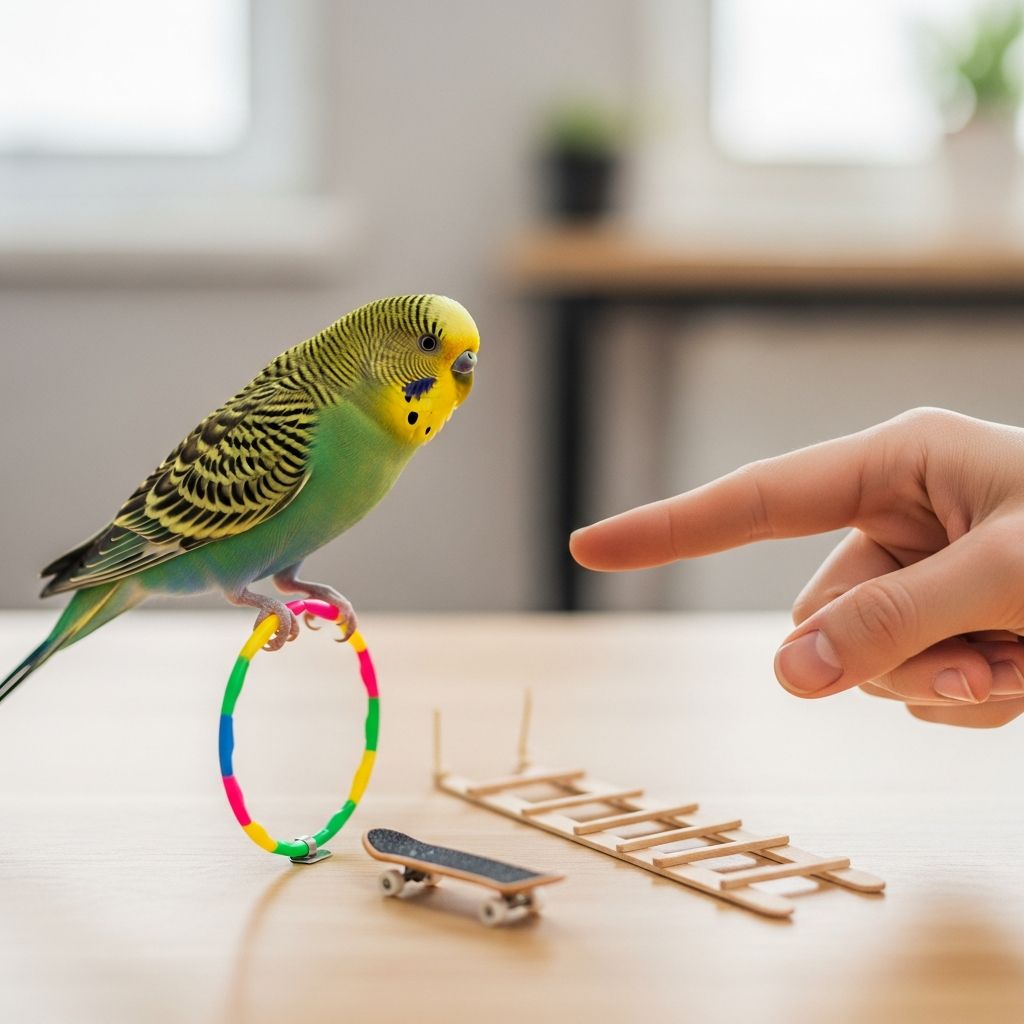
Budgie Training: Master the Art of Teaching Your Feathered Friend
Training a budgie can be one of the most rewarding experiences as a pet owner. These intelligent, curious birds are capable of learning a remarkable variety of tricks and commands that strengthen the bond between you and your feathered companion. Whether you’re a first-time budgie owner or an experienced bird enthusiast, understanding the fundamentals of budgie training opens up a world of interactive possibilities. The journey to a well-trained budgie requires patience, consistency, and a deep understanding of your bird’s unique personality and learning style.
Why Train Your Budgie?
Training your budgie goes far beyond entertainment value. It serves multiple important purposes for your bird’s wellbeing and your relationship with them. Mental stimulation is crucial for budgies, as these intelligent creatures require regular engagement to maintain their psychological health. A trained budgie is typically a happier, more confident bird. Training sessions create dedicated bonding time between you and your pet, strengthening trust and attachment. Additionally, teaching your budgie commands and tricks can make handling and veterinary care significantly easier. When your bird understands commands like “step up,” routine activities become less stressful for both parties. The cognitive challenges involved in learning new behaviors keep your budgie’s mind sharp and active, contributing to their overall longevity and quality of life.
Understanding Your Budgie’s Learning Capacity
Budgies are remarkably intelligent creatures with impressive cognitive abilities. Research has demonstrated that some budgies have learned over 1,700 words, showcasing their extraordinary capacity for language and communication. However, it’s essential to remember that individual budgies learn at different rates. Some may grasp new concepts quickly, while others require more time and repetition. Understanding that “you cannot teach parakeets things that they don’t want to do” is fundamental to successful training. Your budgie has preferences, moods, and limits. Respecting these boundaries creates a positive training environment where your bird is motivated to participate rather than forced or coerced.
Creating the Ideal Training Environment
The setting where you conduct training sessions significantly impacts your budgie’s ability to focus and learn. Training works considerably better in a space with minimal distractions. Attempting to train your budgie in the room containing their cage and toys creates unnecessary competition for their attention. Instead, choose a quiet, calm location where external stimuli are minimized. This dedicated training space helps your budgie concentrate on the lesson at hand and makes the learning process more efficient.
Lighting is another important consideration. Budgies respond better to training during times when they’re naturally more alert and active. Early morning or late afternoon sessions often prove most effective. The temperature and comfort level of the training area also matter—your budgie should be comfortable but not overly warm or cold, as extreme temperatures affect their willingness to participate.
Fundamental Training Principles
Starting with the Basics: The Step-Up Command
Before attempting any tricks, your budgie must master the fundamental “step-up” command. This foundational skill forms the basis for virtually all other training endeavors. The step-up trick teaches your budgie to climb onto your finger or a perch on command, building trust and establishing clear communication between you and your bird.
Here’s the proper technique for teaching the step-up:
- Hold your finger or a small perch near your budgie, positioning it just below their belly
- Say “step up” in a clear, consistent voice
- Gently press against your budgie’s belly, encouraging them to climb onto your finger
- The moment they step up, immediately reward them with a treat and enthusiastic praise
- Repeat this process several times daily until the behavior becomes reliable
Consistency in your command word is absolutely critical. Use the same phrase every single time, helping your budgie create a clear association between the sound and the desired action.
The Power of Positive Reinforcement
Positive reinforcement is the cornerstone of effective budgie training. This approach involves rewarding desired behaviors with treats, praise, and attention. Treats work exceptionally well as rewards—millet is particularly popular among budgies and serves as an excellent motivation tool. The instant your budgie performs the desired action, provide the reward while saying your command word. This immediate reinforcement helps your bird understand exactly which behavior earned the reward.
Critically, never punish your budgie for mistakes or failure to perform. Punishment only discourages learning and damages the trust you’ve built. If your budgie doesn’t perform the trick, simply don’t reward and try again. This approach maintains a positive association with training sessions.
Simple Tricks to Build Your Budgie’s Confidence
The Ladder Climbing Trick
Once your budgie has mastered the step-up, ladder climbing makes an excellent next trick. This activity capitalizes on budgies’ natural climbing instinct, making it easier for them to learn. Set up a parakeet-sized ladder outside the cage. Perch your budgie on your finger, then place them at the base of the ladder. Present millet at the top to encourage climbing. As your budgie climbs, say your chosen command phrase like “climb up” or “up the ladder.” Gradually increase the distance from which you start the trick, eventually having your budgie climb from the floor.
The Slide Trick
Build on the ladder trick by introducing a slide element. After your budgie successfully climbs the ladder, place a small plastic slide or stick going down from the top. Use millet to encourage descent, saying “down the slide” as they come down. This creates an entire routine combining both climbing and descending, providing more complex mental stimulation.
The Wave Trick
The waving trick appears impressive but is simpler than it sounds. Interestingly, budgies wave with their foot rather than their wing. Start with the familiar step-up position, offering your finger as if inviting a normal step-up. But this time, withdraw your finger slightly, leaving your budgie’s leg lifted. Immediately reward with a treat and say “wave!” Repeat during each session until your budgie associates the word and lifted foot with the reward.
The Spin Trick
Teach your budgie to spin by holding a treat just out of their reach on one side of their body. As they turn to follow the treat, say “spin” and reward them. Gradually move the treat farther around to encourage a full circle rotation. This trick provides excellent exercise and mental engagement.
Intermediate Tricks for Advanced Learners
The Tennis Ball Trick
Start by placing your budgie on the ground near a tennis ball. They may initially find the ball intimidating due to its size. Gently roll the ball so it taps their beak repeatedly. Eventually, your budgie will give the ball a shove with their beak—this is your moment to say “push” and reward them. Once this phase is mastered, teach them to stand “on top” of a stationary ball. Finally, combine both elements into one impressive routine.
The Fetch Trick
Choose a parakeet-friendly object like a bright button as your fetch item. Hold it until your budgie takes it in their beak, then say “fetch.” Allow them to play with it briefly. The moment they drop it, say “drop it!” and reward them. This trick can develop into a full retrieve game with practice.
Target Training
Teach your budgie to touch a target like a stick or your finger by holding it near them and saying “target.” Reward when they touch it with their beak. This fundamental skill serves as the basis for many advanced tricks and provides useful mental enrichment.
Advanced Training Techniques
The Ring Jump or Tunnel Trick
Start with a plastic ring or a piece of paper with a large hole cut through it. Lure your budgie through using millet and a specific command. Once successful, gradually reduce the hole size, making the challenge slightly more difficult. Eventually, replace the ring with sections of rolled paper or kitchen paper tubes, slowly extending the tunnel length as your budgie becomes comfortable. This trick provides excellent problem-solving challenges.
The Skateboard Trick
This impressive trick takes considerable time but yields remarkable results. Begin by moving your budgie from your finger to a small skateboard and giving it a gentle push. Position your budgie with one foot on the board and one on the floor—their natural walking instinct will propel the skateboard forward. With persistence and practice, your budgie will eventually “skateboard” across the floor, creating an entertaining display.
Play Dead
Gently hold your budgie on their back and say “play dead.” When they lie still, reward them with a treat. This unusual trick showcases your budgie’s trust and creates a memorable performance.
Essential Training Guidelines and Best Practices
Session Duration and Frequency
Budgies have relatively short attention spans. Keep individual training sessions to 10-15 minutes maximum, or even shorter if your bird shows signs of fatigue or boredom. Multiple short sessions throughout the day prove more effective than one long marathon session. When teaching very basic tricks like the step-up, limit sessions to 3-4 minutes initially.
Consistency is Key
Practice regularly, even if only for a few minutes daily. Consistency reinforces learned behaviors and accelerates progress. A budgie trained five minutes daily will progress faster than one trained once weekly for extended periods.
Using a Clicker
A clicker is a small handheld device that makes a distinct clicking sound. By clicking the moment your budgie performs the desired behavior and immediately following with a reward, you create a clear marker for correct behavior. This accelerates the learning process because your budgie receives instant feedback about what action earned the reward.
Patience and Individual Pacing
Remember that budgies learn at different rates. Some may grasp new tricks quickly, while others require extended practice. If your budgie isn’t making progress, take a break and try again later. Forcing training when your budgie is disinterested or tired creates negative associations with the activity.
Making Training Enjoyable
Training should be fun for both you and your budgie. Incorporate toys, games, and varied rewards to maintain engagement. If training feels like a chore to your budgie, they’ll resist participation. The goal is creating positive experiences your budgie genuinely enjoys.
Choosing Appropriate Rewards
Millet serves as the gold standard reward for budgie training. These small seeds are highly palatable and serve as exceptional motivators without overfeeding your bird. Other suitable rewards include spray millet, small pieces of apple or broccoli, and enthusiastic verbal praise. Vary your rewards occasionally to maintain interest and prevent boredom. Some budgies respond better to social rewards like head scratches than food treats—learn what motivates your individual bird.
Common Training Challenges and Solutions
Challenge: Your budgie seems uninterested in treats. Solution: Try different reward options. Some budgies prefer social interaction or specific foods over standard millet.
Challenge: Your budgie forgets tricks they previously learned. Solution: Lack of consistent practice causes skills to fade. Resume regular practice sessions and be patient during the relearning process.
Challenge: Your budgie becomes aggressive or bites during training. Solution: Stop training immediately and reassess. Your budgie may be frightened, overstimulated, or hormonal. Consult with an avian veterinarian or behaviorist if this continues.
Challenge: Your budgie won’t step up onto your finger. Solution: Ensure your budgie is comfortable with your presence first. Spend time near them without attempting training. Build trust gradually before expecting them to perch on your finger.
Progression Timeline: What to Expect
The timeline for budgie training varies by individual bird and the tricks being taught. Most budgies learn the basic step-up within 1-2 weeks of consistent daily practice. Simple tricks like waving typically take 2-4 weeks to master. More complex tricks like skateboarding or extended tunnel running may require months of dedicated training. Rather than rushing through tricks, focus on proper foundation-building and ensure each skill is thoroughly mastered before moving forward.
Mental Health Benefits of Training
Regular training provides crucial mental stimulation that budgies require for optimal health. In the wild, budgies spend considerable time foraging, exploring, and problem-solving. Captive budgies need outlets for this natural intelligence. Training sessions provide these mental challenges in a structured, engaging format. Budgies receiving regular training and mental stimulation demonstrate fewer behavioral problems, less aggression, and greater overall contentment. They also tend to live longer, healthier lives with enhanced quality of life.
Frequently Asked Questions About Budgie Training
Q: At what age should I start training my budgie?
A: You can begin basic training when your budgie is 6-8 weeks old. Younger birds adapt more readily to new experiences and routines. However, budgies of any age can learn—older birds may simply require more patience.
Q: Do all budgies have the same learning ability?
A: No, individual budgies have varying learning speeds and preferences. Some birds are naturally more outgoing and eager to learn, while others are more cautious. Adapt your approach to your specific bird’s personality.
Q: How long should individual training sessions last?
A: Keep sessions to 10-15 minutes maximum for general training, and 3-4 minutes when teaching very new tricks. Short, focused sessions are far more effective than lengthy ones.
Q: What’s the best reward for training budgies?
A: Millet is widely considered the most effective reward. However, different budgies have different preferences—some prefer specific fruits or vegetables, while others respond better to praise and attention.
Q: Can budgies forget tricks they’ve learned?
A: Yes, without regular practice, budgies can forget previously learned tricks. Consistent reinforcement helps maintain skills indefinitely.
Q: Is punishment ever appropriate in budgie training?
A: No. Punishment damages trust and discourages learning. Always use positive reinforcement and reward-based methods exclusively.
Q: How do I know when my budgie has mastered a trick?
A: Your budgie has mastered a trick when they reliably perform it on command with minimal prompting and in various environments and situations.
References
- Teaching Parakeets Tricks | Training a Parakeet — Omlet. 2024. https://www.omlet.us/guide/parakeets/training_a_parakeet/tricks/
- Why Training Your Parakeet Can Help You Bond With Your Pet — Bird Exotics Vet. 2024. https://www.birdexoticsvet.com/post/train-parakeets-tricks
Similar Articles








Read full bio of Sneha Tete


