
Complete Guide to Budgie Training: Tricks and Techniques
Master budgie training with proven techniques, positive reinforcement methods, and fun tricks for your parakeet.
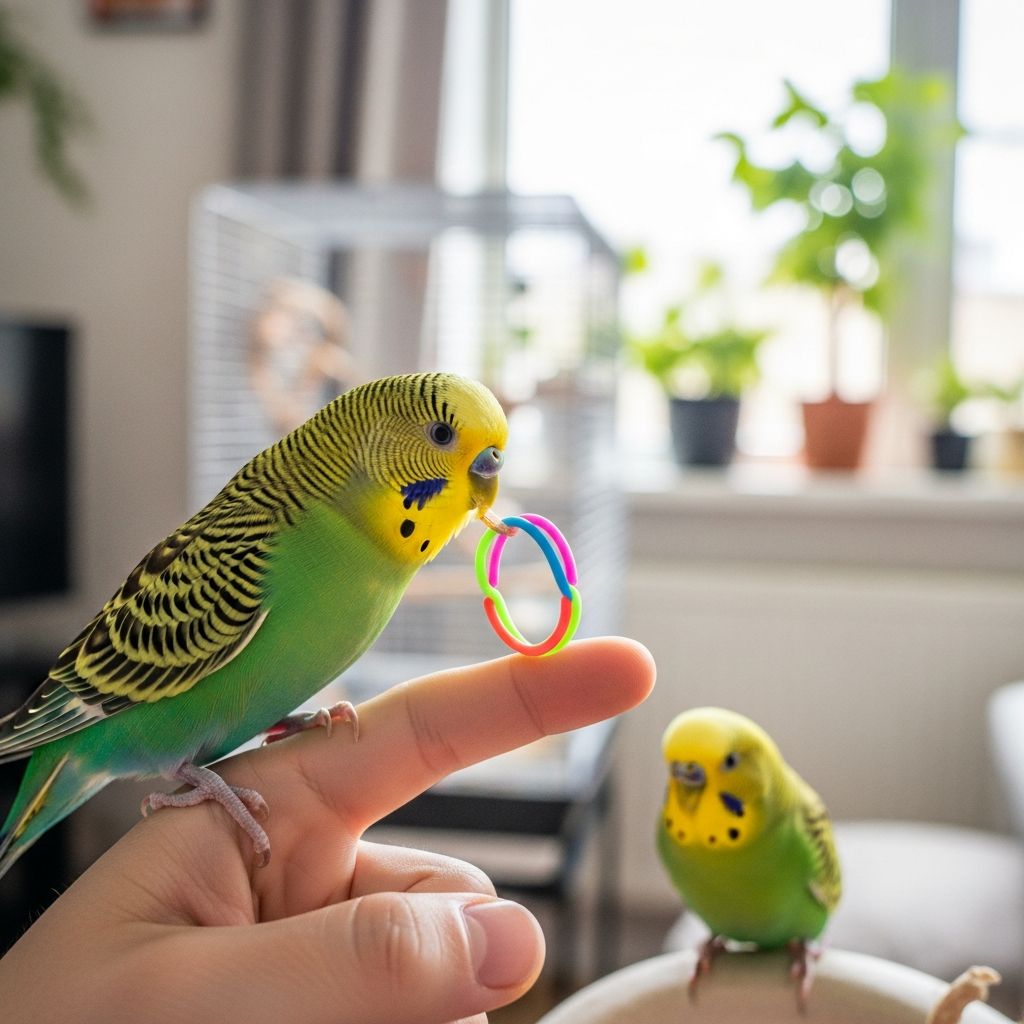
Training your budgie is more than just teaching entertaining tricks—it’s a powerful way to bond with your feathered companion while keeping them mentally stimulated and healthy. Whether you’re a first-time budgie owner or an experienced bird enthusiast, understanding proper training techniques can transform your relationship with your pet and create lasting behavioral improvements. Budgies are intelligent, curious birds with remarkable capacity for learning, and with patience, consistency, and positive reinforcement, you can teach them an impressive array of behaviors and commands.
Why Train Your Budgie?
Training offers numerous benefits beyond simple entertainment. A well-trained budgie experiences improved mental health, reduced behavioral problems, and a stronger bond with their human family members. Training sessions provide essential mental stimulation that prevents boredom and destructive behaviors. Additionally, teaching your budgie fundamental commands like “step up” creates a foundation of trust and communication that makes handling, grooming, and veterinary visits significantly easier. Regular training also encourages your bird to remain active and engaged, contributing to overall physical and psychological well-being.
Understanding Your Budgie’s Learning Capacity
Budgies possess remarkable intelligence and learning abilities. Remarkably, one budgie on record learned more than 1,700 words, demonstrating the extraordinary cognitive capabilities of these small birds. This exceptional capacity for learning illustrates that with dedication and proper techniques, your budgie can master numerous behaviors and commands. Understanding this potential helps set realistic expectations and encourages you to invest time in training sessions that yield impressive results.
Foundation of Successful Budgie Training
Positive Reinforcement: The Key to Success
Positive reinforcement forms the cornerstone of effective budgie training. This method involves rewarding desired behaviors with treats, praise, and attention, creating positive associations with specific commands and actions. Never punish your budgie for mistakes or slow progress, as punishment will only discourage learning and damage your relationship with your pet. Instead, focus entirely on rewarding correct behaviors and gradually building their confidence and understanding of what you’re asking them to do.
Building Trust and Comfort
Before beginning any formal training, your budgie must feel comfortable and safe in your presence. Start by placing your hand gently inside the cage for several minutes daily, allowing your bird to acclimate to your presence without attempting to grab or restrain them. Position your finger on perches at bird level, demonstrating that your hand is not a threat. This foundational phase typically lasts several days or weeks, depending on your budgie’s previous experiences and personality. Patience during this stage is crucial, as rushing will set back your progress significantly.
The Step-Up Command: Your First Training Goal
Why Start with Step-Up?
The “step-up” command is the fundamental trick that opens doors to all other training opportunities. This simple but essential behavior builds trust between you and your budgie while establishing the basis for handling, transportation, and advanced tricks. Once your budgie confidently steps onto your finger or a perch on command, you have a powerful tool for both training and practical pet management.
Step-by-Step Training Instructions
Begin by holding your finger or a small perch just below your budgie’s belly, positioning it at a comfortable angle. Say “step up” in a clear, consistent voice—consistency in your verbal cue is essential for effective learning. Gently push against your budgie’s belly with light, steady pressure, encouraging them to shift their weight upward onto your finger. When your budgie successfully steps up, immediately offer enthusiastic praise and a small food reward such as millet spray. Repeat this process multiple times daily, starting with just a few repetitions and gradually increasing as your budgie becomes more comfortable. Most budgies require several days to a few weeks of consistent practice before mastering this command.
Troubleshooting Step-Up Training
If your budgie resists stepping up or becomes frightened when you place your hand near them, return to the comfort-building phase. Some budgies require extended periods of simply having your hand present in their cage before they’re ready for active training. If your budgie remains fearful despite your efforts, you can use millet spray to entice them toward your finger, creating positive associations with your hand. Patience and consistent, gentle approaches will eventually overcome even significant fear responses in most budgies.
Training Session Best Practices
Optimal Session Length and Frequency
Budgies have relatively short attention spans, typically maintaining focus for only 10-15 minutes before becoming distracted or fatigued. Keep individual training sessions within this timeframe, conducting one or two sessions daily. This approach allows for consistent practice without overwhelming your bird or creating negative associations with training time. Short, frequent sessions prove far more effective than occasional lengthy training marathons.
Choosing Appropriate Rewards
High-value treats like millet spray serve as excellent motivators for budgie training. These seeds are nutritious and deeply appealing to budgies, making them ideal for positive reinforcement. Beyond food rewards, provide verbal praise, gentle head scratches, and enthusiastic attention when your budgie performs correctly. Many budgies quickly learn to value your approval and excitement as much as the physical treat, allowing you to gradually reduce food rewards as training progresses.
Reading Your Budgie’s Mood
Pay close attention to your budgie’s body language and energy levels. If your bird appears stressed, tired, or disinterested, end the training session and try again later. Forcing training during these moments creates negative associations and slows overall progress. Similarly, if your budgie isn’t making progress after several repetitions, take a break and return to training later when they may be more receptive.
Advanced Tricks Beyond Step-Up
Wave
Teach your budgie to wave by holding a treat just slightly out of their reach at face level. As your budgie attempts to reach the treat, their foot naturally lifts toward it. The moment their foot rises, say “wave” and immediately reward them. With repetition, your budgie will begin lifting their foot in response to the verbal cue alone, creating an adorable waving behavior that impresses everyone who sees it.
Spin
To teach spinning, hold a treat to one side of your budgie’s body, encouraging them to turn their head and body toward it. Say “spin” as they move, rewarding them when they rotate. Gradually move the treat further around their body, encouraging fuller rotations. Eventually, your budgie will complete 360-degree spins in response to your command.
Target Training
Hold a target object, such as a stick or your finger, near your budgie and say “target.” When they touch it with their beak, reward them immediately. This foundational trick becomes useful for directing your budgie’s movements and can be used to teach numerous other behaviors.
Retrieve
Place a small, lightweight object in front of your budgie and say “retrieve.” When they pick it up with their beak, reward them enthusiastically. Gradually introduce brief distances between your budgie and the object, building their retrieval responses.
Play Dead
Gently hold your budgie on their back in your palm while saying “play dead.” Reward them for remaining still. This trick requires significant trust and should only be attempted after your budgie is completely comfortable with your handling.
Essential Training Tools and Techniques
Clicker Training
A clicker is a small handheld device that produces a consistent clicking sound. Use the clicker to mark the exact moment your budgie performs the desired behavior, helping them understand precisely which action earned the reward. This technique, called “clicker training,” accelerates learning by providing immediate, clear feedback. The process involves clicking the moment your budgie does something right, then immediately offering a reward.
Environmental Setup
Train in a quiet, distraction-free environment where your budgie can focus entirely on you. Dimly lit rooms may help calm anxious birds during initial training phases. Ensure your budgie has fresh water and is not hungry or overstimulated before beginning training sessions.
Consistency in Commands
Always use the exact same verbal cue for each behavior. If you sometimes say “step up” and other times say “get on my finger,” your budgie becomes confused. Consistency in both your words and your training methodology creates the clearest communication and fastest learning.
Advanced Training Concepts
Progressive Distance Training
Once your budgie confidently steps onto your finger nearby, gradually increase the distance between you and your bird. Initially reward them for flying short distances to reach your finger, then progressively increase these distances. Eventually, your budgie will fly across rooms to reach you, strengthening your bond and providing excellent flight exercise.
Transitioning Away from Constant Rewards
As training progresses, stop consistently showing the treat before your budgie performs the behavior. Instead, reveal the treat only after they complete the action on command. This teaches your budgie to respond to your verbal cue and gestures rather than relying on visible reward promises, creating more reliable and impressive behavior demonstrations.
Making Training Fun
Incorporate toys, games, and variety into your training sessions. Rotate between different tricks, use different treat types, and occasionally introduce new challenges. When training remains engaging and playful for both you and your budgie, you’re far more likely to maintain consistency and see better results.
Common Training Challenges and Solutions
Fear of Hands
Some budgies, particularly those with previous negative experiences, fear approaching hands. Address this by spending extended time simply having your hand present in their cage without attempting to touch or grab them. Let your budgie approach your hand on their own terms, rewarding any interested behavior. This process may take weeks but is essential for overcoming deep-seated fear responses.
Reluctance to Leave the Cage
Many budgies resist leaving their cage, viewing it as their safe territory. Use mirrors or shiny objects to gently coax your budgie toward the cage opening. Never force them out, as this creates fear associations. Patient, gentle encouragement combined with enticing treats will eventually overcome this reluctance.
Inconsistent Performance
If your budgie sometimes performs a behavior and other times doesn’t, evaluate your consistency in training execution. Ensure you’re using identical verbal cues, hand gestures, and reward timing. Additionally, consider your budgie’s health, stress levels, and current mood—all affect learning capacity on any given day.
Training Frequency and Long-Term Success
Consistency proves absolutely critical for long-term training success. Practice regularly, even if only for a few minutes daily, rather than attempting intense training sessions followed by weeks of inactivity. Regular practice reinforces behaviors and prevents your budgie from forgetting previously learned tricks. Additionally, ongoing training keeps your budgie mentally engaged, preventing boredom-related behavioral problems that commonly develop in under-stimulated pet birds.
Frequently Asked Questions
Q: How long does it take to train a budgie to step up?
A: Most budgies learn the step-up command within 1-4 weeks of consistent daily practice, though some may require longer depending on their previous experiences and temperament. Building initial trust and comfort typically takes 1-2 weeks before formal training should begin.
Q: Can older budgies be trained, or is training only for young birds?
A: Budgies of any age can learn new behaviors. While younger birds may learn slightly faster, older budgies are absolutely trainable with patience and consistency. One documented budgie learned over 1,700 words throughout its lifetime, demonstrating that learning capacity extends throughout a budgie’s life.
Q: What should I do if my budgie bites during training?
A: Never punish your budgie for biting, as this creates fear and worsens the behavior. Instead, pause training immediately and give your budgie space. Resume training only when they’re calm. Most biting during training results from fear or overstimulation rather than aggression.
Q: How often should I train my budgie?
A: Train your budgie one to two times daily in short 10-15 minute sessions. More frequent training sessions than this often leads to fatigue and frustration, while less frequent training results in slower progress and potential skill regression.
Q: Can multiple budgies be trained together?
A: Individual training is most effective, as budgies in pairs or groups often distract each other. Train budgies separately, then gradually introduce group training once individual commands are well-established.
Q: What treats work best for budgie training?
A: Millet spray stands out as the preferred training treat for budgies. Other effective options include small pieces of fruits, vegetables, and specialized bird treats. Rotate treat types occasionally to maintain your budgie’s interest and enthusiasm.
Conclusion
Training your budgie represents an investment in your relationship and your bird’s well-being. Through patient, consistent application of positive reinforcement techniques, you can teach your budgie impressive tricks while strengthening your bond and keeping them mentally stimulated. Start with the foundational step-up command, master the training principles covered in this guide, and progressively advance to more complex behaviors. Remember that every budgie learns at their own pace, and the journey itself—the daily interactions, the small victories, and the growing trust between you and your feathered companion—provides rewards far beyond the tricks themselves. Begin your budgie training journey today and discover the remarkable capabilities of these intelligent, delightful birds.
References
- Train Parakeets Tricks: How to Train Your Parakeet — Bird Exotics Veterinary. Accessed November 28, 2025. https://www.birdexoticsvet.com/post/train-parakeets-tricks
- How to Train a Budgie: Easier than a Dragon — YouTube. Accessed November 28, 2025. https://www.youtube.com/watch?v=0wIR2eJYuZI
- How to Tame Your Budgie Compilation — YouTube. Accessed November 28, 2025. https://www.youtube.com/watch?v=JvJxaW8xOrs
- How to Bond, Tame and Train Your Bird: The Ultimate Guide — YouTube. Accessed November 28, 2025. https://www.youtube.com/watch?v=nzCjoXO6zpI
Similar Articles








Read full bio of medha deb


