

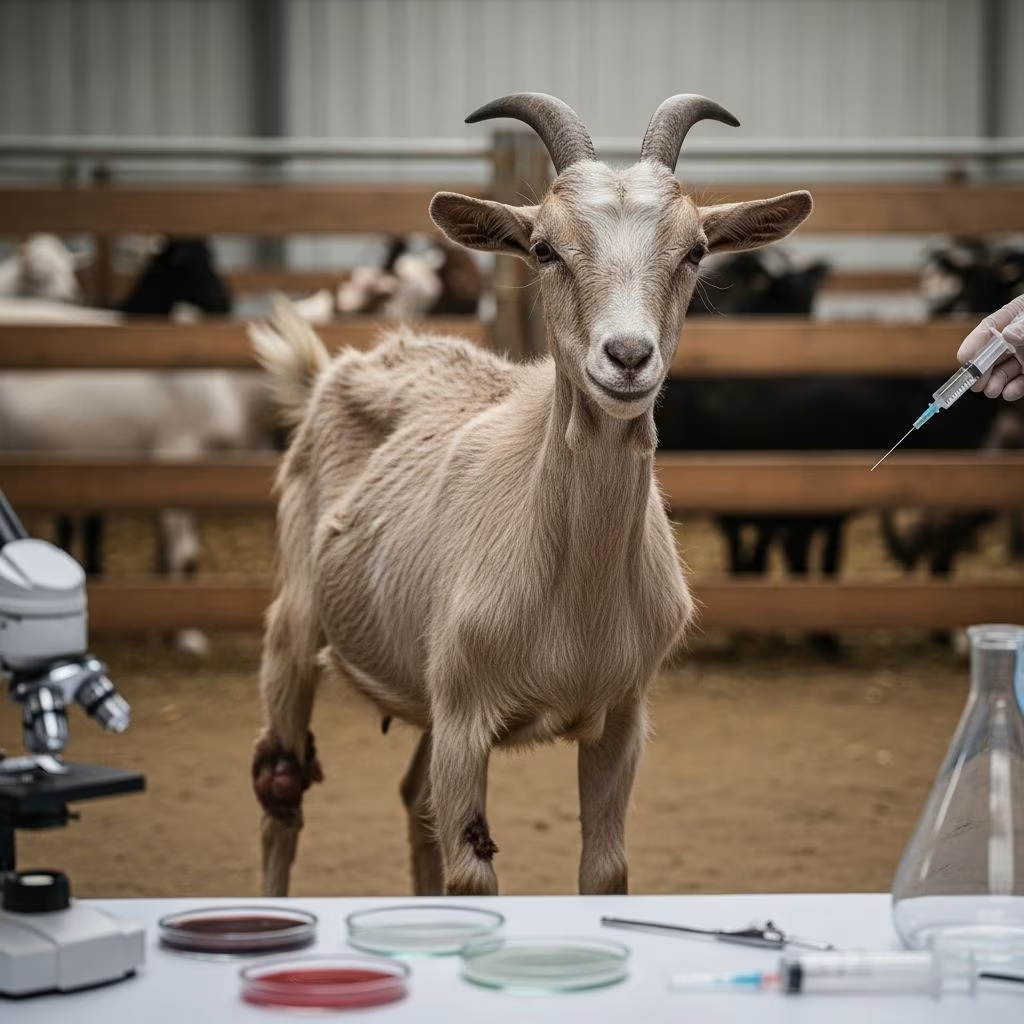
Brucellosis represents a major bacterial threat to goat populations, primarily driven by Brucella melitensis, leading to severe reproductive losses and posing zoonotic risks to humans. This infection disrupts herd productivity through abortions and infertility while necessitating stringent control measures like vaccination and culling.
The Bacterial Culprit Behind Goat Brucellosis
The pathogen Brucella melitensis thrives as a facultative intracellular bacterium, adept at evading host immune responses to establish persistent infections in goats. It targets reproductive organs, lymph nodes, and mammary glands, causing bacteremia that spreads systemically. Goats serve as primary reservoirs, with infections often subclinical until late gestation, amplifying spread within herds.
Transmission occurs mainly via ingestion of contaminated feed, water, or aborted materials rich in bacteria. Direct contact with infected placentas, fetuses, or vaginal discharges during kidding heightens risk, as does venereal spread in males. Aerosol transmission in confined spaces and indirect via fomites like milking equipment further perpetuate outbreaks. In endemic regions, wildlife or co-mingled sheep exacerbate persistence.
Clinical Manifestations in Infected Goat Herds
In goats, brucellosis often manifests subtly until abortion strikes, typically in late pregnancy between 3-4 months gestation. Infected does may expel fetuses or placentas laden with millions of bacteria, contaminating the environment. Other signs include retained placenta, metritis, and stillbirths, with weak offspring prone to early mortality.
Males exhibit orchitis, epididymitis, and scrotal swelling, impairing fertility. Joint lesions like hygromas and arthritis affect mobility, while udder infections lead to subclinical mastitis, tainting milk. Many goats remain carriers without overt symptoms, shedding bacteria chronically via milk, urine, or feces, sustaining herd-level transmission. Economic tolls include reduced kidding rates, culled animals, and trade restrictions.
- Key reproductive impacts: Abortions in 50-90% of first infections; repeat breeders.
- Male-specific issues: Testicular inflammation reducing semen quality.
- Systemic effects: Occasional lameness from joint localization.
Diagnostic Approaches for Accurate Detection
Confirming brucellosis demands integrated methods, as clinical signs alone mislead. Serological tests like Rose Bengal card test and complement fixation detect antibodies with high sensitivity post-abortion, appearing 10-20 days after exposure. ELISA assays offer specificity for flock screening, though cross-reactions with other bacteria require confirmation.
Direct pathogen isolation via culture from aborted fetuses, stomach contents, milk, or supramammary lymph nodes remains gold standard, despite biosafety demands. PCR amplifies Brucella DNA rapidly from tissues or fluids, ideal for antemortem diagnosis. Blood cultures capture bacteremia early, but sensitivity varies (50-90%).
| Method | Sample Type | Advantages | Limitations |
|---|---|---|---|
| Serology (Rose Bengal, CFT) | Blood serum | Quick, field-applicable | Detects exposure, not active infection |
| PCR | Milk, tissues, aborted fetus | Specific, rapid | Requires lab equipment |
| Culture | Fetal stomach, lymph nodes | Confirms viability | Slow (up to 4 weeks), hazardous |
Combined testing protocols enhance reliability, guiding test-and-slaughter programs.
Prevention Strategies: Vaccination and Biosecurity
Eradication hinges on multifaceted prevention. In endemic areas, Rev.1 live vaccine administered subcutaneously to kids aged 3-8 months induces immunity without causing abortion, reducing prevalence significantly when timed pre-breeding. Reduced dosage conjunctival methods minimize udder shedding in adults, though not universally licensed.
Biosecurity pillars include quarantine of new arrivals, prompt removal of abortion debris, and disinfection of kidding pens. Separate housing for rams prevents venereal spread. Milk pasteurization curbs zoonotic spillover. In brucellosis-free zones, surveillance testing enforces movement controls. No therapeutic antibiotics exist for livestock; infected animals face depopulation[10].
Zoonotic Dimensions: Human Health Threats from Goats
B. melitensis tops zoonotic brucellosis agents, entering humans via unpasteurized goat milk, cheese, or direct contact with infected tissues during kidding or slaughter. Ingested bacteria invade mucosa, causing undulant fever, sweats, arthralgias, and fatigue; chronic cases yield spondylitis or orchitis.
Incubation spans 1-4 weeks, with misdiagnosis common due to flu-like onset. Treatment demands dual antibiotics (doxycycline-rifampin) for 6+ weeks to avert relapse. Farmers, vets, and abattoir workers face highest exposure; gloves, goggles, and pasteurization mitigate risks. Globally, brucellosis burdens public health in dairy-dependent regions.
Herd Management and Eradication Programs
Successful control integrates vaccination, serosurveillance, and culling reactors. EU protocols emphasize Rev.1 in young stock alongside tracing. US programs depopulate positives, compensating owners[10]. Milk ring tests screen dairy herds efficiently.
Breeding from accredited-free stock rebuilds clean herds. Economic modeling favors vaccination in high-prevalence zones over slaughter alone. Surveillance post-vaccination tracks progress via DIVA (differentiating infected from vaccinated) tests.
Global Epidemiology and Regional Challenges
Brucellosis ravages Mediterranean, Middle East, and Latin American goat sectors, with B. melitensis entrenched. Trade barriers enforce testing; outbreaks trigger quarantines. Climate influences vector-free spread, but pastoralism accelerates fomite transmission.
Emerging resistance complicates therapy, underscoring vaccination primacy. WOAH standards guide international reporting, fostering harmonized control.
Frequently Asked Questions (FAQs)
What causes brucellosis in goats?
Mainly Brucella melitensis, a hardy bacterium spread via aborted materials and milk.
Can brucellosis be treated in goats?
No effective livestock treatment; focus shifts to prevention and culling[10].
Is goat brucellosis dangerous to humans?
Yes, via raw dairy or tissues, causing severe flu-like illness treatable only long-term with antibiotics.
How effective is the Rev.1 vaccine?
Highly protective in young goats, reducing abortions when given 3-8 months old.
What should I do if my goat aborts?
Quarantine, submit fetus for lab testing, and screen herd serologically.
References
- Brucellosis in Sheep and Goats — European Commission Food Safety. 2020-12-01. https://food.ec.europa.eu/system/files/2020-12/sci-com_scah_out59_en.pdf
- Brucella melitensis of Goats and Sheep Public Health Issue — California Department of Food and Agriculture. N/A. https://www.cdfa.ca.gov/ahfss/animal_health/pdfs/B_MelitensisFactSheet.pdf
- Brucellosis in Goats – Merck Veterinary Manual — Merck & Co. 2023. https://www.merckvetmanual.com/reproductive-system/brucellosis-in-large-animals/brucellosis-in-goats
- Veterinary Guidance for Brucellosis — Centers for Disease Control and Prevention. 2024. https://www.cdc.gov/brucellosis/hcp/animals/index.html
- Brucellosis – Symptoms & causes — Mayo Clinic. 2024. https://www.mayoclinic.org/diseases-conditions/brucellosis/symptoms-causes/syc-20351738
- Brucellosis — World Organisation for Animal Health (WOAH). 2024. https://www.woah.org/en/disease/brucellosis/
- Brucellosis: epidemiology, pathogenesis, diagnosis and treatment — National Center for Biotechnology Information (PMC). 2023-12-01. https://pmc.ncbi.nlm.nih.gov/articles/PMC10769134/



