

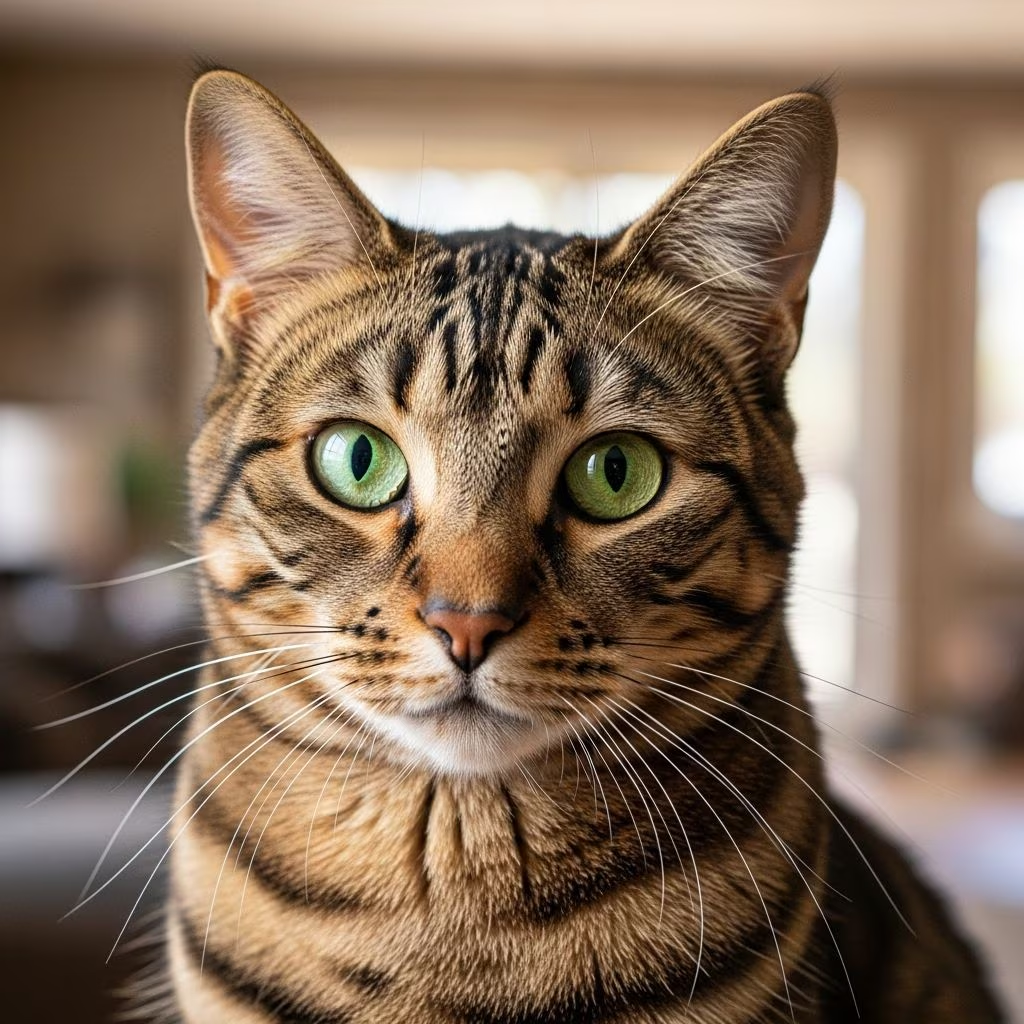
Brown tabby cats are one of the most common and beloved coat variations among domestic cats, recognized for their striking patterns and charming personalities. Not a breed but a coat pattern, the brown tabby features dark brown stripes, swirls, or spots on a lighter tan or brown background, echoing their wild ancestors. These cats blend beauty with adaptability, making them ideal companions for many households. This article delves into seven fascinating, vet-verified facts about brown tabby cats, covering their appearance, history, behavior, and care needs.
What Is a Brown Tabby Cat?
A brown tabby cat is defined by its coat pattern rather than breed. The tabby pattern originates from the Felis silvestris lybica, the African wildcat, and is the most prevalent in domestic cats. Brown tabbies display agouti hairs—banded with multiple colors—for a glowing effect, typically with deep brown or black markings on a tan, buff, or reddish-brown base. Common patterns include mackerel (narrow stripes), classic (bold swirls), spotted, and ticked. Almost all tabbies, including brown ones, sport a signature “M” on the forehead, thin cheek lines, and a dark dorsal stripe running from head to tail tip.
The brown tabby’s coloration provides excellent camouflage in natural environments like dry grass or woodlands, much like their wild relatives. This pattern appears across breeds such as American Shorthair, Maine Coon, and Bengal, as well as in mixed-breed cats. Their fur can be short, long, or in between, but the pattern remains consistent.
7 Fascinating Facts About the Brown Tabby Cat
1. Tabby Is a Pattern, Not a Breed
The term “tabby” refers exclusively to a coat pattern, not a specific breed. This pattern exists in over 80% of domestic cats worldwide, making brown tabbies ubiquitous. It can manifest in purebreds like the Abyssinian (ticked tabby) or British Shorthair (classic tabby) and domestic shorthairs alike. The genetics involve dominant alleles for the tabby gene (Ta), allowing wide variation while preserving core traits like stripes and the “M” mark.
Brown tabbies often have orange undertones due to pheomelanin pigment, blending with black eumelanin for rich shading. This versatility explains their prevalence in shelters and homes.
2. They Come in Four Distinct Patterns
Brown tabby cats exhibit four primary patterns, each with unique visual appeal:
- Mackerel Tabby: The most common, featuring narrow, parallel stripes resembling a fish skeleton, with bars on the legs and tail.
- Classic (Blotched) Tabby: Bold, swirling marbling on the sides, a butterfly shape on the shoulders, and thick stripes on limbs.
- Spotted Tabby: Round spots instead of stripes, often seen in breeds like the Ocicat.
- Ticked Tabby: Subtle banding on individual hairs, creating a uniform glow without bold markings, as in Abyssinians.
These patterns are genetically determined, with mackerel being dominant. Brown tabbies in any pattern camouflage seamlessly in nature.
3. Brown Tabbies Offer Superior Camouflage
The brown tabby’s dark stripes and earth-toned base provide exceptional camouflage in tall grass, brush, or leaf litter—essential for their wildcat ancestors hunting prey. This mimicry of the African wildcat’s coat allowed early domestic cats to thrive near human settlements while retaining hunting prowess. In modern homes, this trait translates to skilled mousers, as brown tabbies blend into surroundings to stalk toys or pests unnoticed.
Studies on feline evolution confirm tabby patterns evolved for concealment, with brown variants optimal for savanna-like habitats.
4. They Closely Resemble Their Wildcat Heritage
Brown tabby cats are living echoes of Felis silvestris lybica, domesticated over 9,000 years ago in the Near East. Their coat mimics the wildcat’s exactly, aiding survival through camouflage during hunts. Genetic research from institutions like the University of Washington shows domestic tabbies retain 95% of wildcat DNA in patterning genes. This heritage makes brown tabbies hardy, with strong instincts for independence and predation.
Unlike more specialized breeds, brown tabbies maintain robust health and adaptability from this ancestry.
5. Almost All Brown Tabby Cats Have a Distinctive “M” Marking
Nearly every brown tabby bears a prominent “M” on its forehead, formed by dark lines connecting facial stripes. Myths abound: Islamic lore credits Prophet Muhammad for stroking a tabby and leaving the mark; Christian tales say the Virgin Mary blessed a cat warming baby Jesus. Scientifically, it’s due to the Agouti gene expressing melanin in an “M” configuration. Variations range from bold to faint, but it’s a tabby hallmark.
This mark aids identification and is visible from kittenhood.
6. They Are Highly Affectionate
Brown tabby cats are renowned for affectionate, sociable temperaments. Owners report they greet at doors, purr readily, knead laps, and follow family members, seeking interaction. While not breed-specific, tabby patterns correlate anecdotally with friendliness, intelligence, and playfulness—traits from social wildcat packs. They bond deeply, often becoming “velcro cats” without aloofness.
Early socialization enhances this; they thrive in multi-pet or family homes.
7. They Are Easy to Care For
Brown tabbies are low-maintenance gems. Most have short to medium coats needing weekly brushing to reduce shedding and distribute oils. Feed high-protein, meat-based diets as obligate carnivores—aim for AAFCO-approved formulas with taurine for heart and eye health. Provide daily play (15–30 minutes) with toys like feather wands to channel energy and prevent boredom-induced mischief. Regular vet check-ups catch issues like dental disease or obesity early.
| Aspect | Care Tips |
|---|---|
| Grooming | Weekly brush; nail trims biweekly |
| Diet | High-protein kibble/wet food; portion control |
| Exercise | Interactive play, scratching posts, cat trees |
| Health | Annual exams, vaccinations, parasite prevention |
Keep indoors for safety, as their camouflage doesn’t protect from traffic.
Brown Tabby Cat Personality
Brown tabbies charm with playful, energetic spirits lasting into adulthood. They pounce on toys, explore curiously, and solve puzzles like opening doors. Intelligent and adaptable, they adjust to new homes, children, or pets with ease—greeting visitors calmly. Affection shines through head-butts, purring, and loyalty, though they retain independent streaks. Genetics, early handling, and breed influence individuality; a tabby Maine Coon may be gentler than an energetic Bengal mix.
- Playful & Energetic: Kitten-like vigor; loves feather toys and laser pointers.
- Intelligent & Curious: Masters tricks; thrives on puzzle feeders.
- Affectionate & Loyal: Forms deep bonds; follows owners room-to-room.
- Adaptable & Easygoing: Handles changes well; suits busy households.
Brown Tabby Cat History
Tabby patterns trace to ancient Egypt (c. 2000 BCE), where cats were revered for pest control. Brown tabbies, resembling wildcats, spread via trade routes to Europe and Asia. By the Middle Ages, they symbolized good fortune in folklore. Modern popularity surged post-WWII with domestic shorthairs. Famous brown tabbies include Garfield, cementing their cultural icon status.
Brown Tabby Cat Health & Care
Robust from wild heritage, brown tabbies live 12–18 years with proper care. Watch for obesity, urinary issues, and dental woes—common in cats. Annual vet visits, balanced nutrition, and dental treats promote longevity. Spay/neuter prevents cancers and roaming.
Frequently Asked Questions (FAQs)
What makes a cat a brown tabby?
A brown tabby has tabby patterning (stripes/swirls/spots) in brown tones with an “M” on the forehead. It’s a pattern, not breed.
Are brown tabby cats hypoallergenic?
No, no cat is truly hypoallergenic, but short-haired tabbies shed less than longhairs.
Do brown tabby cats make good pets for families?
Yes, their affectionate, adaptable nature suits kids and other pets with proper intros.
How can I tell if my cat is a brown tabby?
Look for the “M” mark, stripes, and brown base/contrast. Patterns confirm it.
What’s the average lifespan of a brown tabby cat?
12–18 years with good care; indoor living extends it.
References
- Tabby Cat Personality Guide — PetScreening. 2023-05-15. https://www.petscreening.com/blog/tabby-cat-personality-guide
- 7 Fascinating Facts About the Brown Tabby Cat (Vet-Verified) — Catster. 2024-08-20. https://www.catster.com/lifestyle/brown-tabby-cat-facts/
- Tabby Cat — Wikipedia (referencing feline genetics studies). 2025-01-10. https://en.wikipedia.org/wiki/Tabby_cat
- Uncover The Charming & Unique Brown Tabby Cat Personality — Zeze Life. 2024-03-12. https://www.zezelife.com/uncover-the-charming-unique-brown-tabby-cat-personality/
- Tabby Cats: Colors, Patterns, Breeds, and Fun Facts — Cats.com. 2024-11-05. https://cats.com/tabby-cats
- 5 Interesting Tabby Cat Facts — Cat Town Oakland. 2018-04-29. https://cattownoakland.org/cat-town-blog/2018/4/29/5-interesting-tabby-cat-facts
- 10 Fascinating Facts about the Tabby Cat — We Are All About Cats. 2020-04-03. https://weareallaboutcats.com/2020/04/03/10-fascinating-facts-about-the-tabby-cat/



