

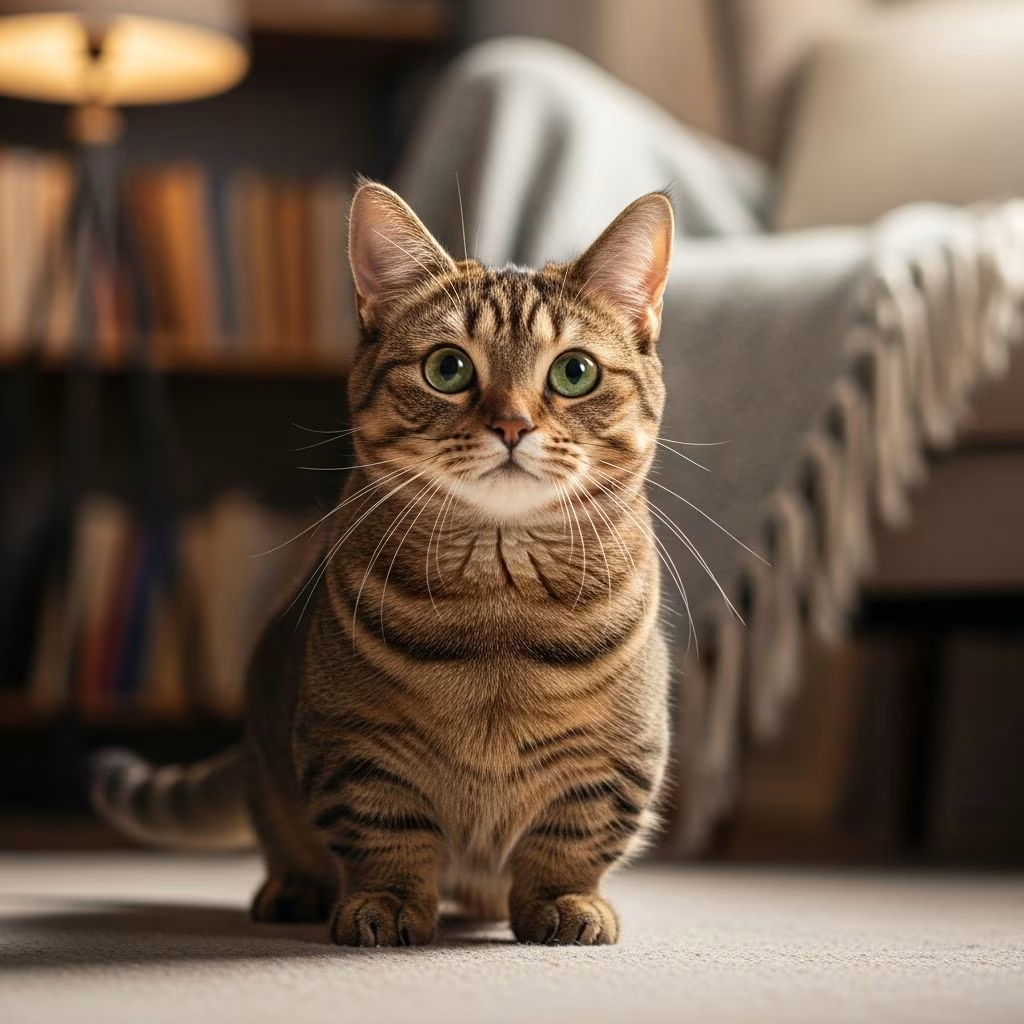
The brown Munchkin cat stands out with its endearing short legs and warm coat color, blending playfulness with an affectionate demeanor that wins over many pet owners. This breed, recognized for its distinctive physique caused by a natural genetic trait, offers a unique twist on the domestic cat experience.
Origins and Development of the Munchkin Breed
The Munchkin breed emerged in the United States during the early 1980s when a cat named Blackberry, found in Louisiana, gave birth to kittens with unusually short legs due to a spontaneous genetic mutation. Breeders began selectively pairing these short-legged cats with standard domestic cats to perpetuate the trait, leading to official recognition by organizations like The International Cat Association (TICA). Unlike breeds defined by color, Munchkins are categorized primarily by their leg length, with brown emerging as one popular coat variation among many.
This mutation, known as achondroplasia, affects bone growth in the legs but leaves the rest of the body proportional, resulting in cats that measure about 7-9 inches tall at the shoulder and weigh 5-9 pounds. The breed’s history underscores a commitment to outcrossing, ensuring genetic diversity and avoiding the lethal effects of double inheritance of the dominant short-leg gene.
Physical Traits of Brown Munchkin Cats
Brown Munchkin cats exhibit a compact, muscular build with short legs that do not impede their agility or speed. Front legs average 3 inches in length, while hind legs may be slightly longer, allowing for efficient movement despite their stature. Their heads feature a rounded wedge shape, full cheeks, and large, pointed ears set wide apart.
The coat is a highlight for brown variants: plush and medium-dense in short-haired individuals, or silky and semi-long in long-haired ones, both shedding minimally with proper care. Brown shades range from rich chocolate to lighter tan tones, often with tabby patterns or solid hues, as color is not breed-restrictive. Eyes are typically vivid green, gold, or copper, complementing the earthy palette.
| Physical Feature | Description |
|---|---|
| Height | 7-9 inches at shoulder |
| Weight | 5-9 pounds |
| Leg Length | Front: ~3 inches; Hind: slightly longer |
| Coat Types | Short plush or semi-long silky |
| Common Brown Shades | Chocolate, tan, tabby-marked |
Temperament and Behavior Patterns
Brown Munchkin cats are renowned for their outgoing, people-loving personalities, often described as confident explorers who thrive in active households. They form deep bonds with owners, following them room-to-room and eagerly participating in daily activities rather than lounging aloofly. Their sociable nature extends to children, dogs, and other cats, making them ideal for multi-pet families.
- Highly curious, often investigating new objects and greeting guests at the door
- Playful hunters with low center-of-gravity agility for quick pursuits
- Patient and gentle, rarely aggressive or shy
- Dog-like traits: enjoys fetch, leash walks, and collecting shiny trinkets
- Soft vocalizers using trills, purrs, and chirps over loud meows
Despite lower jumping ability, they compensate with speed on the ground and clever climbing, embodying a “small but mighty” spirit. Intelligence shines in trainability, responding well to positive reinforcement for tricks or litter habits.
Health Considerations and Genetic Concerns
While generally robust, the Munchkin’s short legs stem from a dominant mutation that raises ethical debates, with some registries like CFA withholding full recognition due to potential welfare issues. Breeding requires one Munchkin parent and one non-Munchkin to produce viable litters, as two Munchkins risk homozygous offspring with lethal skeletal defects.
Potential issues include lordosis (spinal curvature), pectus excavatum (sunken chest), and joint problems like osteoarthritis, though evidence varies on prevalence. Owners report average lifespans of 12-15 years with vigilant care, emphasizing weight control to prevent lordosis exacerbation. Routine vet checks focus on mobility and spine health.
- Monitor for signs of lameness or breathing difficulties
- Maintain ideal weight through portion control
- Avoid breeding two short-legged cats
Grooming and Everyday Care Essentials
Care for a brown Munchkin mirrors standard cats but accounts for coat length and activity levels. Short-haired varieties need weekly brushing to manage shedding, while long-haired demand twice-weekly sessions to prevent mats and reduce hairballs.
Bathing is infrequent; focus on nail trims biweekly, ear cleaning monthly, and dental care daily with brushing or treats. Litter boxes should be low-sided for easy access, and toys placed at ground level encourage exercise without high jumps. Nutrition prioritizes high-protein kibble or wet food to sustain muscle tone and prevent obesity, a risk given their sturdy build and moderate energy.
Environmental enrichment includes tunnels, puzzle feeders, and scratching posts at reachable heights. Annual vaccinations, flea preventives, and spaying/neutering round out a proactive routine.
Why Choose a Brown Munchkin as a Family Pet?
Brown Munchkins excel as companions for their blend of novelty and normalcy: visually striking yet behaviorally akin to mixed-breed cats. Their lower energy suits apartments, but daily play sessions keep them fit and engaged. Families appreciate their tolerance for kids’ handling and adaptability to visitors.
Adopters should source from ethical breeders who prioritize health testing and outcrossing, or consider rescues where Munchkins often appear. The breed’s charm lies in its resilience—short legs don’t define limitations but highlight adaptive prowess.
Fun Facts and Unique Quirks
- The mutation mirrors dachshunds, earning Munchkins the nickname “sausage cats”
- They hoard small items like jewelry in secret spots, mimicking magpies
- Brown coats can mimic wild tabby patterns, enhancing their hunter aesthetic
- TICA accepts both short and longhair as distinct yet related standards
- Despite physique, they sprint at speeds rivaling longer-legged breeds
Frequently Asked Questions (FAQs)
Are brown Munchkin cats hypoallergenic?
No, they shed moderately like most cats, though longhairs may produce more dander. Regular grooming helps.
Can Munchkins jump onto counters?
Typically not high surfaces, but they climb ramps or use momentum effectively.
Is the Munchkin gene harmful long-term?
Debated; ethical breeding mitigates risks, but some conditions like lordosis occur.
How much exercise do they need?
20-30 minutes daily of play to combat obesity risks.
What’s the average litter size?
4-6 kittens, half short-legged when one parent carries the gene.
Training Tips for Success
Leverage their smarts with clicker training for commands like sit or come. Leash training harnesses their curiosity for safe outdoor adventures. Consistency and treats yield quick results.
References
- Brown Munchkin Cat: Info, Pictures, Origin & Facts — Catster. 2023. https://www.catster.com/cat-breeds/brown-munchkin-cat/
- Discover Munchkin Cats: 10 Fascinating Facts About This Unique Breed — Purebred Kitties. 2024. https://purebredkitties.com/blogs/munchkin-cat/discover-munchkin-cats-10-fascinating-facts-about-this-unique-breed
- The Munchkin: origin, temperament, health and price — Weenect. 2024. https://www.weenect.com/us/en/guide/cat-breeds/munchkin/
- Munchkin — The International Cat Association (TICA). 2025-01-15. https://tica.org/breed/munchkin/



