

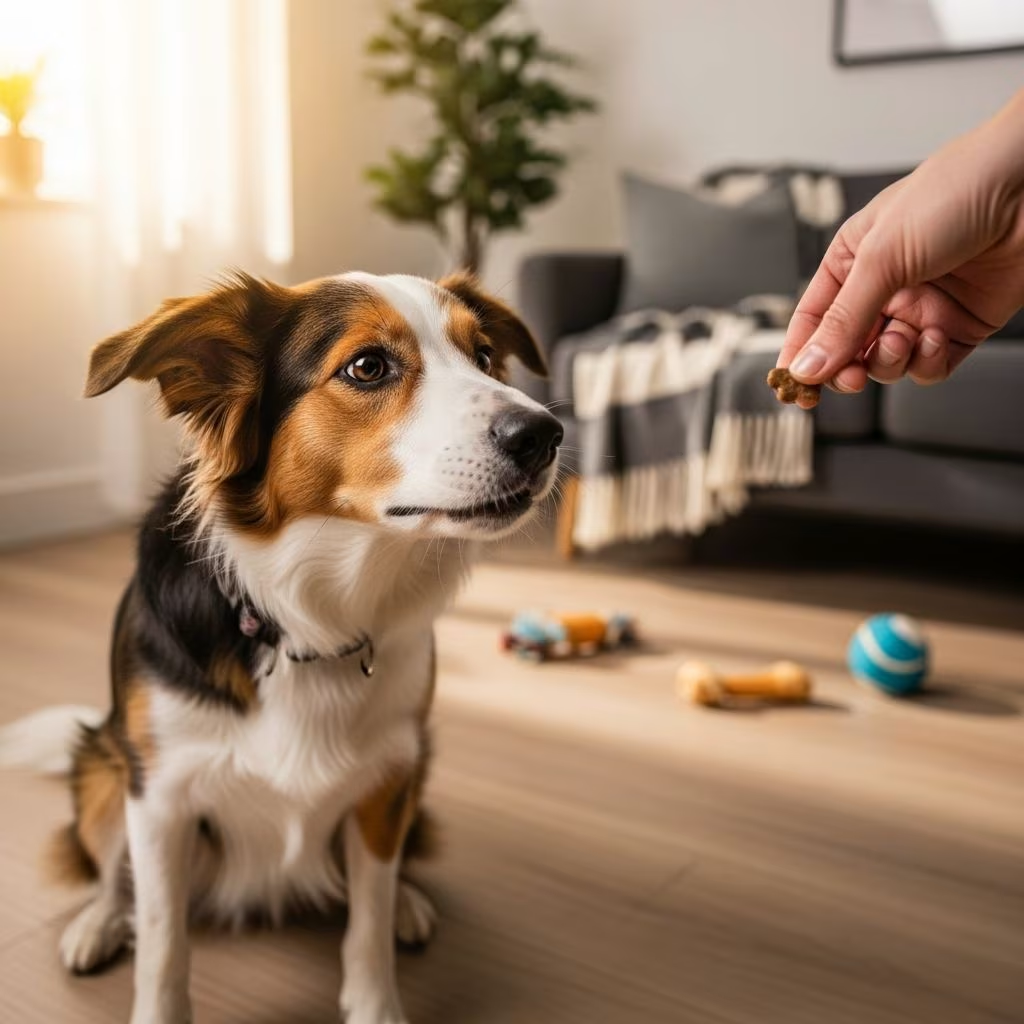
Effective dog training hinges on brevity rather than endurance. Short sessions, typically lasting 5-15 minutes, align with a dog’s natural attention span, fostering quicker learning and sustained enthusiasm without overwhelming the animal or the handler.
The Science Behind Short Sessions
Dogs, particularly young ones, possess limited focus durations that diminish rapidly during prolonged activities. Research from veterinary institutions, such as the University of Pennsylvania’s School of Veterinary Medicine, endorses repeated sessions of five minutes or less to optimize retention and performance. This approach prevents cognitive overload, ensuring each interaction ends positively and reinforces neural pathways for behaviors like sitting or staying.
Extended periods often lead to diminished returns, where initial gains plateau into boredom or errors. By capping sessions early, trainers secure ‘easy wins’ that motivate both dog and owner to repeat the process consistently.
Optimal Durations by Life Stage
Training length varies significantly with age, as developmental stages influence concentration and stamina.
- Puppies (8 weeks to 6 months): Their underdeveloped focus demands 5-10 minute bursts, repeated 2-3 times daily. Every potty break presents a training window, turning routine into reinforcement.
- Adolescents (6 months to 2 years): Improved attention allows 10-20 minutes per session, 1-2 times a day, interspersed with play to sustain engagement.
- Adults (2-7 years): Capable of 15-30 minutes daily, ideally split to maintain sharpness without fatigue.
- Seniors (7+ years): Revert to 5-10 minutes, emphasizing review over new skills to support cognitive health gently.
| Life Stage | Session Length | Frequency | Key Focus |
|---|---|---|---|
| Puppies | 5-10 min | 2-3x/day | Basics, fun |
| Adolescents | 10-20 min | 1-2x/day | Building skills |
| Adults | 15-30 min | 1-2x/day | Refinement |
| Seniors | 5-10 min | 1-2x/day | Maintenance |
Breed-Specific Considerations
High-energy breeds like Border Collies, Belgian Malinois, and Australian Shepherds require 20-30 minutes split into two sessions, incorporating puzzles or agility to channel their drive. Companion breeds, conversely, thrive on gentler 5-10 minute interactions to avoid overstimulation.
Smaller dogs or those with tiny stomachs may need even briefer intervals, as food rewards fill them quickly, curtailing motivation. Always observe individual cues: dilated pupils, panting, or wandering gaze signal time to stop.
Advantages of Concise Training
Short sessions yield multiple benefits:
- Heightened Focus: Dogs remain attentive, absorbing cues without distraction buildup.
- Reduced Frustration: Ending on success prevents negative associations, unlike marathon drills that breed confusion.
- Consistency Boost: Brief commitments fit busy schedules, enabling daily practice over sporadic long efforts.
- Faster Progress: Quality repetitions trump quantity; five solid sits outperform 25 sloppy ones.
- Motivation Surge: Positive closures make training the highlight, eager anticipation follows.
Handlers report higher adherence, as guilt over ‘insufficient time’ evaporates when minutes deliver results.
Implementing Effective Short Sessions
Structure matters as much as duration. Begin in low-distraction environments, using high-value rewards like treats or toys. Focus on one skill per session: isolate ‘sit’ before layering ‘stay’.
End proactively—before errors mount. If engagement wanes, pivot to play. Track progress in a journal: note successes, adjustments, and mood. Gradually introduce variables like distance or noise as proficiency grows.
Incorporate life moments: mealtimes for ‘wait,’ leashes for ‘heel.’ Frequency trumps length; multiple daily micro-sessions outperform singular epics.
Common Mistakes to Sidestep
Avoid these pitfalls:
- Pushing boundaries for ‘progress,’ risking burnout.
- Multi-tasking commands, diluting focus.
- Ignoring off-days; rest preserves momentum.
- Neglecting handler energy—fatigued owners impair sessions.
Overachievers often extend times incrementally, but data favors restraint.
Real-World Applications
Service dog preparation employs 5-minute regulars, prioritizing consistency over volume. Gundog training adapts to individual tolerances, reading subtle disengagement. Basic obedience flourishes universally with this model, from resource guarding to desensitization.
For working breeds, blend physicality: fetch with recalls. Puppies associate training with joy via potty-integrated reps.
Tools and Enhancements
Timers enforce brevity. Clickers mark precision. Varied rewards prevent satiation. Apps log sessions, revealing patterns.
| Tool | Purpose | Benefit |
|---|---|---|
| Timer | Session control | Prevents overrun |
| Clicker | Behavior marker | Sharpens timing |
| Treat Pouch | Quick access | Maintains flow |
| Journal | Progress tracking | Identifies trends |
Frequently Asked Questions
How often should I train my dog daily?
2-3 short sessions for puppies, 1-2 for adults, adjusting for response.
Can short sessions replace long ones?
Yes, they surpass by building habits through repetition without fatigue.
What if my dog wants more time?
Extend slightly if engaged, but prioritize quality; reassess attention.
Is this suitable for all behaviors?
Ideal for basics; desensitization may vary slightly.
How do I know when to end?
Watch for disinterest signs: yawning, avoidance, errors.
Adopting brief sessions transforms training into a joyful routine, yielding obedient, eager companions efficiently.
References
- How Long Should I Work My Dog on Obedience Per Day? — Haven Dog Training. 2023. https://havendogtraining.com/blog/how-long-should-i-work-my-dog-on-obedience-per-day
- Short Training Sessions — Rescued by Training. 2022-07-04. https://rescuedbytraining.com/2022/07/04/short-training-sessions/
- How Long Should a Dog Training Session Last — Delaware K9 Academy. 2023. https://delawarek9academy.com/blog/how-long-should-a-dog-training-session-last/
- Why Shorter Training Sessions Are Often Better — Where’s It Happens. 2025-06-30. https://wheresithappens.com/2025/06/30/why-shorter-training-sessions-are-often-better/
- How Long Should My Training Sessions Be? — Cornerstone Gundog Academy. 2023. https://www.cornerstonegundogacademy.com/blog/how-long-should-my-training-session-be
- How long should your training sessions be? — YouTube (Service Dog Training). 2023. https://www.youtube.com/watch?v=2eKSdU8tJcc



