
Breeding the Dwarf Gourami: Complete Guide
Master dwarf gourami breeding with tank setup, spawning techniques, and fry care.
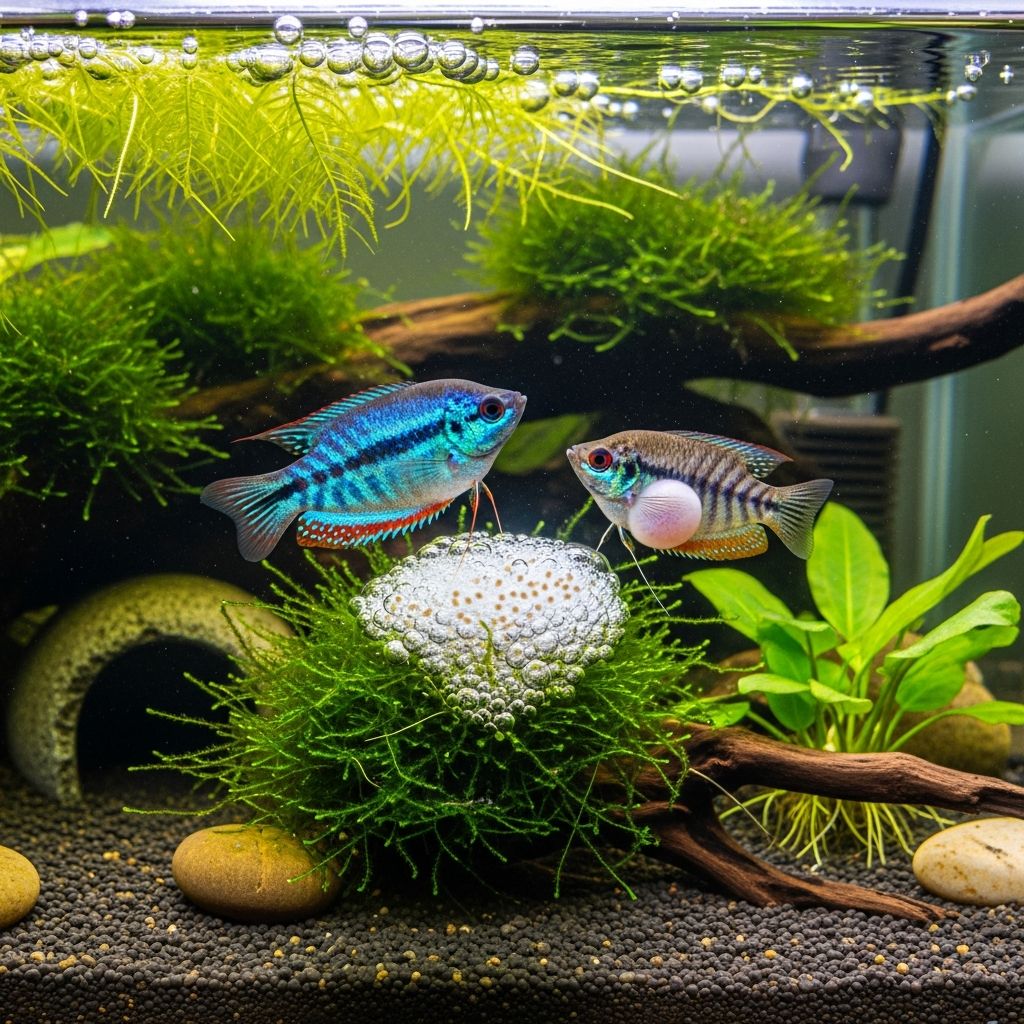
Breeding the Dwarf Gourami: A Complete Guide
Breeding dwarf gouramis can be an incredibly rewarding experience for aquarium enthusiasts, though it requires careful planning and attention to detail. Unlike many fish species, dwarf gouramis exhibit fascinating reproductive behaviors including bubble nesting and active parental care. In community aquariums, healthy mature males and females will often spawn naturally, but the fry rarely survive among other fish. To successfully raise dwarf gourami fry to adulthood, a dedicated spawning and breeding tank is essential.
Understanding Dwarf Gourami Color Variations
Dwarf gouramis display remarkable sexual dimorphism in coloration. Male dwarf gouramis are highly colorful, displaying vibrant patterns and hues that become even more intense during breeding season. Females, by contrast, are notably less colorful, appearing as pale silvery-blue with only faint traces of orange-yellow vertical stripes behind the gills.
Beyond the natural coloration, manmade strains have been developed through selective breeding, offering aquarists several color variations. These include the powder blue, neon blue, and red or sunset forms, where males display predominantly blue or red coloration. Regardless of the variety, female dwarf gouramis maintain a pale blue appearance across all strains. When selecting breeding stock, it is crucial to purchase both the male and female from the same source, ensuring genetic compatibility and reducing stress-related breeding failures.
Setting Up the Breeding Tank
Creating an appropriate breeding environment is fundamental to successful dwarf gourami reproduction. Unlike general community tanks, breeding tanks have specific requirements designed to maximize spawning success and fry survival.
Tank Size and Dimensions
The breeding tank does not need to be as large as a display aquarium. A tank measuring approximately 24 by 12 by 16 inches with a capacity of around 20 gallons provides adequate space. Some breeders successfully use even smaller tanks, including 5-gallon setups for the initial spawning phase. The key is maintaining proper water chemistry and conditions rather than tank volume.
Substrate and Vegetation
Interestingly, the breeding tank should ideally have no substrate on the bottom. This design allows the male to more easily locate and retrieve fallen eggs, which is critical during the incubation period. However, fast-growing aquatic plants should be present at the water surface. Three or four strands of plants like Cabomba can be allowed to drape naturally on the water surface, providing ideal anchoring points for the male’s bubble nest.
Male dwarf gouramis instinctively seek floating plants to construct their nests, so providing these plants is essential for triggering natural breeding behaviors. For general plant growth in the tank, a substrate of 2 to 3 inches of small-sized gravel will suffice, though laterite substrate is superior for promoting healthy plant development. Adequate lighting from fluorescent tubes should provide at least 15 to 20 watts per square foot of water surface.
Hiding Spaces and Water Conditions
On the bottom of the breeding tank, place a few small clay pots on their sides to create hiding places for the female. During the breeding process, females often need refuge from the attention of overzealous males. These pots provide safe havens where stressed females can retreat. Water conditions in the breeding tank should closely match those of the community tank from which the breeding pair originated, ensuring minimal stress during the transition.
Water levels should be reduced to approximately two-thirds of normal capacity. This reduction makes it significantly easier for the male to reach the water surface and pick up fallen eggs, transporting them back to the bubble nest. Temperature is critical and should be maintained around 78 to 80 degrees Fahrenheit. Filtration should be provided by a mature air-driven sponge filter, which offers gentle water circulation without disturbing the delicate bubble nest.
Preparing the Breeding Pair
Proper conditioning of the breeding pair dramatically increases spawning success rates. The process begins with introducing the female to the breeding tank on her own, allowing her to acclimate to the new environment for 7 to 10 days.
Conditioning the Female
During this 7 to 10-day conditioning period, the female should be fed a diet rich in live foods. This nutritious feeding regimen allows her to fill up with roe, developing eggs in her ovaries. Live foods such as mosquito larvae, daphnia, or small crustaceans are ideal choices, providing the high protein content necessary for egg development.
Simultaneously, prepare several jars of infusoria culture to feed the extremely tiny fry once they hatch. Creating an infusoria culture is simple: place a crushed lettuce leaf in each jar of water and position the jars on a sunny windowsill. Within a few days, microscopic organisms will proliferate, creating the perfect first food source for newly free-swimming fry that are too small to consume brine shrimp or commercial fry foods.
Introducing the Male
Seven to 10 days after placing the female in the breeding tank, introduce the male. Within a day or so of his introduction, the male should begin building his bubble nest. This nest consists of mucous-coated air bubbles anchored to the overhanging plants at the water surface. During this time, the male will also begin courting the female by flaring his fins and displaying his brightest colors to attract her attention and stimulate her to spawn.
Chasing behavior typically occurs during this courtship phase, which is entirely normal. The female may require the cover of the clay pots to hide from the persistent male. This behavior indicates that the pair is becoming ready to spawn.
The Spawning Process
Understanding the mechanics of dwarf gourami spawning provides insight into this remarkable reproductive behavior.
Courtship and Mating Embrace
When the female is fully ready to spawn, she approaches the male beneath his bubble nest. The pair then engages in a distinctive spawning embrace. During this embrace, the male wraps his body around the female and turns her on her back. In this position, eggs and sperm are simultaneously released into the water column.
Immediately after the embrace, the pair separates, and the male quickly gathers the floating eggs in his mouth. He coats them with his saliva, making them sticky, then places them into his bubble nest where they adhere to the mucous matrix. The male then produces additional air bubbles to encase the eggs and keep them suspended in the nest.
Multiple Spawning Sessions
The spawning embrace is not a one-time event. Instead, the pair repeats this process multiple times over the course of approximately one to two hours until the female has released all her eggs. A healthy female typically releases around 50 to 100 eggs during a complete spawning session. These multiple embraces ensure that all eggs are fertilized and properly placed in the nest.
Egg Incubation and Fry Development
Once spawning is complete, the male becomes solely responsible for nest defense and egg care. This remarkable parental care is one of the most interesting aspects of dwarf gourami reproduction.
Hatching Timeline
The eggs should begin to hatch approximately 24 hours after being placed in the nest. The tiny, almost invisible fry continue to develop within the nest, occasionally falling out due to their immobility. When this occurs, the vigilant male promptly picks them up in his mouth and returns them to the safety of the nest.
By day three post-hatching, the fry become free-swimming and begin to naturally disperse from the nest despite the male’s dedicated efforts to keep them contained. At this critical juncture, the male should be removed from the breeding tank and returned to the community aquarium. His presence could become stressful or counterproductive once the fry are mobile.
Fry Feeding and Growth
The newly free-swimming fry are incredibly tiny and require proportionally tiny food sources. The infusoria culture prepared during the female conditioning phase becomes invaluable at this stage. For the first two to three weeks, infusoria serves as the primary food source. As the fry grow, gradually introduce slightly larger foods such as baby brine shrimp or finely crushed commercial fry food.
Feeding frequency during the early stages should be multiple times daily—ideally four to six times per day—in very small quantities. The first two days following free-swimming are absolutely critical; without adequate nutrition during this period, fry may develop poorly or perish from energy depletion.
Alternative Breeding Method
For breeders who prefer not to move the adult pair, an alternative approach exists. Allow the dwarf gourami pair to spawn in the community tank. Approximately one day after spawning, when the male is actively caring for the eggs in the bubble nest, carefully remove the entire nest to a separate grow-out tank.
This technique requires gentle handling: slowly slide a bowl under the nest and carefully lift it intact, then gently release it at the water surface of the grow-out tank. The grow-out tank must contain water with identical chemistry to that of the community tank to prevent shocking the eggs and developing fry. This method leaves the adult gouramis undisturbed in the community tank while still providing a safe environment for fry development.
Managing Fry Population Through Culling and Moving
Successful dwarf gourami breeding presents a unique challenge: managing the rapidly growing population of fry. A single spawning can produce dozens of young fish within weeks.
Population Control Strategies
To achieve the best results when breeding dwarf gouramis, the number of fry should be reduced by at least 50 percent. This can be accomplished through two primary methods: either moving half the young fish to another tank for separate rearing, or culling them by feeding them to fish in the community tank.
While culling may seem harsh, it mirrors what occurs naturally in wild populations, where only a small percentage of fry survive to adulthood. Most aquarium breeders prefer the more ethical approach of relocating surplus fry to separate grow-out tanks where they can develop further, allowing for selective breeding of the most desirable specimens or selling them to other aquarists.
Selective Breeding Opportunities
Population management also provides an opportunity for selective breeding. By carefully observing the developing fry, breeders can identify specimens with superior coloration, body shape, or other desirable traits. Retaining these superior individuals while culling or relocating others allows breeders to develop increasingly beautiful strains over successive generations.
Key Tank Parameters Summary
| Parameter | Specification |
|---|---|
| Tank Size | 20 gallons (24 x 12 x 16 inches) or smaller for spawning |
| Water Temperature | 78-80°F (26-27°C) |
| Water Level | Two-thirds of normal capacity (6-8 inches) |
| Substrate | None, or 2-3 inches of small gravel |
| Floating Plants | Cabomba or similar, 3-4 strands |
| Filtration | Mature air-driven sponge filter |
| Lighting | 15-20 watts per square foot |
| Female Conditioning | 7-10 days on live food diet |
| Male Introduction | After 7-10 days of female conditioning |
| Egg Hatching | 24 hours post-spawning |
| Free-Swimming Stage | Day 3 post-hatching |
| Male Removal | When fry become free-swimming (day 3) |
Frequently Asked Questions
Q: What is a bubble nest and why do male dwarf gouramis build them?
A: A bubble nest is a floating structure made of air bubbles coated with mucous that male dwarf gouramis construct at the water surface. They build these nests as part of their natural breeding behavior to provide a safe environment for eggs and newly hatched fry. The mucous helps keep eggs together and floating.
Q: Can dwarf gouramis breed in community tanks?
A: Yes, healthy mature pairs will often spawn in community tanks, but fry survival is extremely unlikely. Other fish will consume the eggs and fry, making a separate breeding tank essential for successful fry rearing.
Q: How many eggs does a female dwarf gourami produce?
A: A healthy female typically releases around 50 to 100 eggs during a complete spawning session, though this number can vary based on age, health, and conditioning.
Q: What is the best first food for newly free-swimming dwarf gourami fry?
A: Infusoria is the ideal first food due to its microscopic size matching the fry’s mouth size. Prepare infusoria cultures in advance using lettuce leaves in water placed on sunny windowsills for several days before needed.
Q: How long does it take for dwarf gourami fry to show color?
A: Newly hatched fry are nearly colorless and transparent. Coloration begins to develop over several weeks, with males gradually displaying their vibrant patterns as they mature. Selective coloration becomes apparent around 8-12 weeks of age.
Q: Why is population control necessary when breeding dwarf gouramis?
A: A single spawning produces dozens of fry that rapidly grow and consume resources. Reducing population by at least 50 percent ensures that remaining fry receive adequate nutrition and space to develop properly, preventing overcrowding and stunted growth.
Q: Can I keep the male with the fry after they become free-swimming?
A: No, the male should be removed once fry become free-swimming around day three. After this point, he may become stressed or may consume the fry, so transfer him back to the community tank.
Q: What water parameters should match between the community tank and breeding tank?
A: pH, general hardness, and water quality should be as similar as possible. Temperature in the breeding tank should be slightly elevated to 78-80°F to stimulate spawning, compared to typical community tank temperatures.
References
- Breeding the Dwarf Gourami — Chewy Educational Content. 2025. https://www.chewy.com/education/fish/general/breeding-the-dwarf-gourami
- The Fascinating World of Dwarf Gourami Fish: A Beginner’s Guide — We Know Pets Australia. 2025. https://www.weknowpets.com.au/blogs/news/the-fascinating-world-of-dwarf-gourami-fish-a-beginners-guide
- Dwarf Gourami – Detailed Guide: Care, Diet, and Breeding — Aquarium Breeder. 2025. https://aquariumbreeder.com/dwarf-gourami-detailed-guide-care-diet-and-breeding/
- The Complete Guide to Dwarf Gourami Breeding — Micro Aquatic Shop Australia. 2025. https://microaquaticshop.com.au/blogs/beginners-guide/the-complete-guide-to-dwarf-gourami-breeding
Similar Articles








Read full bio of Sneha Tete


