
Bracken Fern Toxicity In Livestock: Prevention And Treatment
Understand the hidden dangers of bracken fern for cattle, horses, sheep, and pigs, including symptoms, treatments, and prevention strategies.
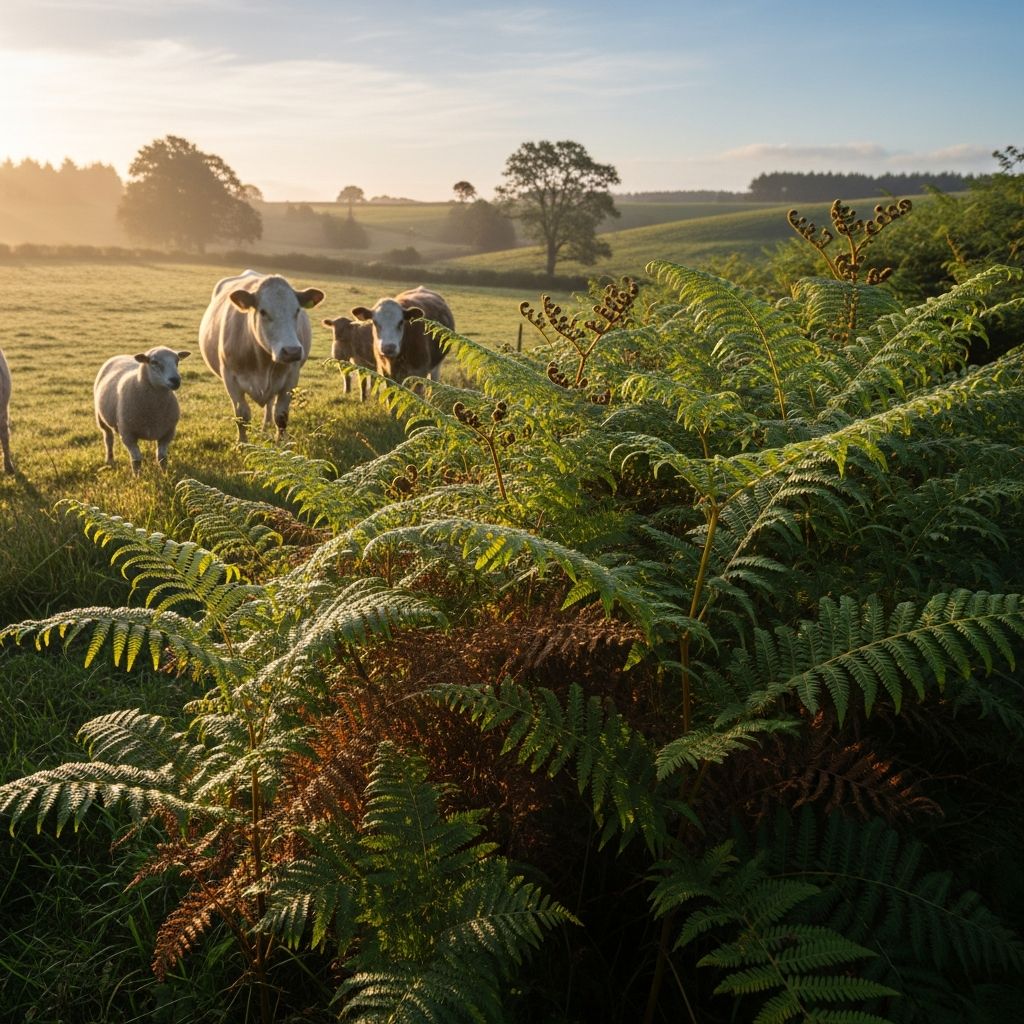
Bracken fern (Pteridium aquilinum), a widespread plant in pastures worldwide, harbors potent toxins that threaten grazing animals. These include cattle, horses, sheep, and pigs, leading to syndromes ranging from bone marrow suppression to neurological collapse. Ptaquiloside induces genotoxic damage and bleeding, while thiaminases deplete vitamin B1, causing deficiency-related disorders.
Recognizing the Plant and Its Global Reach
This perennial fern thrives in poor soils, woodlands, and disturbed lands, often dominating when other forage is scarce. Its large triangular fronds, growing up to 5 feet tall, emerge in spring from deep rhizomes. Rhizomes store toxins concentratedly, posing risks even after frond death. Found across North America, Europe, and beyond, it proliferates in acidic, infertile conditions, making overgrazed or drought-stressed pastures hotspots for exposure.
- Telltale features: Coarse, divided leaves with wavy edges; reddish-brown fiddleheads unfurling early season.
- Hazard zones: Sunny hillsides, forest edges, abandoned fields.
- Seasonal peaks: Summer growth when animals seek sparse grass.
Toxic Agents at Play
Two primary threats drive pathology: ptaquiloside, a radiomimetic compound damaging DNA and bone marrow, and thiaminases, enzymes destroying thiamine essential for nerve function. Ptaquiloside causes capillary fragility, urinary bladder cancers (enzootic hematuria), and immunosuppression via neutropenia. Thiamine loss triggers polioencephalomalacia-like symptoms in ruminants and neurocardiac issues in monogastrics. Cumulative dosing over weeks amplifies risks, with delayed onset masking early exposure.
| Toxin | Primary Effects | Affected Species |
|---|---|---|
| Ptaquiloside | Bleeding, anemia, tumors, bone marrow failure | Cattle, sheep |
| Thiaminase | Neurological deficits, weight loss, heart issues | Horses, pigs, cattle |
Symptoms Across Species
Cattle: Bleeding and Marrow Collapse
In cattle, chronic intake yields progressive anemia from erythroid suppression, evident after weeks. External signs include pale mucous membranes, ventral edema, scleral hemorrhages, fever from infections, and hematuria (red urine) signaling bladder tumors. Acutely, black diarrhea, respiratory distress, and kidney congestion precede high mortality (>90%). Immunodeficiency heightens secondary bacterial invasions.
Horses: Bracken Staggers and Collapse
Horses develop “bracken staggers” after 20-30% fern in hay over a month. Initial anorexia and weight loss escalate to incoordination, wide stance, arched back, tremors, blindness, convulsions, and recumbency. Toxicity lingers post-exposure, demanding swift action.
- Nervousness and circling.
- Staggering gait progressing to inability to rise.
- Muscle spasms and final coma.
Sheep and Pigs: Neurological and Cardiac Crises
Sheep exhibit polioencephalomalacia (PEM) with head pressing, blindness, and recumbency; 75% respond to thiamine if treated early. Pigs suffer anorexia, weight loss, dyspnea, and sudden heart failure-like deaths. Overlaps occur, complicating differentiation.
Diagnostic Approaches
Veterinarians rely on history of fern access in sparse pastures, clinical signs, bloodwork showing leukopenia, anemia, or coagulopathies, and necropsy revealing hemorrhages, edema, marrow hypoplasia, or bladder neoplasms. Thiamine response confirms thiaminase involvement; ptaquiloside cases show genotoxic markers. No single lab test exists, emphasizing pasture surveys.
- Review grazing history and fern prevalence.
- Assess hematology: neutropenia, thrombocytopenia.
- Test thiamine therapy trial.
- Necropsy for confirmatory lesions.
Management and Therapeutic Options
Prevention trumps cure, as ptaquiloside poisonings resist treatment. Remove animals immediately, provide nutritious feed, and supplement thiamine preemptively for at-risk cases.
Thiamine Therapy Protocols
For thiaminase syndromes, administer thiamine hydrochloride: horses 500mg-1g IV day 1, then IM; cattle/sheep 200mg IV q24h; pigs/horses per weight (5mg/kg IV q3h initially). Early intervention yields high success in horses; delayed cases falter.
Supportive Care
Antibiotics combat infections; blood/platelet transfusions aid severe hemorrhage (2-4L in cattle); cathartics/charcoal for acute ingestion. Euthanasia spares prolonged suffering in advanced ptaquiloside toxicity.
| Species | Thiamine Dose | Adjuncts |
|---|---|---|
| Horses | 500mg-1g IV/IM multi-day | Remove fern source |
| Cattle | High-volume transfusions if bleeding | Antibiotics |
| Sheep | 200mg IV q24h | Nutritional support |
Prevention Through Pasture Mastery
Prohibit fern access via fencing, rotational grazing, and supplemental feeding during scarcity. Mechanical slashing delays but risks rhizome exposure; wait 8-12 months before herbiciding. Combine herbicides with resowing for lasting control; avoid grazing treated areas. Burning/ploughing disrupts rhizomes effectively.
- Fence infestations.
- Improve soil fertility to outcompete ferns.
- Monitor hay for contamination.
FAQs on Bracken Fern Risks
What if my animal shows early wobbliness?
Initiate thiamine and isolate from ferns; consult a vet urgently for horses.
Can recovered animals relapse?
Ptaquiloside effects persist; monitor bloodwork lifelong.
Is bracken safe after herbicide?
No—toxins linger; exclude grazing until cleared.
How prevalent is this in the US?
Common in West/Northwest; worst in poor pastures.
Any pet risks?
Primarily livestock; dogs/cats rarely affected but watch for similar ferns.
Long-Term Control Strategies
Sustainable management integrates cultural, mechanical, and chemical tactics. Boost legume/grass mixes to shade out ferns; lime acidic soils. Long-term, community programs eradicate via coordinated spraying and seeding. Track via regular scouting; educate on delayed signs. Economic losses from deaths and stunted growth underscore vigilance.
Farmers should partner with extension services for site-specific plans. Emerging research probes ptaquiloside bioactivation, promising diagnostics.
References
- Bracken Fern and Other Fern Poisoning in Animals — Merck Veterinary Manual. 2023. https://www.merckvetmanual.com/toxicology/bracken-fern-and-other-fern-poisoning/bracken-fern-and-other-fern-poisoning-in-animals
- Western Bracken Fern (Pteridium aquilinum) — USDA Agricultural Research Service. 2022. https://www.ars.usda.gov/pacific-west-area/logan-ut/poisonous-plant-research/docs/western-bracken-fern-pteridium-aquilinum/
- Bracken-fern poisoning in horses — Ontario Ministry of Agriculture, Food and Rural Affairs. 2021. http://www.ontario.ca/page/bracken-fern-poisoning-horses
- Bracken Poisoning in Horses — PetMD. 2024. https://www.petmd.com/horse/conditions/toxicity/c_hr_bracken_poisoning
- Bracken Poisoning In Cattle — The Cattle Site. 2023. https://www.thecattlesite.com/diseaseinfo/201/bracken-poisoning-in-cattle
- Brake Fern – Toxic and Non-toxic Plants — ASPCA. 2024. https://www.aspca.org/pet-care/aspca-poison-control/toxic-and-non-toxic-plants/brake-fern
Similar Articles








Read full bio of Sneha Tete


