

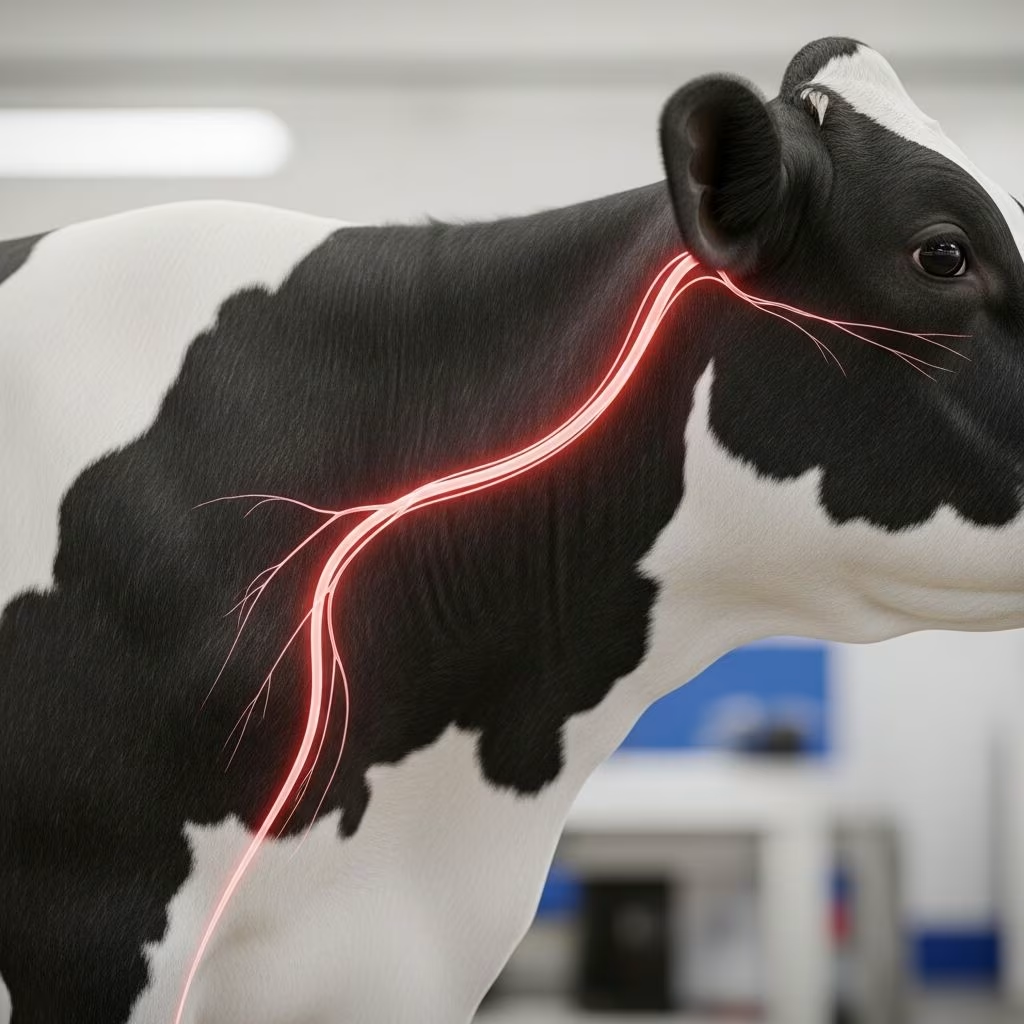
Brachial plexus injuries represent a significant challenge in bovine veterinary practice, particularly affecting the forelimbs of calves during difficult births. These nerve network disruptions lead to partial or complete limb dysfunction, impacting mobility and long-term productivity in affected animals.
Understanding the Brachial Plexus Anatomy
The brachial plexus forms a complex bundle of nerves originating from the spinal cord segments C6 through T2, supplying motor and sensory functions to the thoracic limb. In cattle, this network includes key contributions from the radial, ulnar, median, and musculocutaneous nerves, enabling extension of the elbow, carpus, and fetlock joints, as well as shoulder stability.
Damage to this structure disrupts signal transmission, resulting in flaccid paralysis where muscles lose tone and the limb fails to support weight. Unlike simpler nerve traumas, brachial plexus involvement often stems from traction forces stretching or avulsing nerve roots, a scenario common in veterinary reports on calving complications.
Primary Causes of Injury
Most cases arise during dystocia, especially when excessive pulling force is applied to extract a large calf in anterior presentation. Veterinarians note that attempts to deliver while the cow stands in restraint devices heighten risk, as the dam’s sudden recumbency midway through delivery amplifies traction on the calf’s shoulder region.
- Prolonged second-stage labor with oversized calves.
- Mechanical assistance using traction devices without proper alignment.
- Rarely, direct trauma from falls or crushes post-birth.
These events mimic human obstetric brachial plexus palsies like Erb’s or Klumpke’s, but in neonates, the injury manifests immediately with visible limb deformities.
Recognizing Clinical Manifestations
Affected calves exhibit characteristic signs centered on the forelimb. The elbow drops dramatically, with the carpus and fetlock flexed, leading to knuckling of the toe and dragging during attempted ambulation. Severe cases prevent any weight-bearing, and the limb dangles flaccidly.
| Symptom | Description | Severity Indicator |
|---|---|---|
| Dropped Elbow | Elbow joint hangs low due to triceps paralysis | Moderate to severe |
| Flexed Distal Joints | Carpus and fetlock buckle forward | Common in all cases |
| Toe Knuckling | Dorsal hoof surface scrapes ground | Progresses without intervention |
| Muscle Atrophy | Shoulder muscle wasting, prominent scapular spine | Appears within days |
| Sensory Loss | Reduced pain response distal to elbow | Poor prognostic sign |
Owners often first notice scuffing of the hoof wall and inability to rise symmetrically. Bilateral involvement is rare but catastrophic, mimicking generalized weakness.
Differential Diagnosis Essentials
Distinguishing brachial plexus damage from mimics is crucial for prognosis. Humeral fractures present with crepitus and swelling, while radial nerve paralysis alone allows weight-bearing if the limb is positioned under the body. Olecranon fractures cause similar elbow drop but with palpable instability.
- Conduct neurologic exam: Test deep pain sensation and panniculus reflex.
- Rule out fractures via palpation and radiographs if available.
- Observe gait: Dragging without weight support points to plexus avulsion.
Electromyography, though uncommon in field settings, confirms denervation patterns in research contexts.
Management and Supportive Care
No curative therapy exists for avulsed roots, but supportive measures improve outcomes. Prompt veterinary intervention focuses on preventing secondary complications like contracted tendons or pressure sores.
Splinting Protocols: Custom splints extend the limb straight, applied by professionals to avoid ischemia. Monitor for sores and adjust weekly. Wide hobbles on hindlimbs aid standing if unilateral.
Anti-inflammatory drugs like NSAIDs reduce swelling around intact fibers, potentially aiding partial recovery in milder neurapraxia cases. Provide deep bedding in loose housing to minimize further trauma.
Prognosis Factors and Recovery Timeline
Outlook varies: Mild traction injuries may resolve in weeks with NSAIDs, showing muscle regain. Severe avulsions yield permanent deficits, with euthanasia considered for non-ambulatory calves beyond 48 hours.
- Favorable: Intact deep pain, early intervention, unilateral.
- Guarded: Partial atrophy, slow NSAID response.
- Poor: Anesthesia to mid-limb, Horner syndrome.
Recovery spans 2-6 months for viable cases, with beef calves faring better than dairy due to less demanding environments.
Prevention Strategies for Producers
Avoiding excessive force during calving is paramount. Train staff on proper technique: Two-person pulls should advance forelimbs one hand-breadth past the vulva in 10 minutes without hip-lock.
- Select for calving ease in breeding programs.
- Perform deliveries on soft ground, not in crushes.
- Monitor high-risk cows closely during late gestation.
- Ensure passive immunity transfer to combat secondary infections from recumbency.
These steps reduce not just brachial but also femoral, obturator, and rib fracture incidences.
Related Nerve Injuries in Calving
Brachial plexus issues often coincide with hindlimb paralyses. Femoral nerve damage from hip-lock causes stifle collapse and quadriceps atrophy, leading to dog-sitting postures. Tibial paralysis flexes hocks bilaterally post-prolonged labor, resolving slowly without treatment.
Peroneal injury, from recumbency, knuckled the fetlock unilaterally. Holistic calving management addresses this spectrum.
Long-Term Impacts on Herd Health
Chronic cases burden operations: Culls for humane reasons, reduced growth rates, or salvage slaughter. Early euthanasia prevents suffering and welfare violations. Track incidence to refine protocols.
Frequently Asked Questions
Can calves fully recover from brachial plexus injury?
Partial recovery is possible in 20-50% of mild cases with aggressive support, but complete function rarely returns in severe avulsions.
How do I know if it’s a nerve issue versus a fracture?
Nerve damage shows flaccid paralysis without crepitus; imaging and neuro exams confirm.
Is surgery an option?
Not routinely in cattle; supportive care is standard due to cost and anatomy.
What if both front limbs are affected?
Prognosis is grave; supportive nursing rarely succeeds long-term.
How can I prevent this in my herd?
Prioritize genetic ease of calving, gentle assistance, and post-birth monitoring.
References
- Calving Part 3 – Nerve Damage — NADIS. 2023. https://www.nadis.org.uk/disease-a-z/cattle/calving-module/calving-part-3-nerve-damage/
- Radial limb paralysis in Cows (Bovis) — Vetlexicon. 2024. https://www.vetlexicon.com/bovis/musculoskeletal/articles/radial-limb-paralysis/
- Trauma of the Peripheral Nerves and Neuromuscular Junction in Animals — Merck Veterinary Manual. 2025-02-01. https://www.merckvetmanual.com/nervous-system/diseases-of-the-peripheral-nerves-and-neuromuscular-junction/trauma-of-the-peripheral-nerves-and-neuromuscular-junction-in-animals
- Nerve damage – Large Animal Surgery — University of Minnesota. 2022. https://open.lib.umn.edu/largeanimalsurgery/chapter/nerve-damage/
- Partial brachial plexus paresis in three calves — PubMed (Journal of Veterinary Internal Medicine). 2012-09-01. https://pubmed.ncbi.nlm.nih.gov/22952132/



