

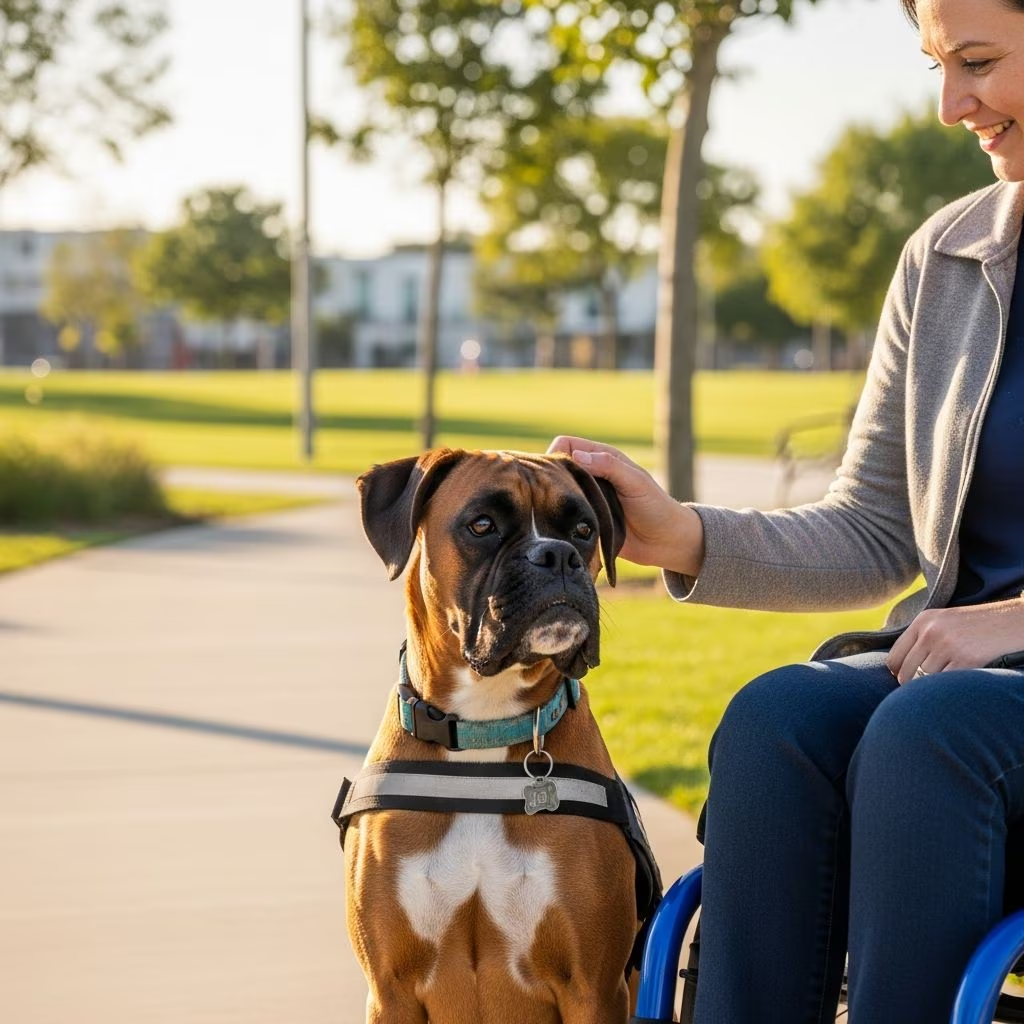
Boxer dogs, with their muscular build and enthusiastic personality, show promise in service roles due to traits like loyalty and quick learning. However, their high energy levels and protective instincts demand rigorous training to ensure reliability in public settings.
Understanding the Boxer Breed’s Core Characteristics
Originating from Germany, Boxers were developed for working tasks including hunting and guarding, evolving into versatile companions recognized by the American Kennel Club since 1904. Their medium-to-large size, short shiny coat in colors like fawn or brindle, and athletic physique make them appear powerful yet graceful.
These dogs thrive on human interaction, forming deep bonds that fuel their eagerness to assist. Their playful, “clownish” behavior stems from high intelligence paired with boundless vitality, which can be channeled effectively through structured activities.
Physical Attributes Supporting Service Work
- Muscular Build: Strong legs and deep chest provide stability for balance support.
- Endurance: Historical use in military roles highlights stamina for extended tasks.
- Sensory Acuity: Sharp hearing and smell aid in detection duties.
Essential Temperament Traits for Assistance Roles
Boxers exhibit a friendly, patient demeanor that suits interaction with diverse people, including children and other animals when properly socialized. Their loyalty translates to protectiveness, alerting handlers to threats without undue aggression.
| Trait | Benefit for Service | Potential Drawback |
|---|---|---|
| Loyalty | Strong handler bond for reliable task performance | Overprotectiveness if not trained |
| Intelligence | Quick mastery of complex commands | Boredom leads to mischief without stimulation |
| Friendliness | Non-threatening public presence | High sociability may distract from duties |
| Energy | Sustained activity for mobility aid | Requires outlets to prevent hyperactivity |
This balance of qualities positions Boxers well, though consistent positive reinforcement training is vital to harness their upbeat nature.
Training Boxers for Service Dog Responsibilities
Service dogs must demonstrate obedience, public access skills, and task-specific proficiency. Boxers’ eagerness to please makes them responsive learners, often excelling in obedience trials and agility. Start with basic commands like sit, stay, and heel, progressing to advanced cues.
Step-by-Step Training Framework
- Foundation Obedience (8-12 weeks): Focus on reliability in distractions using treats and praise.
- Socialization (Ongoing): Expose to crowds, vehicles, and noises to build calm demeanor.
- Task Specialization (3-6 months): Tailor to handler needs, such as retrieval or alerts.
- Public Access Testing: Simulate real-world scenarios for certification readiness.
Professional trainers emphasize patience, as Boxers’ enthusiasm can lead to errors if rushed. Their working intelligence supports consistent performance once habits form.
Specific Tasks Boxers Can Master as Service Dogs
Trained Boxers perform diverse duties, leveraging physical prowess and senses. They assist with physical, medical, and psychiatric needs, enhancing handler independence.
- Mobility Assistance: Provide counterbalance for wheelchair users or those with balance issues, using sturdy frame to steady falls.
- Retrieval and Object Handling: Fetch dropped items, medication, or doors with precise paw control.
- Medical Detection: Alert to seizures, low blood sugar via scent changes, or sound cues.
- Psychiatric Support: Interrupt anxiety episodes by nudging or deep pressure therapy.
- Environmental Awareness: Signal intruders or hazards through barking or pawing.
These capabilities stem from their alertness and strength, making Boxers adaptable across disabilities.
Legal Framework and Public Access Rights
In the United States, the Americans with Disabilities Act (ADA) grants service dogs public access without fees or separate areas, provided they behave appropriately. No breed restrictions exist, but handlers must prove task-training, not just presence. Boxers qualify if they pass temperament tests and maintain control.
Emotional support roles differ, requiring no task training but documentation for housing/travel. Boxers shine here via natural companionship, though service certification unlocks broader privileges.
Health Considerations for Long-Term Service
Boxers are prone to hip dysplasia, heart conditions like cardiomyopathy, and cancers, necessitating regular vet checks. A lifespan of 10-12 years supports extended service, but early screening ensures suitability.
- Exercise Needs: 60+ minutes daily to sustain focus.
- Diet and Weight: Monitor to prevent joint strain from their muscular build.
- Grooming: Minimal shedding eases maintenance in service environments.
Real-World Success Stories and Case Examples
Anecdotal evidence highlights Boxers aiding visually impaired individuals through guide work and providing stability for mobility-impaired handlers. Their gentle side comforts during PTSD episodes, with bonds fostering emotional resilience. Families note their patience with children, extending to therapeutic family dynamics.
Potential Limitations and When to Choose Alternatives
Boxers’ exuberance may overwhelm sedentary handlers, and their size (50-80 lbs) suits not all apartments. Breeds like Labradors offer calmer dispositions for some, but Boxers excel where energy matches active lifestyles.
Assess handler compatibility: High-drive individuals benefit most from their vitality.
Getting Started: Steps to Certify a Boxer Service Dog
- Health evaluation and temperament test.
- Enroll in accredited training program.
- Practice 1-2 years for proficiency.
- Optional third-party certification for documentation.
Frequently Asked Questions (FAQs)
Can any Boxer become a service dog?
Not all; select for stable temperament and health. About 50% of puppies pass rigorous screening.
Are Boxers too energetic for service work?
Channelable with training; their stamina aids demanding tasks.
How much does training cost?
$10,000-$30,000 professionally; owner-training reduces to $1,000-$5,000 with time investment.
Do Boxers get along in public?
Yes, when socialized; low barking enhances non-disruptive presence.
What’s the best age to start training?
8 weeks for basics, full service by 18-24 months.
References
- The Boxer and their Versatility as Service Dogs — Emotional Pet Support. 2023. https://www.emotionalpetsupport.com/boxers-and-their-versatilityas-service-dogs/
- Can A Boxer Be A Service Dog? — Service Dog Outfitters. 2024. https://servicedogoutfitters.com/service-dogs-types/can-a-boxer-be-a-service-dog/
- Boxer Service Dog – Everything You Need to Know — Pettable. 2024. https://pettable.com/blog/boxer-service-dog
- The Boxer: A Lively and Loyal Companion — Zealândia Pets. 2023. https://www.zealandiapets.com/pages/the-boxer-a-lively-and-loyal-companion
- Boxer Training — Middle Tennessee Boxer Rescue. 2024. https://mtbr.org/boxer-training
- Boxer Dog Breed Information — American Kennel Club. 2025-01-15. https://www.akc.org/dog-breeds/boxer/



