Complete Guide to Feeding Box Turtles: Diet & Nutrition
Master box turtle nutrition with expert feeding schedules, plant-based diets, and supplementation tips.
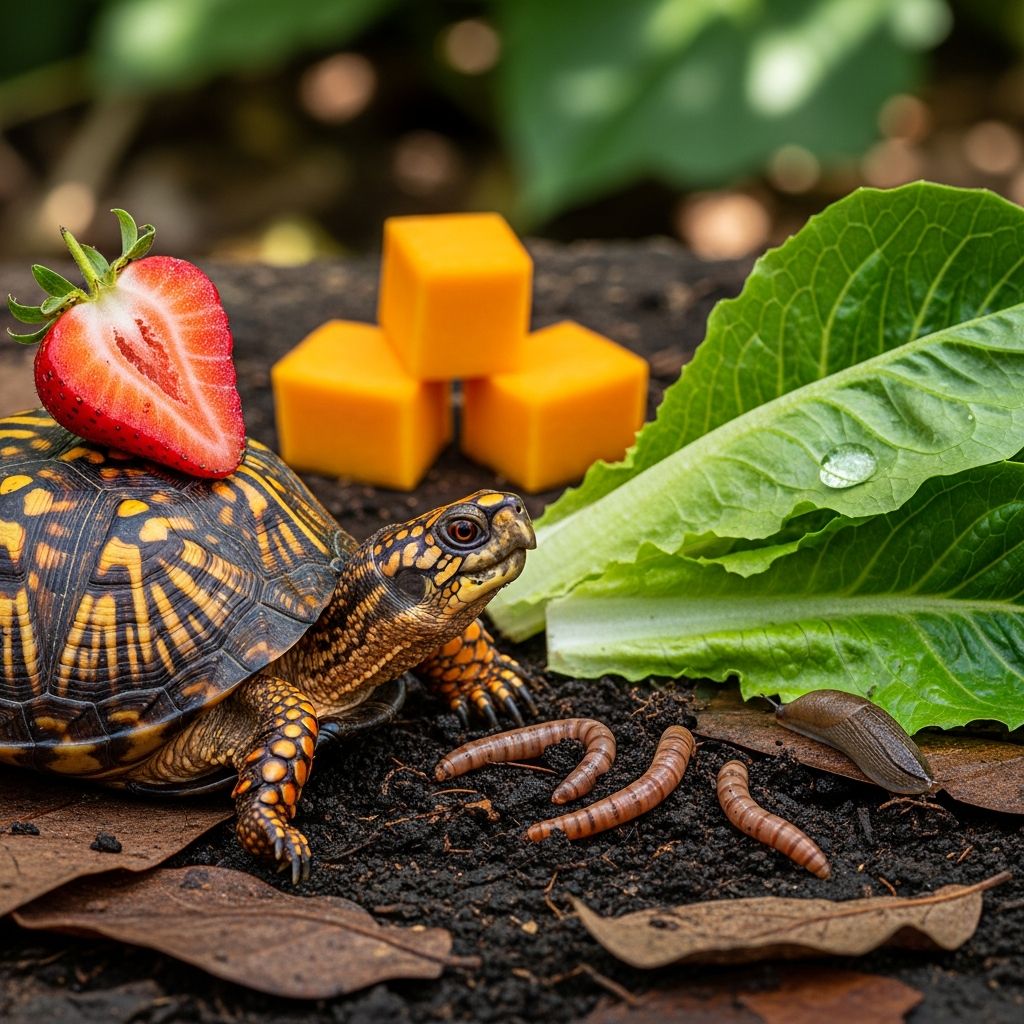
Box turtles are herbivorous or omnivorous reptiles that require a carefully balanced diet to maintain optimal health. Understanding what, when, and how much to feed your box turtle is essential for ensuring it lives a long and healthy life. This comprehensive guide covers everything you need to know about box turtle nutrition, from the types of plants they should eat to the importance of vitamin and mineral supplementation.
How Often Should I Feed My Box Turtle?
The feeding frequency for box turtles depends primarily on their age and life stage. Young turtles have higher metabolic rates and growing bodies, so they require more frequent feeding than their adult counterparts. As a general guideline:
Young turtles: Most juvenile box turtles should be fed daily to support their growth and development. This daily feeding schedule ensures they receive adequate nutrition for their rapidly developing bodies.
Adult turtles: Mature, adult box turtles can be fed less frequently. Once they reach adulthood, most box turtles thrive on a feeding schedule of every other day or even every few days, depending on their individual metabolism and activity level. This reduced feeding frequency reflects their slower metabolic rate compared to younger turtles.
It is important to observe your individual turtle’s body condition and adjust feeding frequency as needed. If your turtle appears to be losing weight, you may need to increase feeding frequency. Conversely, if your turtle appears overweight, you may need to reduce portions or feeding frequency.
What Types of Plants Can I Feed My Turtle?
Box turtles are primarily herbivorous, with the majority of their diet consisting of plant material. The key to a nutritious box turtle diet is variety and proper proportions of different plant types.
Vegetable Composition Guidelines
Most plant material fed to box turtles should be vegetables and flowers, making up approximately 80% to 90% of their diet, with only 10% to 20% being fruit. This ratio ensures your turtle receives adequate nutrients while limiting sugar intake from fruits.
Dark Leafy Greens
Dark, leafy greens should form the largest part of your box turtle’s vegetable intake. These vegetables are nutrient-dense and provide essential vitamins and minerals. Recommended dark leafy greens include:
Collard greens, beet greens, mustard greens, broccoli, turnip greens, alfalfa hay, bok choy, kale, parsley, Swiss chard, watercress, clover, red or green cabbage, savory, cilantro, kohlrabi, escarole, and dandelion greens.
When selecting leafy greens, prioritize the outer, darker leaves over the inner, light-colored portions, as the outer leaves contain significantly more nutritional value.
Colored Vegetables
Yellow, red, and orange vegetables can also be included in your box turtle’s diet and provide important vitamins and antioxidants. These vegetables can comprise a moderate portion of the diet and include options such as bell peppers, carrots, various squash varieties, cooked sweet potato, pumpkin, and butternut squash.
Additional Vegetable Options
A lesser percentage of the diet can include cactus, various squash varieties, sprouts, cooked sweet potato, parsnips, okra, cucumber, asparagus, mushrooms, carrots, peas, and corn. These vegetables provide variety and ensure your turtle receives a broad spectrum of nutrients.
Vegetables to Avoid or Limit
Certain vegetables should be avoided or fed sparingly due to their nutritional profile or chemical composition:
Iceberg lettuce and celery: These greens are composed mainly of fiber and water with poor nutritional content and should be avoided as primary food sources.
High-oxalate vegetables: Swiss chard, spinach, and beet greens should be fed sparingly, as they contain oxalates that can bind to calcium and other trace minerals, preventing these nutrients’ absorption in the turtle’s intestinal tract. Diets composed primarily of these vegetables can ultimately lead to nutritional deficiencies.
Goitrogen-containing vegetables: Be cautious when feeding cabbage, kale, or mustard greens in large quantities, as these vegetables contain goitrogens, which are chemicals that may interfere with thyroid function and potentially lead to hypothyroidism.
Fruit as Part of Your Box Turtle’s Diet
While fruits can be offered to box turtles, they should make up a small portion of the overall diet. Fruits are naturally high in sugars and should be limited to approximately 10% or less of daily food intake.
Healthy Fruit Options
Fruits that are particularly healthy for box turtles include figs, which are high in calcium and therefore especially beneficial for bone health. Other excellent fruit choices include apricots, dates, raspberries, and strawberries. These fruits provide natural sugars, fiber, and various vitamins that complement a balanced turtle diet.
Fruit Preparation and Feeding
If you offer fruit, the amount should be less than 10% of the daily food intake. Fruits should be thoroughly washed before feeding and cut into appropriately sized pieces to prevent choking hazards.
Flowers as Nutritional Supplements
As a treat, flowers may also be offered to box turtles and can provide variety to their diet. Healthy flower options include geraniums, carnations, dandelions, hibiscus, nasturtiums, and roses. Flowers can be home-grown or purchased from floral shops. Interestingly, floral shops often throw out older, wilting flowers. While these may be unacceptable for sale to the public, some store owners offer them at reduced cost for pet food. Be sure that no chemicals have been applied to the flowers or water before offering them to your turtle.
Food Preparation Methods
The way you prepare vegetables and fruits for your box turtle can affect their nutritional value. Vegetables and fruit can be offered cooked or raw, although raw tends to be more nutritious, as cooking can destroy many vital nutrients. When preparing food for your turtle:
Always thoroughly wash all fruits and vegetables before feeding them to remove any pesticide residues or contaminants that could harm your turtle.
Cut vegetables and fruits into appropriately sized pieces to prevent choking and make consumption easier for your turtle.
Consider the texture of the food item—soft vegetables are generally easier for turtles to consume than very hard, raw vegetables.
Do I Need to Give My Box Turtle Vitamins and Minerals?
Vitamin and mineral supplementation is crucial for maintaining your box turtle’s health. Like most reptiles, turtles require more dietary calcium than phosphorus, and a proper balance is essential for bone health, shell integrity, and overall physiological function.
Calcium Supplementation
Most veterinarians recommend lightly sprinkling vegetable matter with a calcium powder two to three times per week. Acceptable calcium supplements include calcium gluconate, calcium lactate, or calcium carbonate. This supplementation helps ensure your turtle receives adequate calcium to prevent metabolic bone disease and maintain strong bone structure.
Multivitamin-Mineral Supplementation
In addition to calcium supplementation, a light sprinkling of a multivitamin-mineral powder made specifically for reptiles is also recommended weekly. These multivitamin supplements ensure your turtle receives adequate levels of vitamin A, vitamin D3, and other essential micronutrients that may not be present in sufficient quantities in their food alone.
Proper Supplementation Technique
The best way to ensure reptiles consume the supplements is to dust them onto small portions of their vegetables and feed those dusted portions first, when your turtle is most hungry and eager to eat. This technique ensures your turtle consumes the full dose of supplements rather than leaving dusted food items uneaten in their habitat.
Creating a Balanced Diet
A balanced box turtle diet should include variety across all food categories. Rotate different types of vegetables regularly to ensure your turtle receives a broad spectrum of nutrients. Combine dark leafy greens with colored vegetables, occasional fruits, and flowers to create an interesting and nutritionally complete diet.
Monitor your turtle’s body condition regularly and adjust portions or feeding frequency as needed. A healthy box turtle should have a shell that is smooth and free from pyramiding, clear eyes, and an active demeanor during appropriate times of day.
Important Nutritional Considerations
Box turtles are prone to certain nutritional deficiencies if their diet is not properly balanced. One common deficiency is calcium deficiency, which can lead to metabolic bone disease characterized by soft shells and deformed limbs. Another concern is vitamin A deficiency, which can lead to swollen eyes and respiratory infections.
To prevent these deficiencies, ensure your turtle’s diet includes:
– A variety of dark leafy greens rich in calcium
– Regular calcium supplementation
– Yellow, orange, and red vegetables providing vitamin A
– Weekly multivitamin supplementation
– Appropriate feeding frequency based on age
Frequently Asked Questions About Box Turtle Feeding
Q: Can I feed my box turtle only vegetables?
A: Yes, most box turtles can thrive on a primarily vegetarian diet consisting of 80-90% vegetables and flowers with 10-20% fruits. However, ensure you provide variety and include regular calcium and multivitamin supplementation to prevent nutritional deficiencies.
Q: How do I know if my box turtle is eating enough?
A: Monitor your turtle’s body condition regularly. A healthy turtle should have a rounded shell without visible bumps (pyramiding), clear eyes, and active behavior. If your turtle appears thin or lethargic, increase feeding frequency or portion sizes.
Q: What should I do with uneaten food?
A: Remove any uneaten food from your turtle’s habitat within a few hours to prevent bacterial growth, mold, and odors. Decaying food can also attract pests and create unsanitary living conditions.
Q: Can box turtles eat commercial turtle pellets?
A: While some commercial turtle pellets can be included in a balanced diet, they should not be the primary food source. Fresh vegetables and plants should form the majority of your box turtle’s diet, with pellets serving as a supplement.
Q: How often should I supplement vitamins?
A: Most veterinarians recommend calcium supplementation two to three times per week and multivitamin supplementation once weekly. Always follow your veterinarian’s specific recommendations based on your individual turtle’s needs.
Q: Are there any toxic plants I should avoid feeding my box turtle?
A: Yes, avoid feeding your turtle high-oxalate vegetables like spinach and Swiss chard in large quantities, iceberg lettuce, and vegetables treated with pesticides or other chemicals. Always research unfamiliar plants before offering them to your turtle.
Q: Can I feed my box turtle different foods each day?
A: Absolutely! In fact, varying your turtle’s diet is recommended to ensure they receive a complete spectrum of nutrients. Rotate different vegetables, greens, and occasional fruits daily or weekly.
References
- Feeding Box Turtles — VCA Animal Hospitals. Accessed 2025. https://vcahospitals.com/know-your-pet/turtles-box-feeding
- How Much & How Often to Feed Turtles: Vet-Reviewed Guide — Hepper. 2024. https://articles.hepper.com/turtle-feeding-guide/
- What Do Pet Turtles Eat? Diets, Mealtimes, Amounts — WebMD Pets. 2024. https://www.webmd.com/pets/what-do-pet-turtles-eat
- Owning Aquatic Turtles — VCA Animal Hospitals. Accessed 2025. https://vcahospitals.com/know-your-pet/turtles—aquatic—owning
Similar Articles








Read full bio of medha deb