

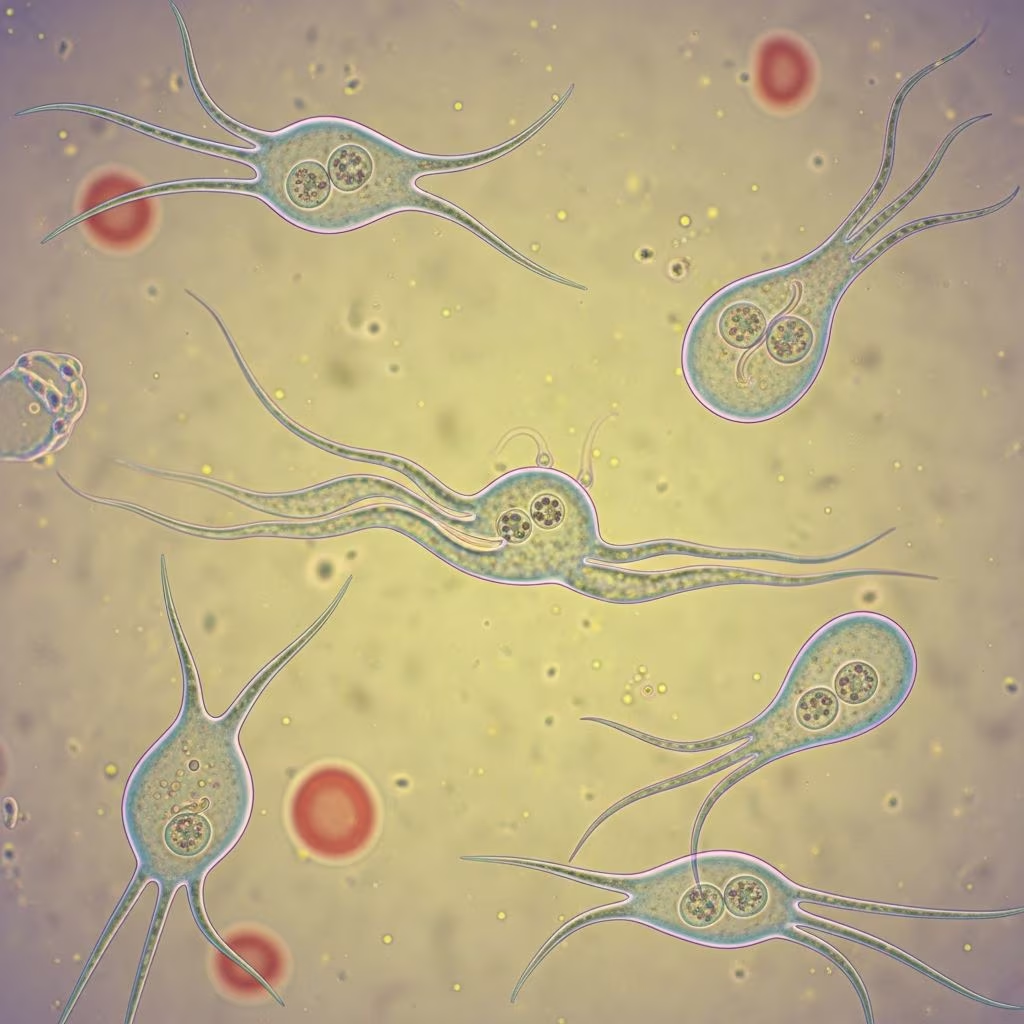
Bovine trichomoniasis, commonly known as trich, is a significant venereal disease affecting cattle reproduction worldwide. Caused by the protozoan parasite Tritrichomonas foetus, it spreads primarily through breeding, leading to substantial economic losses from reduced fertility and increased open cows.
The Nature of the Pathogen
Tritrichomonas foetus is a flagellated protozoan that thrives in the reproductive tracts of cattle. Bulls serve as lifelong carriers, shedding the organism in their preputial smegma without showing symptoms, while cows typically clear the infection after a few months but suffer reproductive setbacks first.
This parasite’s motility allows it to navigate the female genital tract, causing inflammation and disrupting early pregnancy. Unlike bacterial infections, trichomoniasis evades easy detection due to its microscopic size and lack of overt clinical signs in most cases.
Transmission Pathways in Herds
Transmission occurs almost exclusively via coitus. Infected bulls introduce the parasite to naive females during natural service. Virgin heifers and cows without calves at side are particularly vulnerable, as pregnant or nursing females are presumed uninfected.
- Bulls over 3-4 years old are more likely to harbor chronic infections.
- Shared breeding pastures facilitate rapid herd-wide spread.
- Introduction of untested bulls from auctions poses high risk.
- Neighboring herd commingling during fence-line contact can introduce the disease.
Artificial insemination rarely transmits trich due to semen processing, but contaminated equipment or natural service in AI herds can.
Clinical Manifestations and Herd-Level Impacts
Individual animals rarely show visible illness. Bulls remain asymptomatic carriers. In females, early embryonic death manifests as irregular returns to estrus 1-3 months post-breeding, peaking at 60-120 days gestation.
Herd-level signs include:
- Increased open cows at pregnancy check (20-50% losses possible).
- Prolonged calving intervals.
- Occasional abortions with pyometra or vaginal discharge.
- Reduced weaning weights from delayed conceptions.
Heifers suffer higher infertility rates, exacerbating replacement challenges. Economic toll includes culling costs, lost calves, and lighter market weights.
Diagnostic Approaches for Confirmation
Diagnosis relies on laboratory testing since clinical signs mimic other infertility causes. Preputial smegma from bulls is cultured in specialized media like InPouch systems or tested via PCR for T. foetus DNA.
| Sample Type | Method | Sensitivity | Notes |
|---|---|---|---|
| Bull prepuce | Culture/PCR | High (90%+) | Test 2-3 weeks post-breeding rest |
| Cow vaginal/cervical | Culture | Moderate | Less reliable; use for abortions |
| Aborted fetus | PCR | Variable | Submit placenta/fluids |
Multiple negative tests (e.g., three weekly samples) confirm negativity. Positive results demand immediate action.
Management Challenges: No Approved Treatments
Regulatory restrictions prohibit treatments for trich in the US due to residue concerns and inefficacy. Extra-label drugs like metronidazole show promise experimentally but lack FDA approval for cattle.
Cows self-clear infections after 2-6 months of sexual rest, though not before pregnancy loss. Bulls, especially older ones, become permanent reservoirs.
Vaccination as an Adjunct Tool
A commercial vaccine, TrichGuard, reduces shedding duration and pregnancy losses in females when administered pre-breeding: initial dose 8 weeks prior, booster 4 weeks prior, with annual revaccination.
- Effective in cows/heifers; limited bull benefit.
- Does not prevent infection but hastens clearance.
- Combine with testing/culling for best results.
Vaccination alone insufficient; integrate into comprehensive programs.
Core Control Strategies for Infected Herds
Control hinges on bull management, as they perpetuate spread.
- Cull positives: Slaughter all test-positive bulls immediately.
- Test rigorously: Three negative tests for all bulls pre-breeding.
- Youthful bull battery: Remove bulls >3-5 years; use virgin bulls.
- Short breeding season: Limit to 4 months; pregnancy check and cull opens.
- Sexual rest: Quarantine females 3+ months post-exposure.
For cows: Cull all non-pregnant, pyometra cases, and abortion-confirmed positives. Avoid buying opens.
Prevention Tactics for Naive Herds
Proactive steps avert outbreaks:
- Test all incoming bulls, regardless of age or virgin status.
- Separate heifer and cow breeding groups.
- Fence off neighbors; notify of status.
- Use AI where possible with certified semen.
- Maintain closed herds or quarantine new additions.
Virgin heifers bred to virgin bulls, cows with calves at side to tested negatives minimize risk.
Economic Considerations and Best Practices
Trich outbreaks cost $20-100+ per cow in losses. Prevention via testing ($20-50/bull) far cheaper than culling waves.
State regulations mandate reporting; comply to avoid quarantines.
Frequently Asked Questions (FAQs)
What causes trichomoniasis in cattle?
Tritrichomonas foetus, a protozoan spread by breeding.
Do infected cattle show symptoms?
Rarely; herd infertility is the main indicator.
Can trich be treated?
No approved treatments; focus on culling and prevention.
Is vaccination effective?
Helps females clear infection faster; not a standalone solution.
How to test bulls for trich?
Preputial scraping cultured or PCR; multiple tests needed.
Should I cull all open cows?
Yes, in positive herds to break transmission.
References
- Bovine trichomoniasis: A hidden threat to reproductive efficiency — PMC/NCBI. 2023. https://pmc.ncbi.nlm.nih.gov/articles/PMC11682740/
- Recommendations for managing Tritrichomonas infections in beef — Kansas State Veterinary Health Center. Undated. https://www.ksvhc.org/docs/farm/Trich_recommendations.pdf
- Trichomoniasis in Beef Cattle — Mississippi State University Extension. Undated. https://extension.msstate.edu/publications/trichomoniasis-beef-cattle
- Bovine trichomoniasis: herd presentation and diagnostic options — Auburn University College of Veterinary Medicine. 2018. https://www.vetmed.auburn.edu/wp-content/uploads/2018/09/Bovine-trichomoniasis.pdf
- Disease Alert: Trichomoniasis in Cattle — USDA APHIS. Undated. https://www.aphis.usda.gov/livestock-poultry-disease/cattle/trichomoniasis
- Trichomoniasis – Beef Cattle Handbook — Iowa Beef Center. Undated. https://www.iowabeefcenter.org/bch/Trichomoniasis.pdf
- Bovine Trichomoniasis — Oklahoma State University Extension. Undated. https://extension.okstate.edu/fact-sheets/bovine-trichomoniasis.html



