

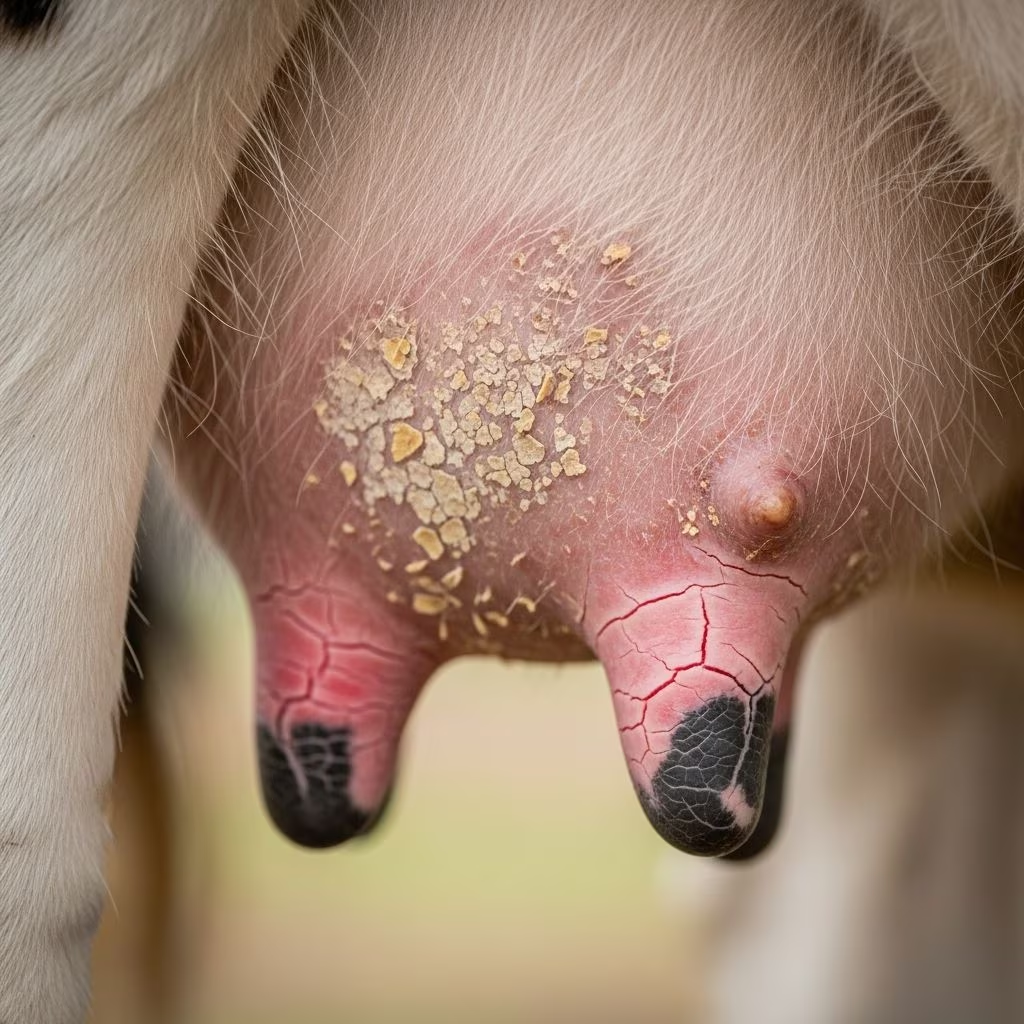
The udder and teats of dairy cows are vital for milk production, but they are prone to various disorders that can compromise animal welfare and farm profitability. These conditions range from physical injuries and inflammatory responses to neoplastic growths, often exacerbated by environmental factors, management practices, and pathogens. Understanding these issues is crucial for timely intervention and herd health maintenance.
Understanding the Anatomy of the Bovine Udder
The bovine udder consists of four quarters, each with a teat suspended by ligaments. The skin covering the udder is thin and sensitive, making it susceptible to trauma and infections. Proper support from suspensory ligaments prevents pendulous udders, which increase injury risk. Weak ligaments, often genetic, lead to sagging, complicating milking and heightening mastitis susceptibility.
Edema, common periparturient, results from fluid accumulation due to hormonal shifts and high salt intake, worsening with poor lymphatic drainage in loose udders.
Traumatic Injuries to Teats and Udder
Trauma is a leading cause of udder damage, stemming from environmental hazards and herd dynamics. Common sources include:
- Fence wire lacerations and hoof treads from overcrowded housing.
- Abrasions from rough bedding, sandy pastures, or abrasive forage like Bermuda grass.
- Insect bites from flies and mosquitoes, leading to secondary infections via licking or rubbing.
- Teeth scratches from suckling calves or herdmates, appearing as dorsal-ventral marks.
Milking machine issues, such as excessive vacuum or faulty pulsation, cause petechial hemorrhages on teats, progressing to open sores if unaddressed. Contusions and hematomas manifest as cranial or caudodorsal swellings, mimicking abscesses. Severe cases cause anemia, evidenced by pale mucous membranes, tachycardia, and weakness, with a guarded prognosis if swelling enlarges.
| Injury Type | Common Causes | Clinical Signs | Complications |
|---|---|---|---|
| Lacerations | Wire cuts, steps | Bleeding, open wounds | Infection, mastitis |
| Hematomas | Blunt trauma | Soft swelling, anemia | Death in 2-7 days |
| Machine-Induced | High vacuum | Petechiae, sores | Bacterial invasion |
Infectious Conditions of Teat Skin
Bacterial, viral, and fungal pathogens frequently target teat and udder skin, especially in damp or unsanitary conditions.
Bacterial Dermatitis
Udder fold dermatitis presents postpartum with necrotizing lesions, matted hair, scabs, and foul discharge in skin folds. Myiasis occurs in warm weather, and severe cases in heifers cause lameness. Diagnosis relies on clinical signs; treatment involves antiseptics and antibiotics.
Viral Infections
Herpes mammillitis (BHV-2) affects first-calf heifers, causing vesicles and pustules (1-10 mm) on teats and udder. Multiple animals are often involved, with lesions transmissible to humans. Bovine viral diarrhea virus (BVDV), bluetongue, and malignant catarrhal fever also produce skin lesions.
Frostbite, differentiated from herpes by leathery, cold skin patches, strikes periparturient cows in cold barns.
Fungal Diseases
Trichophyton verrucosum (ringworm) creates circular, crusted alopecic patches (1-10 cm) on udder skin, often with concurrent body lesions.
Physiological and Developmental Abnormalities
Precocious udder development in calves and heifers arises from estrogenic stimuli like cystic ovaries, estrogenic feeds, or zearalenone mycotoxin. Affected animals show symmetric enlargement, sometimes with vulvar swelling; group outbreaks suggest feed contamination. Resolution requires feed removal.
Udder edema peaks pre-calving due to venous/lymphatic compromise in pendulous udders, predisposing to trauma and mastitis. Milk ejection failure, or let-down issues, stems from stress or oxytocin deficiency.
Neoplastic and Structural Disorders
Tumors in older dairy cows (>15 years) include squamous cell carcinomas (ulcerated, malodorous masses), adenocarcinomas, fibropapillomas (warts), and rarer types like fibromas. Juvenile tumors mimic mastitis in undeveloped udders.
Structural failures, like suspensory ligament rupture, cause teat deviation and milking difficulties, often genetic and untreatable. Acute ruptures occur at parturition.
Link to Mastitis and Udder Health
Teat and skin disorders predispose to mastitis, the costliest dairy disease. Subclinical mastitis elevates somatic cell counts (>100,000/mL) without visible signs; clinical forms show swelling, heat, altered milk, and fever. Pathogens include Staphylococcus aureus (30-40%, hard to eradicate), Streptococcus agalactiae (eradicateable), environmental streptococci (5-10%), and coliforms.
Signs: udder hardness, pain, clots in milk, reduced yield, systemic illness. Early lactation cases often trace to dry period infections.
Diagnostic Approaches
Diagnosis combines history, palpation, and lab tests. Palpate for obstructions (fat/mineral masses in cisterns) causing milk flow interruption. California Milk Cell Test or somatic cell counts detect subclinical mastitis. Differentiate frostbite from herpes by lesion feel; biopsy tumors.
Prevention Strategies
- Provide soft bedding and adequate space to minimize trauma.
- Maintain milking equipment: check vacuum, pulsation, liners.
- Hygiene: post-milking teat dips, dry cow therapy.
- Nutrition: balance salts to curb edema; avoid estrogenic feeds.
- Breeding: cull ligament-weak genetics.
- Vaccination and fly control for infections.
Treatment Protocols
Trauma: Clean wounds, suture if needed, antibiotics for infection. Hematomas may require drainage; monitor anemia. Infections: Topical/systemic antimicrobials; isolate viral cases. Edema: Diuretics, massage. Tumors: Surgical excision if feasible. Mastitis: Intramammary antibiotics, cull chronic S. aureus cases.
FAQs
What causes premature udder growth in heifers?
Estrogenic feeds, mycotoxins, or cystic ovaries; remove offending feed for resolution.
How to differentiate hematoma from abscess?
Hematomas are soft, progressive; abscesses firm, pus-filled.
Can herpes mammillitis affect humans?
Yes, lesions can transmit to farm workers.
Is ringworm on udder contagious?
Yes, via spores; treat topically and isolate.
How to prevent milking machine injuries?
Regular maintenance, proper settings, avoid overmilking.
Monitoring Udder Health in Herds
Regular scoring: check teat condition post-milking, track SCC, monitor new cases. Early dry period infections demand dry cow antibiotics. Genetic selection for strong ligaments enhances resilience.
References
- Diseases of the Teats and Udder — Veterian Key. 2023. https://veteriankey.com/diseases-of-the-teats-and-udder/
- Guidelines for Udder Health in Bovine — ICAR. 2020. https://www.icar.org/Guidelines/07.3-Functional-traits-Udder-health-in-dairy-cattle.pdf
- Traumatic and Structural Disorders of the Bovine Udder — Merck Veterinary Manual. 2023. https://www.merckvetmanual.com/reproductive-system/udder-diseases-in-cows/traumatic-and-structural-disorders-of-the-bovine-udder
- Bovine Udder Health: From Standard Diagnostic Methods to New… — PMC (NCBI). 2023-05-15. https://pmc.ncbi.nlm.nih.gov/articles/PMC10221688/
- A Guide to Mastitis in Cattle — VitaFerm. 2025-02-21. https://vitaferm.com/2025/02/21/mastitis-in-cattle/
- Overview of Udder Diseases in Cows — MSD Veterinary Manual. 2023. https://www.msdvetmanual.com/reproductive-system/udder-diseases-in-cows/overview-of-udder-diseases-in-cows



