

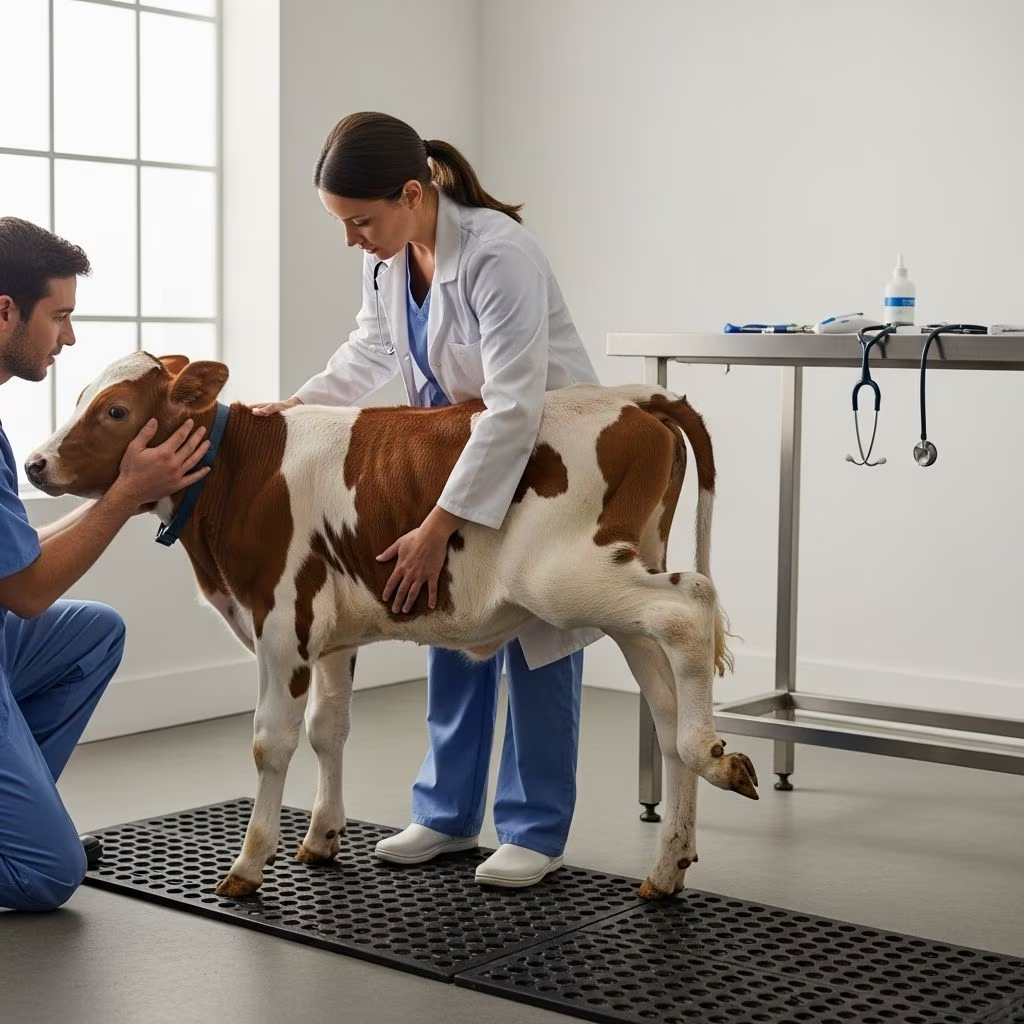
Bovine spastic paresis represents a significant neuromuscular challenge in cattle populations, characterized by persistent muscle contractions that lead to abnormal hindlimb positioning and impaired mobility. This disorder primarily targets the gastrocnemius and quadriceps muscles, resulting in hyperextension of the hock and stifle joints, which progressively worsens over time and impacts animal welfare and productivity.
Understanding the Core Mechanisms of the Disorder
At its foundation, bovine spastic paresis stems from an overactive stretch reflex within the affected muscles, particularly the gastrocnemius, coupled with potential disruptions in central nervous system signaling. This leads to involuntary, sustained contractions that lock the hindlimbs in an extended position, making normal locomotion difficult. While the precise etiology remains elusive, evidence points toward a hereditary component, especially in breeds with specific conformational traits like post-legged stances.
The condition manifests sporadically but shows breed predispositions, suggesting incomplete genetic penetrance rather than a strictly Mendelian inheritance pattern. Pathophysiological changes involve hyperactivity of motor neurons innervating the extensors, possibly due to faulty inhibitory neurotransmission, such as impaired glycinergic pathways in the spinal cord segments.
Clinical Presentation and Progression Stages
Symptoms typically emerge in young calves between 3 to 6 months of age, though a delayed onset can occur in adults up to 2-6 years. Initial signs include subtle hindlimb stiffness during ambulation, with intermittent backward jerking of the affected leg. As the disease advances, the hock straightens excessively, and the animal adopts short, pendular steps, often appearing painful or reluctant to move.
- Unilateral onset: Commonly starts in one hindlimb before potentially progressing bilaterally.
- Muscle involvement: Gastrocnemius is most frequent, but quadriceps femoris can dominate, distinguishable via nerve blocks.
- Behavioral changes: Affected cattle may spend more time recumbent, lose body condition, and exhibit reduced feed intake due to mobility constraints.
In severe cases, the limbs become rigidly extended, rendering the animal unable to rise independently, which poses risks of secondary complications like pressure sores or respiratory issues from prolonged recumbency.
Predisposed Breeds and Risk Factors
Certain cattle breeds face higher incidence rates, including Holstein-Friesians, Aberdeen Angus, Belgian Blue, and Romagnola. Prevalence ranges from 0.1% to 0.9% within these groups, with conformational factors like straight hocks amplifying susceptibility. Genetic links are hypothesized, including references to foundational sires such as the Friesian bull Elso II in Holstein lines, though definitive inheritance modes lack conclusive proof.
| Breed | Prevalence Estimate | Key Risk Notes |
|---|---|---|
| Holstein-Friesian | 0.1-0.9% | Linked to Elso heel; common in dairy herds |
| Belgian Blue | Higher incidence | Double-muscled conformation |
| Aberdeen Angus | Moderate | Beef breed predisposition |
| Romagnola | Moderate | Reported in European lines |
Environmental triggers like mycotoxins or manganese deficiencies have been speculated but lack robust evidence. Post-legged animals warrant close monitoring during early growth phases.
Diagnostic Approaches for Accurate Identification
Diagnosis relies heavily on clinical observation, as no pathognomonic lab test exists. Veterinarians assess gait abnormalities, measure hock angles, and rule out differentials through physical exams. Femoral nerve blocks or lumbosacral epidurals with local anesthetics help differentiate gastrocnemius from quadriceps involvement by temporarily alleviating spasms.
Advanced imaging like electromyography (EMG) can reveal overactive reflexes, while ruling out infectious causes (e.g., joint sepsis) or trauma via radiography is essential. Genetic testing remains underdeveloped, but pedigree analysis aids in herd-level assessments.
Therapeutic Interventions and Management Options
Treatment focuses on surgical correction for viable cases, with tenotomy of the gastrocnemius tendon or tibial neurectomy offering 75% success in early interventions. These procedures sever the spasm cycle, allowing limb flexion restoration, though long-term monitoring for contracture recurrence is needed.
Conservative measures include supportive care: anti-inflammatories for pain, physiotherapy for muscle maintenance, and nutritional optimization. Euthanasia is considered in advanced bilateral cases where quality of life is compromised. Affected animals should not enter breeding programs to mitigate potential heritability.
Prevention Strategies in Modern Herds
Herd management emphasizes selective breeding, avoiding sires with familial histories. Conformation scoring at weaning identifies at-risk calves for culling. Routine surveillance in predisposed breeds, coupled with genetic marker research, promises future progress. Data collection initiatives, like those tracking ‘crampy’ traits, enhance breeding value accuracy.
Economic Implications for Producers
Beyond welfare, spastic paresis incurs costs from lost productivity, veterinary fees, and culling. Early detection minimizes impacts, with surgical success preserving valuable genetics. Producers should integrate lameness scoring into protocols, prioritizing high-merit animals for intervention.
Related Neuromuscular Conditions in Cattle
Bovine spastic paresis differs from adult ‘spastic syndrome’ or crampy, which involves episodic rather than permanent spasms. Other inherited disorders include spinal muscular atrophy and progressive degenerative myeloencephalopathy, sharing CNS origins but distinct presentations.
- Crampy: Transient stiffness, often bilateral in adults.
- Spinal muscular atrophy: Weakness without hyperextension.
- Hyperkalemic periodic paralysis: Rare in cattle, episodic tremors.
Research Frontiers and Genetic Insights
Ongoing studies challenge strict heritability claims, citing allele frequencies inconsistent with recessive models. Tarsal joint angle correlates with risk, informing selection indices. Future genomic tools may enable marker-assisted selection, reducing incidence without compromising production traits.
Frequently Asked Questions (FAQs)
What causes bovine spastic paresis?
It arises from neuromuscular dysfunction with overactive reflexes, likely genetic, affecting extensor muscles.
Can it be cured?
Surgical tenotomy offers good outcomes in early cases (75% success), but prevention via breeding is key.
Which breeds are most at risk?
Holsteins, Belgian Blues, and Angus show higher rates due to conformation and lineage.
How do I differentiate it from other lameness?
Use nerve blocks and observe progressive hyperextension without hoof or joint pathology.
Should affected calves be culled?
Yes, to avoid breeding transmission; intervene surgically only for non-breeding stock.
Key Takeaways for Herd Health
Proactive monitoring, breed selection, and timely intervention form the cornerstone of managing bovine spastic paresis, ensuring sustainable cattle operations.
References
- Spastic paresis in Cows (Bovis) — Vetlexicon. Accessed 2026. https://www.vetlexicon.com/bovis/musculoskeletal/articles/spastic-paresis/
- Spastic Paresis in Cattle – Musculoskeletal System — MSD Veterinary Manual. Accessed 2026. https://www.msdvetmanual.com/musculoskeletal-system/lameness-in-cattle/spastic-paresis-in-cattle
- Bovine spastic paresis: A review of the genetic background — PubMed (Peer-reviewed). 2016-10-01. https://pubmed.ncbi.nlm.nih.gov/27687928/
- Neuromuscular Disorders in Animals – Nervous System — MSD Veterinary Manual. Accessed 2026. https://www.msdvetmanual.com/nervous-system/congenital-and-inherited-anomalies-of-the-nervous-system/neuromuscular-disorders-in-animals
- A Review of Inherited Central Nervous System Dysfunction in Calves — Bovine-OJS-TAMU. Accessed 2026. https://bovine-ojs-tamu.tdl.org/bovine/article/view/1787



