
Bovine Schistosomiasis: Causes and Control
Understand the impact of Schistosoma parasites on cattle health, transmission cycles, clinical effects, and proven prevention strategies in livestock management.
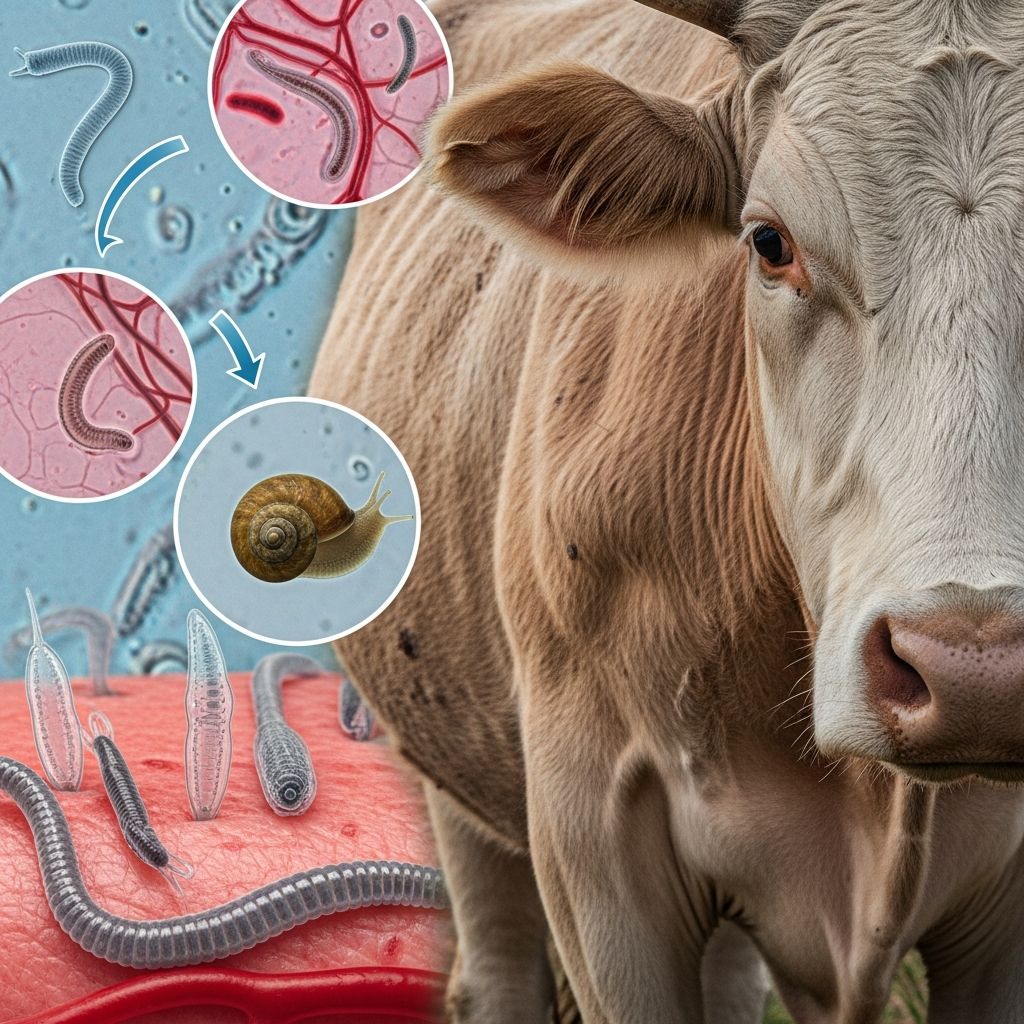
Bovine schistosomiasis is a significant parasitic infection in cattle caused by trematode worms of the genus Schistosoma, primarily S. bovis in Africa. These blood flukes lead to chronic health issues, reduced productivity, and economic losses in livestock sectors.
The Nature of the Parasite and Its Life Cycle
Schistosoma species are flatworms that reside in the blood vessels of their hosts. In cattle, adult worms pair up in mesenteric veins, where females produce eggs that trigger inflammation and tissue damage. The life cycle requires freshwater snails as intermediate hosts. Eggs excreted in feces hatch into miracidia, which infect snails and develop into cercariae. These free-swimming larvae penetrate cattle skin during contact with infested water, migrating to blood vessels to mature.
This complex cycle thrives in tropical and subtropical regions with stagnant water bodies, explaining high prevalence in areas like Ethiopia where rates reach 21% via fecal exams. Snail-infested swamps facilitate transmission, making grazing cattle particularly vulnerable.
Geographic Distribution and Prevalence Patterns
Bovine schistosomiasis predominates in Africa, with S. bovis, S. leiperi, and S. mattheei as key species. Studies in Ethiopia report 13-21% prevalence, varying by location; for instance, 22.4% in Dasra areas. Globally, it affects 165 million cattle, causing anemia and growth stunting.
Prevalence exceeds 40-70% in endemic zones with marshy pastures. Hybrid strains, like S. bovis–S. haematobium, emerge in Benin, posing zoonotic risks where cattle and humans share water sources.
Key Risk Factors Influencing Infection Rates
Several factors elevate susceptibility:
- Management System: Extensive grazing increases odds 5.9 times due to snail exposure (OR=5.9, 95% CI=2–17). Intensive systems show lower rates at 17.9%.
- Body Condition: Poor condition correlates with 3 times higher risk (OR=3.048, 95% CI=1.07–8.68), linked to weakened immunity. Prevalence hits 37.1% in emaciated cattle.
- Age: Young cattle (<2 years) face 2.7 times higher odds (OR=2.7, 95% CI=1.0–7.0), lacking immunity; rates are 37.68% vs. 13.91% in adults. Older cattle (>5 years) show 23.1%.
- Breed and Sex: Crossbreeds (17.1%) and females (16.9%) are more affected.
- Location: Swampy regions amplify transmission.
| Risk Factor | Prevalence/Odds Ratio | Source |
|---|---|---|
| Extensive Management | OR=5.9 | |
| Poor Body Condition | 37.1%; OR=3.048 | |
| Young Age | 37.68%; OR=2.7 | |
| Crossbreed | 17.1% |
Clinical Manifestations in Infected Cattle
Infections are often subclinical, but heavy burdens cause morbidity. Symptoms stem from immune responses to eggs, not worms. Acute signs include skin irritation from cercarial penetration—itchy rashes—and Katayama-like fever weeks post-infection.
Chronic effects involve anemia, weight loss, diarrhea, and emaciation due to mesenteric vessel blockage and liver fibrosis. Eggs trap in tissues, forming granulomas that damage liver, intestines, and sometimes the nervous system. Productivity drops: reduced fertility, milk yield, and growth. Severe cases lead to mortality, though rare clinically; abattoir surveys reveal 18-21% infections.
Diagnostic Approaches for Field and Lab Use
Confirming schistosomiasis requires detecting eggs or worms. Key methods:
- Fecal Sedimentation: Gold standard; detects S. bovis eggs in 13-21% of samples.
- Postmortem Exam: Reveals worms in mesenteric vessels and liver lesions (white-gray patches).
- Serology and Biopsy: For tissue confirmation.
Coprological prevalence (21.28%) slightly exceeds postmortem (18.23%), indicating viable infections. Early detection via fecal tests aids management.
Treatment Options and Efficacy
Praziquantel is the primary drug, effective against adult worms at 20-25 mg/kg. It targets schistosomes but not eggs, so repeat dosing may be needed. In bovine studies, it reduces egg output significantly, though field efficacy varies with infection intensity. Supportive care includes deworming for mixed infections and nutritional support for poor-condition animals.
Challenges include drug resistance risks and delivery in extensive systems. Integrated approaches combining treatment with snail control yield better outcomes.
Prevention and Control Strategies
Effective control targets the life cycle:
- Avoid Infested Waters: Fence off swamps; use intensive grazing.
- Snail Control: Molluscicides or environmental management (drainage).
- Herd Management: Regular deworming, especially in young stock.
- Surveillance: Fecal monitoring in high-risk areas.
In Ethiopia, shifting to semi-intensive systems cut prevalence markedly. Vaccination research is ongoing, but none commercially available yet.
Economic and Zoonotic Implications
Schistosomiasis costs billions in lost productivity. In Africa, it hampers meat/milk output and hides meat quality via liver lesions. Zoonotic hybrids raise human health concerns, as cattle amplify transmission near villages. One Health approaches are vital.
Recent Research Insights
2022-2024 studies confirm risk factors and hybrids. Prevalence data guide targeted interventions, emphasizing age-specific immunity development.
Frequently Asked Questions (FAQs)
What causes bovine schistosomiasis?
Trematode worms like Schistosoma bovis, transmitted via snail-hosted cercariae penetrating skin in infested water.
How is it diagnosed in cattle?
Primarily through fecal sedimentation for eggs; postmortem for worms and lesions.
Can it be treated effectively?
Yes, praziquantel clears adult worms; combine with supportive care.
What are the main risk factors?
Extensive management, poor body condition, young age, and swamp access.
Is it zoonotic?
Hybrids like S. bovis–S. haematobium in cattle pose potential human risks.
References
- Prevalence of Bovine Schistosomiasis and Associated Risk Factors — PMC. 2024. https://pmc.ncbi.nlm.nih.gov/articles/PMC11069369/
- Prevalence of Bovine Schistosomiasis and Associated Risk Factors — Wiley Online Library. 2022-11-28. https://onlinelibrary.wiley.com/doi/10.1155/2022/8940576
- Bovines, Bilharzia and Benin: Does Schistosoma Hybridization Happen in Cattle? — BMC Blogs. 2020-07-17. https://blogs.biomedcentral.com/bugbitten/2020/07/17/bovines-bilharzia-and-benin-does-schistosoma-hybridization-happen-in-cattle/
- Schistosomiasis — World Health Organization. 2024. https://www.who.int/news-room/fact-sheets/detail/schistosomiasis
- DPDx – Schistosomiasis Infection — CDC. Accessed 2026. https://www.cdc.gov/dpdx/schistosomiasis/index.html
- Epidemiology of Bovine Schistosomiasis and Associated Risk Factors — PLOS One. 2023. https://journals.plos.org/plosone/article?id=10.1371/journal.pone.0283691
Similar Articles








Read full bio of medha deb


