

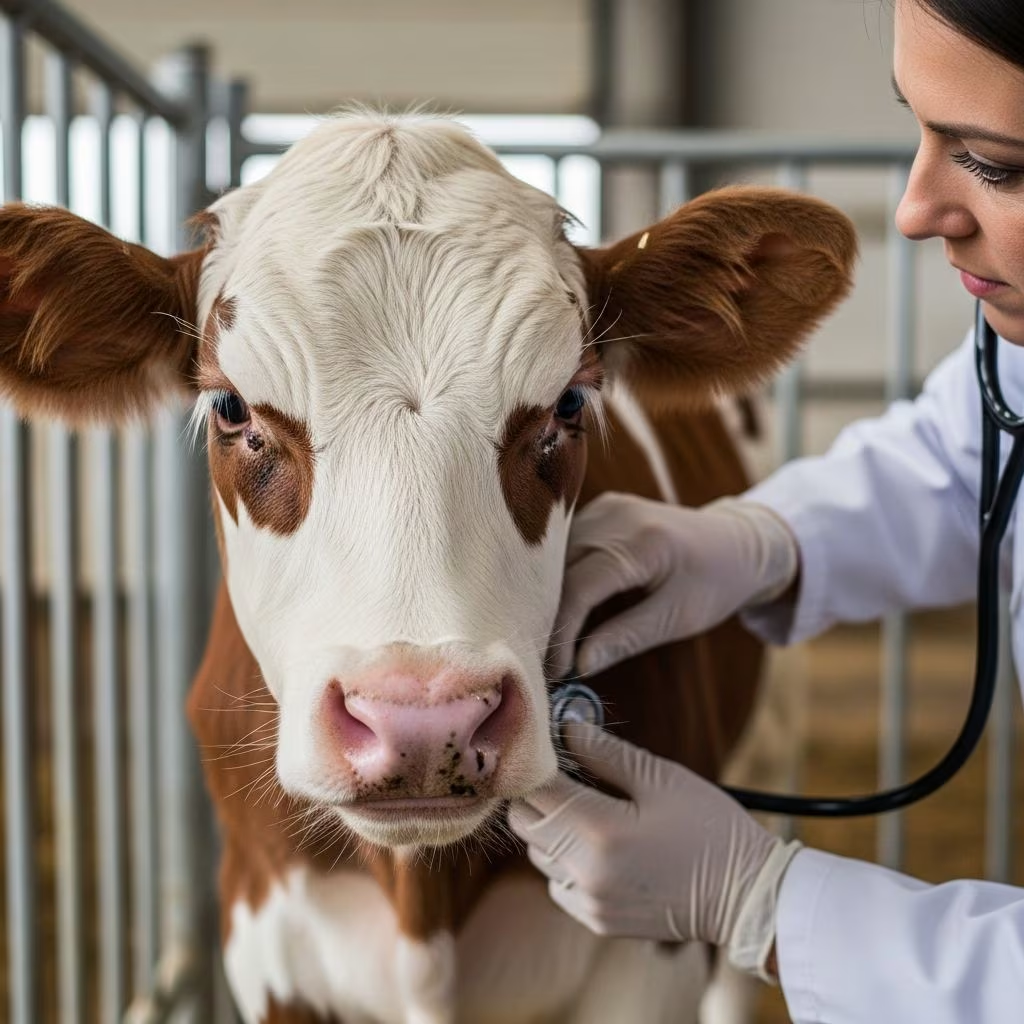
Bovine Respiratory Disease Complex (BRD), often called shipping fever, stands as the primary health challenge and economic burden in the beef cattle sector worldwide. This multifactorial condition arises from the interplay of infectious agents, environmental pressures, and animal vulnerabilities, frequently striking young calves during stressful transitions like weaning or transport.
The Nature and Impact of BRD
BRD manifests as pneumonia primarily affecting the lower respiratory system, though it can involve upper airways too. It leads to substantial losses through reduced growth rates, higher mortality, increased treatment expenses, and poorer feed efficiency. In North American feedlots, it claims the top spot among costly diseases, with global repercussions in dairy and beef operations alike.
Young, naive cattle bear the brunt, especially post-transport or market exposure. The syndrome’s complexity stems from primary viral assaults weakening defenses, paving the way for bacterial opportunists—often normal upper tract residents—to invade deeper lung tissues.
Risk Factors Fueling BRD Outbreaks
Multiple stressors compromise cattle immunity, creating BRD hotspots. Key triggers include:
- Weaning: Separation anxiety and dietary shifts suppress defenses in calves.
- Long-haul transport: Exhaustion, dehydration, temperature extremes, and poor ventilation heighten susceptibility.
- Commingling at auctions or feedlots: Mixing unfamiliar groups spreads pathogens rapidly.
- Environmental hazards: Dust, overcrowding, wet bedding, and abrupt high-energy diet changes add nutritional strain.
- Processing procedures: Castration, dehorning, or branding under suboptimal conditions amplify risks.
These elements often coincide during feedlot arrival, explaining peak incidence within weeks of entry.
Pathogens at the Core of BRD
BRD involves a roster of viruses and bacteria acting in concert. Viruses typically initiate damage, impairing ciliary clearance and mucosal barriers, while bacteria exploit the breach for pneumonia.
Viral Culprits
Primary viruses include:
- Bovine Herpesvirus 1 (BHV-1): Triggers necrotic lesions, suppressing immunity and worsening bacterial spread.
- Bovine Parainfluenza-3 (PI-3): Damages respiratory epithelium, detected in bronchiolar cells.
- Bovine Viral Diarrhea Virus (BVDV): Persistently infects, broadly weakening host responses.
- Bovine Respiratory Syncytial Virus (BRSV): Induces alveolar inflammation, often co-occurring with others.
- Bovine Coronavirus and Adenovirus: Contribute to upper and lower tract involvement.
Bacterial Invaders
Bacteria, many commensal in healthy noses, proliferate post-viral hit:
| Pathogen | Role in BRD | Tissue Targets |
|---|---|---|
| Mannheimia haemolytica | Key pneumonia agent; toxins cause lung necrosis | Bronchi, alveoli |
| Pasteurella multocida | Secondary colonizer; fibrinous pneumonia | Lung parenchyma |
| Histophilus somni | Severe cases; systemic spread to heart | Lungs, myocardium |
| Mycoplasma bovis | Chronic, treatment-resistant; syncytial cells | Bronchioles, alveoli |
| Bibersteinia trehalosi | Less common; similar to Mannheimia | Lower respiratory |
Coinfections amplify severity; e.g., BHV-1 with M. haemolytica yields extensive lesions.
Clinical Manifestations and Progression
BRD evolves subtly at first, escalating rapidly. Cattle mask illness, complicating early detection. Watch for:
- Early signs: Dry cough, clear nasal/ocular discharge, fever above 102.5°F (39.2°C), lethargy, appetite loss.
- Moderate stage: Labored breathing, ear droop, dull eyes, withdrawal from herd.
- Severe cases: Profuse purulent discharge, open-mouth respiration, recumbency, death from anoxia or toxemia.
Onset peaks 4-6 weeks post-arrival, with cranioventral lung consolidation pathognomonic on necropsy.
Diagnostic Approaches for BRD
Diagnosis blends clinical acumen, history, and lab confirmation. Core steps:
- Physical exam: Temperature, respiration rate, lung sounds (crackles, wheezes).
- Scoring systems: Tools like the DART (depression, appetite, respiration, temperature) aid objectivity.
- Lab tests: Nasal swabs for PCR detecting viral/bacterial DNA; serology for antibodies; deep lung sampling via transtracheal wash.
- Advanced: Immunohistochemistry (IHC) localizes antigens in lung biopsies, linking severity to pathogen load (e.g., H. somni in capillaries).
- Imaging/Necropsy: Ultrasound reveals consolidation; postmortem confirms bronchopneumonia patterns.
Challenges include subclinical carriers and mixed etiologies requiring multiplex assays.
Treatment Protocols for Affected Cattle
Prompt intervention curbs mortality and chronicity. Antimicrobials target bacteria:
- First-line: Broad-spectrum like macrolides (tulathromycin), fluoroquinolones, or tetracyclines labeled for BRD.
- Metaphylaxis: Mass-treat high-risk arrivals preemptively.
- Supportive care: NSAIDs for fever/inflammation, fluids, oxygen if dyspneic.
Resistance, notably in M. bovis, demands culture-guided choices. Avoid over-reliance to preserve efficacy.
Prevention and Control Strategies
Proactive management trumps reaction. Pillars include:
- Vaccination: Modified-live or killed vaccines against BHV-1, PI-3, BRSV, BVDV; administer pre-stress.
- Preconditioning: Wean early, acclimate to feed, deworm/vaccinate before sale.
- Feedlot practices: Limit commingling, ensure ventilation/dust control, gradual diet ramp-up.
- Metaphylaxis: Antibiotics for at-risk groups upon arrival.
- Biosecurity: Quarantine newcomers, monitor surveillance.
Integrated programs slash incidence by 50%+.
Economic Ramifications and Industry Responses
BRD drains billions annually via deaths (1-2%), treatments, and growth lags (10-20% ADG drop). Chronic cases yield culls. Research drives resilient vaccines and diagnostics; extension services promote best practices.
Frequently Asked Questions (FAQs)
What is the most common time for BRD outbreaks?
Typically within 2-4 weeks of transport or feedlot entry, coinciding with stress peaks.
Can BRD be prevented entirely?
Not fully, given multifactorial nature, but robust programs reduce cases dramatically.
Are there BRD vaccines for all pathogens?
Core viruses yes; bacteria like M. bovis lack reliable ones, emphasizing management.
How do I spot early BRD in my herd?
Monitor for fever, cough, and behavioral shifts daily using scoring systems.
Is BRD only in beef cattle?
Predominantly, but affects dairy calves and even sheep/pigs in confinement.
References
- Overview of Bovine Respiratory Disease Complex — Merck Veterinary Manual. 2023. https://www.merckvetmanual.com/respiratory-system/bovine-respiratory-disease-complex/overview-of-bovine-respiratory-disease-complex
- Bovine respiratory disease — Wikipedia. 2023-10-15. https://en.wikipedia.org/wiki/Bovine_respiratory_disease
- An overview of the detection of bovine respiratory disease complex — PMC/NCBI. 2023. https://pmc.ncbi.nlm.nih.gov/articles/PMC10734592/
- Bovine Respiratory Disease Complex — Purdue Extension. 2017. https://www.extension.purdue.edu/extmedia/VA/VA-33-W.pdf
- Bovine Respiratory Disease — BeefResearch.ca. 2023. https://www.beefresearch.ca/topics/bovine-respiratory-disease/



