

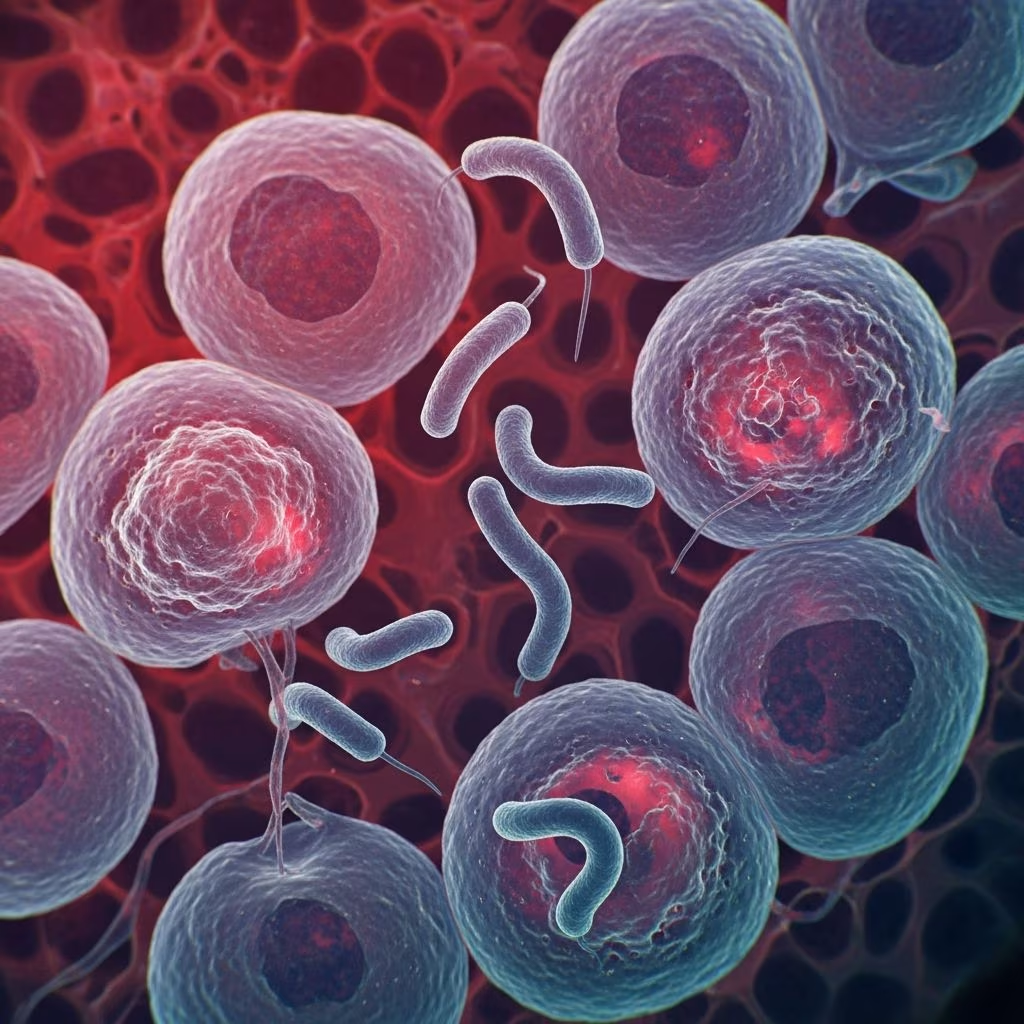
Bovine genital campylobacteriosis, often abbreviated as BGC, represents a significant bacterial infection affecting cattle fertility worldwide. Primarily transmitted through natural breeding, this disease disrupts reproductive efficiency in herds, leading to economic losses for farmers and ranchers. Caused by a specialized strain of Campylobacter, it targets the genital tracts of both sexes, with bulls serving as primary carriers.
Understanding the Pathogen Behind the Disease
The causative agent is Campylobacter fetus subsp. venerealis (Cfv), a microaerophilic, gram-negative bacterium adapted specifically to the bovine genital environment. Unlike other Campylobacter subspecies, Cfv thrives in the preputial cavity of bulls and the reproductive mucosa of cows, evading host defenses through mechanisms like sialylation of its lipooligosaccharide, which mimics host tissues.
This subspecies differs from C. fetus subsp. fetus, which can cause sporadic genital infections but is more associated with enteric diseases. Cfv’s restricted host range and venereal transmission mode make it a persistent challenge in natural mating systems, particularly in regions relying on extensive grazing.
Routes of Transmission in Cattle Herds
Venereal spread dominates transmission, occurring when infected bulls mate with susceptible females. The bacteria colonize the bull’s prepuce and penis, persisting for months or even years without symptoms. During coitus, contaminated semen or preputial washings deposit Cfv into the cow’s vagina, where it ascends to the uterus during estrus when cervical mucus thins.
Artificial insemination poses a risk if semen from carrier bulls is used without testing. Mechanical transmission via contaminated equipment or hands is rare but possible. Calves are not typically infected at birth, though environmental contamination from feces (rarely containing Cfv) is negligible.
- Natural mating: Primary route, with carrier bulls infecting 100% of bred cows if untreated.
- AI with tainted semen: Direct uterine deposition accelerates infection.
- Bull-to-bull spread: Possible via shared sheaths or fighting injuries.
Clinical Manifestations in Affected Animals
In females, BGC induces transient infertility, with return to estrus 2-3 weeks post-breeding due to endometritis blocking embryo implantation. Only 5-10% abort in the third trimester, often 2-6 months after infection, yielding early or mid-gestation losses without other signs.
Bulls exhibit no clinical illness; they become asymptomatic carriers, shedding Cfv intermittently. Subfertile cows may show irregular cycles or scant vaginal discharge, but most infections are subclinical.
| Species/Sex | Key Signs | Frequency |
|---|---|---|
| Cows/Heifers | Repeat breeders, late abortions, mild discharge | Common (infertility), Rare (abortions) |
| Bulls | None (carriers) | 100% subclinical |
| Fetuses | Autolysis, pneumonia | Occasional |
Pathological Changes in Reproductive Organs
Post-infection, cows develop mild endometritis, cervicitis, and salpingitis. The uterus shows mucopurulent exudate, epithelial desquamation, and neutrophilic infiltration, rarely progressing to severe fibrosis. Ovaries remain unaffected, preserving cyclicity.
In aborted fetuses, lesions include bronchopneumonia and hepatic necrosis. Bulls’ prepuce reveals bacterial plaques under microscopy, with no gross lesions.
Diagnostic Approaches for Accurate Detection
Diagnosis combines clinical history, culture, and molecular tests. Preputial samples from bulls yield highest sensitivity via culture on selective media or PCR targeting Cfv-specific genes like asp or parA. In cows, vaginal mucus or aborted tissues are cultured.
Serology (ELISA, FAT) detects antibodies in females but cannot distinguish current from past infections. PCR offers speed and specificity, detecting as few as 10 organisms per sample.
- Bull screening: Preputial washing, culture/PCR.
- Cow testing: Service records + serology.
- Fetal exam: Culture + histopathology.
Prevention Strategies for Herd Health
Vaccination is cornerstone: commercial bacterins (killed Cfv with adjuvants) given IM/SC to cows pre-breeding reduce infertility by 70-90%. Bulls receive fewer vaccines due to carrier status.
Test-and-cull programs in AI herds, virgin bull use, and semen hygiene prevent outbreaks. Antibiotics like streptomycin in semen extenders offer partial control but don’t eradicate carriers.
Treatment Challenges and Options
Treating carrier bulls involves systemic antibiotics (e.g., long-acting tetracycline), but clearance rates are <50% due to preputial biofilms. Repeated testing post-treatment is essential. Females self-clear within 3-6 months, rarely needing intervention.
Quarantine of positives and biosecurity (e.g., footbaths, separate breeding groups) limit spread.
Economic Impact on Cattle Industries
BGC slashes conception rates by 20-50% in endemic areas, costing millions annually in delayed calving and culls. Developing nations with bull herds face highest burdens; eradication via AI boosts productivity.
Zoonotic Potential and Public Health Notes
Unlike enteric Campylobacter, Cfv poses negligible human risk, though rare seminal infections occur. Handlers should use gloves during exams.
FAQs on Bovine Genital Campylobacteriosis
What causes infertility in repeat breeder cows?
Subclinical endometritis from Cfv prevents implantation.
Can BGC be eradicated from a herd?
Yes, via testing all bulls, culling carriers, and vaccinating females.
Is vaccination safe for pregnant cows?
Administer pre-breeding; boosters annually.
How long do bulls carry the bacteria?
Lifelong in 20-30% without treatment.
Does freezing semen kill Cfv?
No; test donors rigorously.
References
- Understanding bovine genital campylobacteriosis — PMC – NIH. 2024. https://pmc.ncbi.nlm.nih.gov/articles/PMC12613218/
- Zoonotic Campylobacteriosis — CFSPH, Iowa State University. 2023. https://www.cfsph.iastate.edu/Factsheets/pdfs/campylobacteriosis.pdf
- Campylobacter — World Health Organization (WHO). 2024-05-31. https://www.who.int/news-room/fact-sheets/detail/campylobacter
- ANZSDP Bovine Genital Campylobacteriosis — Australian Government Department of Agriculture. 2022. https://www.agriculture.gov.au/sites/default/files/sitecollectiondocuments/animal/ahl/ANZSDP-Bovine-genital-campylobacteriosis.pdf
- Enteric Campylobacteriosis in Animals — Merck Veterinary Manual. 2025. https://www.merckvetmanual.com/digestive-system/enteric-campylobacteriosis/enteric-campylobacteriosis-in-animals
- Bovine Genital Campylobacteriosis – A Review — Veterinary Group. 2023. https://www.veteringroup.us/articles/IJVSR-2-111.php
- Bovine genital campylobacteriosis — AGES (Austrian Agency for Health and Food Safety). 2024. https://www.ages.at/en/human/disease/pathogens-from-a-to-z/bovine-genital-campylobacteriosis



