

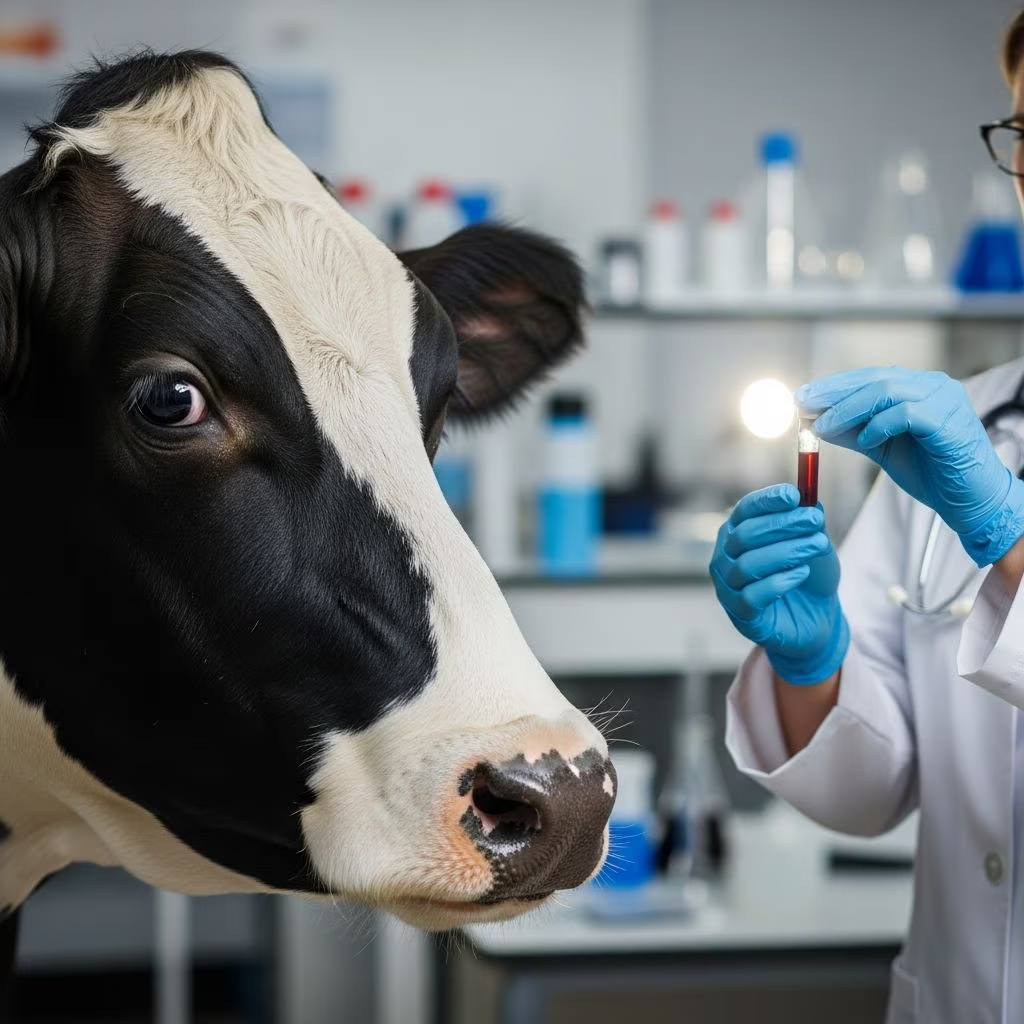
Bovine brucellosis, caused primarily by the bacterium Brucella abortus, represents one of the most significant reproductive diseases affecting cattle worldwide. This zoonotic infection leads to substantial economic losses through abortions, reduced fertility, and trade restrictions. Understanding its transmission, clinical impacts, and management is crucial for livestock producers and veterinarians aiming to safeguard herd productivity.
Understanding the Pathogen Behind the Disease
The causative agent, Brucella abortus, is a small, gram-negative, intracellular bacterium that thrives within host cells, particularly in the reproductive organs and lymph nodes of cattle. This pathogen is highly adapted to bovines, enabling persistent infections that can last for years. Unlike other Brucella species that affect sheep or goats, B. abortus biovars 1 and 3 are most common in cattle, with variations in virulence influencing disease severity.
Infection occurs mainly through ingestion of contaminated feed, water, or aborted materials, where bacteria shed heavily from placentas, fetuses, and vaginal discharges. Venereal transmission via infected semen in bulls further perpetuates the disease within herds. Once inside the host, bacteria disseminate via bloodstream to mammary glands, uterus, and testes, evading immune responses and establishing chronic carriers.
Recognizing Clinical Manifestations in Affected Herds
Clinical signs often remain subtle until late gestation, when abortions become evident. Pregnant cows typically abort between the 5th and 7th months, though not all infected animals do so. Affected herds experience stillbirths, weak neonates, retained placentas, and metritis, leading to infertility and diminished milk yields. Bulls may develop orchitis, epididymitis, or seminal vesiculitis, with bacteria detectable in semen, causing subfertility.
- Reproductive failures: Late-term abortions, weak calves, retained placenta.
- Male-specific issues: Testicular swelling, abscesses, semen contamination.
- Secondary signs: Temporary fever, joint lameness in chronic cases, reduced conception rates.
Overall health rarely deteriorates severely post-abortion, allowing infected animals to appear normal carriers, complicating detection.
Diagnostic Approaches for Accurate Identification
Diagnosis combines clinical history, serology, culture, and molecular methods. Suspicion arises from abortion storms in unvaccinated herds, prompting immediate testing.
Serological Screening Tools
Serum agglutination tests (SAT) detect antibodies at titers ≥1:100 in non-vaccinates or ≥1:200 in calves vaccinated at 4-12 months. The Rose Bengal plate test offers rapid field screening, while the milk ring test (MRT) monitors dairy herds by staining cream layers in pooled samples—positive if antigen rises into cream.
| Test Type | Purpose | Sensitivity/Specificity | Sample |
|---|---|---|---|
| Milk Ring Test (MRT) | Herd screening | High sensitivity, moderate specificity | Pooled milk |
| Serum Agglutination Test (SAT) | Confirmatory | Standard threshold-based | Blood serum |
| Enzyme-Linked Immunosorbent Assay (ELISA) | Supplemental | High accuracy | Serum/milk |
| Complement Fixation Test (CFT) | Differentiate vaccination | Specific for infection | Serum |
Positive screens necessitate individual testing and culling in eradication zones.
Laboratory Confirmation
Culture from aborted fetuses (stomachal contents, lungs), placentas, or vaginal swabs provides definitive proof, though slow-growing bacteria challenge isolation. PCR assays detect Brucella DNA rapidly, ideal for field samples, confirming even low-burden infections.
Prevention Strategies Through Vaccination and Biosecurity
Vaccination with RB51 or S19 strains is cornerstone in endemic areas. RB51, a rough mutant, induces immunity without strong serological interference, suitable for adults; S19 targets calves pre-breeding. Administer subcutaneously at 2-4 months for S19, avoiding use in pregnant heifers to prevent abortions.
- Biosecurity measures: Quarantine new animals, dispose aborted materials promptly, test breeding stock.
- Herd monitoring: Routine MRT every 3-6 months in dairies.
- Hygiene practices: Clean calving areas, avoid raw milk consumption by handlers.
These reduce incidence but cannot fully eradicate without test-and-slaughter.
Control and Eradication Programs Worldwide
Many nations pursue eradication via surveillance, vaccination, and depopulation of reactors. The U.S. program, led by USDA APHIS, has nearly eliminated brucellosis, with focus on bison/cattle interfaces. WOAH guidelines standardize diagnostics and trade requirements, classifying countries by prevalence.
Economic impacts include quarantines and lost exports; prevention averts millions in losses annually. Challenges persist in developing regions with wildlife reservoirs.
Zoonotic Risks and Public Health Implications
As a zoonosis, bovine brucellosis transmits via unpasteurized dairy or tissue contact, causing undulant fever in humans. Farmers, vets, and abattoir workers face highest risks. Pasteurization and PPE mitigate threats; human cases prompt animal source tracing.
Management of Infected Bulls and Breeding Herds
Infected bulls shed intermittently; test semen via culture or PCR before use. Castration or slaughter prevents spread. Artificial insemination from certified sires bypasses risks.
Emerging Research and Future Directions
Advances in DIVA vaccines (differentiating infected from vaccinated) and genomics aid biovar tracking. One Health approaches integrate wildlife control for sustained eradication.
Frequently Asked Questions (FAQs)
What causes abortions in my herd?
Bovine brucellosis is a primary culprit; test immediately if multiple late-term losses occur.
Is vaccination safe for all cattle?
No—avoid S19 in adults; RB51 preferred for broader use.
Can brucellosis be treated with antibiotics?
Not practically in cattle; control relies on vaccination and removal.
How do I prevent zoonotic transmission?
Pasteurize milk, use gloves with birthing materials, vaccinate herds.
What if MRT is positive?
Follow up with individual SAT/ELISA; consult state vets for quarantine.
References
- A detailed review of bovine brucellosis — PMC/NCBI. 2024. https://pmc.ncbi.nlm.nih.gov/articles/PMC12124783/
- Brucellosis — World Organisation for Animal Health (WOAH). 2023-10-01. https://www.woah.org/en/disease/brucellosis/
- Canine brucellosis — Cornell University College of Veterinary Medicine. 2023. https://www.vet.cornell.edu/departments-centers-and-institutes/riney-canine-health-center/canine-health-topics/canine-brucellosis
- Brucellosis in Cattle — Merck Veterinary Manual. 2023. https://www.merckvetmanual.com/reproductive-system/brucellosis-in-large-animals/brucellosis-in-cattle
- Clinical Overview of Brucellosis — Centers for Disease Control and Prevention (CDC). 2024-01-12. https://www.cdc.gov/brucellosis/hcp/clinical-overview/index.html
- Disease Alert: Bovine Brucellosis — USDA APHIS. 2024. https://www.aphis.usda.gov/livestock-poultry-disease/cattle/bovine-brucellosis
- Brucellosis — World Health Organization (WHO). 2023-05-10. https://www.who.int/news-room/fact-sheets/detail/brucellosis



