

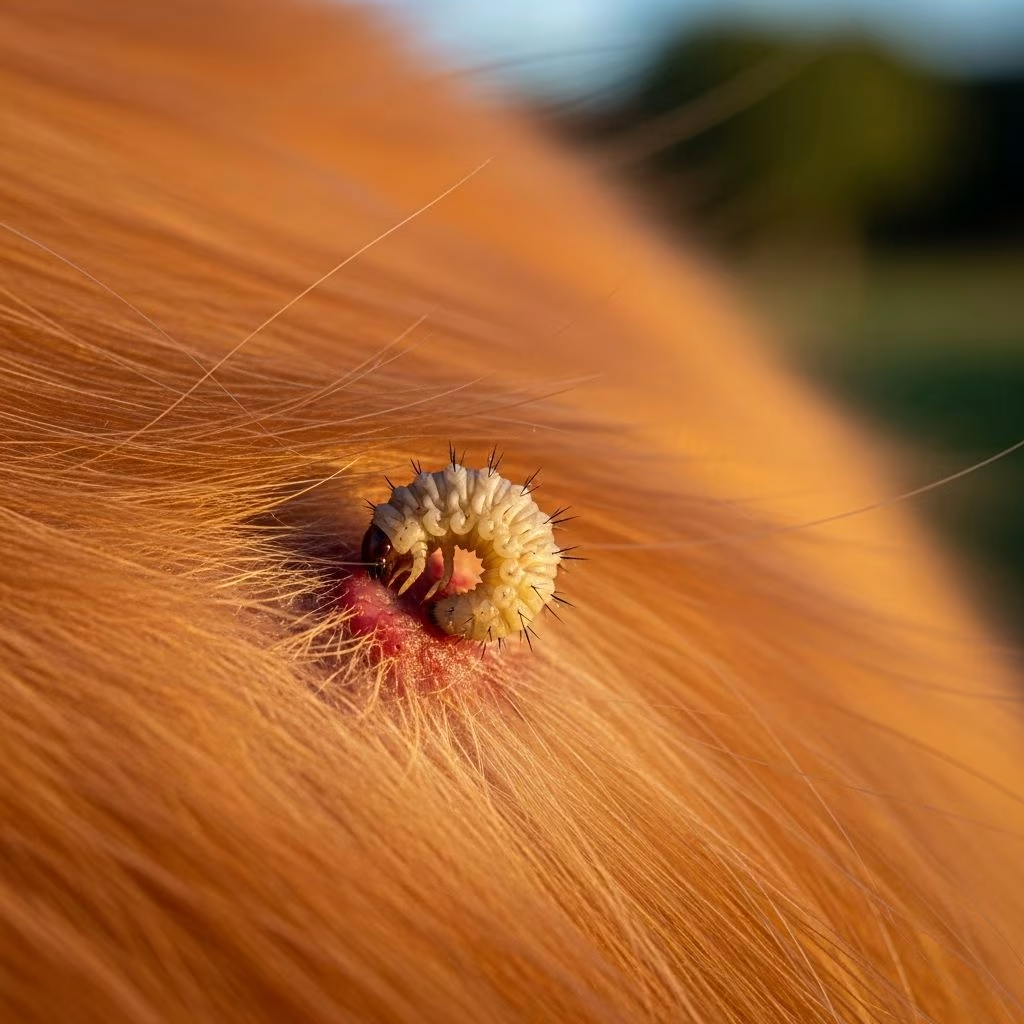
Botfly larvae, known scientifically as Cuterebra species, represent a common parasitic concern for pet owners, particularly those with dogs, cats, and ferrets living in rural or wooded areas. These infestations, often called warbles or botfly strikes, occur when fly larvae embed under the skin, causing noticeable lumps and potential health issues. Understanding the biology, recognizing early signs, and pursuing timely veterinary intervention can prevent complications and ensure pet well-being.
The Biology Behind Botfly Parasites
The life cycle of Cuterebra botflies is fascinating yet problematic for pets. Adult females deposit clusters of eggs on vegetation, such as grass blades or plants near animal burrows, in late summer or early fall. These eggs remain dormant until triggered by the warmth of a passing host animal. Upon hatching, the tiny first-stage larvae (L1) attach to the pet’s fur and seek entry points like the mouth, nose, eyes, or skin punctures.
Once inside, the larvae migrate through tissues to subcutaneous areas, primarily around the head, neck, chest, or flanks. They grow over 4-8 weeks, molting through three instars (L1 to L3), while creating a breathing hole in the skin for oxygen exchange via posterior spiracles. The mature L3 larva eventually exits the host, drops to the soil, and pupates into an adult fly, completing the cycle in 2-3 months depending on environmental conditions.
- Eggs laid on plants near rodent habitats, common in North America.
- Larvae enter via natural orifices, avoiding immediate detection.
- Development spans summer to fall, peaking in warmer climates.
This opportunistic parasitism targets small mammals but frequently affects companion animals exploring outdoors unsupervised.
Common Manifestations in Companion Animals
Skin-based infestations dominate, presenting as firm, raised nodules 0.5-2 cm in diameter with a central pore. Owners often notice a ‘breathing hole’ resembling a tick attachment, sometimes with wriggling motion or serous discharge. Surrounding fur mats from licking, and the site feels warm or painful on touch.
| Symptom | Dogs | Cats | Ferrets |
|---|---|---|---|
| Skin Swelling | Neck/chest common | Head/neck preferred | Trunk areas |
| Discharge | Serous or purulent | Bloody tint possible | Minimal initially |
| Behavior | Lethargy, anorexia | Excessive grooming | Scratching |
Less common are aberrant migrations: larvae may lodge in nasal passages (causing sneezing, nasal discharge), eyes (leading to chemosis, uveitis, or blindness), ears (head shaking), or CNS (neurologic signs like ataxia).
Health Risks and Complications
While many cases resolve uneventfully post-removal, risks escalate if mishandled. Squeezing the nodule can rupture the larva, releasing allergens and triggering anaphylaxis, shock, or severe inflammation. Secondary bacterial infections create abscesses, delaying healing.
Rare systemic effects include fever, disseminated intravascular coagulopathy (DIC) in small dogs, or systemic inflammatory response syndrome (SIRS). Ocular cases risk glaucoma or permanent vision loss; neural involvement demands urgent care.
- Anaphylaxis: Rapid onset post-rupture; treat with epinephrine, steroids.
- Infections: Staph/Strep common; antibiotics essential.
- Chronic Issues: Recurrent draining tracts if fragments remain.
Diagnosis Strategies for Veterinarians
Vets diagnose via visual inspection: the diagnostic ‘posterior spiracles’ in the pore confirm active infestation. Palpation reveals a mobile, cylindrical mass. Imaging (radiographs, ultrasound) aids aberrant cases, while endoscopy visualizes nasal/pharyngeal larvae.
Differentials include abscesses, tumors, foreign bodies, or migrating parasites like Dracunculus. Fine-needle aspiration risks rupture, so avoided. History of outdoor access in endemic seasons supports suspicion.
Safe Extraction and Treatment Protocols
Primary treatment is mechanical removal under sedation/anesthesia to minimize stress. Enlarge the pore with a scalpel, grasp the larva with forceps, and extract intact—never squeeze.
- Sedate or anesthetize the patient.
- Clip fur, aseptically prepare site.
- Incise pore, extract gently.
- Flush with saline, debride if needed.
- Suture if large defect; otherwise open drainage.
Adjuncts: antibiotics (e.g., cephalexin) for infection; NSAIDs for pain; antihistamines (diphenhydramine) pre-extraction to curb anaphylaxis. Avoid parasiticide ‘kill-in-situ’ due to inflammatory surge. Neurological cases may require ivermectin (0.2-0.3 mg/kg SC).
Post-care: E-collar to prevent self-trauma, monitor for abscesses (may need drainage/resection).
Preventive Measures for Pet Owners
Prevention hinges on habitat avoidance: leash-walk in brushy areas, inspect after outdoor time (focus on head/neck). Topical preventives like fipronil may deter larvae, though unproven. Remove rodent attractants from yards.
Educate on seasonal risks (July-October in temperate zones). Prompt vet visits for lumps prevent escalation.
Prognosis and Long-Term Outlook
Prognosis excels for cutaneous cases (95%+ full recovery in 1-2 weeks). Aberrant sites vary: eyes (guarded, 50% vision retention), CNS (fair with early intervention). Recurrence rare with vigilance.
Frequently Asked Questions (FAQs)
Can I remove a botfly larva at home?
No—risks rupture and anaphylaxis. Always seek veterinary help.
Is botfly infestation contagious to humans?
No, specific to animals; humans unaffected by pet Cuterebra species.
How long does healing take after removal?
7-14 days typically; monitor for infection signs like swelling or pus.
Are there preventives like monthly flea meds?
Not specifically; broad-spectrum topicals offer partial protection.
What if my pet has neurologic symptoms?
Emergency—may indicate migration; imaging and ivermectin needed.
Case Studies: Real-World Examples
A 6-month-old kitten presented with neck swelling and sneezing. Extraction revealed L3 larva; nasal flush cleared remnants. Full recovery in 10 days.
A toy poodle developed lethargy and orbital mass. Surgical removal prevented blindness; ivermectin adjunctive.
These underscore vigilance and professional care efficacy.
References
- Cuterebriasis in Dogs and Cats — Today’s Veterinary Practice. 2023. https://todaysveterinarypractice.com/parasitology/cuterebriasis-in-dogs-and-cats/
- Cuterebra (Botfly) in Pets — Franktown Animal Clinic. 2025-04. https://franktownanimalclinic.com/wp-content/uploads/2025/04/botfly-ce.pdf
- Cuterebra or Warbles in Cats — VCA Animal Hospitals. 2024. https://vcahospitals.com/know-your-pet/cuterebra-or-warbles-in-cats
- Cuterebra Parasitism — Animal Surgical Center of Michigan. 2023. https://www.animalsurgicalcenter.com/cuterebra-parasitism
- Botflies in Dogs — PetMD. 2024. https://www.petmd.com/dog/conditions/infectious-parasitic/c_multi_cuterebrosis
- Cuterebriasis — Companion Animal Parasite Council. 2024. https://capcvet.org/guidelines/cuterebriasis/



