

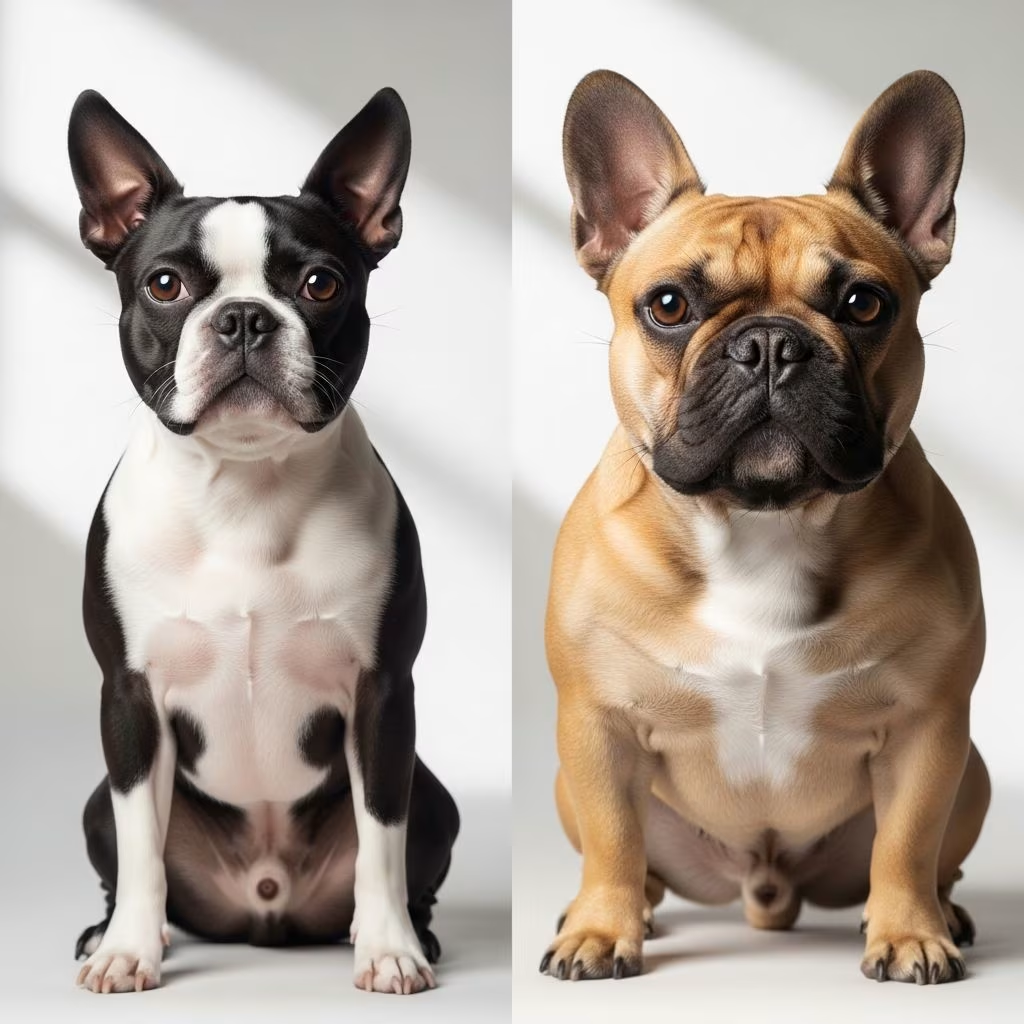
Boston Terriers and French Bulldogs are often confused with one another, and it’s easy to understand why. Both breeds are small, compact dogs with short snouts, flat faces, and big personalities that make them beloved family pets. However, despite their similarities, these two breeds have distinct differences that set them apart. Understanding these differences is crucial if you’re considering bringing one of these charming companions into your home. This comprehensive guide will help you explore the key distinctions between these two popular small dog breeds.
Physical Appearance and Characteristics
While Boston Terriers and French Bulldogs may look similar at first glance, a closer examination reveals several important physical differences that distinguish one breed from the other.
Size and Build
Boston Terriers are generally taller and leaner than French Bulldogs. Boston Terriers typically stand between 10 to 17 inches tall and weigh between 12 to 25 pounds. French Bulldogs, on the other hand, are more compact and stocky, standing between 11 to 13 inches tall and weighing up to 28 pounds. Despite being shorter in height, French Bulldogs often weigh more due to their muscular, dense bone structure. Boston Terriers have longer legs and a more athletic build, giving them a leaner appearance compared to the Frenchie’s more substantial frame.
Head Shape and Facial Features
One of the most distinctive differences between these breeds lies in their head shapes. Boston Terriers have round heads, while French Bulldogs have square-shaped heads. This is immediately noticeable when viewing the breeds side by side. The ear shapes also differ significantly: Boston Terriers have pointed, upright ears positioned higher on their heads, whereas French Bulldogs are known for their distinctive bat-like ears that are larger, more rounded, and set wider apart on their square heads. These bat ears are one of the most recognizable features of the French Bulldog breed.
Coat Colors and Markings
While both breeds have short, smooth coats, their color variations differ considerably. Boston Terriers are famously known as “The American Gentleman” due to their distinctive tuxedo-style markings. These markings are always present and typically consist of black, brindle, or seal coloring with white markings. Boston Terriers should have a white stripe or blaze between their eyes and a white muzzle band. French Bulldogs, however, come in a much wider variety of colors and patterns, including fawn, cream, white, brindle, sable, and tan. French Bulldogs can have solid colors or patches of color, and while they can have tuxedo-like markings similar to Boston Terriers, they are not required to have this specific pattern.
Other Physical Distinctions
Both breeds have short, stumpy tails that sit low and can be either straight or slightly screwed. However, screwed tails caused by vertebral malformations are more common in French Bulldogs than in Boston Terriers. Both breeds have big, round eyes, but due to their facial structure as brachycephalic breeds, they are both prone to eye-related issues. Additionally, both breeds have minimal shedding due to their short coats and require relatively low maintenance grooming.
Temperament and Personality
Understanding the personality differences between Boston Terriers and French Bulldogs can help you determine which breed aligns better with your lifestyle and preferences.
Energy Levels
Boston Terriers are generally more energetic than French Bulldogs. Boston Terriers were originally bred for pit fighting and vermin hunting, which has contributed to their more athletic and spirited nature. They tend to be more playful and require more mental stimulation and physical activity. French Bulldogs, bred primarily as companion dogs for lacemakers, have a more laid-back temperament and are content with moderate activity levels. While both breeds are affectionate and make excellent family pets, the Boston Terrier’s higher energy level may appeal to more active individuals, while the French Bulldog’s calmer demeanor suits those preferring a more relaxed companion.
Trainability and Adaptability
Both breeds score well in trainability and are generally intelligent and responsive to training. However, French Bulldogs tend to be more adaptable to changes in routines and new environments, scoring higher on adaptability scales. Boston Terriers can be slightly more sensitive to environmental changes and schedule disruptions. Both breeds respond well to positive reinforcement training methods and benefit from early socialization. French Bulldogs may be slightly more stubborn at times, while Boston Terriers can sometimes display territorial behaviors if not properly socialized from puppyhood.
Barking and Vocalization
Boston Terriers are more likely to bark than French Bulldogs. This increased vocalization may be traced back to their hunting heritage. French Bulldogs bark only seldomly, making them better suited for apartment living where excessive noise might be a concern. Both breeds are social and enjoy human companionship, but the Boston Terrier’s tendency to bark more frequently should be considered if you live in a noise-sensitive environment.
Exercise Requirements and Activity Needs
Both Boston Terriers and French Bulldogs are small dogs that don’t require extensive exercise, but their exercise needs do differ somewhat.
Boston Terrier Exercise Needs
Boston Terriers require approximately one hour of exercise daily. They enjoy long walks and running activities and benefit from both indoor and outdoor play. If under-exercised, Boston Terriers may develop destructive behaviors due to their higher energy levels. They thrive with active owners who can provide consistent physical and mental stimulation through games, training, and interactive play sessions.
French Bulldog Exercise Needs
French Bulldogs also benefit from about one hour of daily physical activity, but they can tolerate shorter periods without becoming bored or destructive. They prefer low-intensity walks with frequent breaks and do well with indoor exercise options. French Bulldogs are better suited for sedentary or less active owners and adapt well to apartment living. Their exercise tolerance should always be monitored carefully, as their brachycephalic nature makes them susceptible to overheating and respiratory stress during vigorous activity.
Health Considerations and Lifespan
Both breeds face specific health challenges that prospective owners should understand before making a commitment.
General Health and Lifespan
Boston Terriers typically live 12 to 14 years, while French Bulldogs have a slightly shorter lifespan of 10 to 12 years. Both breeds are classified as brachycephalic, meaning they have shortened muzzles and flat faces, which predisposes them to certain health issues.
Brachycephalic Health Issues
Both breeds are prone to breathing difficulties due to their flat faces and shortened airways. They are susceptible to heatstroke during hot weather and should avoid vigorous exercise in high temperatures. Both breeds may experience difficulty swallowing or sleeping and are prone to cataracts and other eye problems due to their shallow eye sockets. Owners must be vigilant about keeping these dogs cool during summer months and providing proper air conditioning in their living spaces.
Breed-Specific Health Concerns
French Bulldogs are particularly susceptible to hip dysplasia, elbow dysplasia, patellar luxation, spinal problems, heart disease, and hypothyroidism. They are also prone to obesity if overfed and under-exercised, which can exacerbate other health conditions. Boston Terriers, while sharing some health concerns with Frenchies, have a higher incidence of patellar luxation, deafness, and hemivertebrae (a spinal disorder). Boston Terriers may also be prone to cataracts, seizures, and allergies. Regular veterinary check-ups are essential for both breeds to catch and manage health issues early.
Cost and Financial Considerations
The financial investment required to bring either of these breeds into your home varies between the two.
Boston Terriers typically cost between $1,000 and $3,000 from reputable breeders. French Bulldogs are generally more expensive, ranging from $2,000 to $4,000, primarily due to higher breeding costs and increased demand. Both breeds require quality dog food, regular veterinary care, grooming supplies, and potential health interventions. The higher price of French Bulldogs should be carefully considered alongside their potential health expenses.
Grooming and Maintenance
Both breeds are relatively low maintenance when it comes to grooming. With their short coats, both Boston Terriers and French Bulldogs produce minimal odor and have minimal shedding. Regular brushing can help manage any loose hair, and occasional baths keep them clean. Both breeds’ short coats make them sensitive to extreme cold weather, so protective clothing may be necessary during winter months. Ear cleaning is particularly important for French Bulldogs due to their bat-like ears, which can trap moisture and debris.
Comparison Table
| Characteristic | Boston Terrier | French Bulldog |
|---|---|---|
| Height | 10-17 inches | 11-13 inches |
| Weight | 12-25 pounds | Up to 28 pounds |
| Head Shape | Round | Square |
| Ear Type | Pointed | Bat-like |
| Lifespan | 12-14 years | 10-12 years |
| Energy Level | Higher | Moderate |
| Exercise Needs | ~1 hour daily | ~1 hour daily (low-intensity) |
| Barking Tendency | More frequent | Minimal |
| Coat Colors | Black, brindle, seal with white tuxedo | Fawn, cream, white, brindle, sable, tan |
| Average Cost | $1,000-$3,000 | $2,000-$4,000 |
| Adaptability | Moderate | High |
Frequently Asked Questions
Q: Can Boston Terriers and French Bulldogs live together?
A: Yes, Boston Terriers and French Bulldogs can typically live together peacefully. Both breeds are social and affectionate. However, proper introductions, early socialization, and individual personalities matter. Supervise their interactions initially to ensure they become comfortable with one another.
Q: Which breed is better for first-time dog owners?
A: French Bulldogs may be slightly better for first-time dog owners due to their calmer temperament, higher adaptability, and lower energy requirements. However, Boston Terriers are also good for first-time owners who can provide adequate exercise and mental stimulation. Both breeds are affectionate and trainable.
Q: Are Boston Terriers or French Bulldogs better for apartment living?
A: French Bulldogs are generally better suited for apartment living due to their lower barking tendency, calmer demeanor, and tolerance for lower activity levels. However, Boston Terriers can adapt to apartment living if provided with sufficient exercise and mental stimulation, though their higher barking tendency may be a consideration.
Q: Do both breeds have significant health problems?
A: Both breeds, as brachycephalic dogs, are prone to breathing difficulties and heat sensitivity. Boston Terriers are more susceptible to deafness and spinal issues, while French Bulldogs face higher risks of hip dysplasia and heart problems. Regular veterinary care and careful monitoring are essential for both breeds.
Q: Which breed is more expensive to own long-term?
A: While French Bulldogs cost more initially ($2,000-$4,000 vs. $1,000-$3,000), long-term costs depend on individual health issues. French Bulldogs may incur higher veterinary expenses due to breed-specific health concerns, but individual dogs vary. Budget for quality food, regular veterinary care, and potential emergency medical expenses for both breeds.
Q: How do their training needs differ?
A: Both breeds are intelligent and trainable with positive reinforcement methods. Boston Terriers may require more consistent training and mental stimulation due to higher energy levels. French Bulldogs can be slightly more stubborn but are generally easier to train due to their more relaxed temperament. Early socialization is important for both breeds.
References
- French Bulldogs vs. Boston Terriers: How They’re Different — PetMD. 2024. https://www.petmd.com/dog/general-health/french-bulldog-vs-boston-terrier
- French Bulldog vs. Boston Terrier: Similarities and Differences — American Kennel Club (AKC). 2024. https://www.akc.org/expert-advice/dog-breeds/french-bulldog-vs-boston-terrier/
- Boston Terrier vs French Bulldog—What’s the Difference? — Rover.com. 2024. https://www.rover.com/uk/blog/boston-terrier-vs-french-bulldog-whats-the-difference/
- Boston Terrier vs French Bulldog: What are the differences? — BullyMax. 2024. https://shop.bullymax.com/blogs/news/boston-terrier-vs-french-bulldog



