
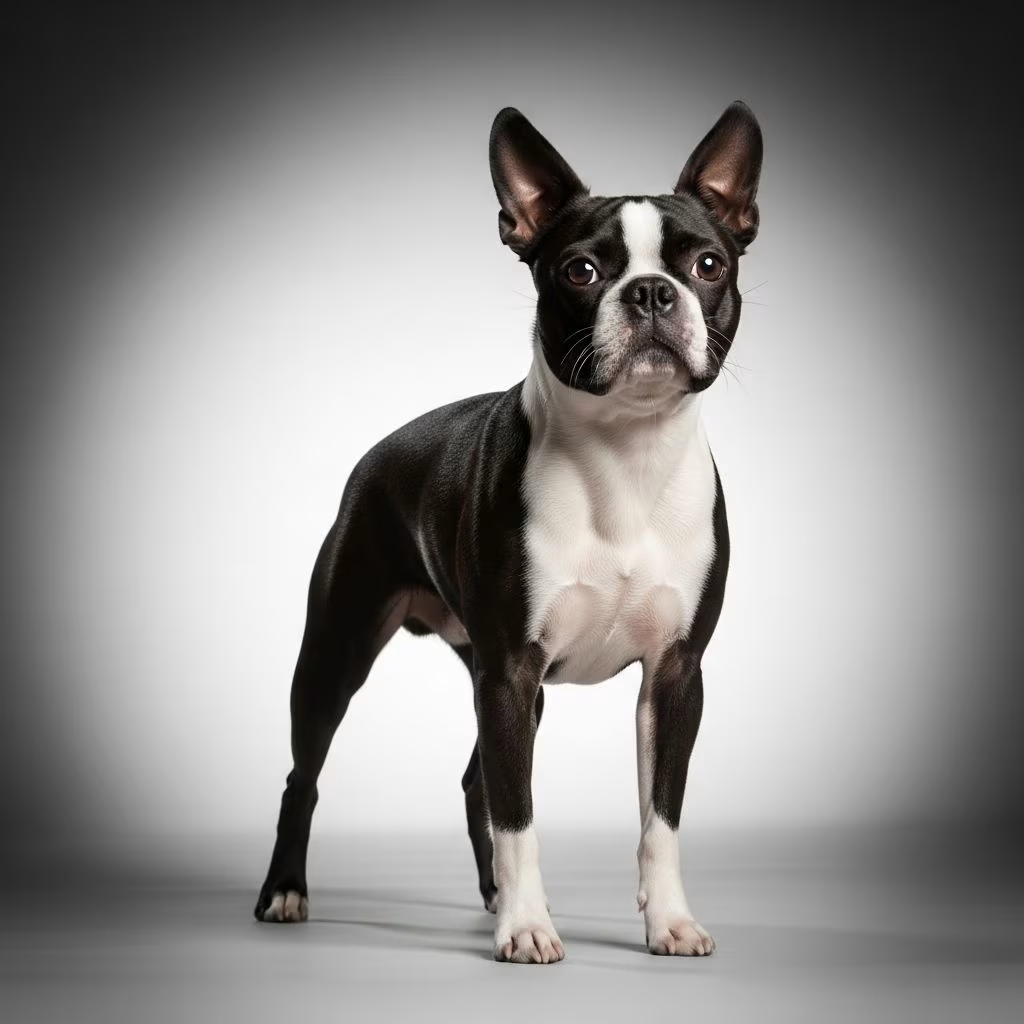
The Boston Terrier stands out as a compact, spirited breed with a rich American heritage, evolving from rugged origins into a cherished family pet known for its affectionate nature and distinctive appearance.
Roots and Evolution of the Breed
Emerging in the mid-19th century around Boston, Massachusetts, the Boston Terrier traces its lineage to crosses between English Bulldogs and White English Terriers. A pivotal figure in this development was Hooper’s Judge, acquired by Robert C. Hooper around 1865 from William O’Brien. This robust dog, heavier and more bulldog-like, served as the primary ancestor for nearly all modern Boston Terriers.
Initially bred for ratting and dog fighting during an era of industrial change and shifting social norms, these early bull-and-terrier mixes reflected the turbulent times. As public interest in fighting waned, breeders refined the type into a smaller, gentler companion. By the late 1800s, coachmen in Boston’s affluent Beacon Hill area popularized the breed among high society, particularly women, who favored its compact size and soft expression.
The breed’s formal recognition came swiftly. In 1889, the American Bull Terrier Club formed with 75 dogs traceable over three generations. Renamed the Boston Terrier Club of America in 1891, it gained American Kennel Club (AKC) admission in 1893 after proving breed consistency. This milestone cemented its status as one of few U.S.-origin breeds, often called the “American Gentleman” for its dapper look.
Early 20th-century debates refined standards: black, seal, or brindle coats with mandatory white markings—a muzzle band, blaze between eyes, and forechest—distinguished it from French Bulldogs, also part of its lineage. Popularity peaked between 1905 and 1935, ranking first or second nationally, aligning with Art Deco aesthetics of clean lines and bold contrasts.
Defining Physical Characteristics
Boston Terriers embody a balanced, short-backed structure with a square head, strong jaw, and short tail. Weighing under 25 pounds, they stand 15-17 inches tall, classified as non-sporting by groups like Dogs Australia. Their smooth, tuxedo-like coat—typically black or seal with white accents—requires minimal grooming, shedding lightly year-round.
Distinctive features include large, round eyes set wide for an alert expression, small erect ears (often cropped historically but now natural), and a short, wrinkle-free muzzle. The skull’s gentle dome earned them the nickname “roundheads.” These traits create a lively yet refined silhouette, ideal for indoor living.
| Size Category | Weight Range | Height | Coat Colors |
|---|---|---|---|
| Small | 10-25 lbs | 15-17 inches | Black & white, seal & white, brindle & white |
Temperament and Behavioral Traits
Renowned for intelligence and people-orientation, Boston Terriers thrive on human interaction, displaying playful energy and quick learning. Their clownish antics—zoomies, head tilts, and expressive faces—endear them to families. Though terrier roots suggest stubbornness, selective breeding has emphasized sweetness over aggression.
- Affectionate: Bonds deeply with owners, excellent for apartments due to low space needs.
- Lively yet adaptable: Energetic play sessions balanced by calm indoor demeanor.
- Sociable: Generally dog-friendly, though males may guard territory.
- Trainable: Eager to please, excels in obedience with positive reinforcement.
- Vocal: Uses barks or snorts to communicate, not overly noisy.
They suit active families, children, and seniors, but early socialization prevents shyness. Their sensitivity to extreme weather—heat or cold—makes them true indoor companions.
Essential Health and Wellness Insights
With a lifespan of 11-13 years, Boston Terriers face brachycephalic (short-nosed) challenges like breathing difficulties, heat intolerance, and snoring. Common issues include patellar luxation, eye problems (cherry eye, cataracts), and heart conditions. Responsible breeding mitigates risks; seek health-tested parents.
- Regular vet checkups for brachycephalic obstructive airway syndrome (BOAS).
- Monitor weight to avoid joint strain.
- Protect eyes and skin folds from irritation.
Nutrition: High-quality, small-breed food supports their active metabolism; portion control prevents obesity. Daily exercise—short walks and play—maintains fitness without overexertion in heat.
Grooming and Daily Care Routines
Low-maintenance coats need weekly brushing and monthly baths. Dental care is crucial due to crowded teeth; provide chews and brushings. Nail trims every 4-6 weeks prevent slipping.
Ears: Clean weekly to avert infections. Eyes: Wipe daily for tear staining. Their short coat tolerates mild climates but requires sweaters in cold and cooling mats in summer.
Training Strategies for Success
Leverage their smarts with short, fun sessions using treats and praise. Focus on:
- Housebreaking: Consistent crate training yields quick results.
- Basic commands: Sit, stay, come—mastered rapidly.
- Leash manners: Gentle collars avoid tracheal pressure.
Positive methods curb stubborn streaks; agility or tricks channel energy productively.
Why Boston Terriers Excel as Family Pets
Compact size fits urban life; gentle nature suits kids. Their mascot roles—Boston University’s Rhett since 1922, Massachusetts state dog since 1979—underscore cultural impact.
Adoption tips: Choose AKC-registered breeders or rescues emphasizing health clearances. Prepare for their expressive, loving companionship that brightens daily life.
Frequently Asked Questions
Are Boston Terriers good with children?
Yes, their patient, playful demeanor makes them ideal family dogs, though supervise young kids to prevent rough play.
How much exercise do they need?
20-30 minutes daily of walks and play suffices; avoid hot weather.
Do they bark a lot?
Moderately; they alert but train well to minimize noise.
What’s their lifespan?
Typically 11-13 years with proper care.
Are they hypoallergenic?
No, but low-shedding coats ease allergies for some.
Choosing Your Boston Terrier Companion
Prospective owners should prioritize ethical sources, preparing for a loyal friend whose history—from Judge’s legacy to modern charm—promises joy. Their evolution mirrors America’s: tough beginnings refined into elegant companionship.
References
- History of the Breed — Southern Boston Terrier Club. Accessed 2026. https://www.southernbostonterrierclub.org.uk/history-of-the-breed/
- BU and the Boston Terrier — Boston University Alumni. 2023-05-12. https://www.bu.edu/alumni/2023/05/12/blog-bu-boston-terrier-history-dog-traits/
- Boston Terrier History — American Kennel Club. Accessed 2026. https://www.akc.org/expert-advice/dog-breeds/boston-terrier-history/
- Boston Terrier — Dogs Australia. Accessed 2026.

medha deb
Medha Deb is an editor with a master's degree in Applied Linguistics from the University of Hyderabad. She believes that her qualification has helped her develop a deep understanding of language and its application in various contexts. Medha specializes in the areas of beauty, health, sports, and wellness and is committed to ensuring that the content on the website is of the highest quality.Medha's passion for writing and editing began early in life when she joined a book writer's club with her mother. It was there that she discovered her love for the written word and the power it holds to inform, inspire, and transform lives. Since then, she has honed her skills as a writer and editor, working with a variety of clients and publications to produce compelling and informative content. Currently, she writes and edits for fluffyaffair.She is also an ardent animal lover and dedicates her time and resources to the foster care of neonatal kittens, providing them with the love and attention they need to thrive. Her commitment to animal welfare is a testament to her compassion and empathy, and it underscores her belief in the importance of caring for the most vulnerable members of our society. More articles →



