

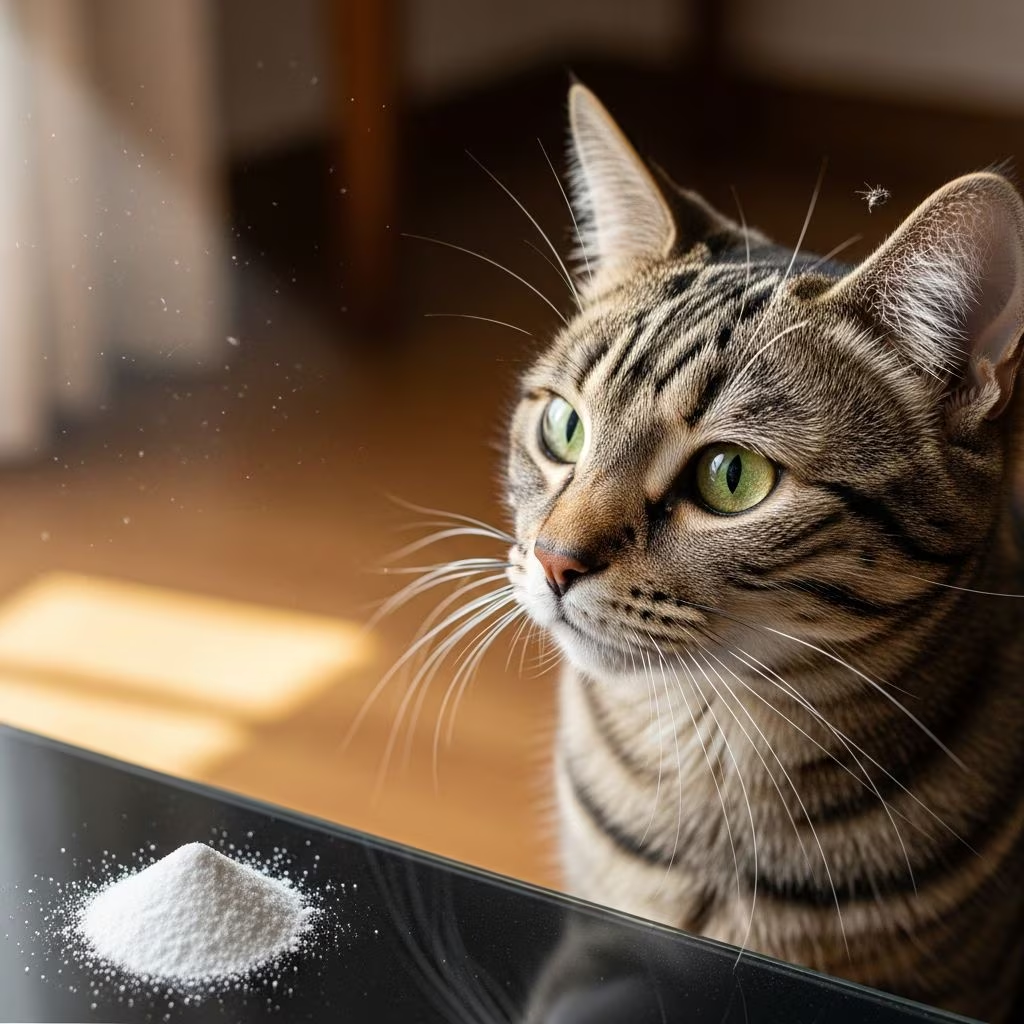
Flea infestations pose significant challenges for cat owners, often requiring targeted environmental treatments alongside pet-specific solutions. Boric acid emerges as a viable option for controlling flea populations in living spaces, particularly effective against larval stages at concentrations as low as 23 micrograms per square centimeter in certain substrates.
Understanding the Flea Life Cycle and Boric Acid’s Targeted Action
The cat flea, Ctenocephalides felis, progresses through four distinct phases: egg, larva, pupa, and adult. Adults reside primarily on the host, feeding on blood and laying eggs that drop into the environment. Larvae feed on organic debris and flea feces before pupating into resilient cocoons. This off-host development makes environmental intervention crucial for breaking the cycle.
Boric acid disrupts this process primarily at the larval stage. As a desiccant and stomach poison, it penetrates the flea exoskeleton, leading to dehydration and internal damage upon ingestion. Studies demonstrate that powdered boric acid achieves LC50 (lethal concentration for 50% mortality) values of 23 μg/cm² in carpet exposures over 96 hours, with higher rates like 200 μg/cm² yielding over 90% larval kill rates. It spares eggs directly, necessitating repeated applications as they hatch.
Safe Application Protocols for Household Flea Control
To harness boric acid effectively, focus exclusively on non-pet-contact surfaces. Direct application to cats risks toxicity through grooming or inhalation, as it is not formulated for mammalian skin.
Follow these structured steps for optimal results:
- Prepare the area: Vacuum thoroughly to remove eggs, larvae, and debris, concentrating on carpets, rugs, upholstery crevices, and pet bedding. Dispose of vacuum contents immediately to prevent re-infestation.
- Apply powder: Use EPA-approved boric acid powder, sprinkling lightly (aiming for 200 μg/cm² or per product label) into carpet fibers, brushing gently with a broom to integrate into the nap. Avoid hard floors or food areas.
- Allow dwell time: Leave undisturbed for 24-48 hours, excluding pets and children from treated zones. Wear a mask during application to avoid dust inhalation.
- Vacuum removal: Thoroughly vacuum after dwell period, repeating daily for a week to capture emerging hatchlings. Empty vacuum outdoors or seal bags securely.
- Repeat cycles: Reapply every 7-14 days for 4-6 weeks to target staggered egg hatches in severe cases.
Test fabrics in hidden spots first, as boric acid may cause discoloration. Post-treatment, steam clean or shampoo surfaces after one month to eliminate residues.
Potential Risks and Precautions for Cats and Humans
While boric acid exhibits low acute toxicity via skin contact or incidental ingestion, excessive exposure warrants caution. In cats, grooming treated fur could lead to gastrointestinal upset, nausea, or more severe poisoning symptoms like tremors if substantial amounts are consumed. Respiratory irritation from airborne particles poses risks during application.
For households, limit use to well-ventilated areas, prioritize child-free zones, and select products without additives. Boric acid remains active in carpets for up to a year, providing residual control but requiring vigilant cleanup. Consult veterinarians before deployment, especially in multi-pet homes or with sensitive individuals.
Comparing Boric Acid to Alternative Flea Control Agents
Boric acid excels in larval suppression but demands meticulous application. Here’s a comparison with common substitutes:
| Method | Target Stages | Pet Safety | Cost | Duration |
|---|---|---|---|---|
| Boric Acid | Larvae (90%+ at 200 μg/cm²) | Environmental only; toxic if ingested by pets | Low-moderate | Up to 1 year residual |
| Diatomaceous Earth (Food-Grade) | Larvae, adults (desiccant) | Safe for pets if applied carefully | Low | Months with reapplication |
| Insect Growth Regulators (IGRs) | Eggs, larvae, pupae | Pet-safe sprays | Moderate | Weeks to months |
| Heat Treatment | All stages | Non-chemical, fully safe | High (professional) | Immediate |
Diatomaceous earth mirrors boric acid’s dehydrating mechanism but offers broader pet tolerance, though both require vacuuming. IGRs like methoprene complement by halting development, ideal for integrated pest management (IPM).
Comprehensive Flea Management Strategies for Cats
Environmental treatments alone falter without addressing fleas on the cat. Implement a multi-faceted approach:
- Veterinary treatments: Prescription topicals (e.g., fipronil, imidacloprid) or orals (e.g., spinosad, fluralaner) target all life stages on the pet. Administer monthly for prevention.
- Mechanical removal: Daily flea combing extracts adults and flea dirt from tail base, neck, groin, and armpits. Dispose in soapy water.
- Bathing protocols: Vet-recommended flea shampoos kill adults but require restraint for bath-averse cats; follow with preventatives.
- Home maintenance: Vacuum daily, wash bedding weekly in hot water, and launder pet items at 140°F (60°C).
- Yard control: For outdoor exposures, apply nematodes or beneficial fungi to soil; limit unsupervised access.
Essential fatty acid supplements bolster skin health, reducing flea allure via improved coat integrity.
Preventive Measures to Avoid Future Infestations
Proactive steps minimize recurrence:
- Year-round preventatives on all pets.
- Regular yard mowing and debris clearance.
- Screened enclosures for outdoor time.
- Quarantine new pets or strays.
Monitor with flea combs weekly; early detection curtails outbreaks.
Frequently Asked Questions
Can boric acid be applied directly to cats?
No. It poses ingestion and inhalation risks; use only environmentally and treat cats with vet products.
How long does boric acid last in carpets?
Up to one year, acting as a residual larval killer when worked into fibers.
Is boric acid safer than chemical sprays?
It offers low-toxicity dehydration control but requires precautions; IGRs provide targeted, pet-safe alternatives.
What if the infestation persists after treatment?
Repeat cycles, vacuum rigorously, and consult a vet or exterminator for integrated assessment.
Does boric acid affect flea eggs?
No direct action; it kills emerging larvae, breaking the cycle over multiple applications.
References
- Larvicidal effects of boric acid and disodium octaborate tetrahydrate to cat fleas (Siphonaptera: Pulicidae) — Hinkle NC, Koehler PG, Patterson RS. Journal of Medical Entomology. 1995-07-01. https://pubmed.ncbi.nlm.nih.gov/7650701/
- Larvicidal Effects of Boric Acid and Disodium Octaborate Tetrahydrate to Cat Fleas — Hinkle NC, Koehler PG, Patterson RS. Journal of Medical Entomology. 1995-07-01. https://academic.oup.com/jme/article-abstract/32/4/424/879460
- Does Boric Acid Kill Fleas on Cats? Vet-Reviewed Use & Safety Guide — Catster. Accessed 2026. https://www.catster.com/cat-health-care/does-boric-acid-kill-fleas-on-cats/
- Least-toxic Control of Fleas — Beyond Pesticides. Accessed 2026. https://www.beyondpesticides.org/assets/media/documents/alternatives/factsheets/FLEA%20CONTROL.pdf
- Fleas — Northwest Center for Alternatives to Pesticides. Accessed 2026. https://www.pesticide.org/fleas



