Border Collies as Service Dogs: Potential and Challenges
Discover if the intelligent Border Collie can excel as a service dog, exploring legal rules, training essentials, and breed-specific traits for success.
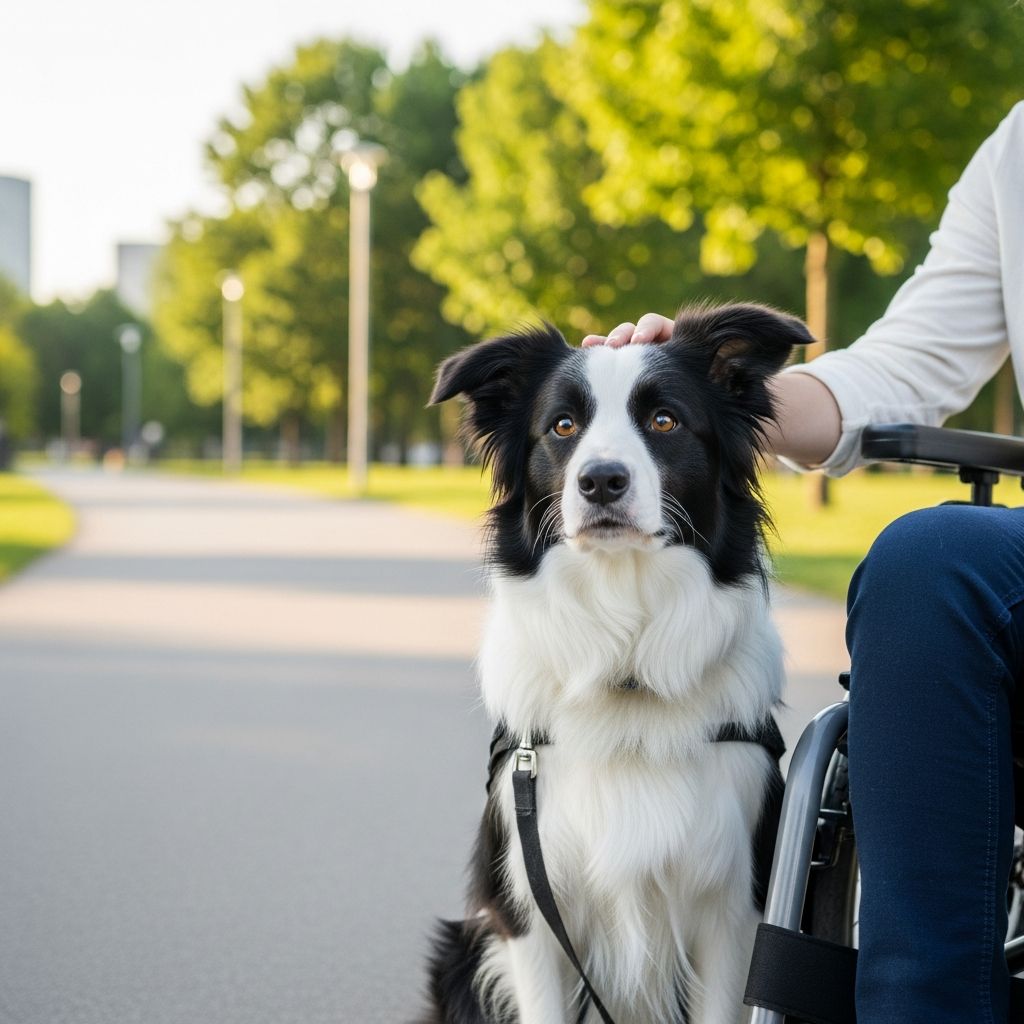
Border Collies, renowned for their exceptional intelligence and herding instincts, show strong potential as service dogs when properly trained. These dogs can perform vital tasks for individuals with disabilities, provided their high energy and focus are channeled correctly under federal laws like the ADA.
Understanding Service Dog Legal Framework
The Americans with Disabilities Act (ADA) defines a service dog as any dog individually trained to perform tasks directly related to a person’s disability. No certification, vest, or professional trainer is required; owners can train their own dogs. Businesses may only ask two questions: if the dog is required due to a disability and what tasks it performs.
State laws may offer extra protections, such as allowing service dogs in training in public spaces, unlike the federal ADA which requires full training first. Housing under the Fair Housing Act also accommodates service dogs, overriding no-pet policies.
Why Border Collies Stand Out for Service Roles
Border Collies top rankings in canine intelligence due to their problem-solving skills and eagerness to work, making them adept at learning complex tasks. Their athletic build supports physical duties like retrieving items or providing balance, while mental acuity suits alert-based roles.
- High Trainability: They master commands quickly, often in fewer repetitions than other breeds.
- Endurance: Long work sessions without fatigue, ideal for all-day assistance.
- Loyalty: Deep bonds with handlers enhance reliability in stressful situations.
However, their herding heritage can lead to nipping or chasing behaviors if not addressed, requiring early intervention.
Key Tasks Border Collies Can Perform
These dogs excel across physical, psychiatric, and mobility support categories, adapting their skills to handler needs.
| Disability Type | Sample Tasks | Border Collie Strengths |
|---|---|---|
| Psychiatric (e.g., PTSD, Anxiety) | Deep pressure therapy by lying on lap; interrupting self-harm via nudging; waking from nightmares. | Intuitive detection of cues; calm under pressure post-training. |
| Mobility/Physical | Retrieving dropped items; opening doors; providing balance support. | Agility and strength for precise actions. |
| Visual/Hearing Impairment | Guiding around obstacles; alerting to sounds. | Sharp senses and focus for navigation. |
Tasks must be reliable on cue, distinguishing service work from mere pet companionship.
Training Essentials for Border Collie Service Dogs
Effective training demands at least 120 hours over six months, including 30 hours of public access practice. Start before six months but count formal training post-puppy play. Use positive reinforcement to avoid stress.
Basic Obedience Foundation
Master sit, stay, come, down, heel, and dropped leash recall in distracting environments like stores. Hand signals complement verbal cues for reliability.
Public Access Manners
- Ignoring distractions (food, animals, crowds).
- No jumping, barking, or soliciting attention.
- Calm elimination with handler cleanup.
- Handler maintains control at all times.
Prohibit prey-drive arousal or aggression training.
Advanced Task Training
Build on obedience: teach disability-specific cues. For deep pressure, pair command with rewarding calm positioning. Progress to real-world simulations.
Owners can self-train, but consistency is key for high-drive breeds like Border Collies.
Overcoming Border Collie Challenges in Service Work
Their boundless energy risks distraction without daily exercise and mental puzzles. Herding instincts may cause unwanted behaviors around children or small animals.
Solutions:
- 1-2 hours daily exercise: runs, agility, fetch.
- Mental games: puzzle toys, scent work.
- Socialization from puppyhood to desensitize triggers.
Health screening is crucial; choose ethical breeders to avoid hip dysplasia or eye issues common in the breed.
Daily Life with a Border Collie Service Dog
Beyond tasks, provide grooming (weekly brushing), balanced nutrition, and vet care. Mental stimulation prevents boredom-induced issues.
Handlers must educate the public politely and carry cleanup supplies.
Success Stories and Real-World Examples
Trained Border Collies assist with PTSD by waking handlers from night terrors and providing grounding during episodes. Mobility users praise their item retrieval in tight spaces. Professional programs note their quick adaptation to therapy roles.
Is a Border Collie Right for You as a Service Dog?
Ideal for active handlers committing to rigorous training and stimulation. Not suited for sedentary lifestyles or inconsistent routines.
Consult professionals if inexperienced; resources like IAADP standards guide progress.
Frequently Asked Questions (FAQs)
Do Border Collies need professional training to be service dogs?
No, the ADA allows owner training as long as tasks are reliably performed.
Can Border Collie service dogs enter all public places?
Yes, under ADA, with full training; some states cover dogs in training.
How long does training take?
Minimum 120 hours over 6+ months, per IAADP standards.
Are Border Collies good for psychiatric service?
Yes, excelling in tasks like deep pressure and interruption.
What if my Border Collie is too energetic?
Channel via exercise and tasks; proper training mitigates issues.
Getting Started: Steps to Train Your Border Collie
- Confirm disability diagnosis and specific needs.
- Acquire a healthy puppy from a reputable source.
- Begin obedience at 8 weeks.
- Log 120+ training hours, including public outings.
- Test tasks in varied environments.
- Practice public access manners rigorously.
Resources like ADA.gov provide free guidance.
References
- Border Collie Service Dog: Requirements, Training, and More — Emotional Support Animal. 2023. https://emotionalsupportanimal.com/blog/service-animal/border-collie-service-dog/
- IAADP Minimum Training Standards for Public Access — International Association of Assistance Dog Partners. 2024. https://iaadp.org/membership/iaadp-minimum-training-standards-for-public-access/
- Border Collie Training in Phoenix, AZ — Dog Training Elite. 2025. https://dogtrainingelite.com/phoenix/professional-dog-trainers/border-collie-training
- FAQ Around Service Animals — Arizona Developmental Disabilities Planning Council (.gov). 2024. https://addpc.az.gov/faq-around-service-animals
- Can Border Collies Be Service Dogs: What You Should Know — ServiceDogs.com. 2024. https://www.servicedogs.com/border-collie-service-dog/
- Service Animals — ADA.gov (.gov). 2025-01-15. https://www.ada.gov/topics/service-animals/
Similar Articles








Read full bio of medha deb