

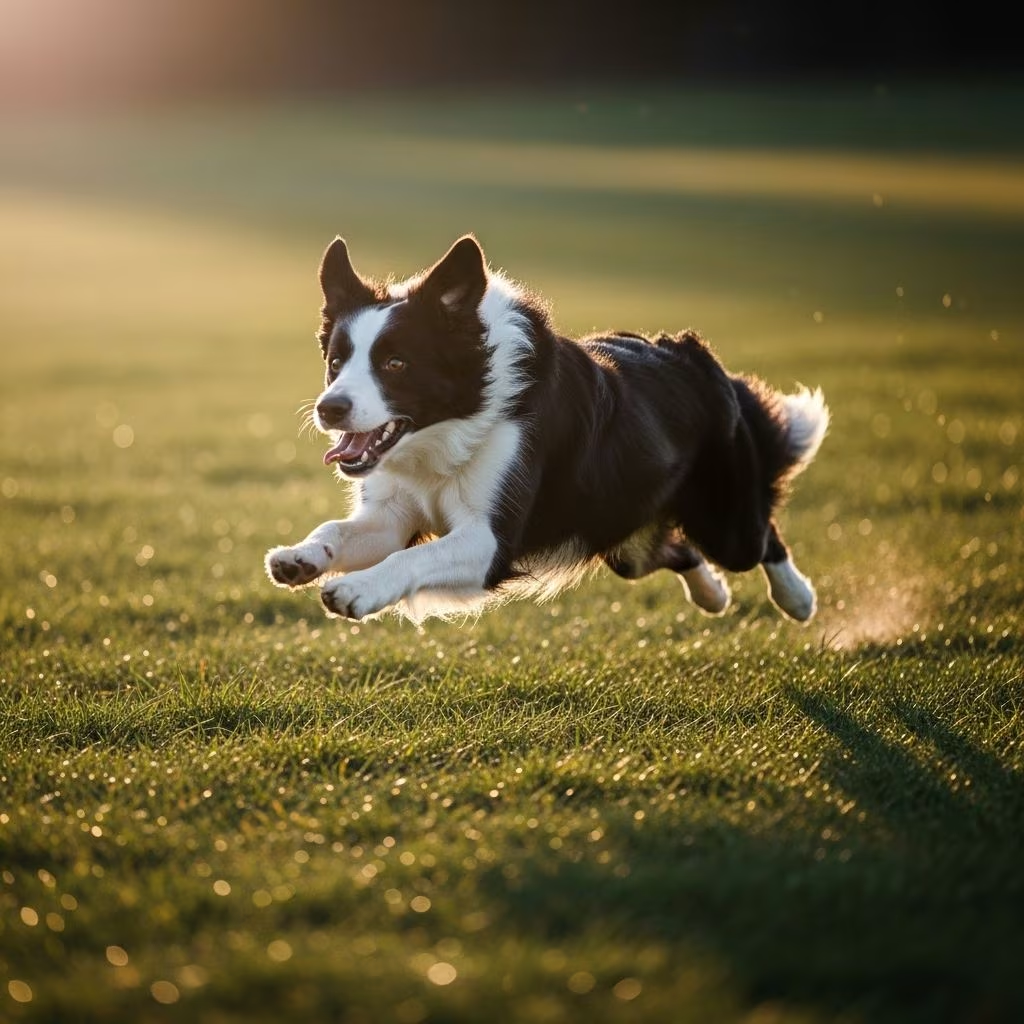
Border Collies stand out as one of the swiftest and most agile dog breeds, capable of reaching impressive velocities during herding and competitive activities. Their blend of intelligence, endurance, and explosive power enables them to excel in tasks demanding rapid acceleration and sustained pace.
The Athletic Foundation of Border Collie Velocity
At the core of a Border Collie’s speed lies a meticulously balanced physique designed for relentless motion. These medium-sized canines typically measure 18 to 22 inches at the shoulder, with males weighing 30 to 45 pounds and females slightly lighter at 25 to 42 pounds. This lean, muscular frame—slightly longer than tall—optimizes aerodynamics and quick directional shifts without excess bulk that could hinder performance.
Their skeletal structure supports tireless propulsion: strong, well-angulated shoulders allow fluid foreleg extension, while powerful hindquarters with deep thighs and low-set hocks deliver forceful pushes off the ground. Pasterns exhibit a slight slope for shock absorption during high-speed impacts, and oval feet with arched toes provide superior traction on varied terrains, from grassy fields to rugged pastures. The tail, moderately long and low-set with an upward curl, aids in balance during sharp turns at full throttle.
Coat variations further enhance their speed adaptability. A double-layered coat—either smooth (short and sleek) or rough (moderately long with mane and feathering)—repels weather while minimizing drag. Dense undercoat insulates during extended runs, and the medium-textured topcoat prevents matting under exertion. Colors range from classic black-and-white to merle patterns, but these aesthetics never compromise functional athleticism.
Quantifying Border Collie Top Speeds
Border Collies routinely clock speeds of 25 to 30 miles per hour in short bursts, rivaling elite sighthounds in herding scenarios where they must outpace livestock. Peak velocities can surge higher during agility competitions, where precise control amplifies raw pace. Their gait is characterized as free, smooth, and tireless, with minimal foot lift to conserve energy and maximize stealthy acceleration.
| Activity Type | Average Speed (mph) | Key Factors |
|---|---|---|
| Herding Sheep | 25-28 | Endurance, directional changes |
| Agility Courses | 27-30 | Explosive starts, obstacle navigation |
| Open Field Sprints | 28-32 | Straight-line bursts, muscle power |
| Flyball Racing | 26-29 | Speed retrieval, relay teamwork |
This table illustrates how context influences their velocity, with herding demanding sustained output over varied ground. Unlike pure sprinters, Border Collies maintain 20+ mph for miles, showcasing stamina bred from generations of farm labor.
Historical Roots Fueling Modern Speed
Originating along the England-Scotland border in the 19th century, Border Collies were selectively bred for outrunning and outmaneuvering sheep across hilly terrains. Farmers prized dogs that could cover vast distances swiftly while executing the ‘eye’—a hypnotic stare that controls flocks without contact. This heritage embedded genes for rapid response and velocity, evident in trials where they navigate obstacles at breakneck speeds.
Early breeders focused on working ability over show traits, resulting in a breed unmarred by excess weight or exaggerated features. The Kennel Club’s standards emphasize grace, balance, and endurance, traits that directly translate to superior sprinting and chasing capabilities. Today, this legacy shines in events like sheepdog trials, where Border Collies demonstrate velocities surpassing 25 mph while gathering dispersed herds.
Physiological Edges for Rapid Movement
Several biological adaptations propel Border Collies to the forefront of canine speed. Their cardiovascular system supports exceptional oxygen delivery, enabling prolonged high-intensity efforts without fatigue. Large lung capacity and efficient heart rate recovery allow seamless transitions from rest to full gallop.
Muscular composition favors fast-twitch fibers for explosive bursts, complemented by slow-twitch endurance for marathon runs. The ‘stalking crouch’—lowered head and intense gaze—lowers their center of gravity, enhancing stability at top speeds. Neurological wiring provides lightning reflexes; they process visual cues and adjust trajectory mid-stride, crucial for agility.
Hormonal profiles, including elevated adrenaline responses, sharpen focus during chases. Joint flexibility from well-laid shoulders and hocks minimizes injury risk during abrupt halts or pivots. These traits culminate in a dog that not only runs fast but maneuvers with surgical precision.
Competitive Arenas Showcasing Peak Speeds
In dog sports, Border Collies dominate disciplines rewarding velocity:
- Agility:** They shatter course records, weaving through jumps at 28+ mph, their compact build navigating tight turns effortlessly.
- Flyball:** Relay races see them hitting 30 mph while leaping hurdles and box-turning for balls.
- Disc Dog:** Frisbee pursuits leverage aerial speed, with catches at full sprint.
- Trekollie/Dock Diving:** Explosive launches from docks propel them far, powered by hindquarter thrust.
World records often bear Border Collie names, underscoring their supremacy in timed events. Owners report personal bests exceeding 30 mph in open fields, measured via GPS trackers.
Everyday Speed and Energy Management
Beyond competitions, Border Collies channel speed into daily life. They thrive on 2+ hours of vigorous exercise, sprinting alongside joggers or biking families at 20-25 mph paces. Herding balls or toys mimics instinctual chases, burning energy without livestock.
Urban dwellers adapt with fetch in parks or treadmill runs, but under-stimulation leads to frustrated zooming indoors. Puzzle toys and scent work supplement physical outlets, preventing boredom-induced mischief.
Training Techniques to Maximize Speed
Unlocking full potential requires targeted conditioning:
- Foundation Fitness:** Build with interval sprints—30-second bursts at max effort, followed by walks—to enhance anaerobic capacity.
- Agility Drills:** Set up homemade courses with cones and low hurdles to hone acceleration and turns.
- Strength Work:** Hill repeats and swimming bolster hindquarters without joint stress.
- Recall Training:** High-speed stops on command prevent runaway chases.
- Nutrition Optimization:** High-protein diets with joint supplements support muscle repair post-run.
Start pups gently to safeguard growth plates, ramping up by 6 months. Professional handlers recommend 4-6 week bootcamps for sport prep.
Health Factors Affecting Performance
Maintaining speed demands vigilance against common issues. Hip dysplasia, though less prevalent than in larger breeds, can curb stride if unchecked—opt for OFA-tested parents. Epilepsy affects some lines, potentially disrupting training.
Obesity from inactivity dulls pace; monitor weight to preserve lean mass. Regular vet checks, including cardiac exams, ensure heart health for endurance. Dewclaw removal in working lines prevents snags during sprints.
Border Collies in Family and Work Environments
Despite speed-driven intensity, they bond deeply with active families. Early socialization curbs herding nips at kids’ heels, channeling instincts positively. They guard homes alertly, barking at intruders before bolting to investigate.
Farm roles remain primary, where their velocity gathers flocks efficiently. Urban agility stars prove versatility, but all need purposeful outlets to flourish.
FAQs
How fast can a Border Collie run?
Typically 25-30 mph in bursts, with elite athletes hitting 32 mph.
Are Border Collies faster than Greyhounds?
No, Greyhounds top 40+ mph in straights, but Collies excel in endurance and turns.
Can Border Collies swim fast?
They’re decent swimmers, but speed shines on land; water aids low-impact training.
What’s the best diet for speed?
Protein-rich kibble (30%+), omega-3s for joints, and hydration for performance.
Do they need speed training as puppies?
Moderate play yes; intense sessions after 12 months to protect joints.
References
- Border Collie Breed Standards — The Kennel Club. 2023-01-01. https://www.royalkennelclub.com/breed-standards/pastoral/border-collie/
- Border Collie Dog Breed — Hill’s Pet Nutrition. 2024-05-15. https://www.hillspet.com/dog-care/dog-breeds/border-collie
- About Border Collies — Arizona Border Collie Rescue. 2023-08-20. https://azbcr.org/Resources/AboutBorderCollies.aspx
- Border Collies Breed Guide — Figo Pet Insurance. 2024-03-10. https://figopetinsurance.com/blog/border-collies-breed-guide
- Border Collie — American Kennel Club. 2024-11-05. https://www.akc.org/dog-breeds/border-collie/



