

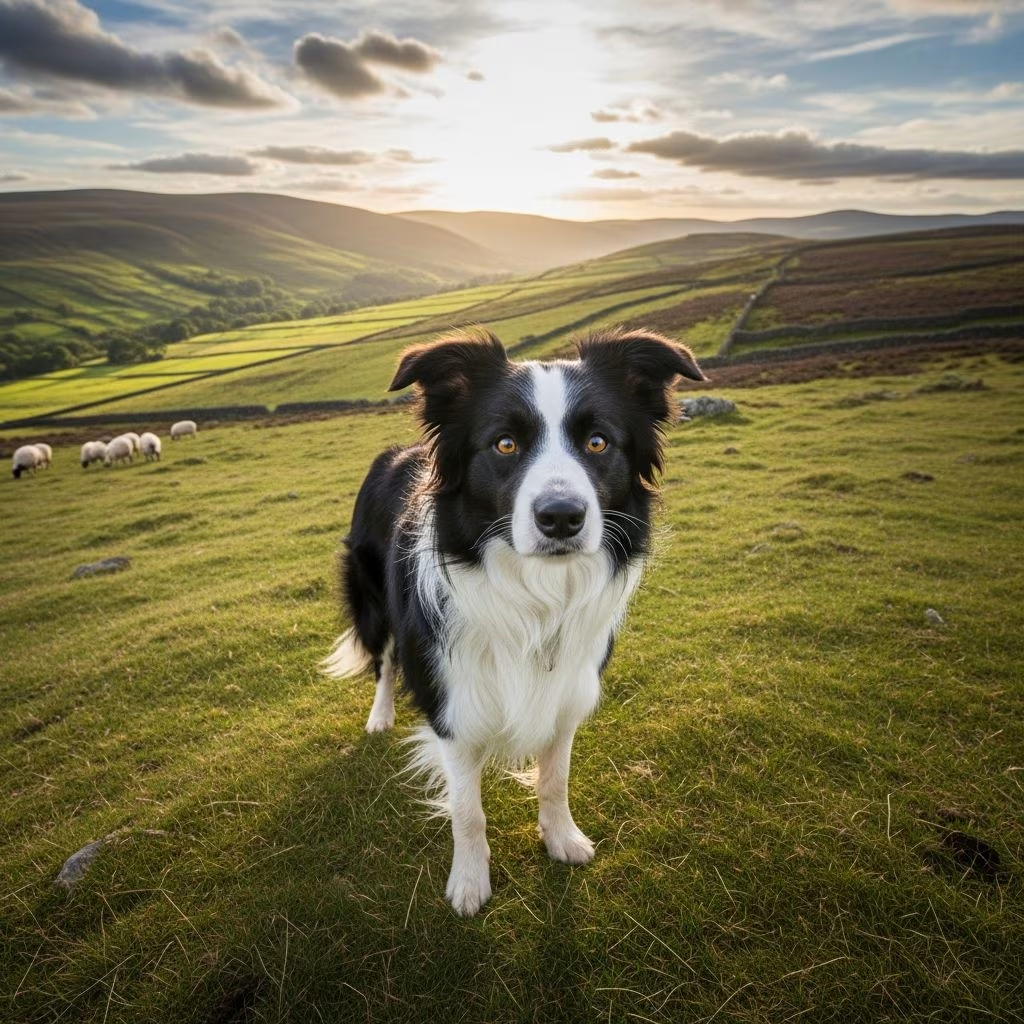
Origins and Historical Development of the Border Collie
The Border Collie stands as one of the most significant herding dog breeds in the world, with a lineage stretching back more than 130 years of deliberate development and refinement. This remarkable breed emerged from the border regions between England and Scotland, where shepherds required an exceptional working partner capable of managing livestock across challenging, rugged terrain. The breed’s development was not accidental but rather the result of strategic breeding decisions made by shepherds and farmers who understood the specific demands of their work.
During the nineteenth century, forward-thinking shepherds recognized that the traditional farm collie could be enhanced through selective breeding with dogs possessing complementary traits. These early breeders incorporated characteristics from setters, known for their intense “eye,” and racing hounds, valued for their speed and silent movement. This combination of traits proved instrumental in creating a dog capable of the nuanced herding work required in the border territories.
The formalization of the Border Collie as a distinct breed came relatively late in the breed’s history. The term “Border Collie” was first officially used in 1915 by James Reid, Secretary of the International Sheep Dog Society, when the breed was formally registered as separate from other collie varieties. Prior to this official recognition, Border Collies had been working alongside shepherds in England and Scotland for hundreds of years, developing their reputation for exceptional herding abilities and remarkable intelligence.
Old Hemp: The Foundation Sire of the Modern Breed
Every purebred Border Collie alive today traces its ancestry back to a single dog: Old Hemp, born in Northumberland, England in September 1893. This tricolour dog, bred by Adam Telfer from parents Roy and Meg, became the foundational sire of the entire modern Border Collie breed. Despite unremarkable physical appearance, Old Hemp demonstrated herding instincts and abilities that were nothing short of revolutionary for his time.
What made Old Hemp extraordinary was not his looks but his working style and temperament. He was described as a quiet, powerful dog to which sheep responded with ease. His herding methodology became the template for what we now recognize as the distinctive Border Collie herding style. Over his lifetime, Old Hemp is believed to have sired approximately 200 puppies, spreading his exceptional genetics throughout shepherding communities across the region.
Adam Telfer, Hemp’s owner and a farmer deeply experienced with herding dogs, recognized something special in the dog. His willingness to stand out among his peers by promoting Hemp’s bloodline demonstrates how even seasoned shepherds were impressed by this dog’s capabilities. The influence of Old Hemp extended far beyond his immediate working life, shaping the breed’s development for generations to come.
Evolution Through Selective Breeding Programs
The first formal sheepdog trial took place in 1873 in Wales, establishing a competitive framework that would drive breed development for decades. These trials provided a venue for recognizing outstanding working dogs and offered them greater influence on breeding programs. The establishment of the International Sheepdog Society in 1906 further formalized breed development, creating a studbook that documented pedigrees and ensured breeding consistency. The society held its first official sheepdog trial in 1922, cementing the competitive tradition.
Early breeders made a critical decision that preserved the Border Collie’s working excellence: they maintained separate bloodlines for working and show dogs. This distinction prevented the introduction of purely aesthetic breeding goals that might have compromised the breed’s herding instincts and physical capabilities. While show dogs developed to meet aesthetic standards, working Border Collies continued to be selected primarily for their herding abilities, intelligence, and drive.
Several distinct types of Border Collies emerged from this selective breeding, each with specific characteristics suited to different working environments and breeding philosophies:
- Northumbrian Type: Descended directly from Old Hemp, featuring a rough coat with minimal white markings concentrated around the neck, legs, and muzzle
- Wiston Cap Type: Developed from the dog Wartime Cap, born in 1937, characterized by a slightly larger frame and more extensive white patches
- Nap Type: The only smooth-coated variety, descended from Whitelope Nap born in 1951, featuring a taller, more square appearance than other types
- Herdman’s Tommy’s Type: Known for powerful builds and strong-willed personalities, inheriting Old Hemp’s black, white, and tan coloring
Physical Characteristics and Appearance
Border Collies are medium-sized dogs with athletic builds specifically adapted for the demanding work of herding livestock. Their size and structure reflect centuries of evolution in response to the terrain and tasks they performed. The breed exhibits considerable variation in physical appearance, a natural consequence of the diverse gene pool that breeders have cultivated.
The coat comes in two primary varieties: rough and smooth. Rough-coated Border Collies feature longer, feathered coats that provide protection against harsh weather conditions, while smooth-coated varieties have shorter hair but retain the same protective undercoat. Color patterns typically include black, white, and tan markings, though variations exist across different bloodlines. The white patches often appear on the chest, face, muzzle, and tip of the tail.
One of the most distinctive physical features of the Border Collie is their characteristic “eye” — an intense, focused gaze that they use in their herding work. This concentrated stare allows them to control and intimidate livestock without frightening them, creating what some describe as an almost hypnotic effect. This physical trait is so valued in working dogs that it is specifically selected for in breeding programs focused on herding ability.
Exceptional Intelligence and Working Ability
The Border Collie consistently ranks among the world’s smartest dog breeds, a distinction earned through both selective breeding and natural aptitude. This intelligence manifests not simply as trainability but as an intuitive understanding of herding dynamics and an ability to respond to subtle human direction. Shepherds throughout history have appreciated this quality, selecting for dogs that could anticipate needs and work somewhat independently while remaining responsive to commands.
The breed’s intelligence extends far beyond herding work. When Border Collies were exported from Great Britain to sheep farms and ranches worldwide, they were eventually discovered by obedience exhibitors who were fascinated by their capacity for learning and their seemingly endless enthusiasm for mental work. This recognition led to their success in numerous competitive venues beyond traditional herding trials.
Competitive Success and Modern Applications
Border Collies have dominated competitive sheepdog trials, establishing themselves as the gold standard in herding dog competitions. Their success in formal competitions like the sheepdog trials has become legendary, with their abilities showcased in popular culture through films such as “Babe.” Beyond herding competitions, Border Collies consistently place highest in agility competitions, demonstrating their athleticism and responsiveness to training.
The breed’s applications have expanded considerably beyond their original herding purpose. Border Collies excel in:
- Competitive obedience trials
- Agility competitions
- Flyball events
- Search and rescue operations
- Therapy and assistance dog roles
Temperament and Behavioral Characteristics
Border Collies are fundamentally gatherers by nature, meaning they instinctively move toward and collect livestock rather than simply driving or tending them. This gathering instinct shapes their behavior and interactions with their environment, even in non-working contexts. Their natural drive to work is balanced by a strong responsiveness to human direction and an eagerness to please.
The breed’s temperament reflects generations of selection for dogs that could work independently while remaining highly attuned to human communication. They demonstrate remarkable loyalty, a strong desire to engage in purposeful activity, and trainability that surpasses most other dog breeds. These characteristics make them exceptional working partners but also create specific needs in terms of mental stimulation and physical exercise.
Essential Care Requirements and Exercise Needs
Owning a Border Collie requires understanding that this breed was developed for work that involves covering significant distances daily in challenging terrain. Early breeders selected for dogs capable of working 50 miles or more per day while maintaining focus and responsiveness. This heritage means modern Border Collies require substantial physical exercise and mental stimulation to be satisfied in a home environment.
These dogs thrive when they have purposeful work to engage in, whether through formal herding, competitive sports, or structured training programs. Without adequate outlets for their energy and intelligence, Border Collies may develop behavioral problems including destructiveness, anxiety, or obsessive behaviors. Prospective owners should realistically assess their ability to provide the physical activity and mental engagement these dogs require.
Health Considerations for the Breed
The Border Collie’s diverse genetic background, while beneficial for eliminating hereditary problems common in less genetically diverse breeds, provides a relatively robust health foundation. However, responsible ownership includes understanding health screening recommendations specific to the breed. Hip and elbow dysplasia, eye conditions, and epilepsy are health concerns that have been identified in some Border Collie populations, making health testing of breeding dogs important for maintaining a healthy breed.
The breed’s hardy nature reflects its origins in harsh climates and demanding working conditions. This ruggedness has been maintained through the emphasis on working ability rather than appearance in breeding decisions, contributing to overall health and longevity when bred responsibly.
Kennel Club Recognition and Breed Standards
The Border Collie gained official recognition from the British Kennel Club in 1976, relatively recently compared to many other established breeds. Prior to this formal Kennel Club registration, Border Collies had been registered with the International Sheep Dog Society, and the dogs registered with the Kennel Club initially had strong working bloodlines from these ISDS registrations.
The distinction between working and show bloodlines has had a lasting impact on the breed. While show dogs are evaluated against aesthetic standards, working dogs continue to be judged primarily on their herding ability and working characteristics. This dual development has preserved the Border Collie’s working excellence while allowing for some variation in appearance among show dogs.
Global Distribution and Influence
Border Collies were actively exported from Great Britain to sheep farms and ranches throughout the world, spreading the breed far beyond its native borders. This global distribution established Border Collies as the preferred herding dog in many countries and regions. Their reputation for intelligence and working ability preceded them, making them highly sought after by shepherds and farmers everywhere.
The breed’s international success has contributed to their popularity as pets in countries where pastoral work is no longer the primary application. Their intelligence and trainability appeal to dog owners seeking a highly responsive and engaged companion, even if traditional herding work is not available.
Conclusion
The Border Collie represents a remarkable achievement in selective breeding, combining traits from various dog types to create an exceptional working partner. From Old Hemp’s foundation through the diverse types that emerged in subsequent generations, the breed has maintained its reputation for intelligence, athleticism, and herding excellence. Understanding the Border Collie’s heritage and purpose provides essential context for anyone considering this breed as a companion, emphasizing the importance of providing appropriate mental and physical stimulation to meet their substantial needs.
References
- Border Collie History: The Herding Dog’s Development Through Time — American Kennel Club. https://www.akc.org/expert-advice/dog-breeds/border-collie-history-the-herding-dogs-development-through-time/
- History of the Border Collie: A Scottish Dog Breed — Scottish at Heart. https://www.scottish-at-heart.com/history-of-the-border-collie.html
- Border Collie Characteristics — Border Collie Society. https://www.bordercollie.org/basics/characteristics/
- Border Collie — Wikipedia. https://en.wikipedia.org/wiki/Border_Collie
- Border Collie History Full — Willow Creek Border Collies. https://willowcreekbordercollies.com/border-collie-full/
- About Border Collies — Arizona Border Collie Rescue. https://azbcr.org/Resources/AboutBorderCollies.aspx



