

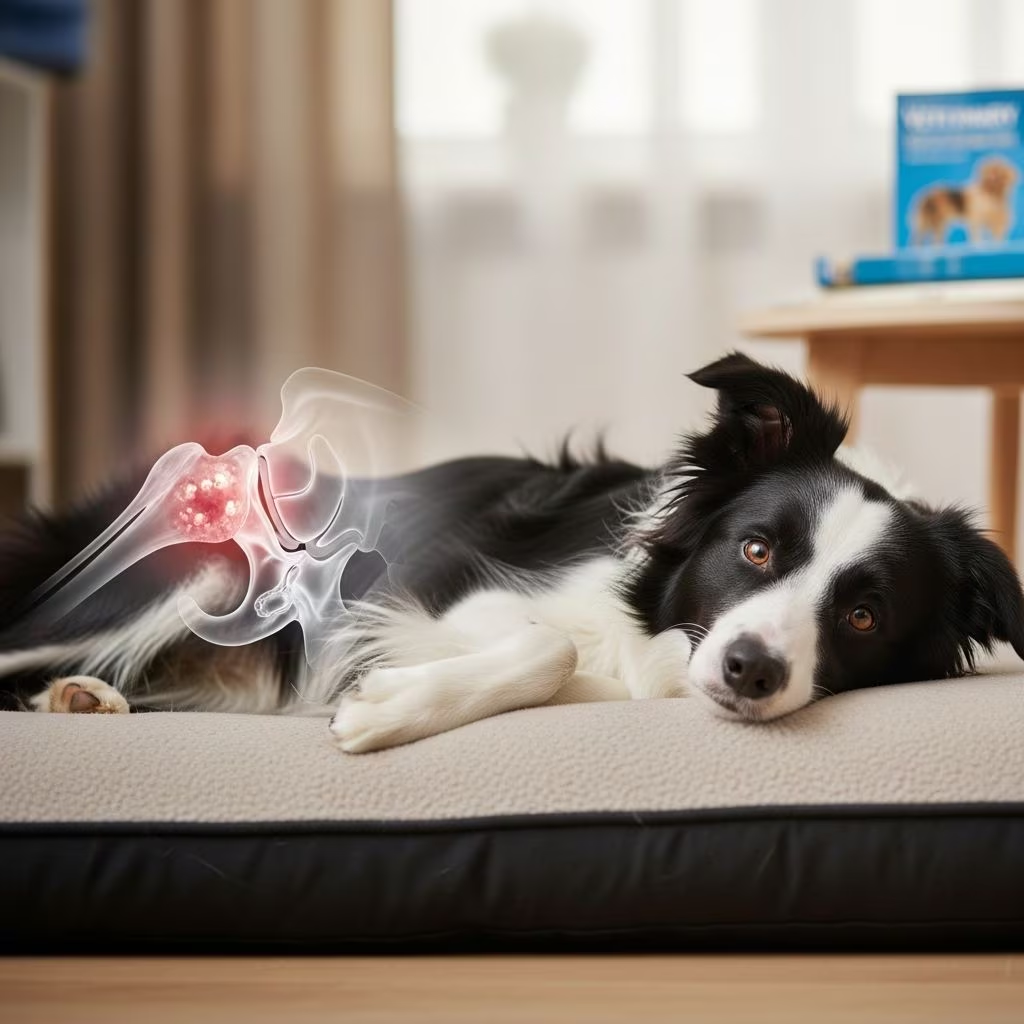
Border Collies, renowned for their intelligence and herding prowess, face a significant health challenge in hip dysplasia, a developmental disorder affecting the hip joint’s ball-and-socket structure. This condition leads to joint instability, progressive arthritis, and mobility loss, impacting their active lifestyles.
Understanding the Hip Joint Anatomy in Dogs
The canine hip joint functions as a ball-and-socket mechanism where the femur’s rounded head nests securely into the pelvis’s acetabulum. In healthy joints, smooth cartilage and strong ligaments ensure fluid motion. Dysplasia disrupts this fit, causing the femoral head to wobble, grind, and erode cartilage over time.
This misalignment begins subtly during puppy growth, often around 5-6 months, and worsens with age, exercise, or excess weight. Border Collies, despite their medium size, are susceptible due to genetic predispositions common in working breeds.
Genetic and Environmental Factors Behind Hip Dysplasia
Hip dysplasia is primarily hereditary, with Border Collies inheriting abnormal joint laxity from parents. Breeding without hip scoring exacerbates prevalence. Environmental influences like rapid growth from overfeeding, slippery floors, or excessive jumping in puppies accelerate onset.
- Genetics: Polygenic inheritance; even puppies born with normal hips develop laxity due to faulty soft tissues.
- Nutrition: High-calorie diets promoting fast growth strain developing joints.
- Activity: Over-exercise on hard surfaces or obesity compounds joint stress.
Breeds like Border Collies show moderate risk, but selective breeding via hip evaluation schemes reduces incidence.
Recognizing Early Symptoms in Your Border Collie
Symptoms vary by severity and age, often emerging in young adults or seniors. Early detection preserves quality of life.
| Symptom | Description | Common in Border Collies? |
|---|---|---|
| Bunny Hopping | Running with hind legs together like a rabbit | Yes, hallmark sign during trots |
| Lameness/Limping | Intermittent or constant hind limb favoring | Frequent, worsens post-exercise |
| Stiffness | Difficulty rising after rest, especially mornings | Common after inactivity |
| Reluctance to Activity | Avoids stairs, jumps, or play | Noticeable in energetic breeds |
| Muscle Wasting | Thinned hindquarters, prominent hips | Progressive atrophy |
Owners report dogs “hobbling,” yelping on stairs, or shifting weight forward to spare hips. Cold weather intensifies stiffness. Mild cases may remain subclinical until arthritis develops.
Diagnostic Process for Accurate Confirmation
Veterinarians diagnose via physical exams, gait analysis, and imaging. Palpation reveals joint laxity (positive Ortolani sign in pups). X-rays under sedation show shallow acetabulum, femoral head deformities, or arthritis.
Scoring systems like OFA (Orthopedic Foundation for Animals) or PennHIP quantify risk from 0-100+; scores under 15 indicate excellent hips. Advanced cases reveal bone spurs and joint space narrowing. Blood tests rule out infections; arthroscopy inspects cartilage directly.
Conservative Management Strategies
Mild to moderate cases respond to non-surgical approaches emphasizing pain relief, joint support, and lifestyle adjustments.
- Weight Control: Ideal body condition score (4-5/9) reduces joint load; every pound lost eases pressure.
- Exercise: Low-impact activities like swimming or leashed walks; avoid high jumps.
- Medications: NSAIDs (e.g., carprofen) for inflammation; joint supplements with glucosamine/chondroitin.
- Physical Therapy: Hydrotherapy, massage strengthen muscles without strain.
Orthotic braces or harnesses aid mobility in seniors.
Surgical Interventions for Severe Cases
When conservatives fail, surgery restores function. Options depend on age and severity.
| Procedure | Best For | Outcomes |
|---|---|---|
| Juvenile Pubic Symphysiodesis (JPS) | Puppies <6 months | Redirects pelvic growth; 80-90% success |
| Triple Pelvic Osteotomy (TPO) | Young dogs <10 months | Rotates acetabulum for better coverage; excellent for non-arthritic |
| Femoral Head Ostectomy (FHO) | Smaller adults/seniors | Removes femoral head; forms false joint; good pain relief |
| Total Hip Replacement (THR) | Mature dogs | Prosthetic joint; near-normal function in 90-95% |
Post-op rehab includes crate rest and controlled physio. Costs range $1,500-$7,000 per hip.
Preventive Measures for Breeders and Owners
Proactive steps minimize risk. Breeders screen sires/dams via X-rays at 2 years; choose low-score mates.
- Puppy Rearing: Large-breed puppy food for controlled growth; non-slip surfaces.
- Early Screening: PennHIP at 4 months predicts dysplasia.
- Lifestyle: Maintain lean weight; joint-healthy diet with omega-3s.
Organizations like the British Veterinary Association promote scoring schemes, lowering puppy incidence.
Long-Term Prognosis and Quality of Life
With management, most Border Collies live comfortably into old age. Early intervention prevents severe arthritis; many resume herding post-surgery. Untreated, euthanasia may be considered for intractable pain. Monitor via annual vet checks; adapt activities to ability.
Frequently Asked Questions (FAQs)
Can Border Collies outgrow hip dysplasia?
No, it’s a permanent structural issue, but symptoms can be managed effectively with treatment.
Is hip dysplasia covered by pet insurance?
Many policies cover diagnostics and treatments if pre-existing conditions are excluded; check hereditary clauses.
How do I know if my puppy has hip dysplasia?
PennHIP or OFA screening at 4-24 months; watch for bunny hopping or reluctance to rise.
What home remedies help hip dysplasia pain?
Warm compresses, ramps for furniture, and fish oil supplements; consult vet before changes.
Does exercise worsen hip dysplasia?
Excessive high-impact does, but controlled swimming strengthens without harm.
References
- Border Collie Hip Dysplasia: Our Vet Explains the Signs, Causes — Dogster. 2023. https://www.dogster.com/ask-the-vet/border-collie-hip-dysplasia
- Hip Dysplasia in Border Collies — Dogs Health. 2022. https://www.dogshealth.com/hip-dysplasia-in-border-collies/
- Hip Dysplasia in Dogs — PDSA. 2024-01-15. https://www.pdsa.org.uk/pet-help-and-advice/pet-health-hub/conditions/hip-dysplasia-in-dogs
- Hip Dysplasia in Border Collies — Zoomadog. 2023. https://zoomadog.co.uk/blogs/blog/hip-dysplasia-in-border-collies
- Hip Dysplasia in Dogs: Signs, Treatment, Surgery — PetMD. 2025-06-10. https://www.petmd.com/dog/conditions/musculoskeletal/hip-dysplasia-dogs
- Understanding Common Health Conditions found in Border Collies — Streamz Global. 2024. https://us.streamz-global.com/blogs/articles/understanding-common-health-conditions-found-in-border-collies



