

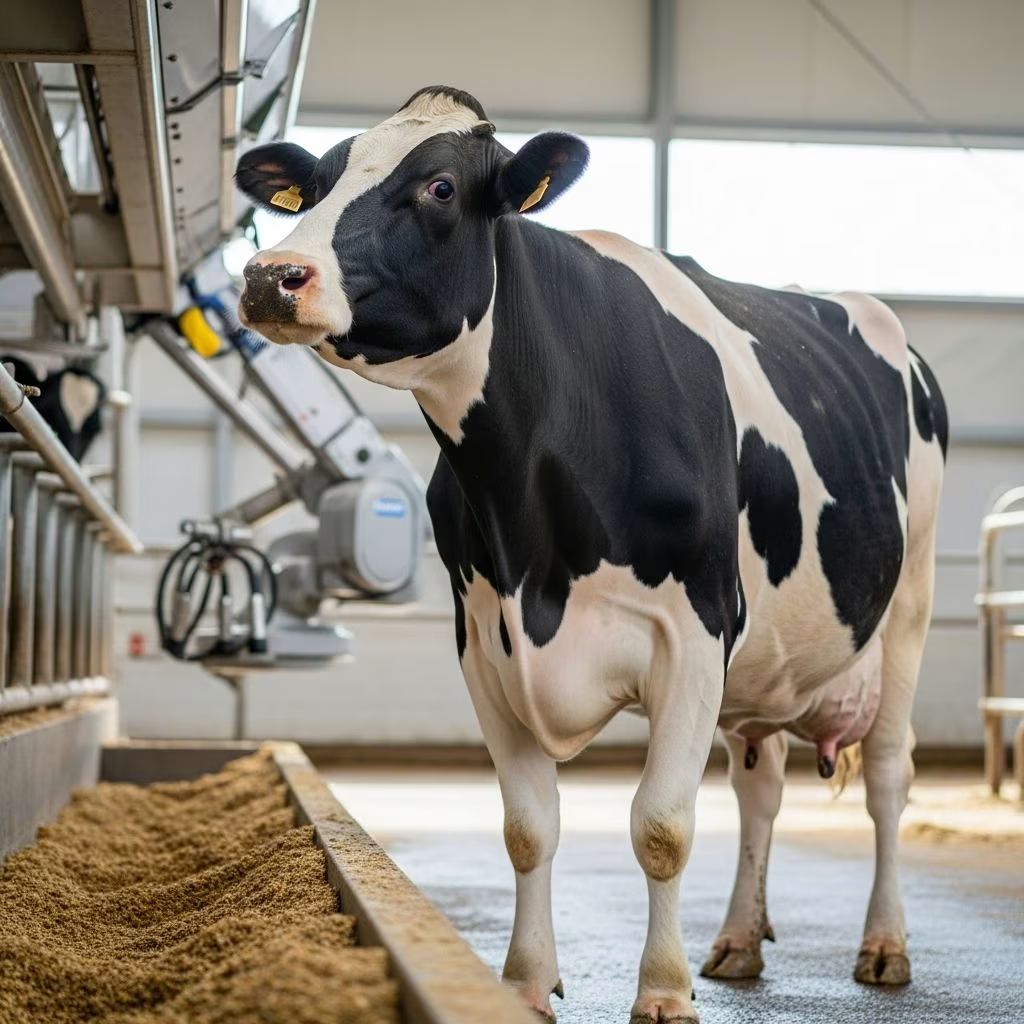
Dairy farming thrives on maximizing milk production from individual cows while optimizing overall herd performance. Key drivers include biological traits, nutritional strategies, environmental conditions, and operational practices, all interacting to determine output levels.
Biological Foundations of Milk Production
The inherent characteristics of dairy cows form the bedrock of productivity. Breed selection plays a pivotal role, with high-yielding breeds like Holsteins often outperforming others due to genetic predispositions for greater milk volume. Age influences output as well; cows in their prime, typically between 3 and 6 years, achieve peak yields before gradual declines set in with advancing years.
Lactation stage marks another critical biological factor. Early lactation sees rapid increases in milk synthesis, peaking around 6-8 weeks post-calving, then tapering as the cycle progresses. Gestation periods also impact yields, with late-pregnancy cows often experiencing reduced production due to fetal nutrient demands. Statistical models confirm these patterns, showing lactation order and cow age as significant predictors of daily milk output.
Nutritional Strategies for Peak Performance
Feed is the engine of milk production, directly tying intake to output. High-energy diets rich in fermentable carbohydrates boost yields but can lower fat content if not balanced. Forage quality matters immensely—particle size, maturity stage, and fiber levels affect rumen fermentation and milk composition. Insufficient crude protein hampers both quantity and protein percentage in milk.
Dry matter intake optimization is essential. Studies using regression analysis link feed rate to milk yield, revealing ideal ratios that minimize waste while maximizing efficiency. Total mixed rations (TMR) with precise dry matter balances support sustained high production, especially during peak lactation. Environmental stressors like heat reduce intake, compounding nutritional shortfalls.
| Nutrient Factor | Impact on Milk Yield | Optimization Tip |
|---|---|---|
| Energy Density | Increases volume | Use readily fermentable carbs |
| Crude Protein | Boosts protein content | Maintain 16-18% in ration |
| Forage Fiber | Supports fat percentage | Ensure adequate particle size |
| Dry Matter Intake | Directly correlates to output | Target 3-4% of body weight |
Environmental Influences on Herd Efficiency
Climate exerts profound effects on dairy operations. Extreme heat and humidity slash feed consumption and milk yields by triggering heat stress, which elevates maintenance energy needs and alters milk profiles—increasing pathogens while dropping protein and fat. Nighttime cooling offers relief, allowing better recovery.
- High temperatures reduce intake by up to 20%, cutting production proportionally.
- Humidity exacerbates stress, though rainy seasons may enhance certain milk solids.
- Geographic advantages, like temperate zones in Wisconsin over arid New Mexico, yield higher outputs.
Shelter design mitigates these issues. Comfortable resting areas, ample space, and cleanliness promote better rest and rumination, indirectly boosting productivity. Ventilation systems and cooling tech in hot climates preserve intake and health.
Management Practices Driving Gains
Operational decisions amplify biological and nutritional potentials. Milking frequency stands out—increasing from twice to three times daily lifts yields by 15-20%, though labor costs rise. Dry period length requires balance; too short hampers next lactation, too long wastes potential.
Health management is non-negotiable. Diseases suppress output and degrade quality, with somatic cell counts signaling issues. Routine monitoring and vaccinations maintain vigor. Farm scale influences adoption of tech like automated milking and precision feeding, fueling U.S. production rises of 32% from 2004-2024 despite fewer farms.
Advanced practices, including genetic selection and data analytics, propel per-cow yields upward. Milk solids per cow have outpaced fluid milk growth, enhancing value.
Individual vs. Herd-Level Productivity
While individual cow traits dictate personal output, herd dynamics determine collective success. Culling low performers and selective breeding elevate averages. Statistical optimization integrates variables like age, temperature, and feed to pinpoint ideal conditions.
Large-scale data from Turkish Holstein farms showed optimized scenarios yielding maximal milk at minimal dry matter use. U.S. trends reflect this, with tech adoption on bigger operations boosting efficiency.

Technological and Economic Considerations
Precision agriculture tools revolutionize management. Sensors track intake, health, and output in real-time, enabling adjustments. Genetics advances, paired with nutrition, have driven consistent gains.
Profitability ties to solids production over volume alone, as processing values components like fat and protein. Balancing costs—feed, labor, equipment—against revenues demands holistic views. Productivity growth buffers price volatility, sustaining consumption.
Future Directions in Dairy Optimization
Sustainable practices loom large. Climate-resilient breeds and feed additives counter warming trends. Data-driven models will refine predictions, from lactation curves to heat stress forecasts. Integrating AI for ration formulation promises further leaps.
Farmers must prioritize multifactor approaches, as no single lever suffices. Holistic management yields resilient, high-performing herds.
Frequently Asked Questions
What is the biggest factor affecting milk production?
Nutrition leads, but interacts with genetics, climate, and management. Balanced diets ensure energy for milk synthesis.
How does heat stress impact dairy cows?
It reduces feed intake, lowers yields, and worsens milk quality by altering composition and raising pathogen risks.
Does milking more often increase output?
Yes, up to 3x daily boosts yields 15-20%, but weigh added costs.
Why focus on milk solids over volume?
Solids drive product value in cheese and other goods, growing faster than fluid milk.
Can technology help small farms?
Yes, scalable tools like apps for monitoring improve efficiency without massive investment.
References
- Statistical Optimization and Analysis of Factors Maximizing Milk Production — PMC/NCBI. 2024. https://pmc.ncbi.nlm.nih.gov/articles/PMC12108520/
- 7 factors that impact milk production and quality — Dairy Global. 2023-10-01. https://www.dairyglobal.net/dairy/milking/7-factors-that-impact-milk-production-and-quality/
- Fewer Farms, More Milk: The Changing Structure and Costs of U.S. Dairy Farming — USDA ERS. 2026-02. https://www.ers.usda.gov/amber-waves/2026/february/fewer-farms-more-milk-the-changing-structure-and-costs-of-us-dairy-farming
- Key factors affecting milk production quality — Jacoby. 2023. https://www.jacoby.com/key-factors-affecting-milk-production-quality/
- Dairy Productivity, Profitability and Promotion – a Hitchhiker’s Guide — Dairy Herd. 2023. https://www.dairyherd.com/news/business/dairy-productivity-profitability-and-promotion-hitchhikers-guide



