

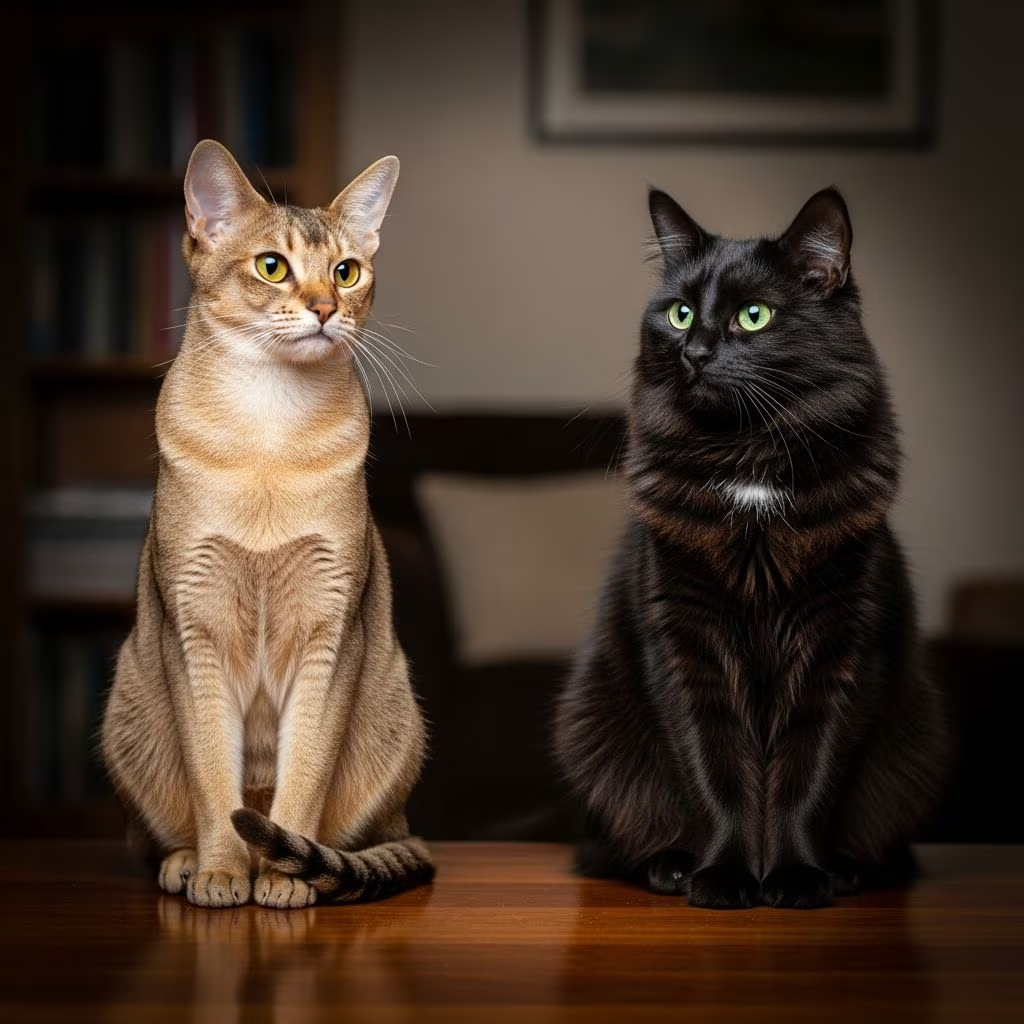
The Bombay cat stands out as a deliberately bred variety designed to mimic a miniature panther, while black cats encompass any feline with a solid black coat, often from mixed or other pure breeds. This comparison highlights their origins, physical attributes, behaviors, and practical ownership aspects to help enthusiasts make informed choices.
Origins and Breeding Background
Bombay cats trace their roots to mid-20th-century America, where breeder Nikki Horner aimed to craft a sleek, all-black feline resembling a small black panther. Starting in the 1950s, she crossed sable Burmese cats with black American Shorthairs, achieving success by 1965 after initial setbacks with coat quality and type. The Cat Fanciers’ Association recognized the breed in 1970, followed by The International Cat Association in 1979, solidifying its status.
In contrast, black cats are not a specific breed but a color variation appearing across numerous lines, including American Shorthairs, British Shorthairs, and domestic mixes. Their black fur stems from dominant melanin genes, with no unified breeding history tied to a single creator or goal.
| Aspect | Bombay Cat | Black Cat |
|---|---|---|
| Origin | 1950s USA, Nikki Horner | Various breeds/mixes, natural mutation |
| Parent Breeds | Burmese x American Shorthair | No specific parents |
| Recognition | CFA 1970, TICA 1979 | Not breed-specific |
Physical Characteristics Compared
Bombay cats boast a striking, uniform appearance: a muscular, medium-sized frame with a rounded head, short muzzle, and wide-set ears. Their coat is short, glossy, and jet-black from root to tip, including whiskers, nose leather, and paw pads, paired with vivid copper or golden eyes that glow like new pennies. Kittens may show faint lighter shades that darken fully by two years.
Black cats vary widely in build, from slender to stocky, depending on their genetic background. Their coats can range from silky to coarse, with potential ghost tabby patterns visible in sunlight, unlike the solid Bombay sheen. Eye colors span green, yellow, orange, or blue, lacking the Bombay’s signature copper hue.
- Bombay specifics: Patent-leather coat, heavy for size due to muscle.
- Black cat diversity: Build and fur texture influenced by breed heritage.
Temperament and Social Traits
Known for a dog-like personality, Bombays are affectionate, intelligent, and playful, often seeking human interaction and adapting well to new homes. They bond with families, children, dogs, and other pets, displaying curiosity and trainability, such as fetching toys or walking on leashes. Their clownish antics and vocalizations make them engaging companions.
Black cats’ personalities depend on their breed or mix: an American Shorthair black cat might be laid-back and independent, while a Bombay-like one inherits similar sociability. Generally, they can be loving but less consistently outgoing than pure Bombays.
Health and Longevity Factors
Bombays, as a hybrid breed, inherit potential issues from Burmese lines, including hypertrophic cardiomyopathy, thickened facial folds leading to teary eyes, and Burmese head defects. Regular vet checks are essential, with a lifespan of 12-16 years under good care. Their low-shedding coat minimizes allergies but requires monitoring for obesity given their sturdy build.
Black cats from robust breeds like American Shorthairs often enjoy 15-20 years of health, facing breed-typical risks rather than Bombay-specific ones. Melanistic fur offers no unique health advantages or drawbacks.
| Health Concern | Bombay Risk | Black Cat (General) |
|---|---|---|
| Heart Conditions | Moderate (from Burmese) | Low to moderate |
| Eye Issues | Possible tearing | Variable |
| Average Lifespan | 12-16 years | 13-17 years |
Grooming and Daily Care Needs
Bombays demand minimal upkeep: weekly brushing maintains their satin coat, which resists matting and shedding. Dental care, nail trims, and ear checks suffice, as their short fur traps little debris. They thrive on high-protein diets supporting muscle tone.
Black cats’ grooming varies; short-haired ones need similar light brushing, while long-haired blacks require more to prevent tangles. No color-specific care, but vigilance for skin issues under dense fur applies universally.
Living Environment Suitability
Bombays flourish in active households, enjoying interactive toys, climbing structures, and family involvement. They handle apartments well if provided stimulation, disliking prolonged solitude.
Black cats adapt broadly, from lazy loungers to adventurers, matching owners’ lifestyles without breed-driven expectations.
Training and Enrichment Opportunities
Leveraging intelligence from both parent breeds, Bombays excel in clicker training, puzzle feeders, and tricks, often greeting owners at doors like dogs.
Black cats train variably; those with Shorthair ancestry may respond well, but results hinge on individual temperament.
Adoption and Cost Considerations
Purebred Bombays from reputable breeders cost $500-$1500, with rescues rarer due to demand. Black cats abound in shelters at low or no fees, offering similar looks without pedigree premiums.
- Pros of Bombay: Predictable traits, stunning aesthetics.
- Pros of black cat: Affordability, availability, genetic diversity.
Common Myths and Fun Trivia
Myths label black cats as unlucky, but Bombays counter this with their panther allure. Fun facts: Bombays burrow into blankets for warmth, name evokes India’s black panther habitat (though unrelated), and British variants exist from Burmese-domestic crosses.
Frequently Asked Questions
Are Bombay cats always black?
Yes, the breed standard mandates an all-black coat, unlike variable black cats.
Do Bombay cats get along with dogs?
Typically yes, their social nature fosters harmony with canines.
What’s the difference between American and British Bombays?
American from Burmese-Shorthair; British from Burmese-domestic shorthair crosses, with subtle type variations.
Are black cats healthier than Bombays?
Not inherently; health ties to breeding, with Bombays prone to specific hereditary issues.
Can Bombay cats be indoor-only?
Absolutely, they adapt excellently to indoor life with ample play.
Choosing Between a Bombay and a Black Cat
For panther-like elegance and doggy devotion, select a Bombay. For versatile, budget-friendly companionship with a black coat, any black cat suits. Both bring joy, but Bombays offer breed consistency.
References
- Cat Breed Spotlight: Bombay — Dr. Bill’s Pet Nutrition. 2023. https://drbillspetnutrition.com/cat-breed-spotlight-bombay/
- About the Bombay – History — Bombay Cat Club Europe. 2022. https://www.bombaycat.eu/history/
- Bombay cat — Wikipedia (informed by primary breed standards). 2024. https://en.wikipedia.org/wiki/Bombay_cat
- Bombay — The International Cat Association (TICA). 2024. https://tica.org/breed/bombay/
- The Bombay Cat: Breed History, Fun Facts and Myths — PrettyLitter. 2023. https://www.prettylitter.com/blog/the-bombay-cat-breed-history-fun-facts-and-myths



