

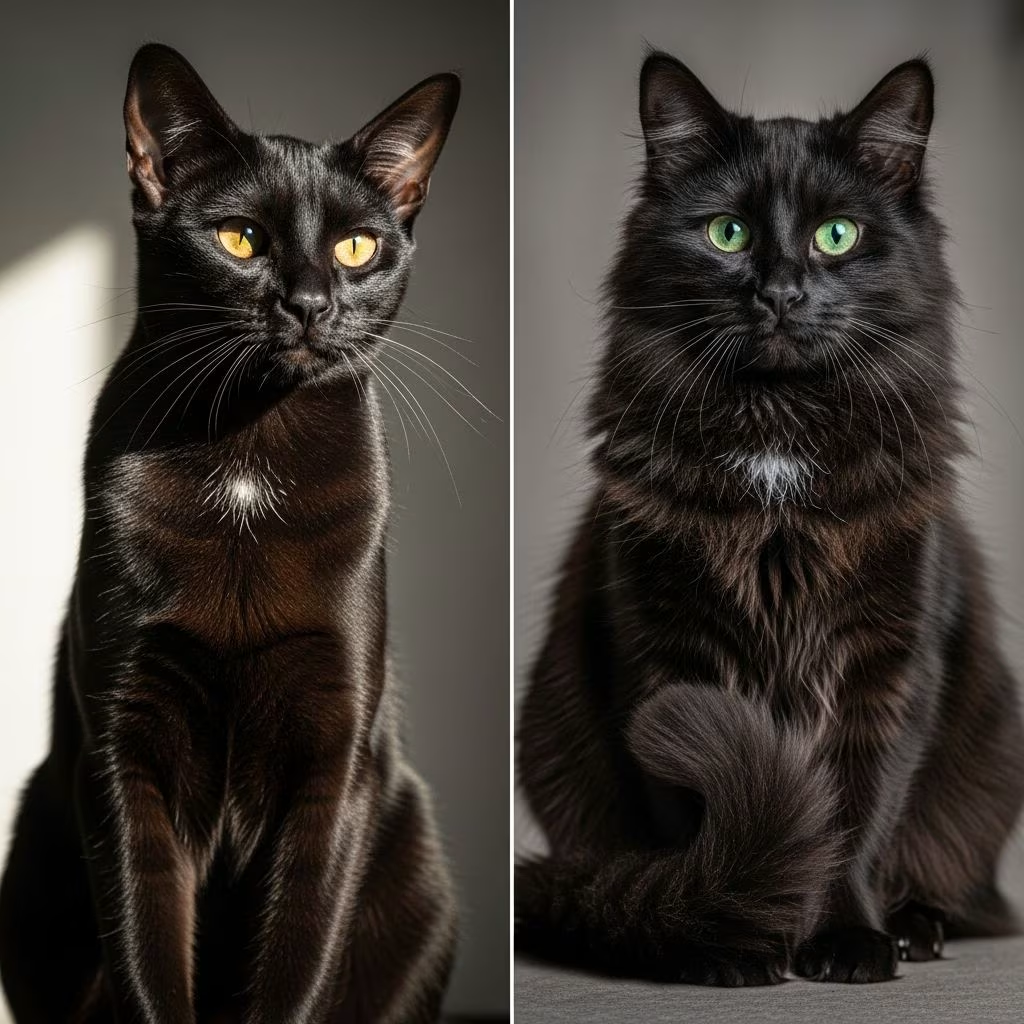
Bombay Cat or Black Cat? 7 Differences Every Cat Lover Should Know
When you see a sleek black cat, you might assume it’s simply a black cat without considering that it could be a purebred Bombay. While both Bombay cats and regular black cats share the same dark coat color, they are distinctly different in several important ways. Understanding these differences can help cat lovers properly identify and care for their feline companions. Whether you’re considering adopting a cat or simply curious about the breeds, this comprehensive guide will help you understand what sets these two apart.
1. Bombay Is a Breed, ‘Black’ Represents Their Color
The most fundamental difference between a Bombay cat and a black cat is the classification itself. A Bombay is a specific cat breed that was developed in the United States during the 1950s, created by crossing sable Burmese cats with black American Shorthairs. Shortly after, British breeders created an English variant by mating sable Burmese cats with British Shorthair cats. This intentional breeding program resulted in a distinct breed with carefully selected characteristics.
On the other hand, ‘black cat’ simply refers to any cat with a black coat color, regardless of its breed or genetic background. A black cat could be a domestic shorthair, a mixed breed, or any number of other breeds that happen to have black fur. This is why calling all black cats “Bombays” would be inaccurate—only those descended from the specific breeding program can be considered true Bombay cats.
2. Their Looks Are Similar, but Not Identical
At first glance, Bombay cats and black cats might appear identical due to their dark coloring, but their physical features tell a different story. Bombay cats are compact, muscular, and built like mini athletes. Their sleek, athletic build is one of their most distinctive features, giving them an appearance reminiscent of a small black panther.
Bombay cats have jet black coats that extend everywhere—including their whiskers and paw pads—creating a uniform black appearance from head to tail. This is particularly notable because many regular black cats have pink, grey, or mixed-colored paw pads and noses. The breed standards for Bombay cats require this complete black coloring, making it an easy identifying factor.
Regular black cats, by contrast, have more variable physical characteristics. Their body shapes can range from lean to stocky to fluffy, and their coat texture may vary significantly. Some black cats have long fur, others short fur, and their coats may range from uniformly black to having white markings on their chest or paws.
3. Eyes: The Most Striking Feature
The eyes are perhaps the most telling difference between Bombay cats and regular black cats. All Bombay cats have large, round, copper or gold-colored eyes that are notably larger than average cat eyes. These distinctive eyes are so striking that they’re often described as practically glowing. In fact, the copper or gold eye color is a crucial breed requirement for a cat to be considered an authentic Bombay.
Black cats, conversely, display tremendous variation in eye color and shape. Their eyes can be blue, green, brown, yellow, amber, or even golden. Additionally, black cats may have eye shapes that are narrow, round, oval, or hooded, and their eyes are typically average-sized rather than notably large. Because of this variation, you’ll need to look at additional features beyond eye color alone to distinguish between the two types of cats.
4. Facial Structure and Head Shape
The facial structure of Bombay cats is quite distinctive and differs notably from regular black cats. Bombay cats have a rounded head with full cheeks and a noticeably shorter, more compact muzzle compared to other cats. Their nose leather is always black, with a compact structure that appears shorter than the average cat’s nose. This compact facial structure, combined with their large round eyes, gives them a characteristic appearance that cat enthusiasts quickly learn to recognize.
Black cats typically display more variable facial structures. Their heads can be triangular, squarish, or round depending on their genetic background and breed mix. Their muzzles are usually straight and medium-sized, and their nose color can be pink, grey, or black depending on their genetic makeup. This variation in facial structure is one reason why black cats appear so diverse despite sharing the same coat color.
5. Coat Quality and Texture
The coat quality is another area where these two categories of cats differ significantly. Bombay cats have short, tight-lying fur that is incredibly smooth and shiny. Their coat feels almost like silk when you pet them, and the black color is usually very intense and uniform throughout. The smooth, lustrous coat is one of the most pleasurable tactile experiences when petting a Bombay cat.
Regular black cats display much greater variation in coat characteristics. Some have long fur while others have short fur, and the texture can range from fluffy to coarse depending on their genetic heritage. The intensity of black color can vary, and many black cats have white markings on their chest, paws, or other areas of their body. This diversity in coat quality makes black cats visually and tactilely distinct from the uniform appearance of a Bombay.
6. Body Weight and Build
Despite their small, compact appearance, Bombay cats are surprisingly heavy for their size. They have a muscular, well-proportioned build that feels substantial when you pick them up, earning the description of being “like picking up a brick wrapped in velvet.” This density comes from their Burmese heritage, which gives them a particularly muscular physique despite their compact frame. A typical Bombay cat has a medium, muscular build that feels heavy relative to their size.
Black cats, by contrast, tend to display more variable body types and weights. Large breeds like Maine Coons can weigh 15-25 pounds, while small breeds might only reach 6-8 pounds, and body shapes range from lean to stocky to fluffy. Regular black cats often have a more slender, elongated frame compared to the compact, athletic build of a Bombay.
7. Temperament and Personality Traits
Beyond physical characteristics, you can often identify a Bombay cat by their distinctive personality. Bombay cats were bred not just for appearance but also for their wonderful temperaments. Their behavioral traits are fairly consistent across the breed and include:
- Highly energetic—Bombays prefer to be active and alert rather than resting. They love observing their surroundings, climbing cat towers or cabinets, and playing interactive games and puzzles.
- Deeply affectionate—Unlike aloof breeds, Bombays are people-driven family companions who actively seek attention, demand cuddles, and follow their humans around constantly.
- Social butterflies—Bombays are comfortable around strangers and other pets, quickly warming up to new social situations. This contrasts with dark-coated breeds like Russian Blues and Korats, which can be skittish around strangers.
- Vocal communicators—Bombays use soft-toned meows to communicate and their cries become louder when hungry or feeling ignored.
- Docile and gentle—Despite their predatory appearance, Bombays are major softies with zero motivation to hunt and are gentle when playing with smaller pets.
- Clever and eager to learn—Bombays are considered intelligent and love to play, displaying curious and trainable personalities.
Regular black cats typically display less consistent personality traits since they come from diverse genetic backgrounds. While some may be friendly and outgoing, others might be gentler or more reserved depending on their breed heritage and individual temperament. The uniformity of Bombay personality traits makes them stand out as a distinctly bred cat with predictable behavioral characteristics.
Bombay Cats vs. Black Burmese Cats: Is There a Difference?
An interesting distinction exists between Bombay cats and black Burmese cats, despite their shared ancestry. The Bombay cat looks similar to their Burmese ancestor in terms of body type and proportions, but Bombays stand out because of their:
- Larger, rounder eyes
- Longer limbs
- Pitch-black coat
It’s important to note that a black Burmese cat has a brownish-grey coat (referred to as sable) due to their genetic makeup that dilutes the dominant coat color into a lighter shade. This fundamental color difference makes it easy to distinguish between a true Bombay and a black Burmese cat.
Bombay Cats vs. Tuxedo Cats
Cat parents of tuxedo cats (black and white felines) often wonder if their cats might be Bombays. However, there are key differences to understand. While the Bombay cat is a relatively new breed, tuxedo cats have been around for centuries. Black and white felines are generally descendants of all-black domestic shorthairs. Historically, most all-black kitties were unfortunately massacred during medieval witch hunts in America and Europe, but tuxedo cats survived because of their white markings. Tuxedo cats are usually larger than Bombay cats, and the white markings immediately distinguish them from the all-black Bombay breed.
Quick Comparison Table
| Feature | Bombay Cat | Black Cat |
|---|---|---|
| Eye Color | Copper or gold (breed requirement) | Blue, green, brown, yellow, or gold |
| Eye Shape | Large and round | Narrow, round, oval, or hooded |
| Nose Color | Always black | Pink, grey, or black |
| Paw Pads | Black | Pink or black |
| Coat Texture | Short, silky, smooth | Variable (short, long, fluffy, coarse) |
| Body Type | Compact, muscular, athletic | Lean, stocky, or variable |
| Head Shape | Round with full cheeks | Triangular, squarish, or round |
| Weight | Heavy for their size (muscular) | Variable depending on breed |
| Temperament | Energetic, affectionate, social, vocal | Varies by individual and breed |
| Lifespan | Relatively shorter | Typically longer |
Frequently Asked Questions
Q: Can a regular black cat be mistaken for a Bombay cat?
A: Yes, black cats can easily be mistaken for Bombays at first glance due to their similar coat color. However, by examining the eye color, facial structure, body type, and personality traits, you can distinguish between them. A true Bombay will have copper or gold eyes, a compact muscular build, a rounded head, and distinctive affectionate behavioral traits.
Q: Are Bombay cats rare?
A: Bombay cats are relatively rare compared to regular domestic black cats. As a specifically bred purebred, they are less commonly found in shelters or among the general pet population. This makes them more valuable and sought after by cat enthusiasts and breeders.
Q: Do Bombay cats have any health issues related to their distinctive features?
A: Bombay cats can sometimes experience health complications related to their smaller muzzle and larger eyes. The compact facial structure may lead to breathing issues, and their large eyes can be prone to certain conditions. It’s important to work with reputable breeders and provide proper veterinary care.
Q: How long do Bombay cats live?
A: Bombay cats have a relatively shorter lifespan compared to black cats, though proper care, nutrition, and veterinary attention can maximize their health and longevity.
Q: Are Bombay cats good for families?
A: Yes, Bombay cats make excellent family companions. They are deeply affectionate, social, and enjoy being around people. Their energetic and playful nature makes them entertaining pets, and their docile temperament means they get along well with children and other pets.
Q: Can you identify a Bombay cat by personality alone?
A: While personality traits are helpful indicators, they shouldn’t be the sole identifying factor. Some black cats may display similar traits, and some Bombays may be less outgoing due to individual differences. Combining physical characteristics—particularly eye color, facial structure, and body build—with temperament traits provides the most accurate identification.
Q: What makes a cat officially recognized as a Bombay?
A: A cat is officially recognized as a Bombay cat based on its pedigree from the selective breeding program that began in the 1950s. Additionally, breed standards require specific physical traits including copper or gold eyes, a black nose and paw pads, a compact muscular build, and a rounded head. Official breed registries like the Cat Fanciers’ Association recognize and verify Bombay cats based on these criteria.
References
- Bombay cat vs. black cat—practical hacks to tell them apart! — Untamed. https://untamed.com/blogs/cat-breeds/bombay-cat-vs-black-cat
- Bombay Cat vs. Black Cat: How to Tell the Difference — WOpet. https://wopet.com/cats/bombay-cat-vs-black-cat/
- Bombay Cat vs Black Cat – Dissecting Their Differences — YouTube. https://www.youtube.com/watch?v=eLDimaPn46Q
- Bombay Cat or Black Cat? 7 Differences Every Cat Lover Should Know — Catster. https://www.catster.com/lifestyle/bombay-cat-or-black-cat-differences-every-cat-lover-should-know/
- How to Tell The Difference Between Black Cats and Bombay Cats — YouTube. https://www.youtube.com/watch?v=z649sTERtzY
- Bombay Cat vs. Black Cat Traits — HowStuffWorks Animals. https://animals.howstuffworks.com/pets/bombay-cat-vs-black-cat.htm



