

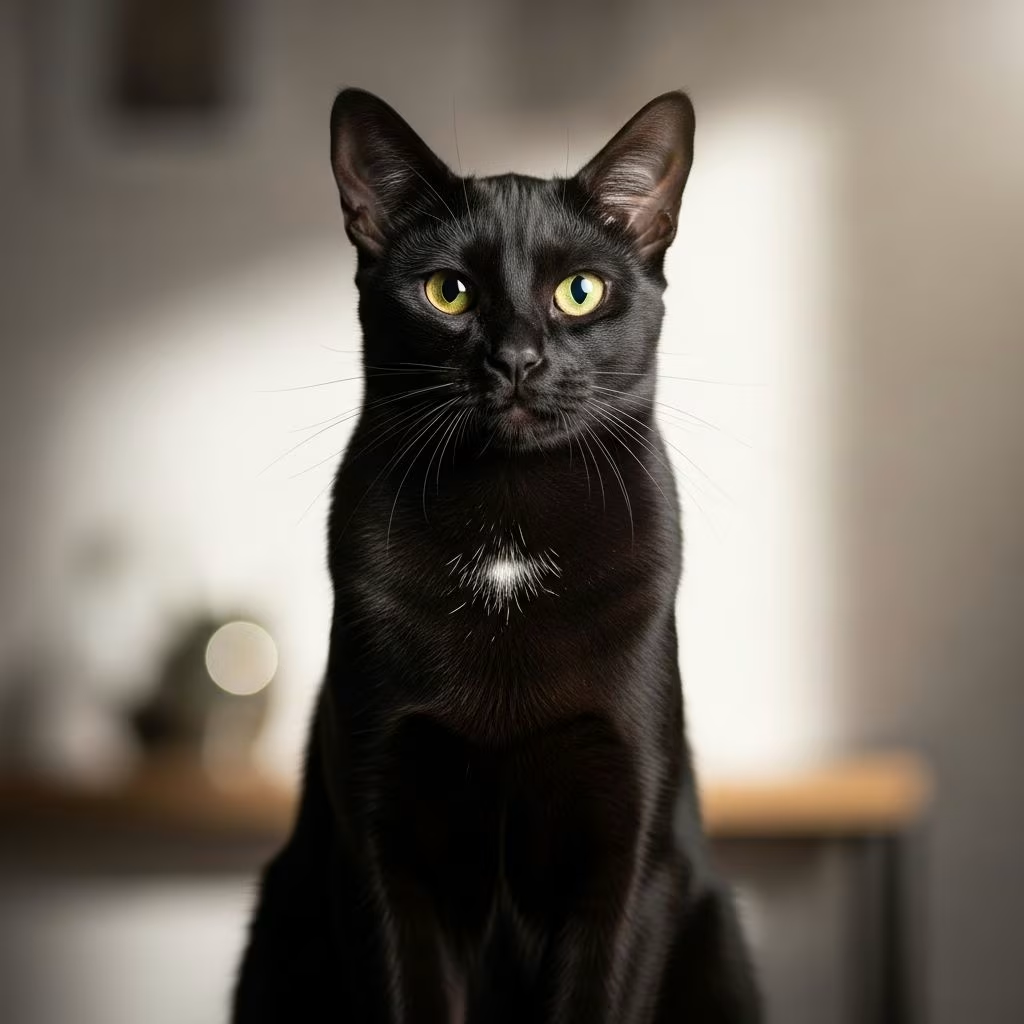
The Bombay cat represents one of the most distinctive and captivating feline breeds in the modern cat world. With their striking jet-black coats, luminous copper eyes, and muscular frames, these cats embody elegance and sophistication. Originally conceived as a domestic interpretation of the miniature black panther, the Bombay breed has evolved into a beloved companion known for its engaging personality and unwavering loyalty to its human family members. Whether you’re considering adopting a Bombay or simply curious about this remarkable breed, understanding their background, characteristics, and care needs will provide valuable insights into what makes these cats so special.
Origins and Development of the Bombay Breed
The story of the Bombay cat begins in the 1950s in Louisville, Kentucky, where a visionary cat breeder named Nikki Horner embarked on an ambitious project to create a breed that would capture the essence of a black panther in miniature form. Horner’s initial attempts at breeding began in 1953 when she crossed a non-pedigreed black domestic shorthair with a sable Burmese cat. However, these early results proved disappointing, yielding kittens with thick coats that resembled poor-quality American Shorthairs rather than the sleek, panther-like feline she envisioned.
Undeterred by her initial setbacks, Horner persisted with her breeding program. In the mid-1960s, she achieved the breakthrough she had been pursuing by strategically crossing a female black American Shorthair named Shawnee Obsidian with a brown Burmese male called Shawnee Cassius Clay. This combination finally produced the black Burmese-type kittens that matched her vision, establishing the foundation for what would become the modern Bombay breed. Some of these early Bombay cats were given to breeders and enthusiasts who would exhibit and promote the newly developing breed before it earned official recognition.
The breed gained official recognition relatively quickly following its successful development. The Cat Fanciers’ Association (CFA) registered the Bombay as a distinct breed in 1970, validating Horner’s years of dedicated work. The International Cat Association (TICA) followed suit in 1979, granting championship status and solidifying the breed’s legitimacy in the international cat fancy community. Today, the Bombay breed is recognized by nearly all major cat associations worldwide, representing one of the most successful modern cat breed development projects.
Physical Characteristics and Appearance Standards
One of the most immediately striking features of the Bombay cat is its distinctive appearance. These are medium-sized cats with muscular, well-proportioned bodies that often feel heavier than they appear upon first glance, a testament to their solid frame and bone density. The Bombay is often described using the poetic phrase “patent leather kid with the new penny eyes,” which captures the essence of their appearance perfectly.
Coat and Color
Perhaps the most defining characteristic of the Bombay breed is its striking all-black coat. The fur is short, glossy, and lies close to the body, creating a sleek appearance reminiscent of polished patent leather. The black coloration extends throughout the entire cat, including the whiskers, nose leather, and even the soles of the paws. The mature Bombay’s coat should be uniformly black to the roots with no visible fading or paling. Interestingly, some Bombay kittens are born with lighter colored coats, but this coloration transitions to the characteristic black as they mature and develop their adult coat.
Facial Features
The Bombay’s face exhibits numerous rounded qualities that contribute to its distinctive appearance. The head is notably round with no sharp angles, featuring a smooth, rounded muzzle and prominent rounded ears that are wide-set and pointed at the tips. The chin is subtly rounded, and even the eyelids display this characteristic softness. Perhaps most captivating are the Bombay’s eyes: they are large, round, and a distinctive copper or golden color reminiscent of new pennies, creating an alert and penetrating gaze that many owners find irresistible.
Body Structure
The Bombay possesses an elegant, elongated Oriental-type body that balances grace with muscularity. Their medium length tail is elegant and proportionate to their overall frame. This combination of physical attributes gives the Bombay an appearance that distinctly separates it from its parent breeds while maintaining the refined characteristics inherited from both the Burmese and American Shorthair.
Temperament and Behavioral Traits
Beyond their visual appeal, Bombay cats are renowned for their remarkable personalities. They are frequently described as a unique combination of cat, dog, and clown, embodying characteristics from multiple personality archetypes in a single feline package. This distinctive personality profile makes them exceptionally engaging companions for the right household.
Bombays are inherently intelligent and inquisitive creatures, traits they inherited from their Burmese ancestors. They possess a natural curiosity that drives them to explore their environment and engage with their surroundings. Simultaneously, they demonstrate the affectionate nature passed down from their American Shorthair lineage, making them deeply devoted to their human companions. These cats genuinely enjoy human company and prefer to be in close proximity to their owners whenever possible, often following family members from room to room and seeking involvement in household activities.
Social Dynamics
Despite their occasional mischievous moments, Bombays are predominantly easygoing and adaptable cats that adjust well to virtually any living environment. They form strong bonds not only with their human family members but also extend their sociability to other household pets. Bombays interact well with both other cats and dogs, though they may display a dominant personality in multi-pet households. Their compatibility with children is excellent, making them ideal family pets for households with younger members.
Playfulness and Entertainment
Bombay cats love interactive play and engage enthusiastically with toys provided by their owners. They possess high intelligence, which makes them surprisingly easy to train compared to many other cat breeds, earning them comparisons to dogs in terms of their responsiveness to commands and their eagerness to please. This trainability opens up unique opportunities for enrichment and bonding with their human families.
Care Requirements and Grooming Needs
One of the advantages of owning a Bombay cat is their relatively straightforward grooming needs. Unlike many long-haired breeds that require extensive daily brushing, Bombays have short coats that shed minimally and require very little grooming maintenance. Occasional brushing helps maintain their glossy coat appearance and supports good skin health, but this breed is far from demanding in this regard.
Beyond coat care, Bombays require standard feline health maintenance including regular veterinary checkups, appropriate vaccinations, and dental care. These cats should be provided with environmental enrichment including climbing structures, interactive toys, and opportunities for mental stimulation to keep their intelligent minds engaged. Given their affectionate nature and preference for human companionship, Bombay cats should not be left alone for extended periods, as they thrive on interaction and may develop behavioral issues if isolated.
Unique Characteristics and Interesting Facts
Bombay cats possess several distinctive behavioral traits and curious habits that set them apart from other feline breeds:
- Burrowing behavior: Bombays exhibit an endearing habit of burrowing deep into blankets and cushions in search of the warmest, coziest spots available. This behavior reflects their desire for comfort and closeness to their owners.
- Nomenclature: The breed’s name references Bombay (now Mumbai), India, a port city known as a location where black panthers inhabit the surrounding regions, reflecting the breed’s visual inspiration.
- Weight perception: Despite their medium size, Bombay cats often weigh more than expected, a characteristic that frequently surprises first-time owners. Their muscular, dense build accounts for this deceptive heaviness.
- International development: While Nikki Horner developed the American Bombay, British breeders independently created the British variant by crossing European Burmese with black domestic shorthairs, resulting in cats with similar appearance and temperament.
Breed Variants: American vs. British Bombay
| Characteristic | American Bombay | British Bombay |
|---|---|---|
| Origin | Louisville, Kentucky, USA (1953-1965) | United Kingdom |
| Breeding Foundation | Sable Burmese × Black American Shorthair | European Burmese × Black Domestic Shorthair |
| Classification | Burmese-type breed | Asian Self cat group |
| Physical Appearance | Nearly identical to British variant | Nearly identical to American variant |
| Temperament | Affectionate, inquisitive, playful | Affectionate, inquisitive, playful |
While both variants were developed independently and have slightly different genetic backgrounds, the American and British Bombays are virtually indistinguishable in both appearance and personality. Both types have garnered significant popularity within their respective regions and continue to be bred according to established standards.
Health and Longevity Considerations
Bombay cats are generally healthy and robust animals when obtained from responsible breeders who prioritize genetic diversity and health testing. As with any domesticated feline breed, regular veterinary care, appropriate nutrition, and preventive health measures are essential for maintaining optimal wellness. Potential owners should always acquire Bombay cats from reputable breeders who can provide health clearances and documentation of the parents’ health status.
Is the Bombay Right for Your Household?
The Bombay breed is ideal for families and individuals seeking an affectionate, intelligent, and visually stunning companion. These cats thrive in environments where they receive adequate human attention and interaction. They are particularly well-suited for households with children and other pets, given their social nature and adaptability. However, prospective owners should recognize that Bombays require regular interaction and do not do well as solitary animals left alone for extended periods. If you can provide a loving, interactive environment where your feline companion receives consistent attention and engagement, a Bombay cat can become an exceptional addition to your household.
References
- Cat Breed Spotlight: Bombay — Dr. Bill’s Pet Nutrition. Accessed January 29, 2026. https://drbillspetnutrition.com/cat-breed-spotlight-bombay/
- The history of the Bombay Cat — Bombay Cat Club Europe. Accessed January 29, 2026. https://www.bombaycat.eu/history/
- Bombay cat — Wikipedia. Accessed January 29, 2026. https://en.wikipedia.org/wiki/Bombay_cat
- Bombay — TICA – The International Cat Association. Accessed January 29, 2026. https://tica.org/breed/bombay/
- The Bombay Cat: Breed History, Fun Facts and Myths — PrettyLitter. Accessed January 29, 2026. https://www.prettylitter.com/blog/the-bombay-cat-breed-history-fun-facts-and-myths
- What Is a Bombay Cat? Get to Know This Stunning Breed — ASPCA Pet Insurance. Accessed January 29, 2026. https://www.aspcapetinsurance.com/resources/bombay-cat/



