

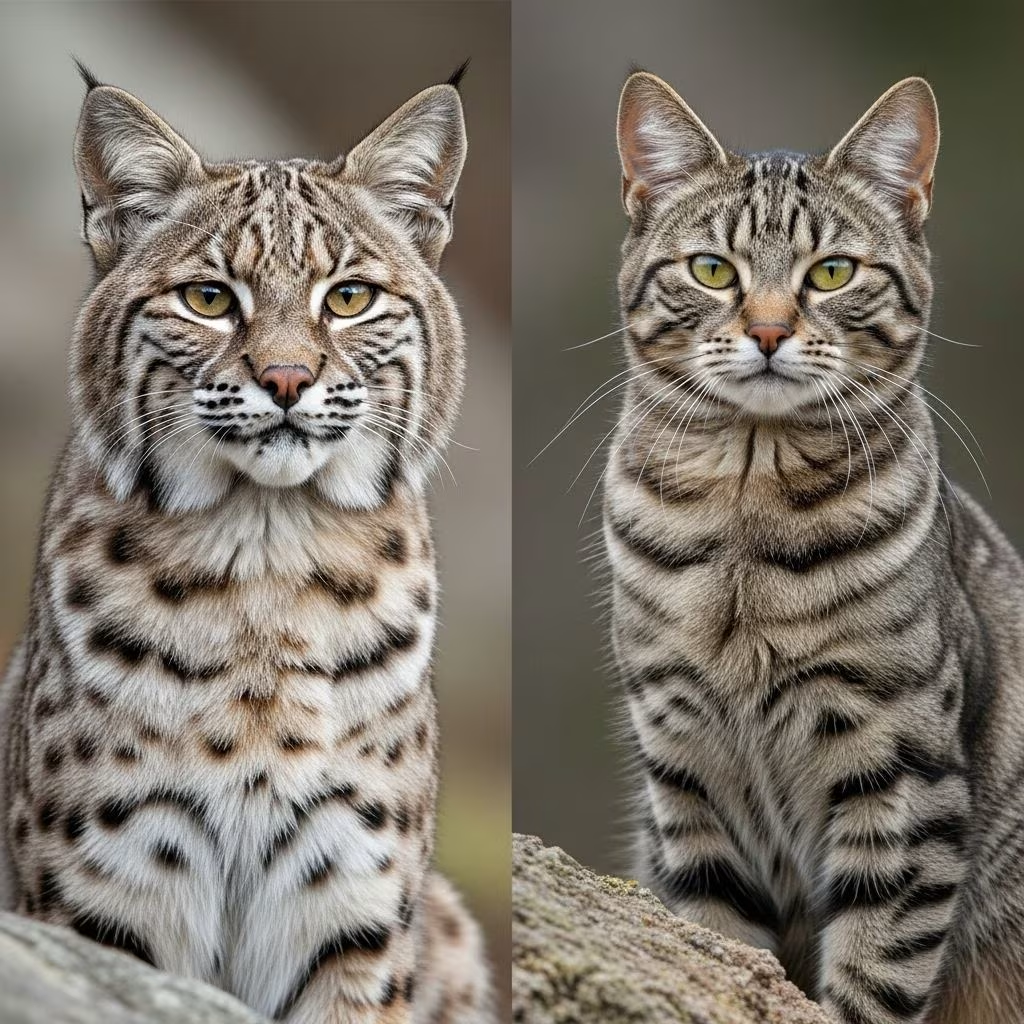
Wild bobcats and familiar house cats share striking similarities in size, spotted coats, and agile builds, sparking curiosity about potential interbreeding. However, scientific consensus holds that viable hybrids between bobcats (Lynx rufus) and domestic cats (Felis catus) do not exist due to profound genetic differences. This article dissects the biology, historical claims, and modern genetic tests debunking these notions.
Genetic Foundations of Feline Species
All cats belong to the Felidae family, but bobcats and domestic cats diverge into separate genera: Lynx for bobcats and Felis for domestics. This classification reflects chromosomal mismatches—both have 38 chromosomes, yet bobcat karyotypes feature 34 metacentrics and 4 acrocentrics, contrasting domestic cats’ 2 acrocentrics. Such structural variances hinder meiosis in potential hybrids, leading to embryonic arrest.
Reproductive isolation mechanisms further prevent success. Bobcat sperm can occasionally fertilize domestic cat eggs in vitro, but embryos stall at the morula stage (16-32 cells), unable to develop further. This early lethality stems from incompatible gene expressions and protein coatings on gametes that block proper penetration or implantation.
Observed Matings Without Offspring
In the wild, bobcats and feral domestic cats overlap in North American habitats, sometimes mating during estrus. Domestic females ovulate post-mating and often pair with multiple males, so any kittens result from domestic sires, not bobcats. Captive attempts yield no live births; breeders report pairings but attribute failures to innate barriers like size disparities or predatory instincts—bobcats view smaller cats as prey.
| Barrier Type | Description | Impact |
|---|---|---|
| Chromosomal | Differing metacentric/acrocentric counts | Sterility in hypothetical hybrids; embryonic failure |
| Gamete Compatibility | Sperm-egg protein mismatches | Fertilization rare; no progression beyond morula |
| Behavioral | Predatory instincts, multiple matings | No confirmed paternity from bobcat sires |
| Genetic Markers | Absence of enFeLV in bobcats | Detectable in tests; confirms no hybridization |
Debunking Legendary Hybrid Claims
Breeds like Pixie-Bob and Jungle Bob fuel myths with bobcat-like traits: short tails, ear tufts, mutton-chop whiskers. Pixie-Bobs claim bobcat ancestry but genetic tests reveal pure domestic origins. Jungle Bobs derive from Felis chaus (jungle cat) hybrids, not bobcats, achieving fertility by F3 due to closer Felis genus relations.
- Pixie-Bob: Bobcatty appearance from selective breeding; no Lynx rufus DNA confirmed.
- Desert Lynx/Bobcat Lynx: Marketing hype; lack peer-reviewed validation.
- Historical Anecdotes: 19th-century tales of ‘blue bobcats’ dismissed as color variants, not hybrids.
Recent DNA advancements, like enFeLV-LTR assays, distinguish hybrids. Domestic cats carry feline endogenous lentivirus long terminal repeats (enFeLV-LTR), absent in bobcats. Contested ‘hybrid’ samples test negative for enFeLV, proving domestic purity.
Successful Feline Hybrids: Lessons from Closely Related Species
Unlike bobcat crosses, hybrids within Felis thrive. Bengals blend domestic with Asian leopard cat (Prionailurus bengalensis), first documented in 1889, refined in the 1970s. These retain wild aesthetics—spots, stripes—while being fertile by later generations.
- Bengal: Vibrant coats; F1 challenging but backcrossing stabilizes traits.
- Felis chaus Hybrids: Jungle Curls/Bobs; viable to F3+ due to genus alignment.
- European Wildcat: Fertile with domestics, threatening pure wild populations via mongrelization.
Bobcat attempts fail where these succeed, underscoring inter-genus inviability. Male hybrids, if produced, would be sterile for generations due to New World-Old World cat mismatches.
Genetic Testing: The Final Arbiter
Pre-2017, bobcat ancestry evaded detection without parental samples. Now, labs like Zoogen (formerly) use parentage markers and wildcat gene panels. A 2018 NIH study validated enFeLV-LTR for wild felid-domestic detection: positives indicate Felis introgression; bobcat-contested DNAs scored zero.
Table 1 from the study highlights a ‘hybrid bobcat’ positive for feline CCR5 but enFeLV-negative, confirming no domestic admixture. Mitochondrial DNA (maternal) in alleged F1s traces solely to domestics, with no nuclear bobcat signals.
Conservation and Ethical Concerns
Pursuing phantom hybrids risks bobcat welfare—wild-caught animals suffer in captivity, prone to stress and aggression. Feral domestic cats already hybridize with endangered felids like Scottish wildcats, diluting genomes. Bobcat populations, stable but localized, face no such threat due to interfertility absence, preserving genetic integrity.
Ethical breeding favors look-alikes over risky experiments. Registries demand genetic proof; unsubstantiated claims erode trust.
Health Risks in Hypothetical Scenarios
Even if viable, hybrids would inherit issues: bobcats carry pathogens incompatible with domestics, like unique parasites. Size mismatches (bobcats 15-35 lbs vs. domestics 8-12 lbs) risk dystocia in females. Sterility plagues males, mirroring mules.
FAQs on Bobcat-Domestic Breeding
Can bobcats and house cats mate in the wild?
Observations confirm attempts, but no viable kittens result; multiple matings favor domestic paternity.
Are there any proven bobcat hybrid breeds?
No; Pixie-Bobs and similar are domestic breeds mimicking traits via selection, not hybridization.
What do genetic tests reveal about alleged hybrids?
enFeLV-LTR absence and chromosomal mismatches confirm pure species status.
Why do some cats look like bobcats?
Polygenic traits like short tails and tufts arise from domestic variation, not wild input.
Is it legal to breed bobcats with domestics?
Wild bobcats are protected; captive breeding requires permits, but inviability renders it moot.
Conclusion: Myths Meet Molecular Reality
The allure of bobcat-domestic hybrids persists in folklore and breeder lore, but genetics unequivocally refutes viability. Focus on ethical, proven hybrids preserves feline diversity without endangering wild lineages. Future tests may refine markers, but current evidence closes the case.
References
- Male reproductive traits, semen cryopreservation, and heterologous in vitro fertilization in the bobcat (Lynx rufus) — Gañán, N. et al. 2009-01-01. https://exoticpetwonderland.org/2023/11/19/domestic-cat-and-bobcat-hybrids/
- Can Domestic Cats Breed With Bobcats? — A-Z Animals. 2023-01-01. https://a-z-animals.com/pets/cats/cat-facts/can-domestic-cats-breed-with-bobcats-2/
- Domestic x Bobcat/Lynx Hybrids — Messybeast. 2023-01-01. http://messybeast.com/small-hybrids/rufus-lynx-hybrids.htm
- A Novel Test for Determination of Wild Felid-Domestic Cat Hybridization — NIH/PMC. 2020-03-10. https://pmc.ncbi.nlm.nih.gov/articles/PMC7062607/



