

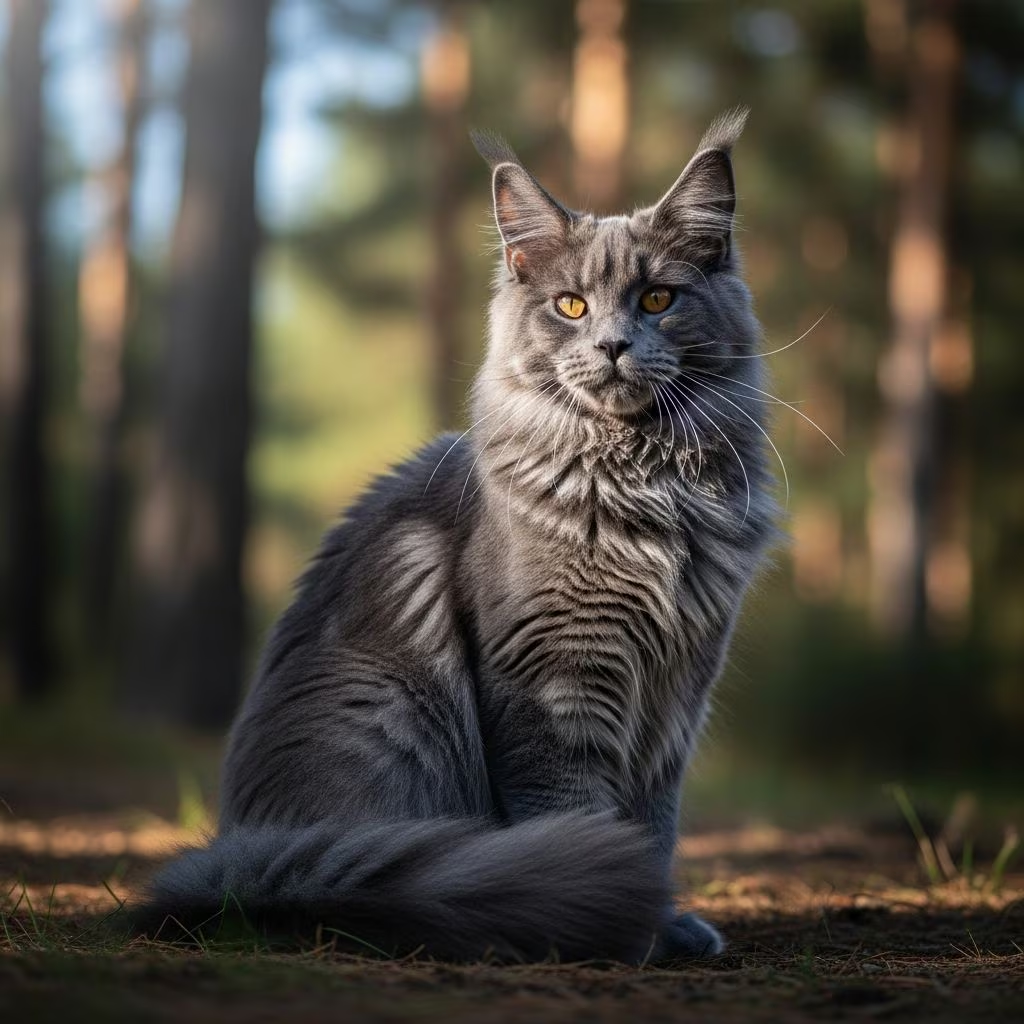
Blue Maine Coon cats captivate with their dilute blue-gray coats that shimmer like soft smoke, paired with towering frames and endearing personalities. These felines, often called the gentle giants of the cat world, blend rugged durability with affectionate companionship, making them a top choice for diverse households.
The Distinctive Appearance of Blue Maine Coons
Blue Maine Coons stand out due to their genetic dilution that transforms standard black pigmentation into a uniform smoky lavender-gray hue, even to the roots of the fur. This creates a sleek, even-toned coat without shading or markings in solid blues, though variations like blue tabby or blue smoke add subtle patterns.
Physically, these cats boast a heavily boned, muscular build with broad chests and substantial legs that support their impressive weight, often ranging from 10 to 25 pounds or more for males. Females are slightly smaller but still formidable. Heights reach 8 to 16 inches at the shoulder, with long, powerful bodies that convey balance and strength rather than exaggeration.
Their heads are moderately wedge-shaped, featuring high cheekbones, large, expressive eyes in shades of green, gold, copper, or blue, and upright noses. Ears are large and pointed with lynx-like tufts, enhancing their wild, majestic look. Paws are expansive and rounded, equipped with tufts for snow navigation, while the tail is notably long, thick, and bushy, often wrapping around the body for warmth.
The coat itself is semi-long, shaggy, and water-resistant, shorter on the head and shoulders but lengthening along the stomach, britches, and ruff. This texture repels moisture, a nod to their origins in harsh climates.
Understanding the Genetics Behind the Blue Coat
The blue coloration stems from the dilute gene (d/d), which lightens black (B/-) to blue, affecting eumelanin granules for a softer, grayish tone. In Blue Maine Coons, this manifests as a solid blue or in patterns like blue-cream (blue with cream patches), blue smoke (white undercoat deeply tipped blue), or shaded blue variants.
According to breed standards from organizations like The Cat Fanciers’ Association (CFA), blue cats must exhibit one level tone from nose to tail tip, with matching blue nose leather and paw pads. Variations allow for blue tabby, blue-silver tabby, or blue patched tabby, broadening the visual appeal within the blue spectrum.
| Blue Coat Variation | Description | Key Features |
|---|---|---|
| Solid Blue | Uniform smoky gray throughout | Even tone to roots; blue nose/paws |
| Blue Smoke | White undercoat tipped blue | Appears blue at rest, white shows in motion |
| Blue Tabby | Blue with tabby markings | Patterns like mackerel or classic |
| Blue-Cream | Blue intermixed with cream | Patches on body and extremities |
Historical Roots and Evolution of the Breed
Maine Coons trace back to 19th-century New England, particularly Maine, where they emerged as natural mousers on farms and ships. Legends suggest polydactyl ancestors from sailors or even Marie Antoinette’s cats, but evidence points to hardy local stock adapting to snowy winters. Their size and coat suited rodent control in barns and vessels.
The blue variant arose through selective breeding post-recognition by CFA in 1976, emphasizing the dilute gene amid diverse color allowances. Today, they’re celebrated for retaining working cat resilience while excelling as pets.
Temperament and Behavior Traits
Renowned for sociability, Blue Maine Coons form deep bonds with families, often following owners room-to-room without clinginess. They’re intelligent problem-solvers, adept at fetch and toy-hunting, and surprisingly dog-like in loyalty.
These cats thrive on interaction, greeting strangers warmly and coexisting with children, dogs, and other pets. Playful into adulthood—especially males—they retain kittenish energy, chasing ground objects over vertical climbs. Their gentle demeanor earns the “Newfoundland of cats” moniker.
- Affectionate yet independent: Enjoys laps but entertains itself.
- Intelligent and trainable: Learns tricks, fetches toys.
- Social butterflies: Welcomes guests, adapts to bustle.
- Water lovers: Fascinated by faucets, may dip paws in baths.
Essential Care and Grooming for Blue Maine Coons
Despite the lush coat, maintenance is straightforward: weekly combing prevents mats, focusing on ruff and britches. Their texture sheds moderately, so brushing distributes oils and reduces hairballs.
Provide expansive litter boxes due to size, high-quality diet for muscle maintenance, and interactive toys for mental stimulation. They’re active but not hyper, favoring horizontal chases.
Nutrition Guidelines
Opt for protein-rich kibble or wet food supporting large frames; portion control prevents obesity. Fresh water is crucial, as they enjoy playing with it.
Exercise and Enrichment
Daily play sessions mimic hunting; cat trees and tunnels suit their grounded playstyle.
Health Considerations and Lifespan
Blue Maine Coons live 10-15 years with proper care, but screen for hypertrophic cardiomyopathy (HCM), hip dysplasia, and spinal muscular atrophy (SMA). Regular vet checks from reputable breeders mitigate genetic risks.
They’re hardy against cold but monitor weight and dental health.
Bringing Home a Blue Maine Coon Kitten
Select CFA/TICA-registered breeders emphasizing health testing. Kittens display tufted ears and tufted paws early, with blue coats emerging by 6-8 weeks. Prepare for a 16-24 month maturity period.
Cost: $1,000-$4,000, reflecting pedigree and health guarantees.
Common Questions About Blue Maine Coons
Are Blue Maine Coons hypoallergenic?
No, their dense coats produce dander, though regular grooming helps.
Do Blue Maine Coons get along with dogs?
Yes, their adaptable nature fosters harmony with canines.
How big do Blue Maine Coons really get?
Males up to 25+ lbs, females 10-15 lbs; longest recorded tails exceed 3 feet.
What’s the difference between blue and other Maine Coon colors?
Blue is a dilute solid gray; others include brown tabby or red.
Can Blue Maine Coons live in apartments?
Absolutely, with sufficient play and vertical space.
Blue Maine Coons offer unmatched companionship through their stunning looks, robust health, and loving spirits. Ideal for active families, they bring joy and warmth to any home.
References
- Maine Coon Cat Characteristics & Care Guide — Cat Evolution. Accessed 2026. https://catevolution.com.au/blogs/cat_tips_tricks/maine-coon-cat-characteristics
- Maine Coon Cat – The Cat Fanciers’ Association — CFA.org. Accessed 2026. https://cfa.org/breed/maine-coon-cat/
- Blue Maine Coon Cat: Info, Pictures, Facts & History — Catster. Accessed 2026. https://www.catster.com/cat-breeds/blue-maine-coon-cat/
- Blue Color Maine Coon — LovingLynx.com. Accessed 2026. https://www.lovinglynx.com/cat-blog/blue-color-maine-coon
- Maine Coon – TICA — TICA.org. Accessed 2026. https://tica.org/breed/maine-coon/



