

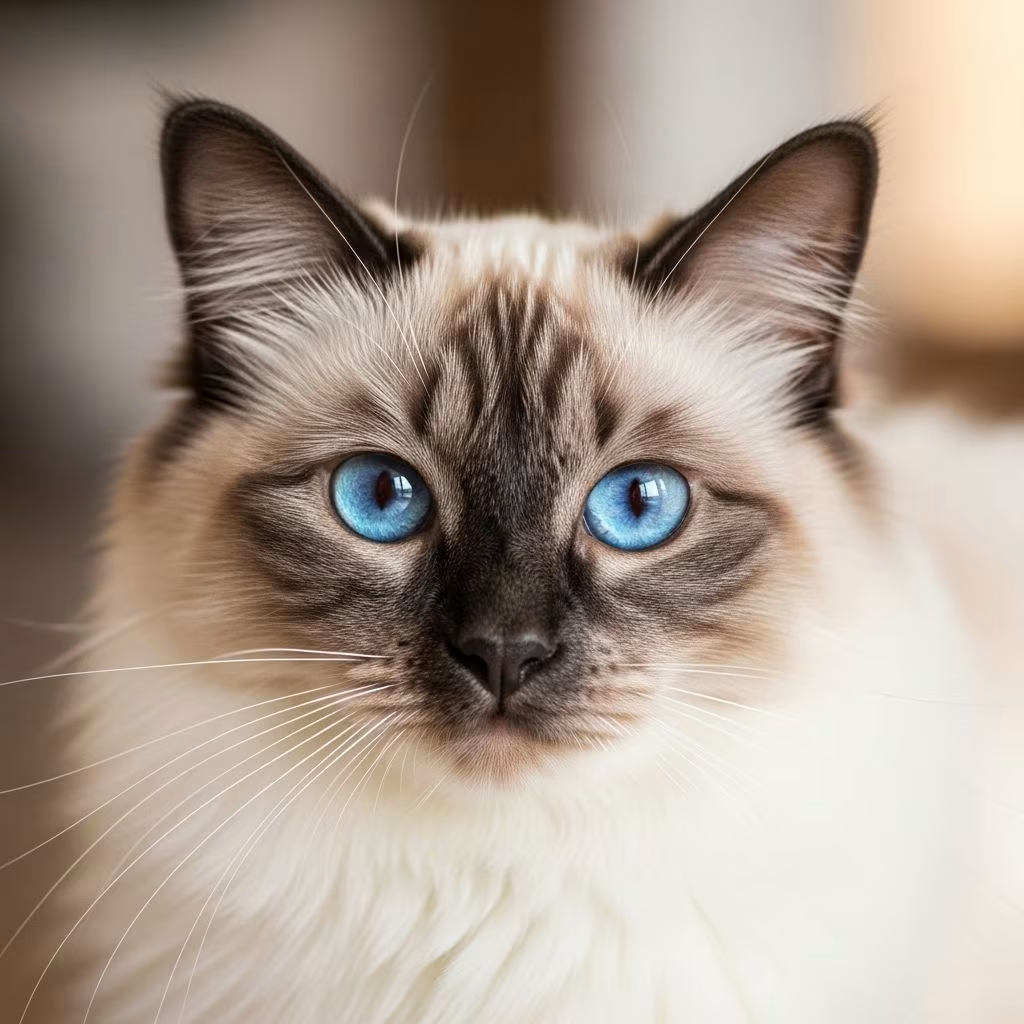
Blue-eyed cats captivate with their striking gaze, a rare trait often linked to specific genetics like the colorpoint pattern in Siamese-related breeds. While all kittens start with blue eyes, only certain adult breeds retain this vivid color, making them highly sought after by enthusiasts. These felines not only offer aesthetic appeal but also come with affectionate, playful personalities ideal for families.
Why Do Cats Have Blue Eyes?
Blue eyes in cats result from low melanin levels in the iris, scattering light to create the blue hue. This trait is dominant in pointed breeds due to the Himalayan gene, which restricts pigment to cooler body areas like ears, paws, and tail, while eyes remain blue. Breeds like Siamese carry this gene recessively, ensuring deep blue eyes in adults. White cats or those with dominant white genes may also have blue eyes, sometimes linked to deafness, but pointed breeds generally avoid this risk. Kittens universally have blue eyes at birth as melanin develops later, typically changing by 6-8 weeks.
Cat Breeds with Blue Eyes
Below are 13 breeds renowned for their blue eyes, each with distinct appearances, temperaments, and care requirements. These selections draw from pedigreed lines where blue eyes are a standard feature.
1. Siamese
The Siamese is the archetype of blue-eyed cats, originating from Thailand with a sleek, tubular body, short cream coat, and dark points on ears, face, legs, and tail. Their almond-shaped sapphire-blue eyes are intense and expressive. Vocal and social, Siamese bond deeply with owners, demanding attention and play. They thrive indoors, needing interactive toys and perches. Average lifespan: 15-20 years with proper care.
2. Balinese
Essentially longhaired Siamese, Balinese cats feature silky, flowing coats in pointed colors like seal, chocolate, and blue, paired with vivid blue eyes. Graceful and elegant, named after Balinese dancers, they are affectionate, vocal, and intelligent, excelling in training and agility. Their medium-long fur requires weekly brushing to prevent matting. Highly people-oriented, they dislike solitude.
3. Birman
Birmans, or Sacred Cats of Burma, boast semi-long plush coats with colorpoint patterns and striking white-gloved paws. Deep blue eyes contrast beautifully against their rounded faces and stocky builds. Gentle, calm, and adaptable, they get along with children and other pets, offering lap-cat devotion without excessive vocalization. Origin tales link them to Burmese temples; regular grooming maintains their luxurious fur.
4. Ragdoll
Ragdolls live up to their name by going limp when held, featuring large size, semi-long fluffy coats in pointed, mitted, or bicolor patterns, and brilliant blue eyes. Developed in the 1960s, they are docile, friendly, and dog-like, following owners everywhere. Excellent with families, they need minimal grooming despite fur length but benefit from dental care. Weight: 10-20 lbs.
5. Himalayan
A Persian-Siamese hybrid, Himalayans combine Persian’s long, dense coat and flat face with Siamese’s points and blue eyes. Available in seal, chocolate, blue, and tabby points, they are calm, sweet, and less active, preferring quiet laps over rough play. Daily face cleaning and frequent brushing combat tearing and mats; they suit apartments well.
6. Colorpoint Shorthair
Short-haired siblings to Siamese, Colorpoint Shorthairs expand color options to red, cream, tabby, and tortie points, all with blue eyes. Athletic and slender, they are extroverted, chatty, and playful, thriving on human interaction. Low-maintenance coats make them easy keepers; they excel in shows and as companions.
7. Javanese
Javanese, longhaired Colorpoint Shorthairs, sport medium-length silky coats in non-traditional points like lynx, tortie, and smoke, with blue eyes. Elegant with plumed tails, they are vocal, acrobatic, and trainable, stemming from Balinese crosses. Affectionate communicators, they need scratching posts and puzzles for stimulation.
8. Snowshoe
Snowshoes, bred from Siamese and American Shorthairs, have short coats, inverted V masks, and white boot-like paws earning their name, plus blue eyes. Medium-sized and muscular, they are social, vocal (less than Siamese), and people-loving, adapting well to families. Rare breed, they require early socialization.
9. Tonkinese
Siamese-Burmese crosses, Tonkinese feature short, soft coats in mink, solid, or pointed patterns (platinum, champagne, blue) and aqua-blue eyes. Playful, shoulder-perching adventurers, they are intelligent, affectionate, and vocal. Indoor-only due to trusting nature; hybrid vigor yields robust health.
10. Turkish Angora
Turkish Angoras are silky, medium-long coated with odd or blue eyes possible in whites, though all-white may carry deafness risk. Graceful and athletic, they are playful, loving, and energetic, originating from Turkey. Weekly grooming suffices; they enjoy water play.
11. Persian
Persians offer blue, blue-green, copper, or odd-eyed options in fluffy solid, tabby, or calico coats. Quiet, sweet, and low-energy with smushed faces, they need extensive grooming and face care. Ideal for calm homes.
12. Ojos Azules
Rare Ojos Azules (‘blue eyes’ in Spanish) produce blue eyes across non-white, non-pointed coats without albinism or deafness issues. Experimental breed with varied appearances; personality is affectionate and curious.
13. Thai
Thai cats resemble traditional Siamese: moderate builds, short coats, warm-toned points, and blue eyes. Less extreme than modern Siamese, they are balanced, social, and vocal, preserving old-style Thai genetics.
Health Considerations for Blue-Eyed Cats
Pointed breeds face hypertrophic cardiomyopathy risks, dental issues, and crossed eyes from the cs gene. White blue-eyed cats have 65-85% deafness odds per ear. Routine vet checks, dental hygiene, and diet control obesity in Persians/Himalayans. Most enjoy 12-18 year lifespans with care.
| Breed | Common Health Issues | Lifespan |
|---|---|---|
| Siamese/Balinese | Asthma, teeth problems | 15-20 years |
| Ragdoll/Birman | HCM, PKD | 12-17 years |
| Persian/Himalayan | Breathing, eye issues | 12-15 years |
Are Blue-Eyed Cats Rare?
Blue eyes are uncommon in adults outside pointed or white cats, making these breeds distinctive. Albino or dominant-white cats add rarity but health concerns. Pedigreed blue-eyed cats are accessible via breeders.
Caring for Blue-Eyed Cat Breeds
- Grooming: Brush longhairs 2-3x weekly; Persians daily.
- Exercise: Provide toys, trees for active breeds like Siamese.
- Diet: High-quality food prevents obesity; dental treats essential.
- Vet Care: Annual exams screen for genetic conditions.
- Environment: Enrichment combats boredom in social breeds.
Frequently Asked Questions
Do all white cats have blue eyes?
No, but many do due to the white gene suppressing iris melanin; deafness risk increases.
Can blue-eyed cats see well?
Yes, blue eyes don’t impair vision; crossed eyes in Siamese may slightly affect depth perception.
Are blue-eyed cats always pointed?
Mostly, via the colorpoint gene, but exceptions like Ojos Azules exist.
Which blue-eyed breed is best for families?
Ragdoll or Birman for gentle temperaments.
Do blue eyes mean deafness?
Only in some white cats; pointed breeds are typically hearing-normal.
References
- 13 Cat Breeds With Blue Eyes — Chewy. 2023-05-15. https://www.chewy.com/education/cat/general/cat-breeds-with-blue-eyes
- 10 Most Beautiful Cat Breeds with Blue Eyes — Purina. 2024-02-10. https://www.purina-arabia.com/en-gb/find-a-pet/cat/blue-eyes
- 9 Cat Breeds With Beautiful Blue Eyes — Cats.com. 2024-08-22. https://cats.com/blue-eyed-cat-breeds
- 9 Majestic Cat Breeds with Blue Eyes — BetterPet. 2023-11-03. https://www.betterpet.com/learn/blue-eyed-cat-breeds
- 10 Cat Breeds with Blue Eyes — Orderkeen. 2024-01-12. https://www.orderkeen.com/en-us/blogs/infos/10-races-de-chats-aux-yeux-bleus-decouvrez-les-avec-nous



