

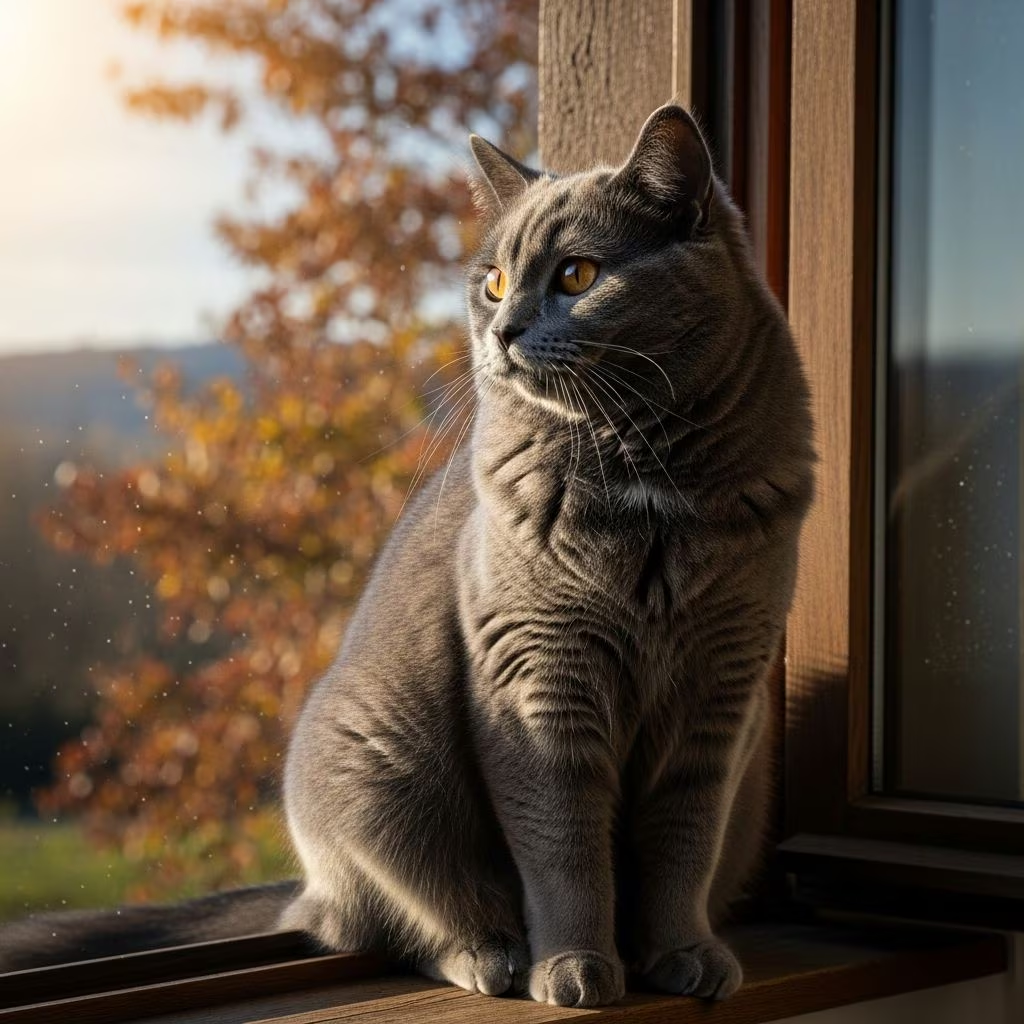
10 Blue Cat Breeds: An Overview
Blue cats are among the most striking felines in the cat world, characterized by their beautiful gray-blue coats and often captivating eye colors. These breeds have been selectively bred for generations to develop their distinctive silvery, slate, or blue-gray fur. Whether you’re drawn to their elegant appearance, calm demeanor, or playful personalities, blue cat breeds offer something unique for every cat lover. This guide explores ten remarkable blue cat breeds, each with its own personality, care needs, and characteristics.
1. Russian Blue Cat
The Russian Blue is one of the most well-known and easily recognizable blue cat breeds, revered for their luxurious, dense blue coats and strikingly captivating green eyes. All Russian Blues have bright green eyes, and all are uniformly blue without any markings. These felines feature a medium-long, graceful body with a modified wedge-shaped head, two-plane profile, and large ears set far apart.
Personality and Temperament: Russian Blues are curious, gentle, and tranquil animals that are friendly and loving with their families but somewhat reserved around new faces. They are highly athletic and rival most other domestic breeds in their jumping ability. These cats are extremely intelligent with amazing memory, and while they are typically reserved around strangers, they will remember familiar visitors months apart and often run to greet them as they arrive.
Physical Characteristics: The Russian Blue has a silver-blue, plushy coat that is distinctively different from other blue breeds. Their eyes are the signature bright green that develops around six months of age, though they are born with yellow eyes.
Lifespan and Care: Russian Blues typically live between 10 to 15 years, with some reaching 20 years old. They need regular stimulation and weekly grooming to manage their dense double coat.
2. British Shorthair Cat
The British Shorthair is a medium-large-sized cat breed known for their short, fluffy coat and rounded face that gives them a cute, cuddly teddy-bear appearance. Also known as the British Blue, these cats are round with a broad chest, strong legs, and short plush gray-blue coats with pineapple-hued eyes.
Personality and Temperament: British Shorthairs are calm, intelligent, affectionate, independent, and quiet. They are affectionate, easy-going, and calm, making them great companions to families with children and other pets. These cats enjoy being close to their owners, so leaving them for many hours per day isn’t ideal.
Unique Traits: British Shorthairs have been bred with several other breeds over the decades and are believed to have a wider gene pool than Russian Blues. Because of this, BSHs come in various coat colors including golden, cream, cinnamon, and fawn, though most purebred BSHs are blue.
Lifespan: These felines typically live 12 to 17 years, with some reaching 20 years old.
3. Blue Burmese Cat
The Blue Burmese has a smoky-blue coat with large gold eyes that is a unique and eye-catching variation. They are active and affectionate cats that have a natural love and devotion toward humans.
Personality and Temperament: Blue Burmese cats are energetic, super smart, and playful. They are friendly toward other cats and dogs, making them an ideal family pet. These cats are adaptable and happy to live indoors, tending to prefer it due to their attachment and dependence on their human family.
Ideal Home: They are suitable for families and individuals interested in a loving, attentive, fun-loving companion.
Lifespan: Blue Burmese cats live between 15-20 years.
4. Blue Chartreux Cat
A fairly rare breed originating in France, the Chartreux has a thick, dense, blue-grey coat that often shows breaks, similar to sheep, topped off by mesmerizing copper eyes.
Unique Characteristic: One unique characteristic of this breed is their silence—these cats rarely, if ever, meow or cry like most other domestic breeds. They have a balanced nature with both extroverted and introverted personalities, making them ideal for quiet, drama-free homes with regular schedules.
Personality and Temperament: They are affectionate and friendly cats that are great with dogs, other pets, and children. They tend to mature slowly, taking around two years to reach full maturity while retaining a kitten-like, playful character well into adulthood.
Lifespan: Chartreux cats are known for their longevity and make wonderful long-term companions.
5. Blue Persian Cat
The Blue Persian is a highly affectionate, intelligent, and friendly cat breed. These beautiful felines are known for their gray-blue coats and muscular frames. They come in solid blue-ish shades along with other color variations including silver and golden chinchilla, smokey colored, and tortoiseshell patterns.
Personality and Temperament: Blue Persians are quiet, affectionate, loyal, docile, and sweet. They are excellent lap cats and prefer homes without children or those without young kids.
Important Care Consideration: This breed is one of the more high-maintenance breeds due to their long coats requiring regular grooming.
Lifespan: Their life expectancy is between 10 to 15 years, with some reaching 20 years old. The Persian’s life expectancy is between 15–20 years.
6. Blue Korat Cat
The Blue Korat originates from Siam, now Thailand, and is known for their striking green-hued eyes and petite stature but have big personalities that thrive in active homes. All of these visually striking felines have three physical characteristics that make them easy to identify: bluish-gray to deep silver with blue undertones coats, bright green eyes, and mauve or lavender pads on their feet.
Personality and Temperament: Blue Korats are intelligent, athletic, social, and affectionate. They are loving, in charge, regal, possessive, and selective. Korats are slender like Russian Blues but have more angular, heart-shaped faces. They are naturally more energetic and spirited than Russian Blues.
Ideal Home: These cats are suitable for individuals and families who are home a lot. They thrive in homes with experienced cat parents and older children.
Lifespan: Blue Korat cats live 10 to 15 years, with some living to 20 years old.
7. Blue Nebelung Cat
The Blue Nebelung is the long-haired version of Russian Blues and is a rare breed not easily found in the country. Originating in the United States, these wide-eyed cats are known for their solid green to yellowish-green eyes, silky blue-gray semi-long coats, bushy tails, tufted ears, and fluffy paw pads.
Personality and Temperament: Nebelungs are affectionate, loyal, gentle-natured, intelligent, social, and playful. They are extremely loyal companions, and it’s not uncommon for Blue Nebelung cats to form a close bond with their favorite human. They are easy-going, friendly, and loving to their family members. Despite their cordial personalities, they don’t like noisy households, are reserved with strangers, and take a while to warm up to frequent house guests.
Ideal Home: These cats are suitable for those who are home often, families with respectful children, and those who want a trainable cat. They prefer quiet homes with older children or senior-aged adults.
Lifespan: Blue Nebelung cats live 11 to 18 years, with lifespans reaching 11-16+ years.
8. Blue Oriental Shorthair Cat
The Oriental Shorthair was developed from the Siamese and retains several characteristics from them. They come in a wide variety of coat colors and patterns, but the blue versions are some of the most striking, with their coloring combined with long slender bodies and characteristically long ears making for a unique and beautiful blue cat.
Personality and Temperament: Oriental Shorthairs are playful, active, affectionate, cuddly, intelligent, vocal, and attention-seeking. They are highly social cats that form strong bonds with their owners and are active, curious, and playful felines.
Ideal Home: These cats are suitable for families or singles with or without pets.
Lifespan: Blue Oriental Shorthair cats live 10+ years.
9. Blue British Longhair Cat
The Blue British Longhair is the longhair version of the British cat and comes in a variety of coat colors and patterns. However, just like in the case of the Shorthair, the Blue Longhair is by far one of the most popular coat colors for the breed. They have characteristically large, round eyes and faces with small to medium ears with a broad base and rounded tips.
Personality and Temperament: These cats are friendly, laid-back, and gentle. They are great companions but are also independent and have no problem spending some time by themselves waiting patiently for their humans to return home to them.
Comparison Table: Blue Cat Breeds at a Glance
| Breed | Eye Color | Lifespan | Temperament |
|---|---|---|---|
| Russian Blue | Green | 10-15 years | Gentle, reserved, intelligent |
| British Shorthair | Gold/Copper | 12-17 years | Calm, affectionate, independent |
| Blue Burmese | Gold | 15-20 years | Energetic, playful, affectionate |
| Chartreux | Copper | Varies | Affectionate, playful, quiet |
| Blue Persian | Copper | 10-15 years | Quiet, affectionate, docile |
| Blue Korat | Green | 10-15 years | Intelligent, athletic, social |
| Blue Nebelung | Green | 11-18 years | Affectionate, loyal, gentle |
| Blue Oriental Shorthair | Varies | 10+ years | Playful, vocal, intelligent |
Choosing the Right Blue Cat Breed for Your Home
Selecting a blue cat breed depends on your lifestyle, living situation, and preferences. Consider the following factors:
- Activity Level: Active individuals may prefer Korats, Oriental Shorthairs, or Blue Burmese cats. Those seeking calm companions should consider Russian Blues, British Shorthairs, or Persians.
- Grooming Requirements: Russian Blues and Nebelungs require weekly grooming due to their dense double coats. Persians require extensive grooming. Shorthaired varieties need minimal grooming.
- Household Composition: Families with young children may prefer British Shorthairs or Chartreux cats. Senior adults or quiet households may be better suited for Nebelungs or Persians.
- Space Requirements: Larger breeds like British Shorthairs need moderate space, while smaller breeds like Russian Blues and Korats adapt well to apartments.
- Social Needs: Cats that bond closely with one person include Nebelungs and Korats. Those enjoying family interaction include Burmese and British Shorthairs.
General Care Requirements for Blue Cat Breeds
While each blue breed has unique needs, several care principles apply to most:
- Nutrition: Feed high-quality cat food appropriate for their age and health status. Consult your veterinarian for specific dietary recommendations.
- Grooming: Establish regular grooming routines. Shorthaired breeds require weekly brushing, while longhaired varieties need daily attention.
- Exercise and Enrichment: Most blue cat breeds are intelligent and need mental stimulation through interactive toys, climbing structures, and play sessions.
- Veterinary Care: Schedule annual wellness exams and keep vaccinations current. Address any health concerns promptly.
- Environmental Considerations: Provide scratching posts, hiding spots, and safe spaces where cats can retreat when stressed.
Frequently Asked Questions About Blue Cat Breeds
Q: What makes a cat’s coat “blue”?
A: The term “blue” in cat breeding refers to a gray-blue coloration caused by genes that dilute the black pigment in a cat’s fur. This results in various shades from light silver to dark slate gray.
Q: Are blue cat breeds hypoallergenic?
A: No cat breed is completely hypoallergenic. However, some people with allergies tolerate certain breeds better. Regular grooming and vacuuming can help reduce allergen levels in your home.
Q: Which blue cat breed is best for first-time cat owners?
A: British Shorthairs and Russian Blues are excellent choices for first-time owners due to their calm, adaptable temperaments and moderate care requirements.
Q: How much do blue cat breeds cost?
A: Prices vary widely depending on the breed, breeder reputation, and pedigree. Generally, blue cat breeds range from $500 to $2,000 or more from reputable breeders. Adoption through rescue organizations is a more affordable option.
Q: Do all blue cat breeds have green eyes?
A: No. While Russian Blues, Korats, and Nebelungs typically have green eyes, British Shorthairs have gold or copper eyes, Persians have copper eyes, and Chartreux cats have copper or amber eyes.
Q: Are blue cat breeds suitable for families with children?
A: Many blue breeds are family-friendly. British Shorthairs and Chartreux cats do well with children. However, Persians and Nebelungs are better suited for families with older, gentler children.
Q: What is the difference between a Russian Blue and a British Blue?
A: Russian Blues are smaller and more slender with bright green eyes and angular features, while British Blues (British Shorthairs) are larger and stockier with gold or copper eyes and rounder, broader faces.
Q: How often should I groom my blue cat?
A: Grooming frequency depends on the breed. Russian Blues and Nebelungs need weekly grooming, while Persians require daily grooming. Shorthaired breeds like British Shorthairs need weekly brushing to maintain their coat health.
Q: Are blue cat breeds indoor or outdoor cats?
A: Most blue cat breeds are best kept indoors for their safety. They can be provided with enrichment through windows, climbing structures, and interactive toys to stimulate their natural instincts.
Q: What health issues should I be aware of in blue cat breeds?
A: Health concerns vary by breed. Persians may have respiratory issues due to their flat faces. British Shorthairs can be prone to heart conditions. Regular veterinary checkups help identify and manage potential health issues early.
References
- British Blue vs Russian Blue cat—how to tell them apart — Untamed. https://untamed.com/blogs/cat-breeds/british-blue-vs-russian-blue-cat
- 10 Rare Cat Breeds with Beautiful Blue Fur – Country Living Magazine — Country Living. https://www.countryliving.com/life/kids-pets/g62695269/blue-cat-breeds-guide/
- 10 Blue Cat Breeds: An Overview (With Vet-Verified Info & Pictures) — Catster. https://www.catster.com/cat-breeds/blue-cat-breeds/
- 5 Cat Breeds That Have Blue-Colored Coats — Tipp City Veterinary. https://tippvet.com/blog/5-cat-breeds-that-have-blue-colored-coats/
- Russian Blue – The Cat Fanciers’ Association — The Cat Fanciers’ Association. https://cfa.org/breed/russian-blue/



