

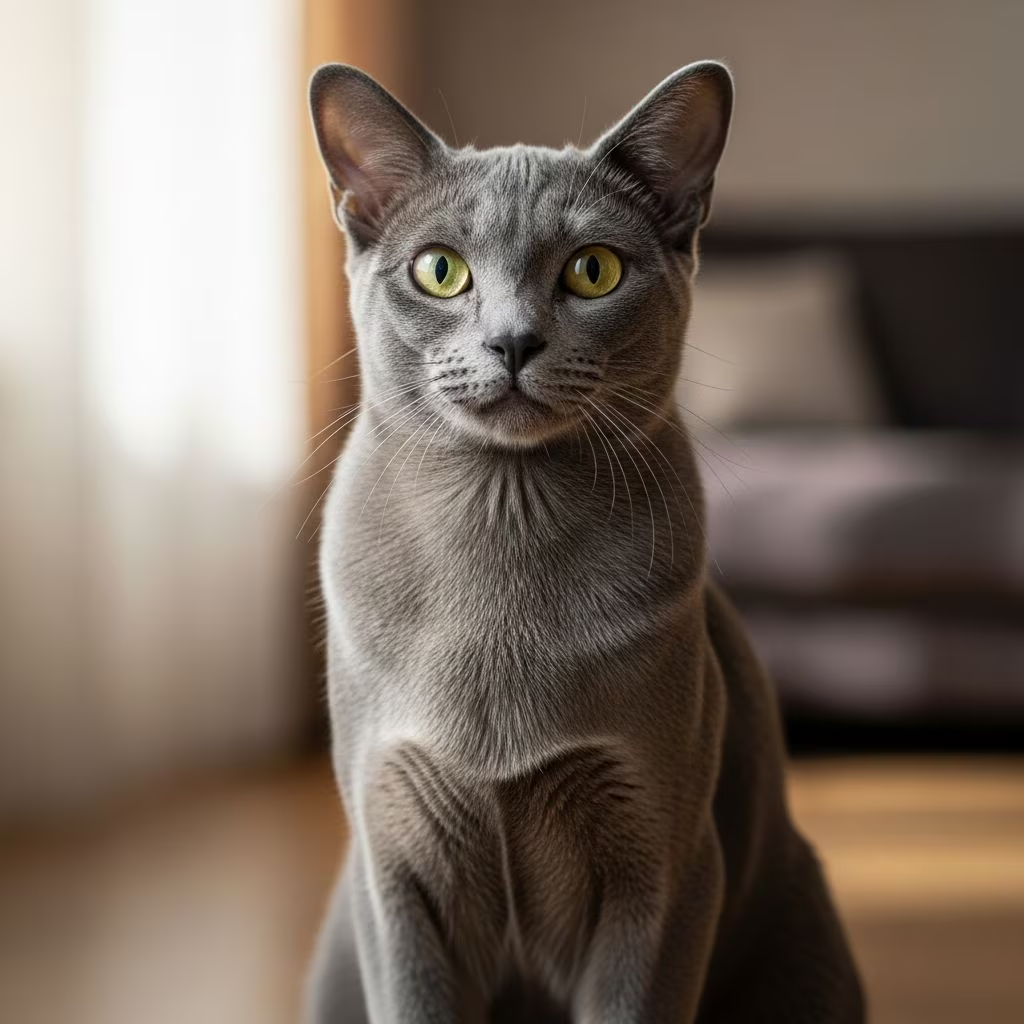
The Blue Burmese cat stands out with its medium blue coat featuring warm fawn undertones, compact muscular build, and exceptionally friendly disposition. This breed combines striking aesthetics with a sociable personality that makes it a favorite among cat enthusiasts.12
Origins and Development of the Blue Variant
The Burmese breed traces its roots to a single chocolate-colored kitten named Wong Mau, imported from Burma to the United States in the 1930s. Breeders crossed her with Siamese cats to establish the sable (brown) standard, but selective breeding later introduced dilute colors like blue.1 The blue shade emerged in the 1950s through matings with blue-point Siamese, producing kittens with a distinctive smoky steel fur that became a recognized color by cat fancier associations.5
By the mid-20th century, the Blue Burmese gained official status in organizations like The Cat Fanciers’ Association (CFA). Unlike the original sable, which is a rich dark brown, the blue variant results from the dilution gene acting on black pigment, creating a pale silvery gray with subtle warm tones.1 This development expanded the breed’s palette while preserving its core traits of robustness and affection.
Physical Characteristics and Breed Standards
Blue Burmese cats exhibit a medium-sized frame with substantial bone density and well-developed muscles, often surprising people with their heft despite compact proportions. Males typically weigh 10-14 pounds, females 8-12 pounds, with a level back, rounded chest, and short straight tail.14
The head is broadly rounded without flat planes, featuring a short muzzle, prominent nose break in profile, and a firm chin. Ears are medium-sized, wide-set, and forward-tilted, while eyes are large, round, and spaced wide apart, displaying vivid yellow-to-gold hues—the deeper the better.1
Coat Specifics for the Blue Color
- Texture: Fine, glossy, satin-like, lying close to the body.
- Color: Medium blue with warm fawn undertones; slightly lighter on underparts, no barring, shading, or markings.
- Nose leather: Slate gray.
- Paw pads: Slate gray to warm pinkish blue.
These standards ensure uniformity, penalizing issues like elongated muzzles or green eyes, and disqualifying kinked tails or blue eyes.1 Compared to platinum Burmese (paler silvery gray), blue has a more pronounced pewter sheen with blue highlights under light.5
| Feature | Blue Burmese | Sable Burmese | Platinum Burmese |
|---|---|---|---|
| Coat Color | Medium blue, fawn undertones | Rich warm brown | Pale silvery gray, pale fawn |
| Nose Leather | Slate gray | Brown | Light warm brown |
| Paw Pads | Slate gray to pinkish blue | Warm pinkish tan | Warm pinkish tan |
| Eye Color | Yellow-gold | Yellow-gold | Yellow-gold |
Temperament and Daily Behavior
Renowned for dog-like qualities, Blue Burmese cats form deep bonds with owners, often trailing them room-to-room and engaging in vocal “conversations.” They retain kittenish playfulness into adulthood, mastering tricks like fetch and thriving on interactive toys.123
Highly social, they greet guests warmly, tolerate children and dogs well, and dislike solitude—potentially becoming vocal or destructive if ignored. Females may be more talkative than laid-back males, but both mellow with age while staying active.4
- People-oriented: Seeks laps and attention.
- Playful: Enjoys games, puzzles, and exploration.
- Tolerant: Good with kids, dogs, other cats.
- Vocal: Communicates needs clearly.
Ideal Living Environment
Blue Burmese flourish in homes with ample human interaction, suiting apartments or houses equally if provided vertical spaces like cat trees and scratching posts. Indoor living is essential due to their curious, fearless nature that risks outdoor hazards.4
They adapt to multi-pet households and families, but require daily play sessions to channel energy. A quiet room for retreat prevents overstimulation in busy settings.
Grooming and Maintenance Routine
Their short, dense coat sheds minimally, needing weekly brushing with a rubber tool to distribute oils and reduce loose hair—ideal for allergy sufferers.4 Bathing is rare; focus on monthly nail trims, ear checks, and dental care with brushing or additives.
Eyes may accumulate discharge; wipe gently with damp cloth. Maintain litter box cleanliness, as they prefer pristine conditions.
Nutrition and Diet Recommendations
Feed high-quality wet and dry food balanced for muscle maintenance, aiming for 200-300 calories daily adjusted for age and activity. Divide into 3-4 meals to prevent obesity, a risk given their sturdy build.1
- Kittens: High-protein growth formula.
- Adults: Moderate fat for weight control.
- Seniors: Joint-supportive with glucosamine.
Provide constant fresh water; puzzle feeders engage their intelligence.
Health Profile and Lifespan
Blue Burmese typically live 12-16 years with proper care, prone to congenital issues like facial deformities (affecting 20-30% in some lines), calcium oxalate stones, and diabetes.3 Regular vet check-ups, including annual bloodwork, screen for these.
Genetic testing for pyruvate kinase deficiency (PKD) is advised before breeding. Spaying/neutering reduces cancer risks and curbs roaming urges.
| Common Health Issue | Symptoms | Prevention |
|---|---|---|
| Facial Deformities | Malocclusion, skull issues | Genetic screening |
| Urinary Stones | Blood in urine, straining | Wet food, water intake |
| Diabetes | Weight loss, thirst | Weight management |
Bringing Home a Blue Burmese
Select reputable breeders adhering to CFA standards, verifying health clearances and socialization. Kittens should be handled from 2 weeks for confident adults. Adoption from rescues offers mature companions already vetted.
Prepare with scratching posts, toys, and a quiet introduction space. Expect bonding within days, marked by purring and following.
Training and Enrichment Activities
Intelligent and eager, train using positive reinforcement: clicker for fetch, leash walking, or litter precision. Rotate toys weekly; laser pointers and feather wands spark hunts.
Window perches satisfy curiosity; puzzle feeders prevent boredom-induced mischief.
Frequently Asked Questions
Are Blue Burmese cats hypoallergenic?
Not fully, but low-shedding coats produce fewer allergens than long-haired breeds.4
Do they get along with dogs?
Yes, their tolerant nature often leads to friendships, especially with patient dogs.
How vocal are Blue Burmese?
Quite talkative, using trills and meows to communicate, more so than average cats.3
What’s the difference between Blue and European Burmese?
American (CFA) are stockier with rounder heads; European are slimmer with wedge shapes.3
Can they be left alone all day?
No, they crave company; consider a companion cat if working long hours.
References
- Burmese Breed Standard — The Cat Fanciers’ Association. Accessed 2026. https://cfa.org/breed/burmese/
- Blue Burmese Cat: Info, Pictures, Facts & History — Catster. Accessed 2026. https://www.catster.com/cat-breeds/blue-burmese-cat/
- Burmese cat — Wikipedia (informational, primary sources referenced). Accessed 2026. https://en.wikipedia.org/wiki/Burmese_cat
- What to Know About Burmese Cats — WebMD. Accessed 2026. https://www.webmd.com/pets/cats/what-to-know-about-burmese-cats
- Blue Burmese Cat — Burmese Cattery. Accessed 2026. https://burmesecattery.com/blue-burmese-cat/



