

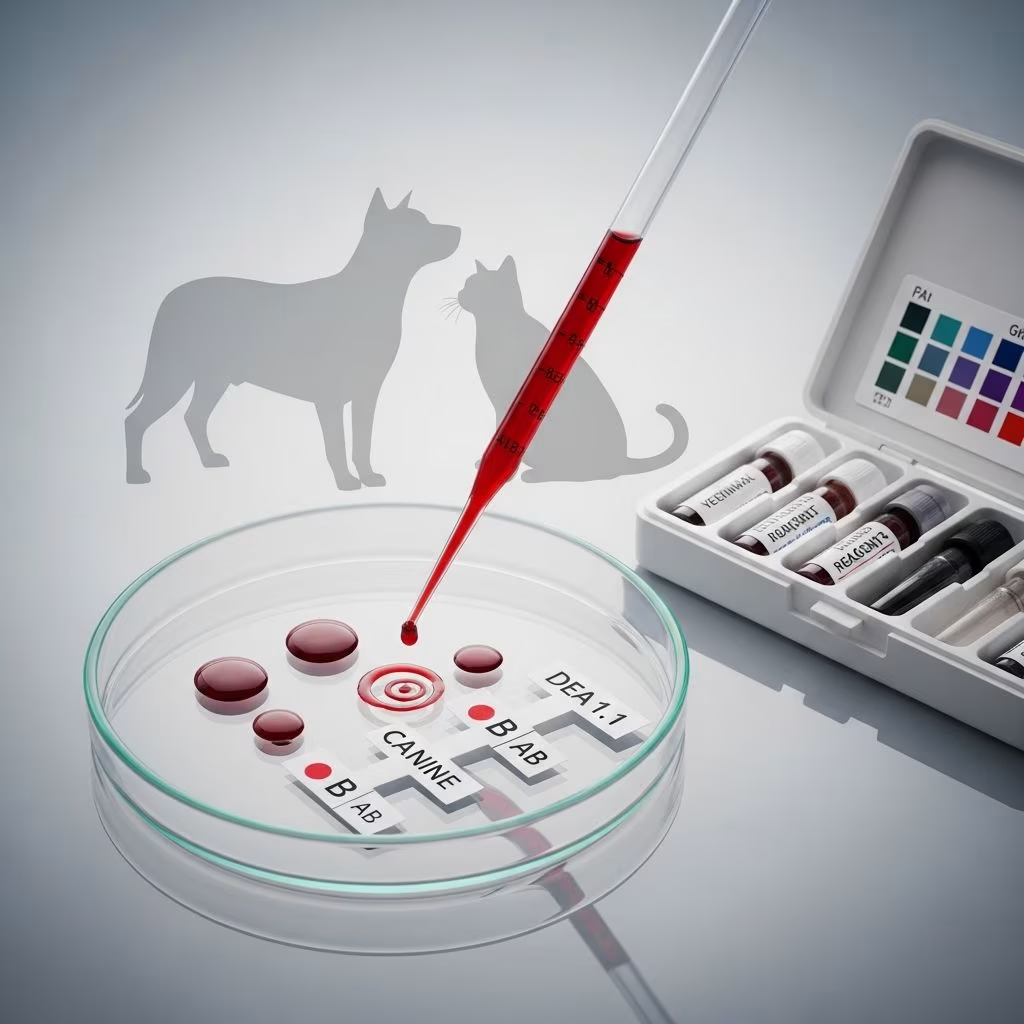
Understanding blood types in dogs and cats is vital for veterinary professionals managing transfusions. Unlike human medicine where blood typing is routine, in pets it prevents severe reactions due to unique antigen systems and naturally occurring antibodies, particularly in felines.
Why Blood Typing Matters in Veterinary Practice
Blood typing identifies specific antigens on red blood cells, ensuring compatibility during transfusions. In dogs and cats, mismatched blood can trigger immune responses ranging from mild incompatibility to fatal hemolysis. Testing reduces these risks, especially for repeat procedures or donors.
- Identifies antigens like DEA in dogs and AB in cats.
- Detects natural antibodies that cause immediate reactions without prior exposure.
- Guides donor selection for blood banks and emergency care.
For cats, typing is mandatory before any transfusion due to potent alloantibodies. Dogs require it primarily for ongoing treatments to avoid sensitization.
Canine Blood Group Systems Explained
Dogs possess over a dozen blood groups, but DEA 1 is the most significant. This system includes subtypes like 1.1 and 1.2, with about 40-60% of dogs testing positive for DEA 1. Naturally occurring antibodies are rare, allowing a first mismatched transfusion often without issue, but subsequent ones can be dangerous.
| Blood Group | Prevalence | Clinical Importance |
|---|---|---|
| DEA 1 (1.1/1.2) | 40-60% positive | High; primary cause of reactions in sensitized dogs |
| DEA 4 | Common, esp. in Dobermans | Moderate; useful for crossmatch issues |
| Dal | Most positive; negative in Dalmatians, Dobermans | Emerging; causes reactions on repeat exposure |
| Others (3,5, Kai 1/2) | Variable | Lower; monitored in breeding donors |
Other groups like Dal affect specific breeds: Dalmatians and Doberman Pinschers often lack Dal, leading to sensitization if exposed to positive blood. Kai 1 and 2, along with Japanese D1D2, add complexity but are less commonly tested.
Feline Blood Typing: A Critical Priority
Cats have three main types: A (most common), B, and rare AB. Type A dominates in domestic shorthairs (95%) and breeds like Siamese, while B prevails in breeds such as British Shorthairs and Persians. Unlike dogs, cats produce strong naturally occurring alloantibodies early in life: anti-B in type A cats and high-titer anti-A in type B cats.
Even 1 mL of mismatched blood can kill a type B cat receiving type A due to anti-A antibodies. Type AB cats lack these antibodies, acting as universal recipients but requiring careful plasma matching.
| Cat Type | Compatible Red Cells | Natural Antibodies Against |
|---|---|---|
| A | A, AB | B |
| B | B, AB | A (high titer) |
| AB | A, B, AB | None |
Newer antigens like FEA 1-5 and Mik (possibly FEA 1) may cause additional incompatibilities, though typing reagents for Mik are unavailable.
Natural Antibodies and Transfusion Risks
In felines, alloantibodies form within months without transfusions, unlike dogs where sensitization follows exposure. Type B cats’ anti-A antibodies are hemolytic, destroying type A cells rapidly. Type A kittens from type B mothers face neonatal isoerythrolysis, where maternal antibodies cross the placenta or via colostrum, causing anemia.
- Avoid nursing type A kittens on type B queens; hand-raise or use type B milk replacer.
- In dogs, DEA 1-negative recipients develop antibodies post-first transfusion if mismatched.
Crossmatching tests recipient serum against donor cells (major) and vice versa (minor). Cats need both always; dogs need major for repeats or unknowns.
Practical Blood Typing Methods
Veterinary labs use EDTA whole blood (1-3 mL) shipped cold. In-clinic kits like Alvedia QuickTest or RapidVet cards provide results in minutes via agglutination.
- Collect blood in EDTA tube.
- Apply to card with reagents for DEA 1, A/B.
- Observe agglutination: clumping indicates positive antigen.
Commercial kits may misidentify AB in FeLV-positive cats, so confirm with labs for rarities. All donors must be typed; prefer DEA 1-negative dogs and type B cats for universal use where possible.
Breed-Specific Considerations
Breed variations influence typing strategies:
- Cats: High type B in British Shorthair (40-50%), Scottish Fold, Persian.
- Dogs: Dal-negative in Dalmatians (50%), Shih Tzu, Lhasa Apso; DEA 4 variable in Dobermans (75% positive).
Screen breeding pairs to prevent neonatal issues in cats. Geographic prevalence affects blood bank stocks: type B scarcer in the US vs. Europe.
Transfusion Protocols and Best Practices
Match types strictly in cats; dogs can receive first untyped transfusion cautiously. Monitor for reactions: fever, vomiting, hemolysis within hours.
- Pre-transfusion: Type recipient/donor, crossmatch.
- During: Slow drip (0.5-1 mL/kg/hr first 30 min).
- Post: Vital signs q15-30min, urine color check.
Plasma must match blood type in cats to avoid antibody transfer. Whole blood for AB cats ideally from AB donors.
Emerging Antigens and Future Directions
Recent discoveries like FEA 1-5 highlight ongoing research. Dal typing gains importance for repeat transfusions in at-risk breeds. Advanced labs offer full panels, improving safety.
Frequently Asked Questions (FAQs)
Is blood typing necessary for a dog’s first transfusion?
Not strictly, as natural antibodies are rare, but recommended for optimal red cell survival.
Can type B cat blood be given to type A cats?
No; anti-A antibodies in type B plasma cause severe reactions even in small volumes.
How common is type AB in cats?
Rare, less than 1%; universal recipients but plasma-sensitive.
What breeds need special Dal typing?
Dalmatians, Dobermans, Shih Tzu; most others are positive.
Can I type blood at home?
No; use vet labs or validated in-clinic kits for accuracy.
References
- Canine & Feline Blood Typing — Cornell University College of Veterinary Medicine. 2023. https://www.vet.cornell.edu/animal-health-diagnostic-center/laboratories/comparative-coagulation/clinical-topics/canine-feline-blood-typing
- A Vet Tech’s Guide to Pre-Transfusion Testing in Dogs & Cats — Vet Tech Prep Blog. 2022. https://blog.vettechprep.com/a-vet-techs-guide-to-pre-transfusion-testing-in-dogs-cats
- Feline Blood Typing — Pet Blood Bank UK. 2024. https://www.petbloodbankuk.org/vet-professionals/i-need-advice/blood-typing/feline-blood-typing/
- Blood Groups in Dogs and Cats — Merck Veterinary Manual. 2023. https://www.merckvetmanual.com/circulatory-system/blood-groups-and-blood-transfusions-in-dogs-and-cats/blood-groups-in-dogs-and-cats
- Blood Typing Products — RapidVet. 2024. https://www.rapidvet.com/products/blood-typing/



