

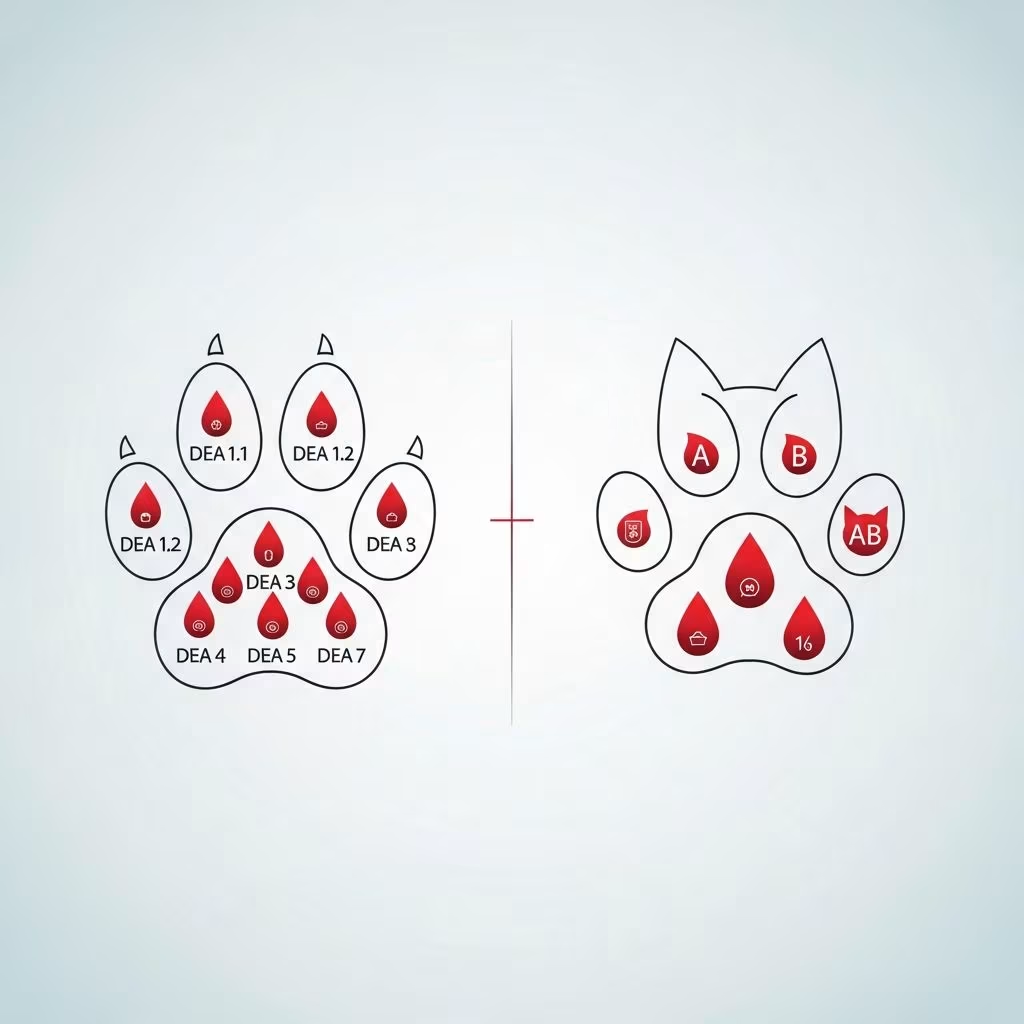
Understanding blood types in pets is crucial for veterinarians and pet owners alike, especially in emergencies requiring transfusions. Dogs and cats possess distinct blood group systems that differ significantly from human ABO groups, influencing compatibility during medical procedures. Mismatched transfusions can lead to severe hemolytic reactions, potentially endangering lives. This article delves into the primary blood groups, their genetic basis, breed-specific distributions, associated risks, and best practices for typing and transfusion safety.
Overview of Canine Blood Group Systems
Dogs exhibit a complex array of blood antigens primarily categorized under the Dog Erythrocyte Antigen (DEA) system. This system includes several recognized groups, with DEA 1 standing out as the most immunogenic and clinically significant. Unlike humans, dogs do not naturally produce strong antibodies against most blood antigens without prior exposure, but sensitization can occur rapidly after the first transfusion.
The DEA antigens are surface proteins on red blood cells (erythrocytes). Key groups encompass DEA 1, 3, 4, 5, 6, 7, and 8. DEA 1, once subdivided into 1.1, 1.2, and 1.3 based on expression levels, is now unified under DEA 1 due to quantitative variations rather than distinct antigens. Approximately 40-60% of dogs test positive for DEA 1, making it a focal point for donor screening.
Emerging Canine Antigens: Dal and Others
Beyond the DEA framework, recent discoveries have identified additional antigens like Dal, Kai 1/2, and the Japanese D1D2 system. The Dal antigen appears on nearly all canine red cells, classifying most dogs as Dal-positive. However, certain breeds such as Doberman Pinschers, Dalmatians, Shih Tzus, Lhasa Apsos, and Bichon Frises frequently lack Dal expression.
Dal-negative dogs, upon exposure to Dal-positive blood, develop antibodies that trigger acute hemolytic reactions in subsequent transfusions. Kai 1 and Kai 2, along with D1D2, represent minor systems with potential for incompatibility, underscoring the need for comprehensive typing in repeat donors and recipients.
Feline Blood Typing: The AB Framework
Cats operate under a simpler yet highly risky blood group paradigm known as the AB system, comprising types A, B, and the rare AB. These antigens are carbohydrate structures on erythrocyte membranes: N-glycolyl-neuraminic acid defines type A, while N-acetyl-neuraminic acid characterizes type B.
Type A dominates globally, affecting 94-99% of domestic shorthairs in the US, though prevalence dips in regions like Australia (73%) and the UK (87%). Type B frequency surges in purebreds, and type AB remains scarce (<1-5%). The A allele is dominant over B in autosomal inheritance, but AB’s genetics remain elusive.
Naturally Occurring Antibodies in Cats
Unlike dogs, cats produce potent naturally occurring alloantibodies (NOAbs) against non-native types shortly after birth, without prior sensitization. Type B cats harbor strong anti-A IgM antibodies that act as agglutinins and hemolysins, capable of destroying type A cells immediately. Type A cats have milder anti-B antibodies, primarily IgG/IgM mixes.
This predisposition mandates strict type-matching for all feline transfusions, even the first. Type AB cats, lacking NOAbs, serve as universal recipients but risk reactions from donor plasma antibodies when receiving whole blood.
Breed-Specific Blood Type Distributions
Blood type prevalence varies markedly by breed, informing donor selection and risk assessment. The following table summarizes key feline distributions:
| Blood Type | Common Breeds | Prevalence Notes |
|---|---|---|
| A | Siamese, most Domestic Shorthair/Longhair (98% US) | Dominant; low anti-B antibodies |
| B | British Shorthair, Persian, Devon Rex | High in purebreds (up to 50%); strong anti-A |
| AB | Scottish Fold, Birman, British Shorthair | Rare (<1-5%); universal recipient |
For dogs, DEA 1-negative status is common in Greyhounds, Boxers, Irish Wolfhounds, German Shepherds, Dobermans, and Pit Bulls, while Golden Retrievers and Labradors skew positive. Dal-negativity clusters in sight hounds and specific toy breeds.
Risks of Transfusion Incompatibilities
- Acute Hemolytic Reactions: Immediate destruction of donor cells by recipient antibodies, seen prominently in type B cats receiving type A blood. Symptoms include fever, tachycardia, hemoglobinuria, and shock.
- Delayed Reactions: Occur 24-96 hours post-transfusion due to sensitized immune responses, as with Dal mismatches in dogs.
- Neonatal Isoerythrolysis (NI): In cats, type A kittens from type B queens face hemolysis from colostral anti-A antibodies. Type B kittens from A queens are spared due to weaker anti-B. Similar risks apply to rare canine scenarios.
- Mik and FEA Antigens: Cats negative for Mik (or novel FEA 1-5) possess NOAbs, risking reactions undetectable by standard AB typing. Crossmatching is vital.
Veterinary Protocols for Safe Transfusions
Prior to any transfusion, blood typing is imperative: DEA 1 for dogs, AB for cats. All donors must be typed; DEA 1-negative dogs are ideal universal donors.
Crossmatching—major (recipient serum vs. donor cells) and minor (donor plasma vs. recipient cells)—detects incompatibilities. In dogs, perform after 4 days post-transfusion; in cats, at every transfusion beyond 2 days due to NOAbs.
Wash donor cells or use packed red cells to minimize plasma-related reactions. Monitor recipients closely for 4-6 hours post-transfusion.
Advances in Blood Typing Technology
Modern gel column agglutination and flow cytometry offer rapid, accurate typing. While DEA 1 reagents are widely available, feline Mik typing is obsolete, with FEA panels emerging. Genetic PCR tests promise non-invasive screening, enhancing blood bank efficiency.
Frequently Asked Questions (FAQs)
Why type my dog’s blood before donation?
Typing identifies DEA 1-negative universal donors, preventing sensitization in recipients.
Can I transfuse without typing in emergencies?
In life-threatening cases, transfuse DEA 1-negative dog blood or type A cat blood cautiously, followed by typing/crossmatching.
How common is type B in cats?
Rare in US domestics (<1%), but up to 50% in breeds like British Shorthair.
What breeds are at risk for Dal-negative reactions?
Dobermans, Dalmatians, Shih Tzus—avoid Dal-positive blood after first exposure.
Is neonatal isoerythrolysis preventable?
Yes, via queen blood typing pre-breeding and hand-rearing type A kittens from B queens if needed.
Conclusion
Mastering pet blood groups safeguards transfusion outcomes, reducing morbidity in critical care. Ongoing research into minor antigens refines protocols, ensuring veterinary medicine evolves with precision.
References
- Blood Groups in Dogs and Cats — Merck Veterinary Manual. 2023. https://www.merckvetmanual.com/circulatory-system/blood-groups-and-blood-transfusions-in-dogs-and-cats/blood-groups-in-dogs-and-cats
- Canine & Feline Blood Typing — Cornell University College of Veterinary Medicine. 2024. https://www.vet.cornell.edu/animal-health-diagnostic-center/laboratories/comparative-coagulation/clinical-topics/canine-feline-blood-typing
- Blood Types — eClinPath. 2023. https://eclinpath.com/hemostasis/transfusion-medicine/blood-types/
- Feline Blood Typing — Pet Blood Bank UK. 2023. https://www.petbloodbankuk.org/vet-professionals/i-need-advice/blood-typing/feline-blood-typing/
- Blood Transfusions in Dogs and Cats — MSD Veterinary Manual. 2023. https://www.msdvetmanual.com/circulatory-system/blood-groups-and-blood-transfusions-in-dogs-and-cats/blood-transfusions-in-dogs-and-cats
- Editorial: Blood Groups in Companion Animals — Frontiers in Veterinary Science. 2021-10-27. https://www.frontiersin.org/journals/veterinary-science/articles/10.3389/fvets.2021.792720/full



