

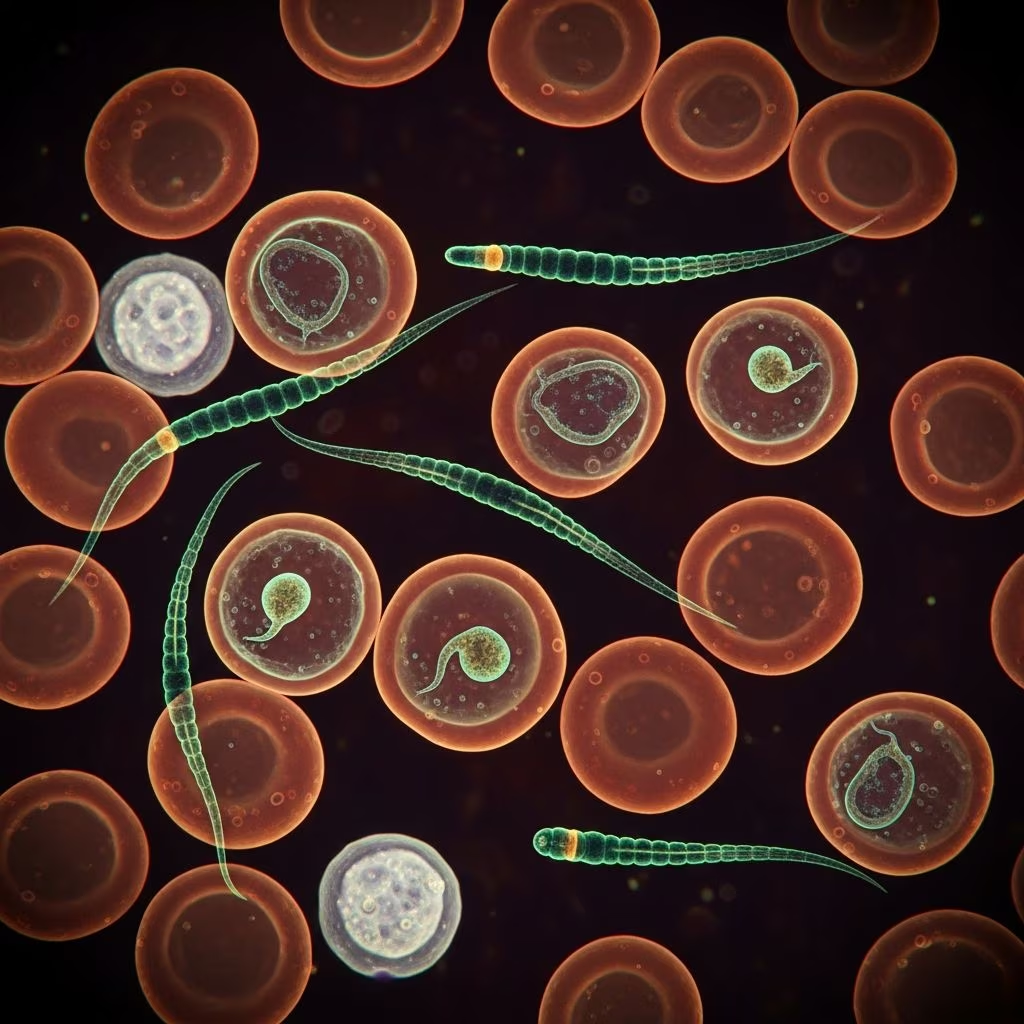
Blood parasites pose significant risks to cats, invading red blood cells and causing anemia, fever, and potentially fatal complications. These protozoan and bacterial invaders, often transmitted by ticks or other vectors, demand prompt veterinary attention to safeguard feline health.
Why Blood Parasites Threaten Your Cat’s Health
Cats encounter various blood parasites that disrupt normal blood function, leading to oxygen deprivation in tissues. These infections thrive in regions with high tick populations, affecting domestic and wild felines alike. Early detection hinges on recognizing subtle signs like lethargy or pale gums, as untreated cases can escalate rapidly.
Key Types of Feline Blood Parasites
Several parasites target feline blood cells, each with unique transmission and impact profiles. Understanding these helps in targeted prevention.
- Babesia species: Protozoans like Babesia felis primarily affect cats in Africa, causing severe hemolytic anemia.
- Cytauxzoon felis: A deadly tick-borne parasite leading to acute illness in wild and domestic cats.
- Hemotropic mycoplasmas: Bacteria such as Mycoplasma haemofelis that adhere to red blood cells, inducing anemia.
- Hepatozoon americanum: Transmitted via tick ingestion, often subclinical in cats.
- Trypanosomes: Including Trypanosoma evansi, causing systemic disease in endemic areas.
Detailed Overview of Major Blood Parasites
Babesiosis: The Tick-Borne Menace
Babesia parasites infect erythrocytes, rupturing them and releasing toxins that trigger immune-mediated destruction. Cats in southern Africa face the highest risk from B. felis, though sporadic cases occur globally. Symptoms emerge 10 days post-tick bite, peaking intensely.
Clinical manifestations include high fever up to 105°F (40.5°C), jaundice from bilirubin buildup, dehydration, and respiratory distress. Anemic cats exhibit pale mucous membranes, splenomegaly, and profound weakness. Diagnosis relies on blood smears revealing intraerythrocytic parasites or PCR for confirmation.
Treatment challenges persist, as traditional antiprotozoals like imidocarb show limited efficacy against B. felis. Supportive care—fluids, anti-inflammatories, antioxidants, and transfusions—bolsters survival. Emerging protocols yield better outcomes, emphasizing aggressive intervention.
Cytauxzoonosis: A Rapidly Fatal Threat
Cytauxzoon felis, harbored by bobcats, spreads to domestic cats via lone star ticks. Schizonts proliferate in macrophages, causing fever, anorexia, and hemolytic crisis within 10 days of exposure.
Signs progress swiftly: icterus, dyspnea, tachycardia, and organ enlargement (liver, spleen, lymph nodes). Without intervention, mortality nears 100% within days. PCR or cytology identifies the parasite; treatment combines atovaquone-azithromycin, yielding 60-80% survival in recent studies.
Hospitalization with IV fluids, transfusions, and pain management is standard. Recovery demands weeks of monitoring.
Hemotropic Mycoplasmosis: The Stealthy Anemia Culprit
Formerly hemobartonellosis, this involves Mycoplasma haemofelis, M. haemominutum, and others attaching to RBCs, prompting splenic clearance and anemia. Transmission occurs via fleas, ticks, bites, or transplacentally.
Symptoms vary: acute fever (103-106°F), pallor, icterus, splenomegaly in severe cases; chronic carriers remain asymptomatic. FeLV/FIV co-infection worsens prognosis. Blood smears or PCR diagnose; doxycycline (21 days) clears most infections, though PCR positivity may linger.
Up to one-third of untreated acute cases prove fatal, necessitating transfusions and oxygen for dyspneic cats.
Hepatozoonosis: Often Silent but Persistent
Hepatozoon americanum infects via Gulf Coast tick ingestion. Cats rarely show signs, serving as reservoirs. Diagnosis via blood smears or histopathology; treatment employs combinations like trimethoprim-sulfadiazine with clindamycin.
Trypanosomiasis: Regional Systemic Invaders
Species like T. evansi (surra) and African trypanosomes cause fever, anemia, cachexia, and ocular/lymphatic swelling after 1-4 week incubation. Blood microscopy confirms; severity ties to strain and host factors.
Recognizing Symptoms Across Infections
Common red flags include:
- Pale or icteric gums
- Fever and lethargy
- Anorexia and weight loss
- Weakness, dyspnea, tachycardia
- Enlarged abdomen (splenomegaly)
Immunocompromised cats display amplified severity. Acute onset signals urgency; chronic forms mimic other anemias.
Veterinary Diagnosis: Precision Testing
Vets initiate with CBC revealing regenerative anemia, bilirubinemia, and thrombocytopenia. Direct visualization via Wright-Giemsa smears detects parasites; PCR offers superior sensitivity for low parasitemia.
Table: Diagnostic Comparison
| Parasite | Primary Test | Sensitivity |
|---|---|---|
| Babesiosis | PCR/Blood Smear | High |
| Cytauxzoonosis | Cytology/PCR | Very High |
| Hemoplasmosis | PCR | Excellent |
| Hepatozoonosis | Blood Smear | Moderate |
Treatment Strategies: From Antibiotics to Transfusions
Therapy blends parasite-specific drugs with support:
- Antimicrobials: Doxycycline for mycoplasmas (5-10 mg/kg BID x21 days, followed by water flush).
- Antiprotozoals: Atovaquone + azithromycin for cytauxzoonosis; primaquine for babesiosis.
- Supportive: IV fluids, whole blood/RBC transfusions, oxygen, NSAIDs.
Prognosis improves with early action; monitor via serial CBC/PCR.
Prevention: Your Best Defense
Tick control reigns supreme: monthly topicals (fipronil, fluralaner), collars, environmental management. Avoid tick-heavy woods; inspect/remove ticks promptly. Screen blood donors; test/vaccinate against retroviruses.
FAQs on Feline Blood Parasites
Can indoor cats get blood parasites?
Yes, via fleas, contaminated needles, or escaped ticks on owners.
Is cytauxzoonosis curable?
With prompt atovaquone-azithromycin, survival exceeds 60%; delays are fatal.
How long does doxycycline take to work for hemoplasmosis?
Clinical improvement in 24-48 hours; full course prevents relapse.
Are blood parasites contagious cat-to-cat?
Via bites/fights (mycoplasmas); not direct contact.
Long-Term Management and Prognosis
Survivors require follow-up testing; carriers risk recrudesence under stress. Annual preventives and wellness checks mitigate recurrence. In endemic zones, vigilance saves lives.
References
- Blood Parasites of Cats – Cat Owners — MSD Veterinary Manual. 2023. https://www.msdvetmanual.com/cat-owners/blood-disorders-of-cats/blood-parasites-of-cats
- Blood Parasites of Cats – Cat Owners — Merck Veterinary Manual. 2023. https://www.merckvetmanual.com/cat-owners/blood-disorders-of-cats/blood-parasites-of-cats
- Parasitic Blood Infection in Cats — WagWalking. 2023. https://wagwalking.com/cat/condition/parasitic-blood-infection
- Cytauxzoonosis in Cats — VCA Animal Hospitals. 2023. https://vcahospitals.com/know-your-pet/cytauxzoonosis-in-cats
- Parasitic Blood Infection in Cats — PetMD. 2023. https://www.petmd.com/cat/conditions/infectious-parasitic/parasitic-blood-infection-cats
- Babesiosis in Cats: ABCD guidelines — PMC (NCBI). 2024-05-15. https://pmc.ncbi.nlm.nih.gov/articles/PMC11148951/
- GUIDELINE for Haemoplasmosis in Cats — ABCD Cats & Vets. 2023. https://www.abcdcatsvets.org/guideline-for-haemoplasmosis-in-cats/



