Blood in Horse Urine: Urethral Issues in Males
Discover causes, symptoms, diagnosis, and treatments for urethral defects leading to hematuria in adult male horses, ensuring better horse health.
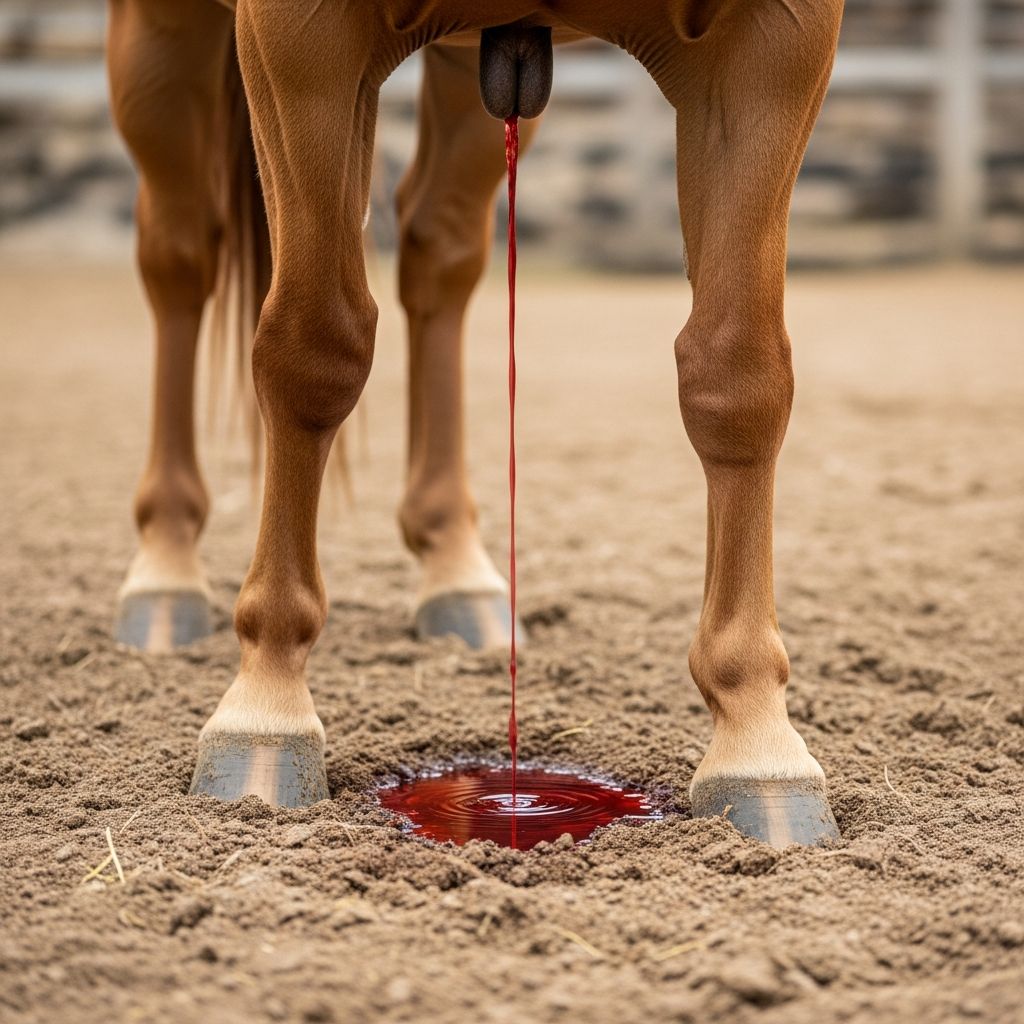
Adult male horses, particularly geldings and stallions, can develop urethral defects that lead to blood appearing in their urine, a condition known as hematuria. This issue often manifests as bleeding at the conclusion of urination and requires prompt veterinary attention to prevent ongoing complications.
Understanding the Anatomy of the Equine Urethra
The equine urethra serves as the conduit for urine from the bladder to the outside, extending through the penis in males. In stallions and geldings, it interacts closely with vascular structures like the corpus spongiosum penis, which surrounds it and supplies blood during urination and ejaculation. Defects in this area can create abnormal connections, allowing blood to mix with urine.
These defects typically occur at specific sites, such as near the ischial arch, where the urethra’s convex surface is vulnerable to pressure changes. During urination, contractions of surrounding muscles increase vascular pressure, exacerbating any weaknesses in the urethral wall.
Recognizing Key Symptoms in Affected Horses
Horses with urethral defects exhibit distinct clinical signs. The primary indicator is hematuria at the end of urination, coinciding with bulbourethral muscle contractions in geldings. Stallions may show hemospermia (blood in semen) alongside reduced fertility, without visible hematuria during urination.
- Blood visible only post-urination stream in geldings
- Semen discoloration and fertility decline in breeding stallions
- No pain or straining typically reported
- Intermittent bleeding episodes over months or years
All breeds can be impacted, though Quarter Horses appear predisposed. Anemia is uncommon despite repeated bleeding. Owners often notice pink-tinged urine or drips after the horse finishes urinating.
Potential Causes Behind Urethral Defects
The exact origins of these defects remain unclear, but they likely stem from repetitive trauma or vascular stress. High pressure in the corpus spongiosum during urination or ejaculation may erode the urethral lining over time, forming a linear rent. No infectious agents or toxins are implicated; it’s considered a noninfectious structural flaw.
Factors increasing risk include:
- Intense muscular contractions in the pelvic region
- Breeding activity in stallions elevating vascular demands
- Possible breed-specific anatomical variations
Diagnostic Approaches for Accurate Identification
Veterinarians rely on targeted exams to confirm urethral defects. Endoscopy is the gold standard, revealing a linear lesion on the urethra’s convex surface at the ischial arch level in every reported case. This minimally invasive procedure visualizes the defect directly.
Additional steps include:
| Method | Purpose | Key Findings |
|---|---|---|
| Physical Exam | Assess general health and urine | Terminal hematuria, no systemic illness |
| Endoscopy | Direct visualization | Linear defect near ischial arch |
| Urinalysis | Rule out infection/stones | RBCs without bacteria or crystals |
| Ultrasound | Check penile vasculature | Abnormal corpus spongiosum flow |
These confirm the diagnosis by excluding uroliths, infections, or bladder issues common in other urinary disorders.
Conservative Management Strategies
Some defects resolve without surgery. Spontaneous healing occurs in select cases, especially if bleeding is mild and intermittent. For stallions, breeding rest is crucial, allowing vascular pressure to subside and tissues to repair. One study noted resolution after 6 months of rest alone.
Supportive care involves:
- Monitoring urine for bleeding frequency
- Stall rest to minimize pelvic strain
- Anti-inflammatory medications if discomfort arises
- Nutritional adjustments to support healing
Surgical Interventions for Persistent Cases
When conservative measures fail, surgery is highly effective. Subischial perineal urethrotomy or corpus spongiotomy reduces pressure in the corpus spongiosum, promoting defect closure. In geldings, this eliminates hematuria by decompressing vessels during urination.
Procedure details:
- Incision below the ischium accesses the urethra
- Targeted cut into corpus spongiosum relieves pressure
- Optional buccal mucosal grafts or cautery for reinforcement
- Post-op catheterization and rest for 4-10 weeks
For stallions with hemospermia, temporary urethrostomy combined with rest yields mixed results; one case recurred post-surgery. Success rates exceed 85% in geldings across studies.
Post-Treatment Care and Recovery Timeline
Recovery focuses on wound healing and preventing reinjury. Horses undergo stall confinement for 6-8 weeks, with gradual pasture turnout. Monitor for infection signs like swelling or discharge. Stallions require 3-6 months breeding hiatus.
Expected outcomes:
- Geldings: Hematuria resolves permanently in most
- Stallions: Fertility often restores, though monitoring needed
- Complications rare: minor hemorrhage or stricture
Follow-up endoscopy verifies healing at 3 months.
Preventive Measures for Horse Owners
While not fully preventable, early detection aids management. Routine breeding soundness exams for stallions include endoscopic checks. Maintain optimal hydration and diet to support urinary health, avoiding excesses that promote stones.
Breeding farms should track fertility metrics closely.
Comparing Urethral Defects to Other Urinary Conditions
Urethral defects differ from infections or calculi:
| Condition | Main Sign | Affected Sex/Age | Treatment |
|---|---|---|---|
| Urethral Defect | Terminal hematuria | Adult males | Surgery/rest |
| UTI | Frequent/painful urination | All | Antibiotics |
| Urolithiasis | Straining, colic | Older horses | Cystotomy |
| Uroperitoneum | Abdominal distension | Foals | Surgery |
Frequently Asked Questions (FAQs)
Is hematuria always serious in male horses?
Terminal hematuria often signals a treatable urethral defect, but consult a vet promptly to rule out other issues.
Can stallions with this condition still breed?
Yes, after rest and surgery, fertility typically returns, though temporary suspension is advised.
How long does recovery take after surgery?
Full healing occurs in 2-6 months with proper care.
Are Quarter Horses more at risk?
Observations suggest higher incidence, but all breeds can be affected.
Will the defect recur after treatment?
Rarely, if pressure relief is achieved surgically.
Long-Term Prognosis and Owner Tips
Prognosis is excellent for geldings post-surgery, with near-complete resolution. Stallions fare well with rest. Owners should schedule annual urinary exams for at-risk horses. Early intervention preserves performance and breeding potential.
References
- Urethral Defects Causing Hematuria in Adult Male Horses — Merck Veterinary Manual. 2023. https://www.merckvetmanual.com/urinary-system/noninfectious-diseases-of-the-urinary-system-in-large-animals/urethral-defects-causing-hematuria-in-adult-male-horses
- What Your Horse’s Urine Is Telling You: Urinary Symptom Guide — Mad Barn. 2024. https://madbarn.com/equine-urinary-symptoms/
- Urethral defects in geldings with hematuria and stallions with hemospermia — PubMed (J Am Vet Med Assoc). 1995-08-15. https://pubmed.ncbi.nlm.nih.gov/7653040/
- Patent Urachus and Ruptured Urethras — University of Minnesota Large Animal Surgery. 2022. https://open.lib.umn.edu/largeanimalsurgery/chapter/patent-urachus/
Similar Articles



Read full bio of Sneha Tete