

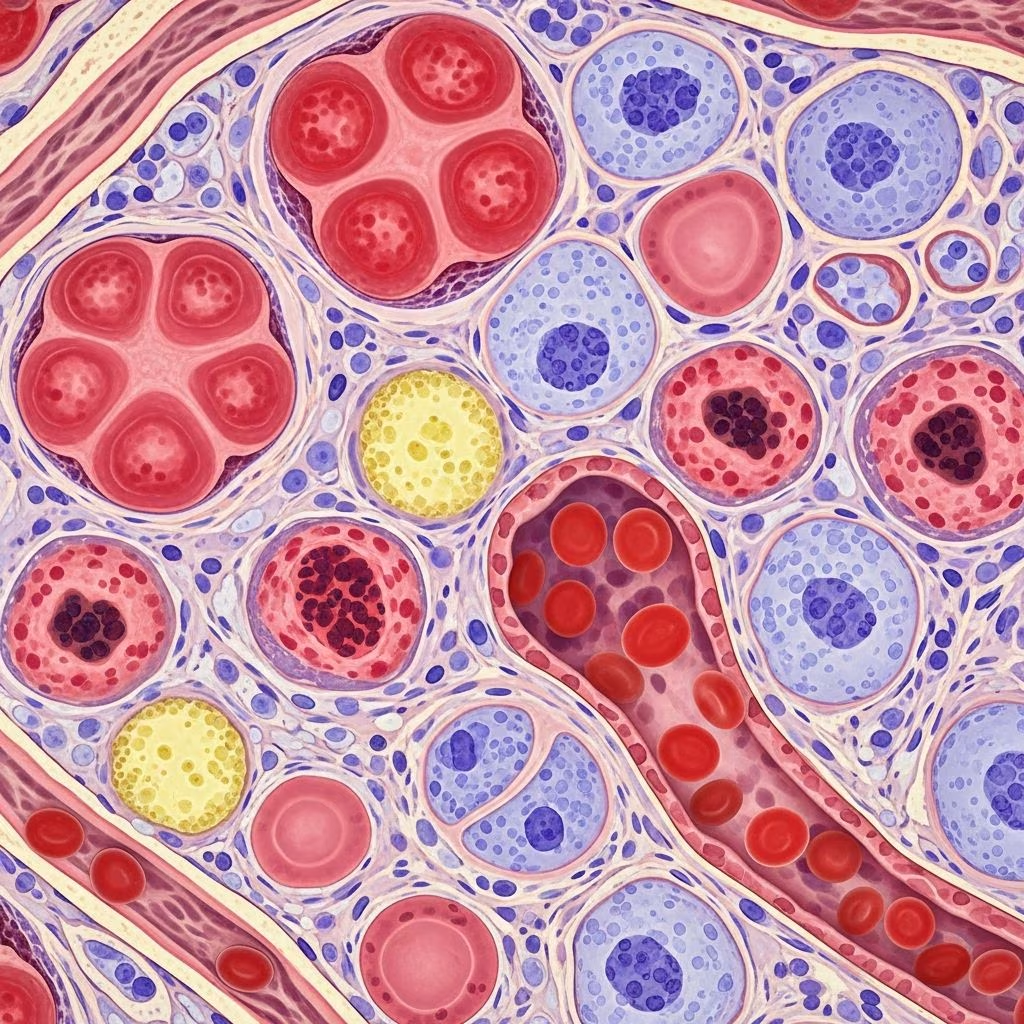
Introduction to Hematopoietic Function
The process by which animals generate blood cells is fundamental to survival, affecting oxygen transport, immune defense, and hemostasis. This intricate biological system operates continuously throughout an animal’s life, maintaining adequate supplies of red blood cells, white blood cells, and platelets necessary for normal physiological function. Understanding how this process works provides insight into both normal animal health and various disease states that can compromise blood production.
Structural Components of Blood-Forming Systems
Blood cell production relies on several interconnected organs and tissues that work synergistically to maintain healthy populations of circulating cells. These structures include specialized microenvironments designed to support the generation and maturation of different blood cell types.
Bone Marrow as the Primary Production Site
In adult animals, bone marrow serves as the dominant organ for blood cell generation. The bone marrow occupies the interior cavities of bones and contains a complex microenvironment composed of stromal cells, endothelial cells, adipocytes, macrophages, and various immune cells. This specialized tissue provides the necessary structural and chemical support for hematopoietic stem cells to proliferate and differentiate into mature blood cells.
The architectural changes that occur as animals age significantly influence bone marrow function. Young animals possess red bone marrow throughout their skeletal system, but as growth slows and metabolic demands stabilize, portions of the bone marrow convert to yellow or fatty marrow in the shafts of long bones. This transformation reflects the body’s adjustment to changing physiological needs, with active blood-producing marrow concentrating in the flat bones of the pelvis, ribs, vertebrae, and the proximal ends of long bones. When demand for blood cells increases due to disease or increased oxygen requirements, this inactive marrow can reactivate and resume blood cell production.
Supporting Lymphoid Structures
Beyond bone marrow, the immune system contains several other critical structures that contribute to blood cell generation. The thymus gland, which is particularly prominent in young animals, plays a crucial role in developing T lymphocytes. Lymph nodes serve dual functions as both immune surveillance centers and potential sites for blood cell production when demand increases. The spleen functions as a secondary hematopoietic organ that can activate blood production during times of stress or increased need.
Cellular Hierarchy and Differentiation Pathways
Blood cell production begins with a remarkable cellular hierarchy, where a small population of specialized cells gives rise to the vast array of different blood cell types. Understanding this hierarchical relationship is essential to comprehending how diverse cellular lineages emerge from a single progenitor source.
Hematopoietic Stem Cells: The Foundation
At the apex of this cellular hierarchy exist hematopoietic stem cells (HSCs), which possess extraordinary capabilities that distinguish them from other cell types. These cells can undergo self-renewal indefinitely while maintaining their stem cell properties, allowing a small initial population to sustain blood production throughout an animal’s lifetime. HSCs replicate slowly—approximately once every 8 to 10 weeks—which may contribute to their remarkable longevity and resistance to aging.
The ability to sustain blood production over decades requires that HSCs possess both proliferative capacity and the capacity for multilineal differentiation, meaning they can generate multiple different cell lineages. This dual capability is carefully controlled through complex signaling mechanisms that balance self-renewal against differentiation into more specialized cell types.
Divergence into Major Cell Lineages
When HSCs differentiate, they first give rise to two primary progenitor populations: the common lymphoid progenitor (CLP) and the common myeloid progenitor (CMP). This bifurcation represents a critical decision point in blood cell development.
The CLP population follows a distinct developmental pathway that produces T lymphocytes, B lymphocytes, and natural killer (NK) cells—the major components of adaptive and innate immune systems. These cells collectively provide protection against pathogens, coordinate immune responses, and maintain immune memory.
The CMP pathway generates all non-lymphoid blood cells through a series of intermediate progenitors, each becoming progressively more specialized. This lineage also produces macrophages, dendritic cells, osteoclasts, and mast cells—cells that extend beyond traditional blood components but maintain critical functions in immunity and tissue homeostasis.
Specialized Progenitor Populations
Further differentiation of the CMP produces several specialized progenitor populations, each committed to generating specific blood cell types. The megakaryocyte-erythroid progenitor generates both platelet-forming megakaryocytes and oxygen-carrying erythrocytes. The granulocyte-monocyte progenitor gives rise to various white blood cell types including neutrophils, monocytes, and other granulocytes. Additional progenitors specifically generate basophils, mast cells, and eosinophils, each with distinct immunological roles.
As cells progress through this differentiation hierarchy, they gradually lose flexibility. Early stem cells possess the capacity for unlimited self-renewal and can become any blood cell type, while committed progenitors have limited self-renewal capacity and increasingly restricted differentiation potential. This progressive restriction ensures that the final products are appropriately specialized for their specific functions.
Regulation of Blood Cell Production
Blood cell production is not constitutive; rather, it is carefully regulated through multiple mechanisms that sense the body’s needs and adjust production accordingly. Several factors control the transition from stem cells to differentiated progeny.
Chemical Signaling Molecules
Hematopoiesis is controlled by signaling pathways mediated by soluble cytokines and their receptors. Interleukins, tumor necrosis factor-alpha (TNF-α), and granulocyte-macrophage colony-stimulating factor (GM-CSF) represent important regulatory molecules that coordinate stem cell behavior and progenitor cell development. These chemical messengers are produced by cells within the marrow microenvironment and act on hematopoietic cells to promote proliferation, differentiation, or cell death as needed.
Nutritional and Hormonal Influences
Beyond cytokine signaling, nutritional factors substantially influence blood cell production. Iron, essential vitamins including B12 and folate, and other micronutrients provide substrate and cofactors necessary for cell division and hemoglobin synthesis. Hormonal signals specific to each blood cell lineage also modulate production rates, allowing systemic needs to be communicated to the bone marrow.
Immune System Coordination
The control of stem cell differentiation apparently involves interaction of helper and suppressor lymphocytes, providing a feedback mechanism by which the body’s immune status influences blood cell production. This creates a dynamic system responsive to the animal’s physiological state and immune challenges.
The Hematopoietic Microenvironment
The physical and chemical environment surrounding hematopoietic cells is as important as the cells themselves in determining successful blood production. This specialized microenvironment creates conditions favorable for stem cell maintenance and controlled differentiation.
Cellular Components of the Niche
The bone marrow microenvironment comprises stromal cells and endothelial cells that produce extracellular matrix components including collagen fibers, basement membranes, and proteoglycans. Osteoblasts contribute to this architecture while maintaining the structural integrity of bone itself. The three-dimensional meshwork created by these components provides physical support while facilitating cell-cell interactions essential for proper hematopoietic function.
Homing and Engraftment
Circulating stem cells recognize and respond to signals from the bone marrow microenvironment through a process called homing. This involves binding to endothelial cells, migrating through vessel walls, and adhering to specific sites within the extravascular space. Chemoattractants produced by marrow cells guide this migration, while adhesion molecules on the surface of hematopoietic cells enable selective binding to proteoglycans and glycoproteins on marrow stromal cells. Once homed to appropriate sites, stem cells begin the processes of proliferation and differentiation that sustain blood production.
Developmental Origins and Fetal Hematopoiesis
The development of hematopoietic systems begins during fetal life, with initial blood cell production occurring at different anatomical locations than in postnatal animals. Understanding these developmental origins provides context for how the adult system becomes established.
Early in gestation, primitive blood cells arise in the yolk sac and develop directly from hematopoietic progenitor cells without necessarily passing through intermediate stages. As development progresses, the aorta-gonad-mesonephros (AGM) region transiently supports hematopoietic stem cell development, though this region itself does not produce recognizable blood cells. The liver and spleen become dominant hematopoietic organs by midgestation, gradually accumulating stem cells that will eventually seed the developing bone marrow.
The transition to marrow-based hematopoiesis occurs as bones develop and medullary cavities form. Once bone structure is sufficiently developed, hematopoietic stem cells from the liver and spleen migrate into the bone marrow, where they establish the microenvironment necessary for lifelong blood cell production. Following birth, the bone marrow becomes the exclusive or nearly exclusive site of hematopoiesis in healthy animals, with all medullary cavities initially participating in blood production.
Functional Lymphoid Anatomy
While bone marrow serves as the primary production center, lymph nodes represent specialized sites where immune cells encounter antigens and organize immune responses. Understanding their structure illuminates how blood cells function after leaving the marrow.
Lymph nodes are organized around primary lymphoid follicles containing populations of B lymphocytes surrounded by perifolliular regions enriched with T lymphocytes. Lymph fluid entering at the cortical surface and blood vessels entering at the hilum both contribute to the lymph node’s immune surveillance function. This anatomical organization positions dendritic cells and macrophages to present antigens to lymphocytes, facilitating immune recognition and response coordination.
Diagnostic Evaluation of Blood Production
Clinically assessing the hematopoietic system requires examination of both circulating blood cells and the bone marrow from which they originate. Different diagnostic techniques provide complementary information about system function.
Bone marrow smears allow evaluation of cell types, developmental stages, and the ratio between myeloid and erythroid precursors, providing insight into the bone marrow’s capacity for different lineages. Tissue sections are necessary to evaluate whether marrow contains normal cellular populations (hyperplasia), reduced populations (aplasia), or focal lesions that might compromise function. Together, these diagnostic approaches enable assessment of whether blood production is proceeding normally or whether specific pathological processes are occurring.
Adaptive Capacity and Disease States
The hematopoietic system demonstrates remarkable adaptability, capable of expanding production when demands increase. When red blood cell or leukocyte demand increases, the bone marrow responds by proliferating and extending hematopoietic activity into the shafts of long bones. This plasticity allows the system to accommodate increased metabolic demands, blood loss, or immune challenges.
However, this system can also fail or become dysregulated, leading to various hematologic diseases. Aplasia represents failure to produce adequate cells, hyperplasia represents overproduction, and malignant transformation can produce uncontrolled proliferation of abnormal cells. Understanding normal hematopoietic structure and function provides the foundation for recognizing and treating these pathological states.
Conclusion
Blood cell production in animals represents a remarkable example of biological organization, with a simple hierarchical stem cell system generating extraordinary cellular diversity. Through finely tuned regulatory mechanisms and specialized microenvironments, animals maintain continuous production of billions of blood cells daily. The bone marrow serves as the anatomical center of this process, while distributed lymphoid tissues provide additional production capacity and critical immune functions. Recognition of this system’s complexity and beauty enhances appreciation for both normal animal physiology and the consequences of its dysfunction.
References
- Hematopoietic System – Veterinary Pathology — Vet Mansoura. Accessed 2026. https://www.vetmansoura.com/archive/Pathology/hematopoietic/Systemic5.html
- The Hematopoietic System (Chapter 3) – Clinicopathologic Principles for Veterinary Medicine — Cambridge University Press. https://www.cambridge.org/core/books/clinicopathologic-principles-for-veterinary-medicine/hematopoietic-system/97E32A458A85CFFF62EB94C061F0C9FB
- Hematopoiesis — Veterian Key. https://veteriankey.com/hematopoiesis/
- The Hematopoietic System — Schalm’s Veterinary Hematology, Wiley. https://onlinelibrary.wiley.com/doi/abs/10.1002/9781119500537.ch4
- Large Animal Models of Hematopoietic Stem Cell Gene Therapy — National Center for Biotechnology Information. https://pmc.ncbi.nlm.nih.gov/articles/PMC2914814/
- The Development of Mammalian Hematopoietic Stem Cells — University of Edinburgh Research. https://www.research.ed.ac.uk/en/publications/of-lineage-and-legacy-the-development-of-mammalian-hematopoietic-/



