

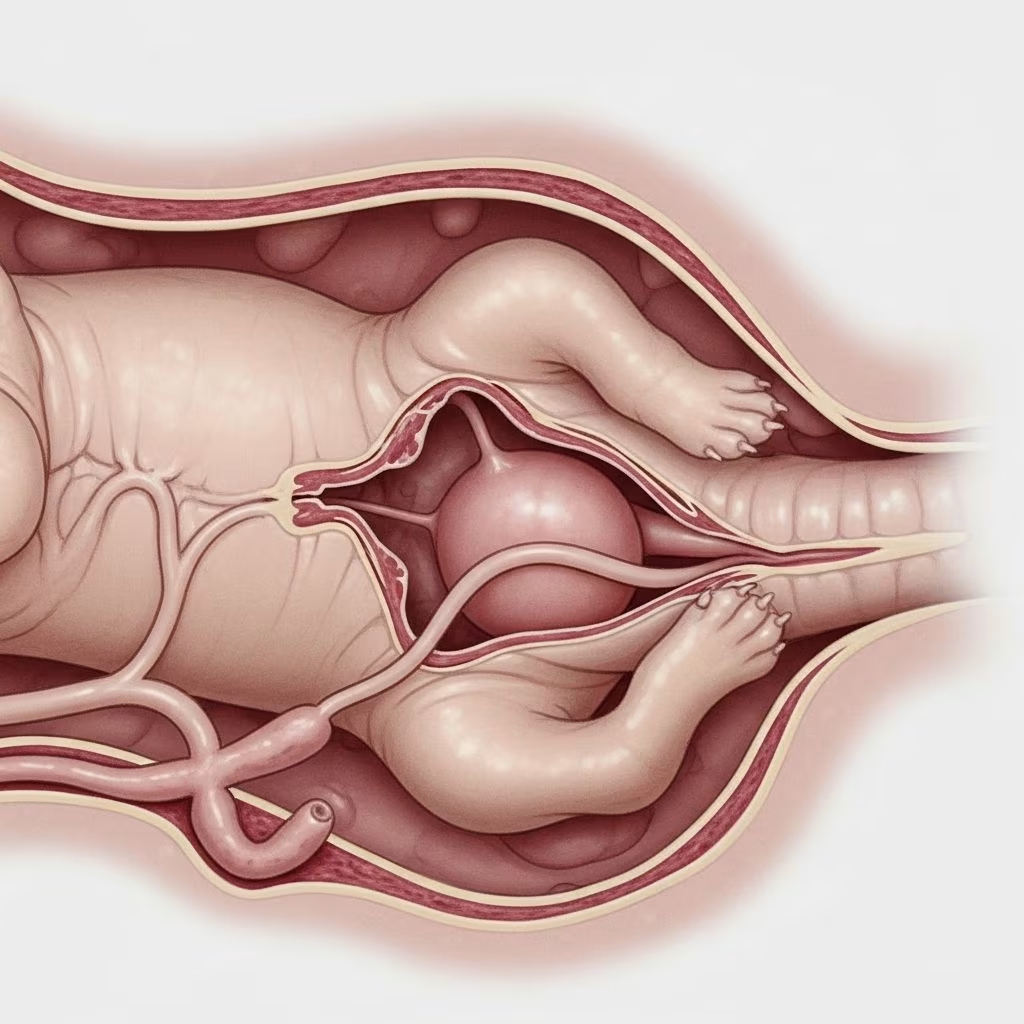
Congenital anomalies of the urinary bladder represent a group of developmental irregularities that arise during fetal growth, potentially leading to significant health challenges in newborn animals. These conditions disrupt normal urine storage and expulsion, often manifesting as incontinence, infections, or abdominal issues shortly after birth. Understanding these defects is crucial for veterinarians to enable early intervention and enhance survival rates.
Developmental Origins of Bladder Irregularities
The urinary bladder forms from the cloaca and urogenital sinus during embryogenesis. Disruptions in this process can result in malformed structures. For instance, incomplete separation of embryonic tissues may leave persistent connections like the urachus, which normally obliterates postnatally. In species such as horses, dogs, and cattle, these failures lead to urine leakage into the abdomen or external orifices, causing uroperitoneum or scalding.
Genetic predispositions play a role in certain breeds. Miniature horses and specific canine lines show higher incidences of hypoplastic bladders, where the organ fails to expand adequately. Environmental factors during gestation, including maternal infections or nutritional deficits, may exacerbate these risks, though precise mechanisms remain under study.
Common Types of Bladder Anomalies
- Patent Urachus: This occurs when the urachus—a fetal channel linking the bladder to the umbilicus—fails to close. Urine dribbles from the navel, leading to skin irritation and systemic dehydration in neonates.
- Urachal Cysts or Diverticula: Remnant sacs that fill with urine, fostering bacterial growth and recurrent infections.
- Bladder Aplasia or Hypoplasia: Complete absence or underdevelopment of the bladder, rare but often paired with kidney malformations, resulting in lethal urine accumulation.
- Ectopic Ureter Connections: Ureters bypassing the bladder to enter the urethra, vagina, or uterus directly, primarily affecting female dogs and fillies.
- Ureteroceles: Cystic dilatations at ureter-bladder junctions, obstructing flow and causing hydronephrosis.
These anomalies vary by species. Equines frequently exhibit urachal persistence, while canines more commonly face ectopic ureters, with prevalence rates around 0.016%–0.045% in dogs.
Clinical Signs and Early Detection
Newborns with bladder defects often present with lethargy, distended abdomens, or continuous urine dripping. In foals, uroperitoneum—urine in the peritoneal cavity—signals severe cases, as seen in a quarter horse colt with abnormal allantoic stalk and dorsal bladder wall fusion failure. Foals may collapse within hours of birth due to electrolyte imbalances.
In dogs, especially females aged 3-6 months, perpetual incontinence is hallmark, sometimes with vulvitis from urine scald. Cattle and sheep show subtler signs, like poor growth, until slaughter or necropsy reveals issues. Diagnostic imaging is pivotal: ultrasound detects fluid accumulations, while contrast cystography outlines structural gaps.
| Anomaly | Species Affected | Key Symptoms |
|---|---|---|
| Patent Urachus | Horses, Dogs | Umbilical leakage, scalding |
| Ectopic Ureters | Dogs (females), Horses (fillies) | Incontinence, normal voiding if unilateral |
| Bladder Hypoplasia | Miniature Horses, Dogs | Small bladder, incontinence |
| Ureterocele | Dogs, Cats | Hydronephrosis, infections |
Diagnostic Approaches in Practice
Veterinarians employ a multimodal strategy. Initial physical exams note umbilical swelling or dribbling. Ultrasonography visualizes bladder walls, urachal remnants, and free peritoneal fluid. Peritoneal tapsconfirm uroperitoneum via creatinine levels exceeding serum.
Advanced imaging like intravenous pyelography (IVP) maps ureter paths, essential for ectopic cases. Endoscopy inspects internal openings, particularly in urethrorectal fistulas seen in bulldogs. In a documented equine case, exploratory surgery confirmed anomalies after ultrasound suspicion, leading to successful repair.
Treatment Strategies and Surgical Interventions
Conservative management suits mild cases, using antibiotics for infections and supportive fluids. However, surgery is standard for persistent defects. Patent urachus resection involves ligating the remnant at its bladder base, often laparoscopically in adults.
For ectopic ureters, neoureterostomy reimplants ureters correctly, with success rates over 90% in dogs if kidneys remain viable. Bladder augmentation using intestinal segments addresses hypoplasia, though complications like stone formation arise. A neonatal foal with combined urachal and bladder defects underwent celiotomy, recovering to perform as a 4-year-old gelding. Prognosis hinges on urogenital function preservation and absence of secondary issues like sepsis.
Species-Specific Considerations
Equine Cases
Horses top the list for urachal anomalies due to large neonatal size straining closure. Fillies suffer ureteral ectopia most, with bilateral cases rarer but graver. Early foal surgery yields favorable outcomes if no renal damage occurs.
Canine and Feline Variations
Dogs, particularly females, dominate ectopic ureter diagnoses. Breeds like West Highland White Terriers show renal dysplasia links. Cats present less frequently, often with ureteroceles causing obstructions.
Large Animals Beyond Horses
Cattle exhibit bladder agenesis sporadically, usually fatal without intensive care. Sheep and pigs rarely show clinical signs, detected postmortem.
Genetic and Preventive Insights
Hereditary patterns emerge in breeds like Shetland ponies with multiple cysts or Shih Tzus with dysplasia. Breeders should screen via ultrasound in late gestation. No vaccines exist, but optimizing maternal nutrition—high selenium, vitamin E—may mitigate risks.
Research gaps persist; novel defects like dorsal bladder non-fusion in foals highlight ongoing discoveries. Peer-reviewed cases stress suspecting these in uroperitoneum neonates.
Long-Term Management and Prognosis
Post-surgical monitoring includes serial ultrasounds and urine cultures. Incontinence may linger, managed with phenylpropanolamine in dogs. Most treated animals achieve normal lifespans, with equine performers documented years post-op. Untreated cases risk chronic kidney failure or euthanasia.
FAQs
What causes bladder birth defects in pets?
They stem from embryonic developmental errors, influenced by genetics or maternal factors during pregnancy.
Can all bladder anomalies be surgically fixed?
Many yes, especially if caught early before kidney damage, with success varying by type and species.
Is patent urachus common in puppies?
Less so than in foals, but surgical correction is straightforward with good outcomes.
How do vets diagnose ectopic ureters?
Through ultrasound, contrast studies, and cystoscopy to trace ureter paths.
What’s the prognosis for foals with uroperitoneum?
Favorable with prompt surgery if urogenital function is intact, as per case studies.
References
- Congenital urachal and urinary bladder defects leading to uroperitoneum in a neonatal quarter horse colt — Mad Barn / Cummings School of Veterinary Medicine, Tufts University et al. 2024. https://madbarn.com/research/congenital-urachal-and-urinary-bladder-defects-leading-to-uroperitoneum-in-a-neonatal-quarter-horse-colt/
- Congenital urachal and urinary bladder defects leading to uroperitoneum — PubMed / Karam et al. 2024-10-25. https://pubmed.ncbi.nlm.nih.gov/39494178/
- Congenital Disorders of the Urinary Tract — Veterian Key. Accessed 2026. https://veteriankey.com/congenital-disorders-of-the-urinary-tract/
- Ureteral Anomalies in Animals — Merck Veterinary Manual. Accessed 2026. https://www.merckvetmanual.com/urinary-system/congenital-and-inherited-anomalies-of-the-urinary-system/ureteral-anomalies-in-animals
- Congenital Kidney Disease In Pets — Safari Veterinary Care Centers. Accessed 2026. https://www.safarivet.com/care-topics/dogs-and-cats/bladder-and-kidneys/congenital-disease-of-the-urinary-system/



